Slashdot Mirror
Domain: americaspace.com
Stories and comments across the archive that link to americaspace.com.
Comments · 6
-
Re:The Aunt Gertrude Rapid Escape System
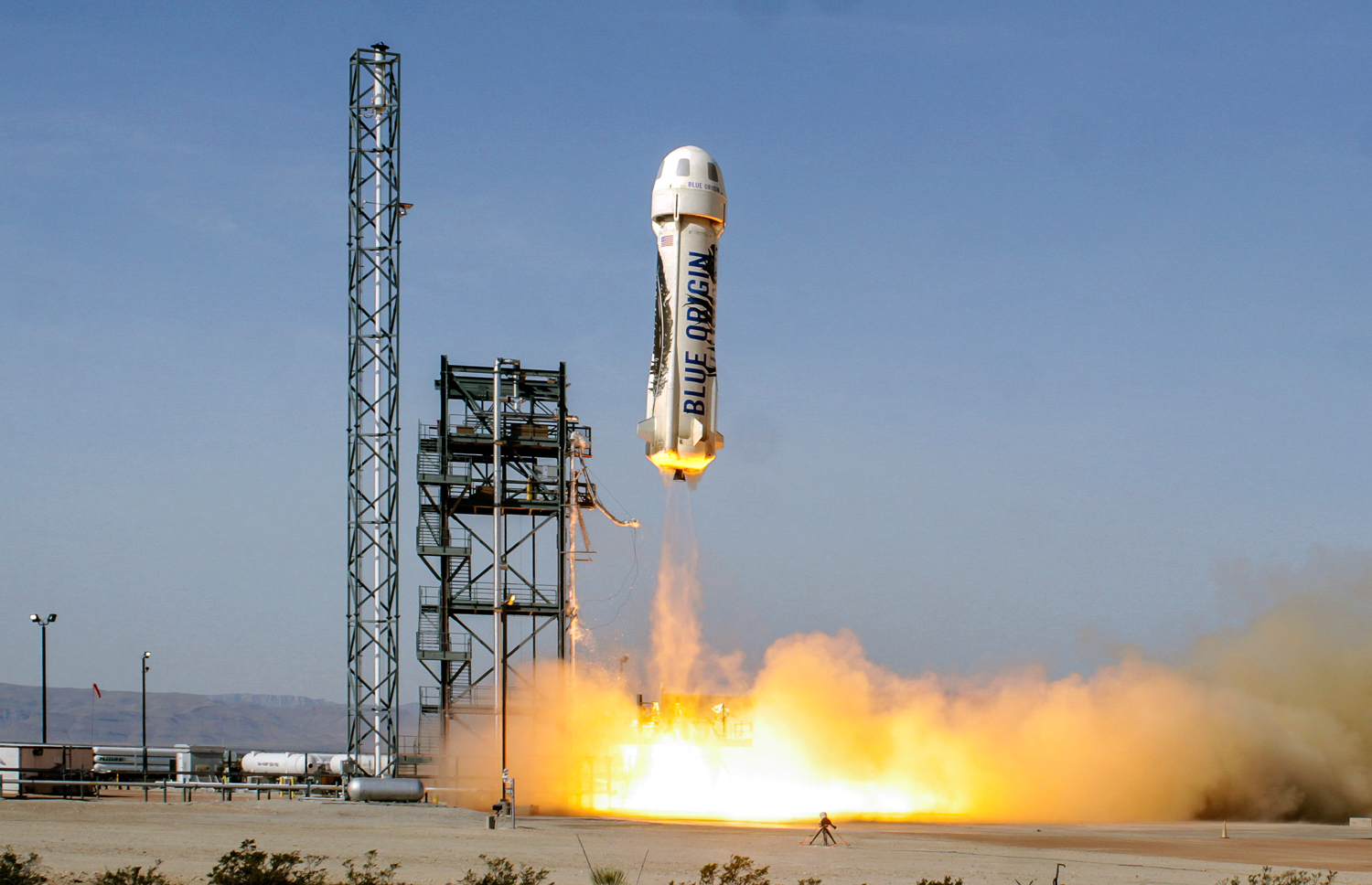
At least this rocket is much-less penis shaped then the New Shepherd
-
Re:Why not a warp drive?
YOU said one of its problems was TWR. Now you're changing the claim by tacking on the "too long to be useful" qualifier. I
What the bloody hell is your malfunction? I pointed out that it has an abyssmal TWR. It does have an abyssmal TWR. For some reason you're pretending that I instead wrote "too low of a TWR to function as a rocket stage in all contexts". I'm sorry, but that's just bullshit. I never wrote anything of the sort. The fact that you Can't Read Very Simple English and want to instead credit to me things that I never wrote is nonsense.
I'll repeat, in all caps and bold, in case it makes it easier for you to read: I NEVER WROTE THAT IT IS NOT A FUNCTIONAL DESIGN IN ALL CONTEXTS. In fact, I WROTE PRECISELY THE OPPOSITE. To repeat, again in all caps and bold to help you with your reading deficiency:
THAT REALLY PUTS IT AS SOMEWHERE IN-BETWEEN CHEMICAL ROCKETS AND VASIMR, WHICH HAS AN EVEN LOWER THRUST TO WEIGHT RATIO BUT AN EVEN HIGHER ISP
Did the boldfacing and caps make it easier for you to read? How the bloody hell are you reading what I wrote as "NERVA is not useless in any context", when I'm sitting here advocating for VASIMR instead which I wrote in my very first post has an even worse thrust to weight ratio?
What the bloody hell is wrong with you?
Are you seriously going to quote a news article interviewing the rocket engine's creator
Well who the bloody hell do you want to hear from? I already did the calculations in the comments section elsewhere for today's working version of VASIMR, but apparently that's not good enough for you.
I know TOPAZ were flown, but those were few-kW units.
TOPAZ was 5-10kWe. Romaskha was 40kWe. BES-5 was 3kWe. Snap-10A was 45kWt. And these are just systems that were launched. I have no clue what the Soviets developed on land but didn't launch, but the US developed reactors over 100kWe on the ground.
This is something people have done again and again and again. The only reason the power levels weren't higher was because that was way more power than was needed for LEO applications. And they're cheap. The Soviet Union sold the US two units, without fuel, for $13M. Got that? $13M for two of them.
And to reiterate, nuclear isn't even needed.
It did and was pretty straightforward to complete
Yes, if you have, in modern dollars, a couple dozen billion USD lying around, then certainly. There's little question that the technology looked like it was going to be viable. The question is whether you have someone showering you with vast sums of money to make something that's only useful as a third stage on very heavy lift missions.
Source to flight-ready hardware please. I don't buy that the ISS has a very inefficient array.
Really? You don't "buy" that a system designed twenty years ago is obsolete? Do you also not "buy" that their computers are obsolete? Seriously, can you not google? ISS's panels are rigid. Today's state of the art are flexible. MegaFlex supercedes ATK's previous product, UltraFlex, which was 150W/kg. If you want more details on MegaFlex which they just validated, look up the Phase 1 proposal documents (or do I need to do that for you as well?) By now they're probably up to about 300W/kg in the lab.
That's not true either. You can't use it as a LIFT stage (i.e. low-atmosphere). But you can certainly use it for ascent (upper atmosphere, circularization) and escape (the aforementioned 3.6km/s).
Escape is not "ascent". Circularization is not "ascent". No, it does not beat chemical rockets for "upper atmosphere", unless you def
-
Re:Why not a warp drive?
YOU said one of its problems was TWR. Now you're changing the claim by tacking on the "too long to be useful" qualifier. I
What the bloody hell is your malfunction? I pointed out that it has an abyssmal TWR. It does have an abyssmal TWR. For some reason you're pretending that I instead wrote "too low of a TWR to function as a rocket stage in all contexts". I'm sorry, but that's just bullshit. I never wrote anything of the sort. The fact that you Can't Read Very Simple English and want to instead credit to me things that I never wrote is nonsense.
I'll repeat, in all caps and bold, in case it makes it easier for you to read: I NEVER WROTE THAT IT IS NOT A FUNCTIONAL DESIGN IN ALL CONTEXTS. In fact, I WROTE PRECISELY THE OPPOSITE. To repeat, again in all caps and bold to help you with your reading deficiency:
THAT REALLY PUTS IT AS SOMEWHERE IN-BETWEEN CHEMICAL ROCKETS AND VASIMR, WHICH HAS AN EVEN LOWER THRUST TO WEIGHT RATIO BUT AN EVEN HIGHER ISP
Did the boldfacing and caps make it easier for you to read? How the bloody hell are you reading what I wrote as "NERVA is not useless in any context", when I'm sitting here advocating for VASIMR instead which I wrote in my very first post has an even worse thrust to weight ratio?
What the bloody hell is wrong with you?
Are you seriously going to quote a news article interviewing the rocket engine's creator
Well who the bloody hell do you want to hear from? I already did the calculations in the comments section elsewhere for today's working version of VASIMR, but apparently that's not good enough for you.
I know TOPAZ were flown, but those were few-kW units.
TOPAZ was 5-10kWe. Romaskha was 40kWe. BES-5 was 3kWe. Snap-10A was 45kWt. And these are just systems that were launched. I have no clue what the Soviets developed on land but didn't launch, but the US developed reactors over 100kWe on the ground.
This is something people have done again and again and again. The only reason the power levels weren't higher was because that was way more power than was needed for LEO applications. And they're cheap. The Soviet Union sold the US two units, without fuel, for $13M. Got that? $13M for two of them.
And to reiterate, nuclear isn't even needed.
It did and was pretty straightforward to complete
Yes, if you have, in modern dollars, a couple dozen billion USD lying around, then certainly. There's little question that the technology looked like it was going to be viable. The question is whether you have someone showering you with vast sums of money to make something that's only useful as a third stage on very heavy lift missions.
Source to flight-ready hardware please. I don't buy that the ISS has a very inefficient array.
Really? You don't "buy" that a system designed twenty years ago is obsolete? Do you also not "buy" that their computers are obsolete? Seriously, can you not google? ISS's panels are rigid. Today's state of the art are flexible. MegaFlex supercedes ATK's previous product, UltraFlex, which was 150W/kg. If you want more details on MegaFlex which they just validated, look up the Phase 1 proposal documents (or do I need to do that for you as well?) By now they're probably up to about 300W/kg in the lab.
That's not true either. You can't use it as a LIFT stage (i.e. low-atmosphere). But you can certainly use it for ascent (upper atmosphere, circularization) and escape (the aforementioned 3.6km/s).
Escape is not "ascent". Circularization is not "ascent". No, it does not beat chemical rockets for "upper atmosphere", unless you def
-
Re:What the eggheads don't consider...
If a Venus flyby is being considered for a Mars manned mission, why not as an alternative flight path for an unmanned probe?
A hearing by the U.S. House of Representatives' Committee on Science, Space, and Technology, scheduled for Feb. 27, aims to explore the feasibility of a flyby of Mars and Venus as a mission concept for the first manned flight of NASA's Space Launch System and Orion spacecraft, called Exploration Mission-2 or EM-2, in 2021.
-
Re:#blackmatterlives
Hmm... What sensing equipment does New Horizons have on it that can perform tests to find dark matter filaments? I guess they could go old-school and do the camera thing?
Anyhow, assuming you're serious:
http://www.space.com/16412-dar...
http://www.americaspace.com/?p... -
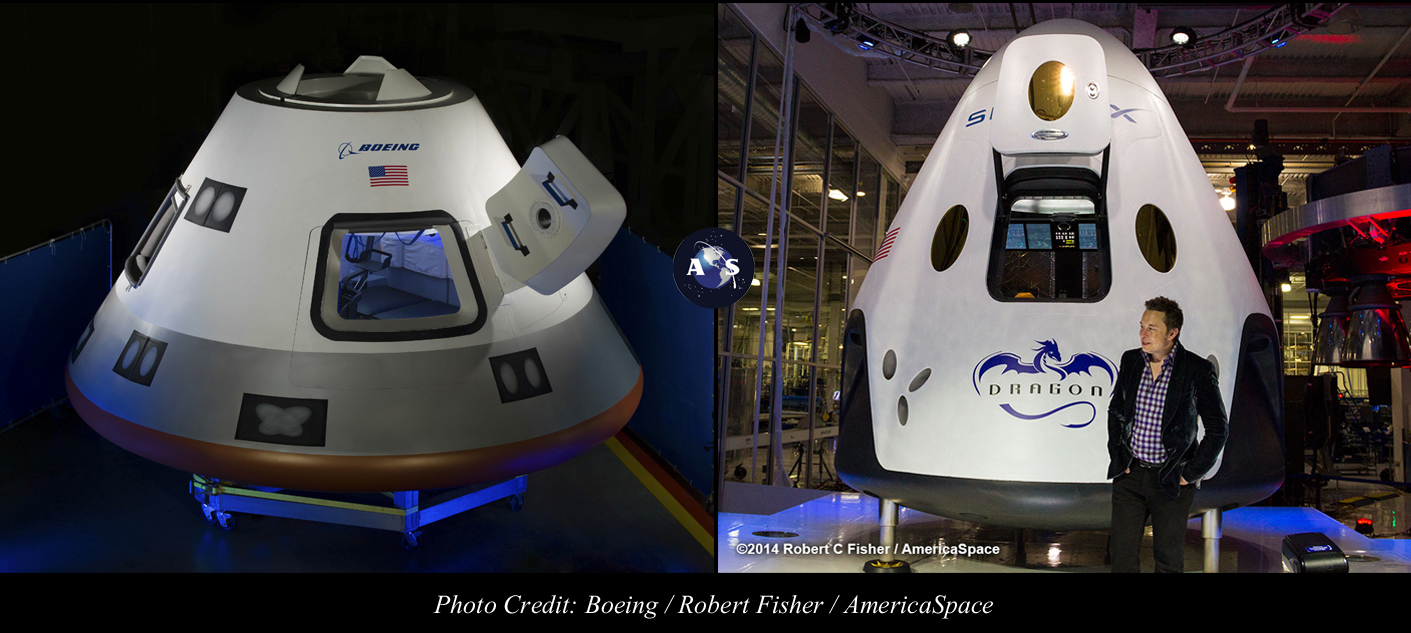
Picture of the Dragon and CST-100