Slashdot Mirror
Domain: mojones.com
Stories and comments across the archive that link to mojones.com.
Stories · 3
-
Sites Blocked By Smartfilter, Censored in Saudi Arabia
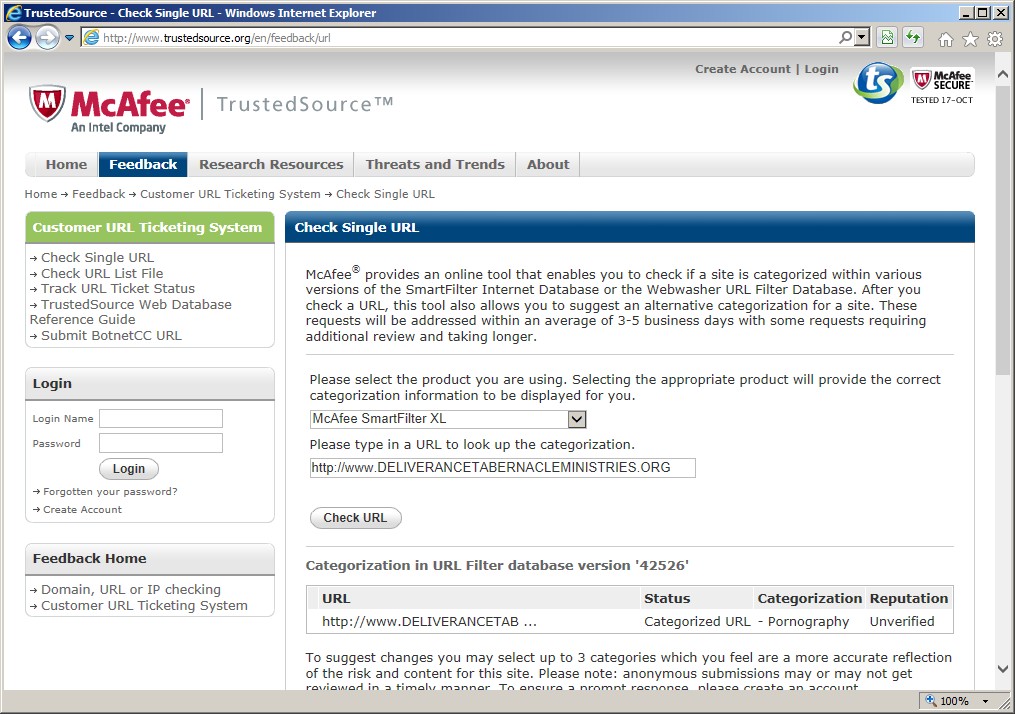
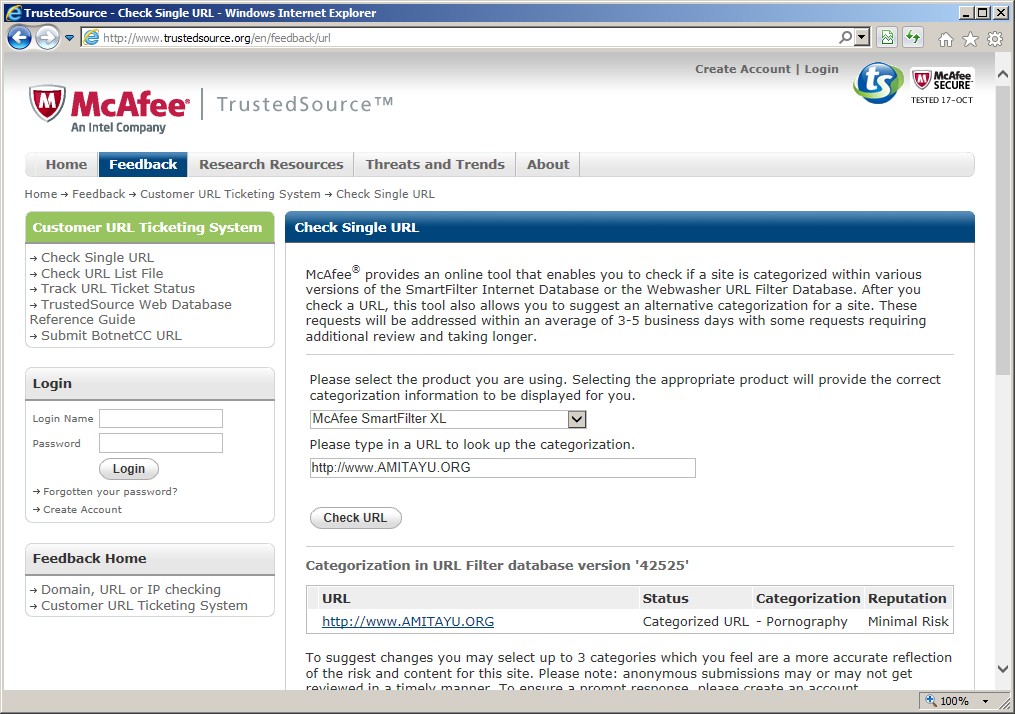
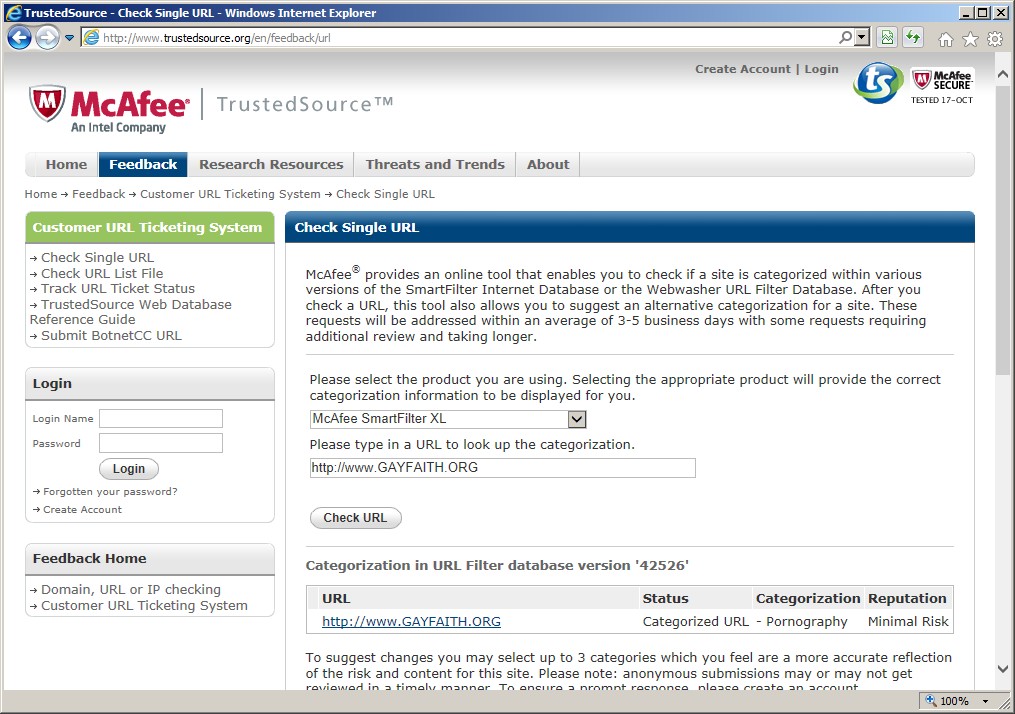
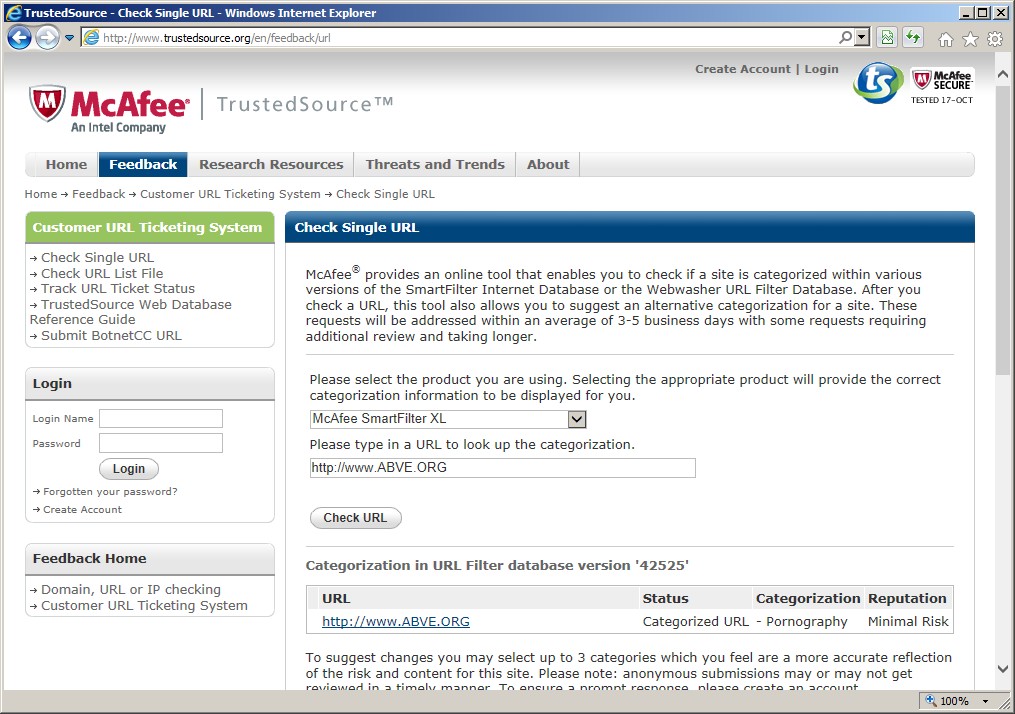
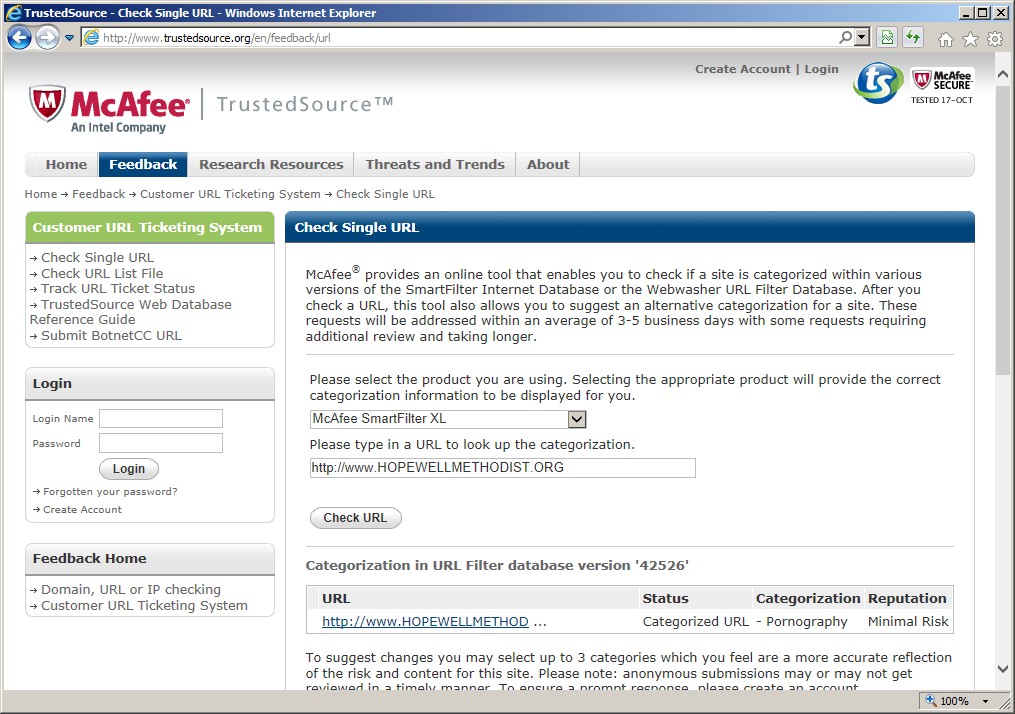
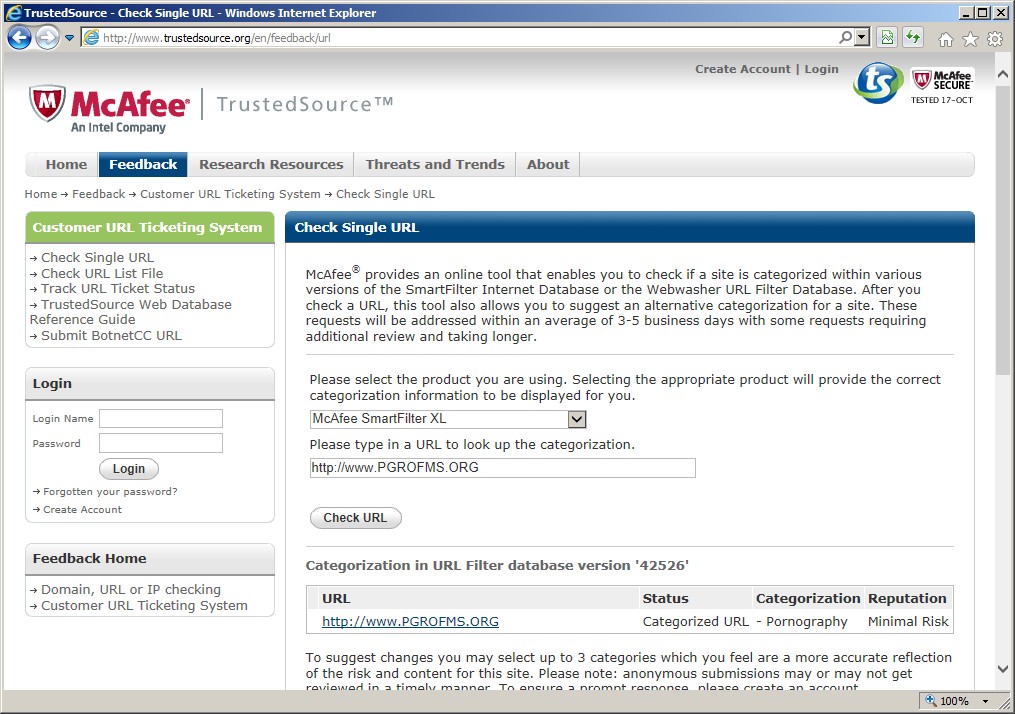
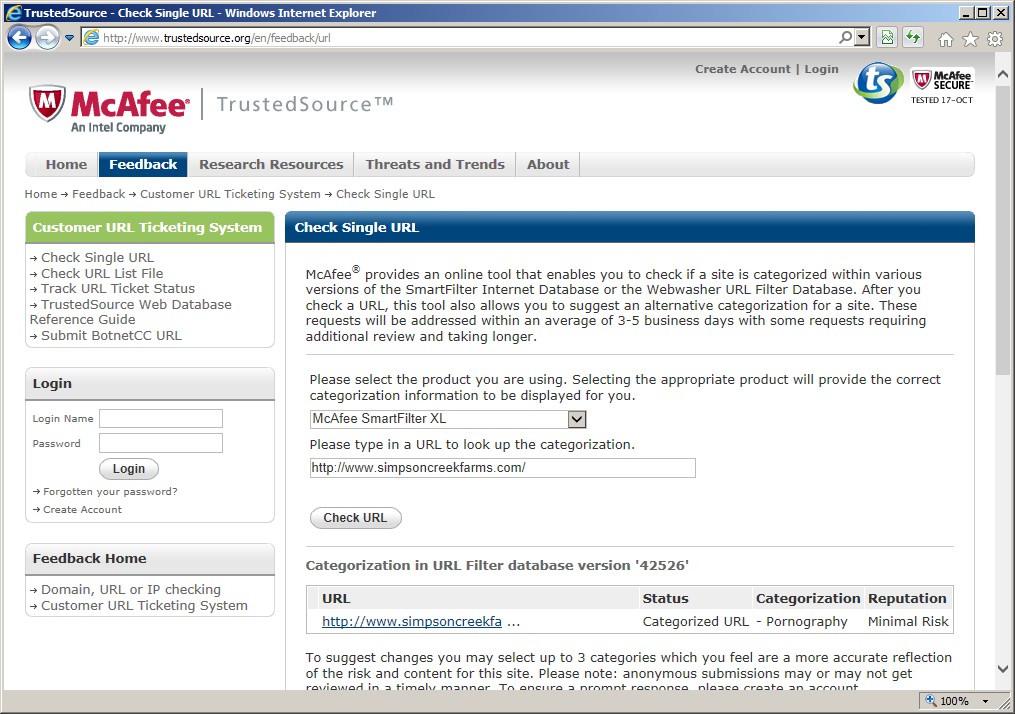
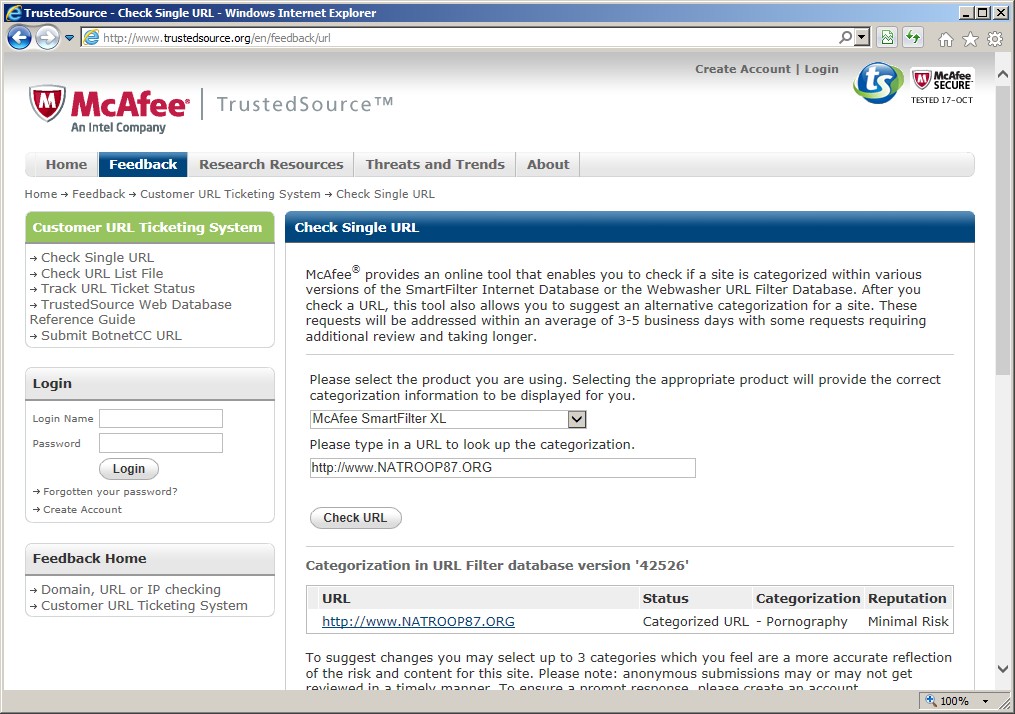
Slashdot contributor Bennett Haselton writes: "Internet users in Saudi Arabia, along with most users in the United Arab Emirates, are blocked by their respective government censors from accessing the websites of the Trinity Davison Lutheran Church, Deliverance Tabernacle Ministries in Pittsburgh, the Amitayu Buddhist Society of Taiwan, and GayFaith.org. An attempt to access any of those websites yields an error page like this one. However, the sites are not blocked because they conflict with the religions beliefs of those countries' governments. Rather, they are blocked because Smartfilter -- the American-made blocking program sold by McAfee, and used for state-mandated Internet censorship in those countries -- classifies those sites as "pornography". You can see the screen shots here, here, here and here." Read on for the rest of Bennett's thoughts.I found these blocked sites by starting with a combination of URL lists and ad hoc spidering, and running as many sites as possible through the Saudi filters to catch the ones that were blocked. Some of the sites were blocked for reasons that were easy to guess -- for example, http://www.bighornbasinsfw.org/, the home page of the Big Horn Basin, Wyoming chapter of Sportsmen for Fish & Wildlife, was almost certainly blocked because of the slang term "nsfw" in their URL. http://www.AgainstPornography.org and http://www.SearchingForMySpermDonorFather.org were presumably blocked because of the presence of the words "porn" and "sperm".
On the other hand, there appears to be no rational reason why the Filipino American Women's Network, the Tuscon Jazz Institute, or the Sacramento Police Activities League would have been blocked by Smartfilter, even by accident. A partial list of the blocked sites that I found is in the blog post I wrote for Citizen Lab, an Internet censorship research center at the University of Toronto.
Articles about sites that are erroneously blocked by Internet censorship software, have a storied history. The first widely read piece was the article "Keys to the Kingdom" written by Brock Meeks and Declan McCullagh in 1996, calling out Cyber Patrol for blocking EnviroLink.org and the University of Newcastle Computer Science Department, and CYBERsitter for blocking the National Organization for Women. I made a minor name for myself and the Peacefire.org site in the late 1990's by writing more pages about sites blocked by other products, including some (like X-Stop and SurfWatch) which no longer exist, and others that are still around, including Smartfilter. I was also one of six people comprising the Censorware Project, a loosely organized group of volunteers that published a few more reports.
By the early 2000's, however, it became clear that anyone whose mind was likely to be changed by information about what kinds of sites were blocked by blocking software, would have changed their mind already (or would, if they came across the research that had already been done up to that point). So the further reports on Internet blocking software errors, by me and other people, slowed to a trickle. I wrote a report in January 2002 on the latest list of sites blocked by Cyber Patrol, a product that most people today have forgotten. In 2006 I worked with the ACLU of Washington to publish a report on sites erroneously blocked by FortiGuard, a program used on computers in some libraries in central Washington, as part of the ACLU's suit to challenge the constitutionality of the program's use on public library terminals. (The Washington State Supreme Court rejected the lawsuit on the grounds that, regardless of what sites were blocked on the computers, it didn't matter because an adult library patron could request for the filter to be turned off.) In 2007 I wrote an article for Slashdot titled "From Bess to Worse" listing some sites that were blocked by an Internet filtering program called Bess (which was later bought out by Smartfilter and discontinued).
Most people's awareness of this debate, if they had heard about it at all, was limited to the perception that "breast cancer sites" and sites about "chicken breast recipes" were sometimes filtered by Internet blocking programs. Or they heard that "Beaver College" actually had to change its name to avoid being censored by web filters. As I tried to explain in a FAQ (written, according to the Wayback Machine, in 1999, but which still broadly holds true today), these examples are true, but they miss the point. These examples make it sound as if blocking software companies are doing the best job they can under the circumstances, and that the errors are unavoidable due to limitations on machine intelligence. In reality, any software algorithm that blocks the American Board of Vocational Experts, the Hopewell United Methodist Church, and the Patriot Guard Riders of Mississippi, as "pornography" (as Smartfilter currently does), is probably not the best algorithm the company could have come up with -- but there's no incentive for them to try harder, because few people will ever look that deep.
And yet, people continue to remember the "breast cancer site" examples. This sounds to me like an example of the narrative fallacy -- people remember that breast cancer sites were blocked, because there's a tidy explanation. There is no tidy explanation for most other examples of blocked sites, so the meme never spreads very far. Conveniently for the blocking companies, the blocked-site errors which make the company look most sloppy (the Kennels at Simpson Creek Farms, the St. Francis Institute of Milwaukee, etc.) are precisely the ones that, due to the narrative fallacy, most people won't remember or hear about.
One company, CYBERsitter, did manage to make a few blocking decisions in the 1990s that were egregious enough that their antics did make the news, and did finally raise some people's awareness that the controversy over private Internet filtering extended beyond "breast cancer sites". After TIME Magazine's website published an article (no longer online) that criticized CYBERsitter's blocking policies, CYBERsitter responded by blocking TIME Magazine's pathfinder.com domain. A few months earlier, CYBERsitter had blacklisted the monthly e-Zine "The Ethical Spectacle, after the Spectacle's founder, Jonathan Wallace, published an article criticizing CYBERsitter for blocking my own Peacefire.org website. And Peacefire.org had been blocked, in turn, because of a page I wrote (now very much out of date) listing some of the sites that CYBERsitter blocked, including the International Gay and Lesbian Human Rights Commission and Mother Jones. (Nowadays, of course, nobody would be surprised that filtering companies block Peacefire.org, since the site publishes ample instructions on how to get around Internet blockers. But at the time, the site's first and only article was the list of sites blocked by CYBERsitter, which is why CYBERsitter received so much criticism for blocking the domain in retaliation.) CYBERsitter also threatened to have Meeks and McCullagh criminally prosecuted for writing "Keys to the Kingdom" and threatened to sue me over the page that I had made.)
The moral, it seems, is that if you want an example of a censored web site to stick in people's minds, it either has to be a forgivable error, or an insane vindictive dick move -- because in either of those cases, people will understand why it happened. The vast swaths of censored websites on the spectrum in between, the ones for which there is no rational explanation for the blocking, go ignored.
These days, though, American and Canadian "censorware" makers have also come under fire for selling censoring software to foreign governments which use them for country-wide censorship. Most of the criticism focuses, naturally, not on the kinds of sites that are accidentally blocked by the blocking software, but on the immorality of these companies enabling statewide foreign censorship in the first place. Netsweeper, Blue Coat, and McAfee have all made the claim that "Once we sell their product to them, we have no control over what they do with it" -- which, as I wrote previously in Slashdot, is nonsense, because for the product to be effective, it has to rely on updates to the blocked-site list, which are provided at regular intervals by the manufacturer. Cut off the updates, and the product will not work, at least not as well.
So the fact that McAfee has classified the Boy Scout Troop 87 of North Andover, the Pan-Iranist Party of Iran, and Reptile Conservation International as "Pornography" is (rightly) overshadowed by the fact that McAfee is selling to government censors in Saudi Arabia and the UAE in the first place. However, as long as the filters are installed, these blocked sites are at least part of the problem for users in those countries, just as much as they are for students or cubicle workers in the U.S. whose network administrators happen to use Smartfilter. And, of course, I sampled only a miniscule fraction of the Web to find these examples of blocked sites, so the true number of stupid blocks affecting Saudi and UAE users is likely to be much larger. For each individual example, you might reasonably ask, "Is it really a big deal if Saudis are blocked from accessing Boy Scout Troop 87 of North Andover?" But it adds up.
-
Cyberselfish: Technolibertarianism
Adam Brate, Slashdot reader, sent us a review of Cyberselfish: Technolibertarianism, a book which takes a look at the "cyber" culture, and what it means. It sounds interesting, although perhaps a bit off-base - comment below if you've read it. Cyberselfish author Pulina Borsook pages 256 publisher PublicAffairs, 05/2000 rating 8/10 reviewer Adam Brate ISBN 1891620789 summary A Critical Romp Through the Terribly Libertarian Culture of High Tech I heard about Cyberselfish when driving around Vermont Memorial Day weekend from used bookstore to used bookstore. The NPR station was broadcasting an interview with Cyberselfish author Paulina Borsook, a writer who worked for Wired during its glory years. I was put off by the book's wretched title, but engrossed by the subject: the powerful undercurrent of libertarianism that flows through high-tech circles. I have been astounded but not amazed at the deeply adolescent and peevish libertarian attitudes that so many techies cling to, from gun worship to fear of governmental Internet regulation. Listening to Borsook speak intelligently and cogently about technolibertarianism made me want her book very much.This month I garnered a copy of Cyberselfish, and I'm still appalled with the title (which comes from an eponymous essay for Mother Jones she wrote in July 1996, when such cyberlanguage wasn't so cybertrite). Cyberselfish is a book-length essay, in fact a somewhat thinly edited series of linked essays. There's a rush of immediacy and wit; for a random example, "Polyamory is the preferred term of art; it's gender-neutral, where polygamy and polyandry are not, and allows for all persuasions of partner choice (gay/straight/bi/it depends)." With the freshness and informality comes flaws. There is too much repeated material in the book. It's clear that essays written at different times have been cobbled together. Reading the book straight through is like reading some multi-volume series straight through, in which the characters and history are rehashed at the beginning of each book.
Cyberselfish looks at a few specific examples of technolibertarianism in depth: Bionomics, cypherpunks, Wired magazine, and Silicon Valley's impressive lack of philanthropy. Each time Borsook exposes the compassionless, fearful, posturing, politically myopic core, without dismissing the good aspects of the high-tech culture and individuals. For example, she thinks fighting for privacy rights is good, but obsessing about it and descending into rabid, paranoid ranting on alt.cypherpunks is scary. She moves smoothly from the historical to the academic to the personal, deliberately exposing her own frailities and biases while she examines those of others.
To give a deeper example of the content of Cyberselfish, Bionomics is the use of biological (and particularly Darwinian) metaphors to describe economic processes, as popularized by Michael Rothschild (Bionomics: Economy as Ecosystem) and then the The Bionomics Institute (TBI). Borsook convincingly points out through both empirical observation and reasoned analysis that Bionomics boils down to economic libertarianism, where government involvement is wrong and the most cut-throat, efficient and entrepeneurial businesses are the best. Ecological metaphors are used in Bionomics only when they're useful and sexy: The ecosystem of Hawaii was used as a metaphor for the fragility of protected industries. Under Bionomics logic, Hawaii's beautiful, lush, peaceful ecosystem is to be derided. Bionomics uses metaphors to draw syllogistic conclusions. Doing that can be powerfully convincing but amounts to hand-waving and emotional appeals. Borsook cuts through the smoke and mirrors.
After a few years, the Bionomics Institute conferences were (literally) taken over by the Cato Institute, the premier libertarian think tank in the nation. The annual Bionomics conterences began in 1993. The 1997 conference was the Cato/Bionomics Conference; 1998, the "Annual Cato Institute/Forbes ASAP Conference on Technology and Society." TBI morphed into software-startup Maxager, which intends to offer Bionomical tools to companies. Borsook wonders what meaning can be ascribed to the success or the failure of the company. If Maxager fails, is it because it wasn't Bionomically good enough, or just because of the many uncontrollable factors that cause the vast majority of startups to fail? If it succeeds, does it validate Bionomics, or just the good connections the founder has with Silicon Valley venture capitalists?
The other chapters are just as interesting. Cyberselfish sharply describes all the archetypes of the technolibertarians, from the neo-hippie polyandric Burning Man attendee to the Lexus-driving, 100-hour-a-week, plugged-in entrepeneur with a sprawling bungalow in Santa Clara county.
One of the most crystalline passages in the book describes Eric Raymond's leaking of the Halloween Document, written by Microsoft program manager Vinod Valloppillil. The two clearly have vast ideological differences, the open-source cowboy and the Evil Empire functionary, but they're both hard-core libertarians, an entirely unreported fact. In Borsook's words, "It was rather like discovering that both a liberal and a conservative senator had both acquired their law degrees from Yale: no news here."
As I said before, the book is somewhat haphazardly put together, and nearly every sentence is to some degree contentious; even someone who agrees with her basic position will find reason to quibble. Cyberselfish doesn't come near to answering all the questions it raises. Borsook doesn't really tackle the paradox that "libertarians celebrate the cult of the individual" but Open Source celebrates the collective. What does it mean to be an Open Source libertarian?
I personally think it's somewhat unfair to attack those flaws, as they're inexorably part of Cyberselfish's loose, immediate, opinionated, and conversational style. It's kind of like how Slashdot's open forums allow for a review like this and the inevitable "hot grits" responses.
Purchase this book at fatbrain.
-
Just Say No To Reading About Drugs
We keep getting submissions about bills in Congress to ban the distribution of any information on how to manufacture illegal drugs. The story of this is kind of humorous. The bill was having trouble on its own, so it's been grafted onto a bill called the "Bankruptcy Reform Act of 2000" -- this bill goes on for 50 pages about modifications to bankruptcy laws (to make it harder for consumers to declare bankruptcy, naturally), then suddenly has a whole section on illegal drugs, then goes back to bankruptcy. It's the censorship law that won't die. Even more disturbing, a tiny little rider in the bill alters the general requirements for search warrants so that you need never be informed of a search -- notification can be delayed indefinitely, which is a fundamental violation of the Fourth Amendment. In any case, it's in real danger of passing, so it's something you ought to pay attention to. We've done some grafting ourselves of some of the submissions related to this ...First, as always, you can read the bills yourself by going to Thomas. Key in "methamphetamine" or "bankruptcy." Here's a direct link to the Bankruptcy Reform Act, and there's a link to HR 2987 in a submission below. Places like DRCNet aren't too happy about the bill, but neither are civil liberties groups -- the EFF has a nice overview of the whole situation in their last newsletter as well.
Vince Beiser writes: "New story from MotherJones.com: Speed Limit: A bill banning Internet sites that publish or even link to drug-making information looks set to sail through Congress -- to the dismay of free-speech advocates. Read the story." Mother Jones has also recently published an update to this story. If you only read one link off this story, it should be this one.
wrenling writes: "Right now HR 2987 is before the House Judiciary Committee. The bill is marked as an anti-methamphetamine proliferation bill. Without getting into discussions of whether or not drugs should be legal, attention needs to be drawn to the rider that is attached to the bill which according to the ACLU would allow the following:
Free Speech is at Risk. H.R. 2987 would also allow the government to order Web sites censored and shut down without any due process of law and without any notice given to the website's owner. One provision of the bill would allow agencies like the FBI to make judgment calls on the intent of online statements regarding drug use -- a power usually reserved for the courts. Internet service providers would then be ordered by law enforcement to take down any of these statements within 48 hours -- without notifying the Web site owner -- or be considered in violation of the law.
It's not only things like DMCA we have to watch out for, but for little riders on other legislation that, if enacted, could be used to further grant the United States government censorship powers."
Eric the .5b writes "Do we geeks really care, and do we geeks really matter?
The Methamphetamine Anti-Proliferation Act, described here and here, is still in committee in the House as we speak. A similar bill sailed through the Senate last year, and if this goes through, the two should be very easy to reconcile into a final version and get made into law.
- This bill,
- HR 2987, would:
- Allow police to search your home or business without so much as notifying you that you are under investigation or that such searches have taken place for as long as six months,
- Allow investigators to make copies of your documents and computer files without ever notifying you,
- And make it illegal to distribute information about how to make any controlled substance, to merely link to Web pages giving information on that or drug paraphenalia, or to even just describe how to find such information.
If we want to do something about this, we have an excellent opportunity. Both the Committee on Commerce and the Committee on the Judiciary (members listed here) are working on this legislative abomination. If you see your House representative (if you don't know your representative, like most of us, use the look-up) on either of these lists, contact him or her. E-mail or snailmail them if you like, but faxes and phonecalls will probably make the best impression. Be polite and very nonthreatening, but make it clear that you vote, and that you don't like this bill. Be sure to mention the title and number (The Methamphetamine Anti-Proliferation Act and HR 2987). Even if you don't see your representative on the lists, it couldn't hurt to bug the chairpersons of the committees. Lastly, pass this info around to anyone you know who might care. The more displeasure the representatives hear, the less attractive doing anything but killing this bill will be."