Slashdot Mirror
Domain: uahirise.org
Stories and comments across the archive that link to uahirise.org.
Comments · 8
-
Re:Why no 4k footage of the moon?
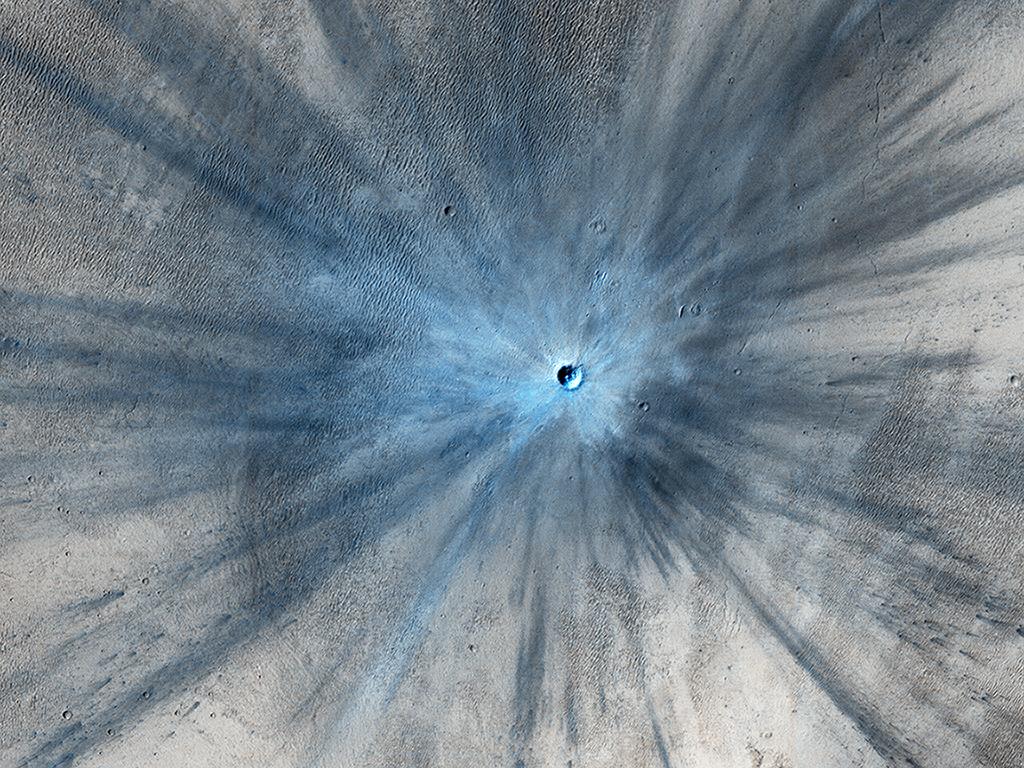
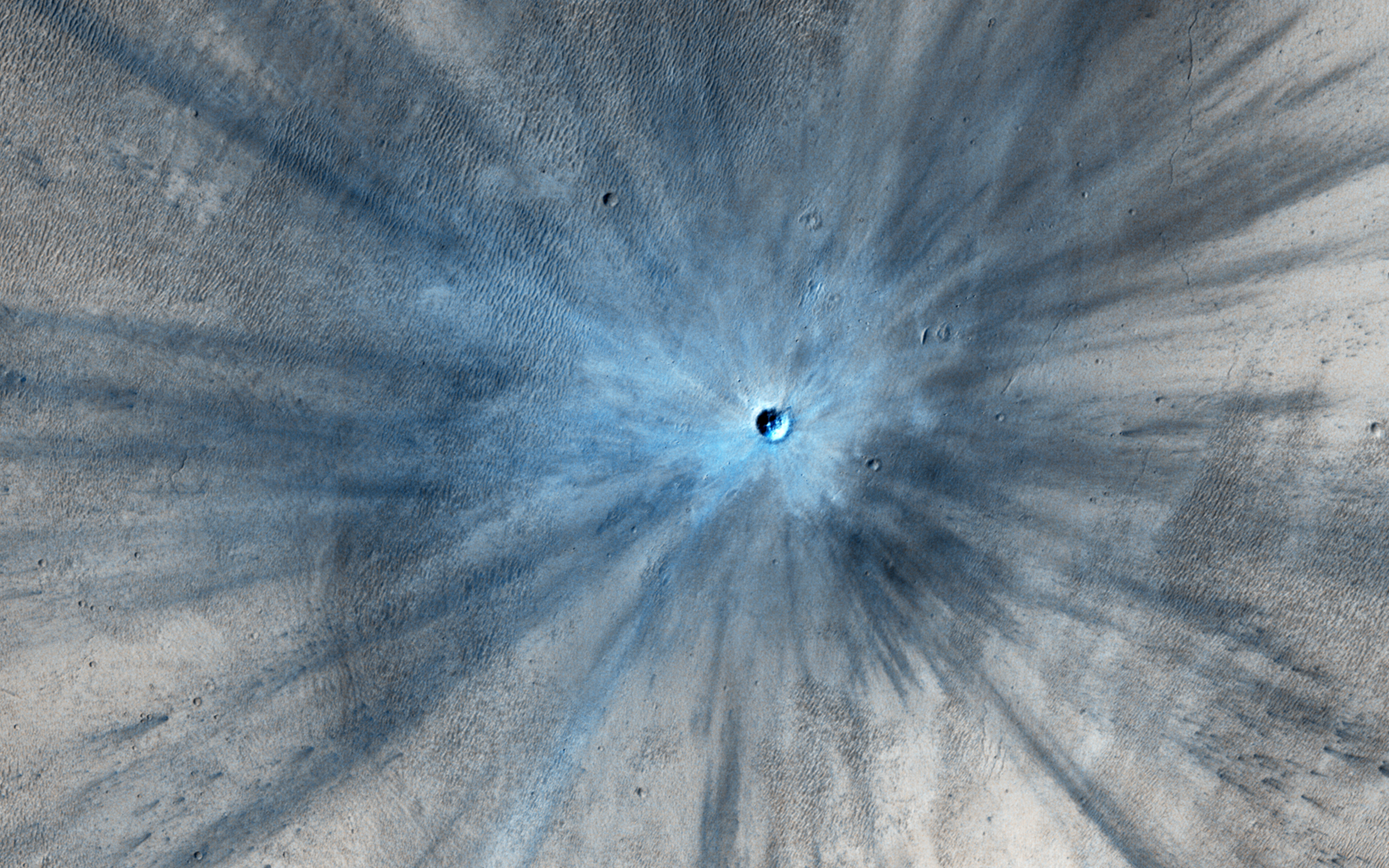
What are you talking about? We''ve been sending some damned impressive cameras out into space of late. Heck, even not just "of late". Have you seen the HiRISE images of Mars? Forget 4k, you can download those in 8k.
Now, if you're talking constant live 4K video footage, the problem isn't the cameras, it's the bandwidth over such huge distances.
-
Re:Can you please post a link to Space.com?
Thanks!
Actually, I think the NASA shot is better than the HiRise one?
-
They might be Kettle Holes
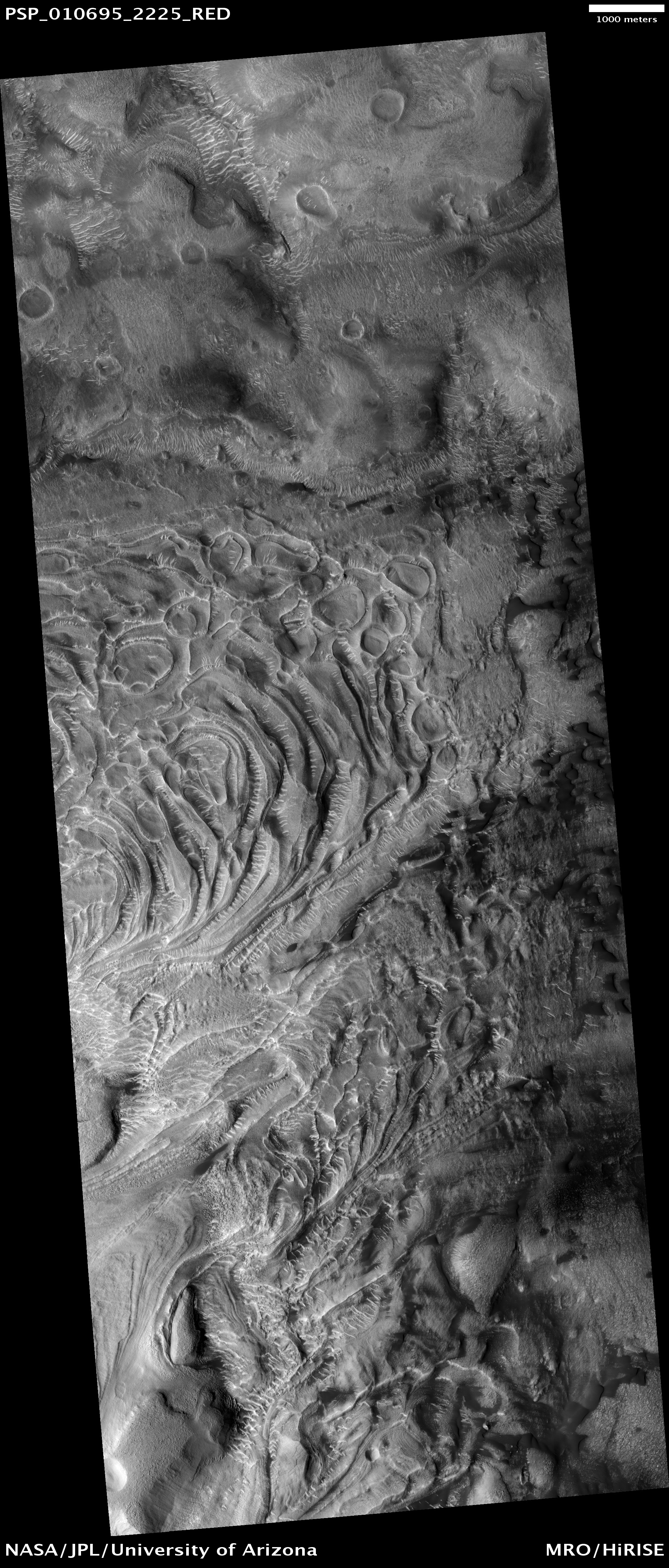
There are quite similar to the depressions in Moreux Crater (image PSP_010695_2225 ; 42 degrees N / 44.6 degrees E). They might be Kettle Holes, formed when a retreating ice sheet or glacial flood leaves behind huge chunks of debris rich ice that later melts (or sublimates) creating distinctive hollows in glacial sediment.
-
Re:Wow
1) These images are not photoshopped (at least not the ones on uahirise.org). If you knew anything about remote sensing, CCD sensors, image processing, or science, you'd know that.
http://www.uahirise.org/pdf/color-products.pdf [uahirise.org]
Have you actually read that PDF?
(My emphasis)
"PSP_005000_1000_RGB.NOMAP.JP2 3-color image consisting of RED, BG, and synthetic blue images. The BG image has been warped to line up with the RED.NOMAP image. The BG (blue-green) bandpass primarily accepts green light. The synthetic blue image digital numbers (DNs) consist of the BG image DN multiplied by 2 minus 30% of the RED image DN for each pixel. This is not unique data, but provides a more
appealing way to display the color variations present in just two bandpasses, RED and BG.""For the Extras products, each color band is individually stretched to maximize contrast, so the colors are enhanced differently for each image based on the color and brightness of each scene. Scenes with dark shadows and bright sunlit slopes or with both bright and dark materials are stretched less, so the colors are less enhanced than is the case over bland scenes."
Whether one uses Photoshop or other software to enhance images to become more pleasing or effectful, it's generally called photoshopping.
Mars may look rather dull compared to Earth, and there's not much light there. But I'd much rather see things as they are, and the IR imagery displayed separately (preferably as black/white, as is traditional as it doesn't give any false impressions that it's visible light). That would be much more impressing than artificial colour "enhancements" and contrast stretching individual colour bands to make the images appear more colourful.
In many ways, exaggerating space images that are already impressive because they are from space to make more of an impact on the public isn't much different from photoshopping people to make their eyes bluer, lips redder, teeth whiter, and wrinkles less visible.
You CANNOT "see things as they are" with the HiRISE images.
1) Does your monitor display Infrared?
2) Does your monitor display "red" with the same bandpass that the HiRISE detectors are sensitive to?
3) Does your monitor display the bluegreen that HiRISE is sensitive to?
4) Are your eyes sensitive, in the same way as the HiRISE detectors, to the same bandpasses as the HiRISE detectors?No.
5) It simply isn't "traditional" to show IR or other non-visible wavelength data as a separate grayscale image. Take a look at Hubble images.
6) The difference between photoshopping and processing these images is: a) there's documentation on exactly how it's done, and why, b) the "original--whatever that means" images are available to anyone who actually has an interest in the imagery rather than complaining about scientists.
7) Mars doesn't look dull compared with Earth. The bandpasses were chosen for science. The public images are just that, to excite the public. If you want to do science, then go to the original source. If you want to look at pretty pictures, then look at the pretty pictures.What, precisely, would you like to see?
Would you like to see the raw numbers that come out of the detectors? Those won't do you much good since you clearly don't know anything about Mars science or remote sensing. Some amount of the "signal" is actually generated by the instrument. In addition, some amount of the "signal" is due to heat generated by the spacecraft, other instruments, etc. If you would like to see the raw data, go here:
http://hirise-pds.lpl.arizona.edu/PDS/EDR/PSP/ORB_001500_001599/PSP_001552_1410/
Those raw data
-
Re:Wow
1) These images are not photoshopped (at least not the ones on uahirise.org). If you knew anything about remote sensing, CCD sensors, image processing, or science, you'd know that.
http://www.uahirise.org/pdf/color-products.pdf [uahirise.org]Have you actually read that PDF?
(My emphasis)
"PSP_005000_1000_RGB.NOMAP.JP2 3-color image consisting of RED, BG, and synthetic blue images. The BG image has been warped to line up with the RED.NOMAP image. The BG (blue-green) bandpass primarily accepts green light. The synthetic blue image digital numbers (DNs) consist of the BG image DN multiplied by 2 minus 30% of the RED image DN for each pixel. This is not unique data, but provides a more
appealing way to display the color variations present in just two bandpasses, RED and BG.""For the Extras products, each color band is individually stretched to maximize contrast, so the colors are enhanced differently for each image based on the color and brightness of each scene. Scenes with dark shadows and bright sunlit slopes or with both bright and dark materials are stretched less, so the colors are less enhanced than is the case over bland scenes."
Whether one uses Photoshop or other software to enhance images to become more pleasing or effectful, it's generally called photoshopping.
Mars may look rather dull compared to Earth, and there's not much light there. But I'd much rather see things as they are, and the IR imagery displayed separately (preferably as black/white, as is traditional as it doesn't give any false impressions that it's visible light). That would be much more impressing than artificial colour "enhancements" and contrast stretching individual colour bands to make the images appear more colourful.
In many ways, exaggerating space images that are already impressive because they are from space to make more of an impact on the public isn't much different from photoshopping people to make their eyes bluer, lips redder, teeth whiter, and wrinkles less visible.
-
Re:Wow
Time to feed the troll.
1) These images are not photoshopped (at least not the ones on uahirise.org). If you knew anything about remote sensing, CCD sensors, image processing, or science, you'd know that.
http://www.uahirise.org/pdf/color-products.pdf2) Press releases do absolutely nothing for scientists except get their work out to the public. In a "publish or die" world, press releases are absolutely worthless. In a "publish or die" world, peer-reviewed work is publishing.
3) All scientists in a given field (and often across fields) compete with each other for funding, so making claims that are easily refutable (by real scientists, not worthless internet trolls like yourself) means you won't get funding in the future because a) your work is peer reviewed by your competitors, and b) your grant proposals are peer-reviewed by your competitors. If you're a shit scientist, your competitors will point it out to the funding and publishing agencies and your papers won't be published anymore and you won't get any more funding.
4) Do a little research yourself before making such asinine claims about "weasel words" and "without a single theory." Scientists use words like "may" and "could" and "potentially" when they have good reason to believe it's possible, but also good reason NOT to state something with certainty.
Here, I'll do it for you.
scholar.google.com/scholar?q=Holden+crater+lake+deposits&hl=en&btnG=Search&as_sdt=801&as_sdtp=on
scholar.google.com/scholar?q=Holden+crater+megabreccia&hl=en&btnG=Search&as_sdt=801&as_sdtp=on -
Direct links?
Why does
-
pics
The actual link to the pics is here but its down right now . http://uahirise.org/releases/hiwish-captions.php