Slashdot Mirror
Domain: uncp.edu
Stories and comments across the archive that link to uncp.edu.
Comments · 10
-
Re:Why use an unknown AV program?
If someone showed up at your house and told you that your water could kill because of some microbe you have never heard of that they claim is getting into your pipes and the only way to make yourself safe is to install this helpful filter that they are selling would you believe them?
Probably not, but then again you're not being very insightful by asking this on
There still is something called social compliance, a term coined by scammers but which is quite close to what this link describes. Also read up on this. Social compliance means that people will very easily accept your position of authority provided that you are in the right place, with the right attitude, costume and speech. One quite famous example of this is by BBC show The Real Hustle, where one of the hosts pretends to be with the company that provides parking spaces, and sells "special day passes". If you pay for an hour it's 2 GBP, if you pay for a day it's 10 instead of 16 [1]. The "pass" that he gives to people is an extremely simple ticket, it doesn't even hold a magstripe. By the time people start using the cards, he's long gone, and suddenly people have to try and explain to the parking manager why they're using cards that have utterly no value. Why did people buy them? Because he's wearing a hi-vis jacket, has a clipboard and gives out pieces of paper.
What most of these frauds rely on are "the bait". It's an age old trick, but the snake-oil seller needs someone to start buying first (and usually a big amount). This makes the others believe a/ it's a bargain, b/ the sale was validated by one (so they think) legitimate buyer, c/ there is scarcity because 20 items were sold in one go -- they might lose out if they don't act fast.
The UK gov published ordered and published a report that tried to explain the psychology behind scams, and why they work (so well). These were the highlights:- Appeals to trust and obbey authority: This is roughly what I explained above. People are inclined to believe anything that seems legit, and which does not give them any reason to doubt. If it looks real, smells real, feels real and sounds real, it must be real. Also, people want to be led, this dramatises the above. This sadly also explains why phishing actually works.
- Visceral triggers: Again, what I explained above, scammers will play the most basic instincts and feelings of people in order to fool them. Greed, fear, avoidance of pain, desire to be liked, etc. This causes instinctive, impulsive behaviour, which means people buy first, ask questions later.
- Scarcity cues: Same as explained in the example above, by making people feel as if the product may run out soon, they have instinctive pressure building up to make a decision fast. This can also work by making the offer seem highly personal. If you, and only you are in for a particular deal, you're not lucky: you just need to make sure no-one else gets it.
- Induction of commitment: By making people take small steps, individual steps that aren't very difficult to accomplish, the scammer push the victim into a guilt-trip for pulling out. The further they go, the harder it is for them to pull out. This also works if the victim already gave money. You're more inclined to give me 200 USD for "processing" if you've already given me $10, $20 and $50. (This BTW is used by casinos too, that's why the cheapest fruit machines are at the front, the big money losers are hidden in the back.)
- Pot odds: May sound stupid, but everyone makes those calculati
-
Re:What's the marginal cost of production on an eb
To give you an idea of the cost breakdown, look here. Diagram is for textbooks; trade publishing is a bit different, but not wildly so. As you can see, freight is a very small part of the cost, and (it's not clear from the diagram) but printing is not a huge contributor, either. It's mostly editorial and administrative fees, author royalties, sub-licensing, and taxes
Printing looks like its around a third of the cost of the book, add in store costs and distribution and you could probably half the cost of an ebook all in.
Look again. That 32.1c for "Publisher's Paper, Printing and Editorial Costs" includes "record keeping, billing, publisher’s offices, employee’s salaries and benefits". Most of that is still going to be applicable to eBooks.
-
Re:What's the marginal cost of production on an eb
To give you an idea of the cost breakdown, look here. Diagram is for textbooks; trade publishing is a bit different, but not wildly so. As you can see, freight is a very small part of the cost, and (it's not clear from the diagram) but printing is not a huge contributor, either. It's mostly editorial and administrative fees, author royalties, sub-licensing, and taxes
Printing looks like its around a third of the cost of the book, add in store costs and distribution and you could probably half the cost of an ebook all in. I know that digital distribution and storage aren't cost free, but there is a huge difference between that and the infrastrcuture required to grow, transport, process, and produce all the elements required in a normal book, enough that its fair to say its essentially cost free. When you have videos being uploaded for nothing and shown to the general population, books are trivial. As for transcripting to ebook format, if thats not done automatically as part of the production process, something is very wrong with your process.
What I'd imagine the future looks like for the literary or publishing world would be small, independent editing and marketing companies competing alongside shopfronts to produce works of literature, and authors will be able to move easily (less contractual obligations) from one to the next depending on quality of service and cost. Less well known authors might have to pay upfront, better known authors will be able to negotiate a percentage of sales, sales which will be higher in volume because of the ease of access you get via the internet.
As for DRM, thats always going to be broken, which combined with ebook reading qualities is going to make it difficult to make a living as an author in the future. The technology will ultimately be there, make no mistake. If something is going for free on the torrent networks, you'll always get a certain, perhaps large, percentage of people who will take that first rather than pay for an ebook. Musicians can make up the difference through live performances, movies will make money via the cinemas (another form of live performance), books, well thats a different story if you will excuse the pun. -
Re:Monopoly?
Sounds like MacMillan needs to diverge into two new companies. You need a publishing company that sells physical books and then you need a new company that sells ebooks. The overhead of the paper book business shouldn't affect the cost of the paper book business. A lot of the overhead from the pdf you linked to only applies to the old fashioned paper books. I don't want to pay for that overhead.
Here is a summary of the pdf:
32.1% Publisher's Paper/Printing
15.3% Publisher's Marketing Costs
11.5% Authors Income
11.4% Book Store Employees
9.9% Publisher's Administrative Costs
7.0% Publisher's Income
6.8% Store Operations Costs
4.7% Store Income
1.3% Freight Expense
Of which nearly 50% of the cost is not there for an e-book.
The first 32.1 percent can be reduced and outsourced to a distributor like Amazon.
The next 15% is a justified expense of a publisher.
We want our authors to get paid.
Why is a store getting 11.4 percent? This rolls into the outsourcing to a distributor like Amazon, this cost should be gone.
In the electronic age the publishers administrative costs should be declining, but if they aren't this 9% is justified.
7% to publishers income, well if thats what you need fine.
6.8 to the store, I don't think so.
4.7 to the store? No thanks.
1.3 for shipping? Not anymore.
Expected discount for an e-book between 24.2 and 56.3 depending on how much printing costs can be reduced. -
Re:What's the marginal cost of production on an eb
The marginal cost of production for books is already about as low as it will go. e-books make this almost zero, but it wasn't a huge factor to begin with.
e-books have additional production costs associated with them (formatting for screen, electronic distribution, electronic storage, and yes, DRM), and these are new things that don't have to happen for paper books. The production process for paper books has been refined over many, many years (at least a hundred in the case of Macmillan US), and so costs are pretty low. e-books are new ground, and so right now, publishers are spending money to break into this market. We'll see how costs shake out in the long run.
To give you an idea of the cost breakdown, look here. Diagram is for textbooks; trade publishing is a bit different, but not wildly so. As you can see, freight is a very small part of the cost, and (it's not clear from the diagram) but printing is not a huge contributor, either. It's mostly editorial and administrative fees, author royalties, sub-licensing, and taxes.
(I work in publishing) -
Re:Sure it can
Wow, what a claim. And by the time someone figures out it's bullshit, the guy who made it will be dust long ago.
Bah! I already have a medium that can store data for a billion years. Now you kids can take your newfangled nanotech memory and get off of my lawn!
-
MoronsThese financial worms and suits are, almost by definition, too stupid to understand that free means freedom and that linux is a technology, not a product, etc. So we invented the buzzword open source. It helped, but now its abused left and right and MS wants to jump on the bandwagon by showing parts of its source under an NDA which you can't even compile.
The shills at Forbes are so obsessed with money that they have no understanding at all of the technical aspects of SCO vs. IBM, and live in a reality distortion field. Remember the outrageous article that called linux users terrorists? And of course, the "Linux's hit men" article showed that the author is unable to perceive the difference between GPL and public domain. These people are mentally retarded, there's nothing else to describe them.
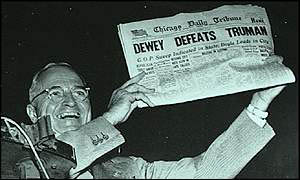
If they were dealing with an entity with lots of money they would likely have been sued for libel or whatever, but since its a community they can take their liberties with their "analysis" and "predictions". When I looked at Truman holding up a copy the Chicago Daily Tribune making fun of the analysts' predictions (in the recent cell phones article), I realized that this is perhaps what we need. And in fact, slashdot could be the ideal vehicle for that. What I mean is, if we had articles laughing at them and ridiculing them and exposing their idiocy every time one of their tech "predictions" went hopelessly wrong, and if some other news outlets picked up on it once in a while, then may be it would knock some sense into these morons' heads.
-
And some pictures...
-
Re:And the Patriot Act is the death of civilizatio
A few years ago people actually got crushed by tanks for demonstrating against the Chinese government?
Actually, there's no evidence to back up what happened to that student, although he may possibly have been killed. -
Re:Is Thomas Friedman a simplistic hack? * YES *RobertFisher: "my original comment applied to his book... not his reporting."
Doesn't matter. Friedman is a working journalist employed by a prominent, mainstream news organization. Bias matters, whether it's in his books, columns, speaking engagements or anywhere else in the public sphere. You can't cherry-pick, then turn around and honestly claim he isn't biased.
You seem to misunderstand the definition of the word "reporting" as it's used by journalists. As they use it, reporting is a process. Whether it's for a news article, a column, an editorial, or even a book, reporting is the process they go through to collect and balance information so they can present it to an audience.
RobertFisher: A good op-ed column should generate thought-provoking discussion and debate, which (as evident from the discussion in this thread and by your own account) is precisely what Friedman's column is doing.
I guess you missed the major points of my post, which I prominently summarized so there would be no confusion. Here they are again:
A good journalist:
- Gets his facts right.
- Gets her facts right.
- Gets facts right.
- Gets good, knowledgeable sources.
- Writes well.
To be unambiguously clear, my previous post is concerned with facts and their accuracy. That is the most fundamental aspect of good journalism, again, whether it's for a news article, a column, an editorial, or even a book. Anyone who doesn't meet this basic standard is, by definition, a hack.
Any hack who makes facile arguments based on gross oversimplifications, errors, inaccuracies or misrepresentations is, by definition, a simplistic hack.
It's a given that a good column should generate discussion and debate. But the assumption is that the debate is about the substantive elements of the column -- arguments based on accurate facts.
The Friedman column in question is riddled with inaccuracies and obtuse claims. The discussion and debate surrounding it is not about the ideas expressed, it's about the lack of factual accuracy and the claims he then makes.
By any measure, it's not a good column.
I also did not say that a news article "should not generate controversy," as you wrote. I completely disagree with you. Some of the best news stories generate controversy. The Watergate scandal is one example. The Kuwait baby incubator story from Gulf War I is another. A lot of award-winning stories are ones that generate controversy.
RobertFisher: "Apparently the people who hand out Pulitzers (who should know a thing or two more about journalism than you) seemed to agree that Friedman's news reporting set the standards for oustanding journalism on two separate occassions."
I think the Pulitzer committee should know more about journalism than any single individual, too. But they've been known to give Pulitzers to people who didn't deserve them. One prominent example was Washington Post reporter Janet Cooke's 1981 Pulitzer for a fabricated story. She returned the prize.
Another example is the 1932 Pulitzer awarded to the New York Times' Walter Duranty for his reports from the Soviet Union. It's now known that he deliberately ignored the Ukrainian famine of the 1930s, and that his reports were outright propaganda for the Communists. Even the New York Times has distanced itself from Duranty's Pulitzer, yet the award remains unrevoked.
There's more on Cooke and Duranty in the Columbia Journalism Review.
Finally, why do you feel the need to resort to ad hominem attacks to build your case? I didn't attack you personally, so why do you impugn m