Slashdot Mirror
Domain: wolfstreet.com
Stories and comments across the archive that link to wolfstreet.com.
Comments · 9
-
Re:Who would have thunk?
From Ford, GM, Chrysler, and AMC pulling a "fuck you plebs, you'll buy what we make" in the 1970's
The Arab Oil Embargo happened rather suddenly. Ford, GM, Chrysler, AMC were making big cars because that's what people wanted. The Japanese were making small cars because that market niche was mostly ignored by the other automakers, making it easier for them to be competitive there. When the oil embargo doubled gas prices, suddenly those small fuel-efficient cars became a much bigger share of the market, and Ford, GM, Chrysler, AMC were caught flat-footed by the market shift.
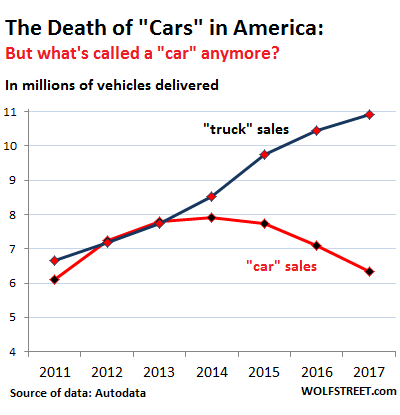
But it should also be noted that the vast majority of buyers wanted, and still want bigger cars. Truck sales are approaching 2x car sales. And the shift away from cars and towards trucks began in the 1970s when the CAFE fuel efficiency standards were introduced, forcing automakers to make smaller more fuel-efficient cars.
It's a myth that automakers had to be forced by regulators to produce the type of cars that people wanted. If anything, regulations are preventing them from producing the vehicles people want, with the looser light truck CAFE standards being a loophole that people are using to buy a bigger less fuel-efficient vehicle. Regulating the supply side like CAFE does isn't very effective because people just find a different way to get what they want. If you want to encourage people to buy more fuel-efficient vehicles, you have to manipulate the demand side - crank up fuel taxes so they want to get a more fuel-efficient vehicle. -
Re:Tax Payer BailoutThe irony is that the argument put forth by both sides about the GM bailout were backwards. When a company goes bankrupt (chapter 7 dissolution, not chapter 11 restructuring), it does not disappear. The parts are sold off to the highest bidder. Things like factories and their workers become part of another car company. The closer the company was to solvency, the more viable its business was and thus a greater percentage of its parts would be absorbed by other companies. But if a company was in a terrible state, then a very small percentage of its parts would be salvaged by other companies.
The left argued that GM needed to be bailed out because it was only barely insolvent, and a small bailout could save x million jobs that would be lost at GM and its suppliers. But if they were just barely insolvent, the the vast majority of those jobs would have survived in other companies after a bankruptcy. And thus no bailout was needed.
The right argued that GM should be allowed to fail because it was an inefficient wreck crippled by union contracts. But if that were true, then bankruptcy would have caused the loss of millions of jobs at GM and its suppliers. And the economy would've had to absorb the shock of its failure (and trickle-down failures among suppliers), in lieu of absorbing the cost of a bailout. So a bailout would probably have been preferable (given the poor state of the economy due to the housing bubble bursting).So now GM is going back to building gas-guzzlers instead of responsible, (more) environmentally friendly smaller cars.
Companies build what people want, while complying with laws. They follow, they don't lead. Light truck sales have risen dramatically in recent years to nearly 2x car sales. If you look at long-term trend, you see that transition picked up pace in the 1980s. Precisely when tougher CAFE standards kicked in. (The sales data actually goes back to the 1940s, but is not available for free online anymore. It shows the ratio of car to truck sales being relatively constant until the 1970s when CAFE began.)
Americans want to buy big cars. CAFE prevented automakers from legally offering big cars for sale. So Americans looked elsewhere and found trucks were still big. So they began buying trucks instead of cars. The fault here lies with the American public, not car companies.
CAFE is a stupid way to encourage fuel efficiency (especially since it's based on MPG, which is the inverse of fuel efficiency, so it puts most of the compliance pressure on the vehicles which are already most efficient).. If you want to increase fuel efficiency, just crank up the fuel tax on gasoline. -
Re:More like $15-$25 vs $500-$1000+
Trump added $2T for tax cuts for the top 1%
Don't forget, in six months the con artist added $1 trillion to the national debt.
But then, he's bragged about being the King of Debt, so this shouldn't be a surprise. -
Re:No real economic impact
So do you think it is right that some companies manage to dodge taxation while some other can not afford the legal fees to enter a tax privileged status ?
I think this: the focus on this above question is leading to over a million deaths every year (in 2000, it was estimated at 875,000); a focus on *other* *problems* eliminates nearly 100% of those deaths.
To me, this circle-jerk is akin to standing around stroking your meat while you watch a teenager get raped, then claiming absolution because you didn't *do* anything. The problem is exactly that: you *should* have done something.
It does not matter how you organize taxation or society in general. If there is a rule, you want it to be followed and not avoided by some technicality that enable ones to dodge the taxation.
The current tax-dodging behavior is a stable system: businesses, rich people, poor people, and the middle-class are all trying to minimize their tax burdens. As the system stands now, appreciable increases in tax avoidance among the rich and big businesses are NOT CAPABLE OF BREAKING A SYSTEM WHICH 100% TOTALLY ELIMINATES POVERTY.
Not. Capable.
That means I can implement this system, end homelessness, end hunger, get 29% more money into the hands of single mothers, get 27% more money into the hands of families, get 48% more money into the hands of single-adult minimum-wage households, REDUCE BUSINESS TAXES TO 35% (currently 40%), eliminate 6.2% of payroll taxes, and IT STILL WORKS (just barely) if businesses find a way to avoid paying 100% of the income taxes they're paying now. If they offshore 100% of their taxes, it's a little rougher, but it still actually works.
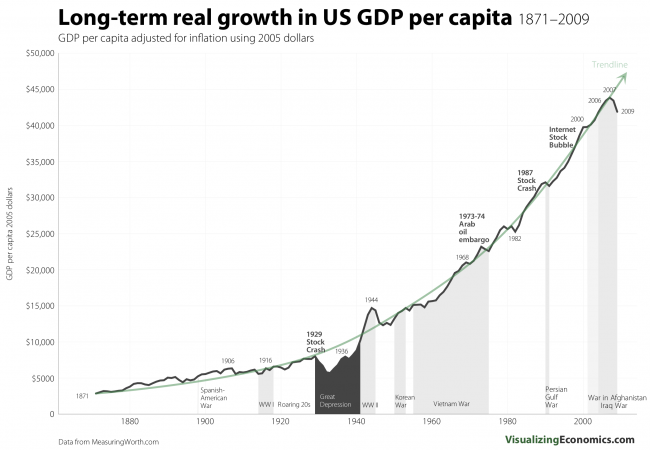
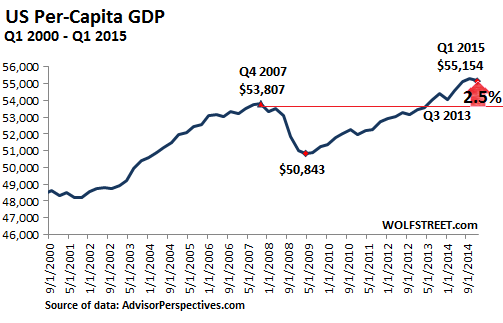
The other upshot is wealth increases with technical progress, meaning 17% of the income represents (a lot) more buying power 10 years from now than it does today; and population can't outgrow that increase, and doesn't (we've recovered from the most recent dip). The purchasing-power parity or GDP-per-capita here shows that, per population, there is more money. In other words: taking any fixed percentage of all the income and dividing it among all the people gives each of those people enough money to buy more stuff year after year.
In practice, it took about 35% (or more?) taxes to implement the system I describe in 1950--which would have collapsed the economy if you'd attempted it. In 2013, the systems this obsoletes cost 17.2% of the income, and the new system costs 17%, so it's actually cheaper, thus viable (you don't disrupt the economy by switching over, if you transition carefully).
All of that means the "it would be rough" part quickly becomes "it would not matter at all." By 2028, it's possible to not tax the businesses for the Dividend at all and have the system behave as it would if implemented today; by 2039, the United States revenue position would be identical to today's if the businesses paid 0 tax.
By contrast, the upper 10% of PERSONAL INCOMES makes up 48% of ALL INCOME in the United States. I want to use a progressive tax system to hold high-income earners's taxes stable while steadily lowering the taxes on the lower- and middle-classes as the income gap widens; however, at some point, we are going to want to start pulling those top-tier taxes down a little. You want to attract rich people with big personal incomes to stay here in the U.S. and pay U.S. income taxes, not offshore their personal wealth by becoming citizens of another country.
France charges around 40% to high-income earners; the United States has a 30% overall income tax rate, and shouldn't charge more than 4/3 that to the upper-income earners (i.e. 40%), *and* will have trouble dialing that down unless we get our Federal spending down to lower levels. As a long-
-
Re:Logistics vs Environmentalism
The 2009 recession saw the biggest ever fleet sitting idle off the coast of Singapore. There were a huge number of contract disputes as shipyards tried to force their clients to pay for the ships they were already building, and keep their sub-contractors busy. Today many shipyards are still facing bankruptcy or folding. There is still a massive oversupply of shipbuilding, as well as an oversupply of ships.
Sending all the niggers back to Africa would fix that. That would keep them busy for years! Just think of all the jobs it would create. Obama could use that fact alone to sell it to the public! Oh, wait...
-
Re:Logistics vs Environmentalism
The 2009 recession saw the biggest ever fleet sitting idle off the coast of Singapore. There were a huge number of contract disputes as shipyards tried to force their clients to pay for the ships they were already building, and keep their sub-contractors busy. Today many shipyards are still facing bankruptcy or folding. There is still a massive oversupply of shipbuilding, as well as an oversupply of ships.
-
Re:risk appetite and risk tolerance are subjective
You might want to adopt early to immediately assess the risk, to understand the nature of operations.
We call those pilots, and they're done on a small scale and considered a sub-optimal cost paid to gain organizational knowledge so as to improve the strategic decisions made later.
You might to add the additional cost of an early transition because the transition can give you an edge (in terms of quality or quantity) against competitors.
Adopting a young technology early in its viability lifetime tends to put you in a position where you have to absorb a lot of cost and hold out for a long-term ROI; and then, when your competitor invests in the same technology 2-3 years later, their absolute minimum prices to break even are lower than yours, and you can't drop you prices to meet theirs without filing Chapter 11 (you don't have to Chapter 7 if you can continue business operations if you can restructure your debt well enough to keep operating). You are now behind, and you are doomed to be behind for the next decade or so.
A not-so-perfect analogy of swallowing upfront costs as a strategic move is Amazon selling its Kindle Fire line of products at a lost.
That's a *FALSE* analogy. Razor-and-blade or loss-leader model sells two separate goods as a combined good: the razor is sold at a loss, and the consumer will *necessarily* buy the blades continuously as a consumable, thus the amortized profit on the blades makes up for the loss on the razor. That's different from making an up-front investment which should provide lower operating costs: loss-leaders are a revenue strategy, while business process management focuses on production cost strategies.
It is at this point that we need to stop looking at this purely from a private business or economics point of view, and look at this as a matter of social/national policy.
I'm actually functioning on my own economic theories because I needed a theory specifically designed for policy development. It's what I do.
the possibility of adopting some form of basic income
Citizen's Dividend is the most optimum model. We can represent public-aid welfare costs as 55% of the total Federal income taxes collected; merge OASDI with the tax brackets, cut each tax bracket by that proportion, lay down a 17% flat tax along side, and then adjust them to smooth the total curve. That essentially locks the Dividend to a proportion of the GDP per capita, which necessarily grows continuously and doesn't fluctuate down too badly even in the worst recessions. That means as we get wealthier, the poorest of poor become wealthier in exactly the same proportion; and so long as the fluctuation doesn't take that Dividend payment down below the viability point (which becomes less likely over time), it can't fail as a safety net. At a point, a recession which breaks the Dividend would necessarily break the economy as a whole--no welfare system survives that.
have a national policy for the continuing education of our workforce - including moving focus away from 4-year college education and into vocational/adult training.
I do not agree with the state-supported workforce development model. It is a handout to businesses at the expense of individuals; it removes small risks from businesses and converts them to *enormous* risks on individuals; and it wastes a lot of labor time providing worthless job training (because we over-supply job markets and wind up with unemployed people who instead could have been trained in something else, thus the
-
The "Great Recovery" Has An Upside!
There's a few hundred engines parked & idle east of Tucson waiting for something to do.
-
Re:Then demanding decryption will not be "reasonab