Slashdot Mirror
Domain: adirondack-park.net
Stories and comments across the archive that link to adirondack-park.net.
Comments · 18
-
Re:Lahars
Mt. St. Helens does not have a nice crater, in the Crater Lake sense. The Mt. St. Helens crater is open on the north side, so everything could just flow right out (see this picture from the south side of the rim). The crater is full of snow as well (which is hard to tell from that picture, because the snow is covered in ash), which would contribute to lahars. I also believe there are still glaciers on Mt. St. Helens, but obviously not of the number and size present on Rainier (which is visible in the above picture behind Spirit Lake; Mt. Adams [yet another volcano] is visible to the far right).
-
Re:A wonderful place to visitUhhh... are you kidding?
I was there last summer, 23 years since the 1980 eruption, and the power with which that thing erupted is still evident all over the area.
For instance:
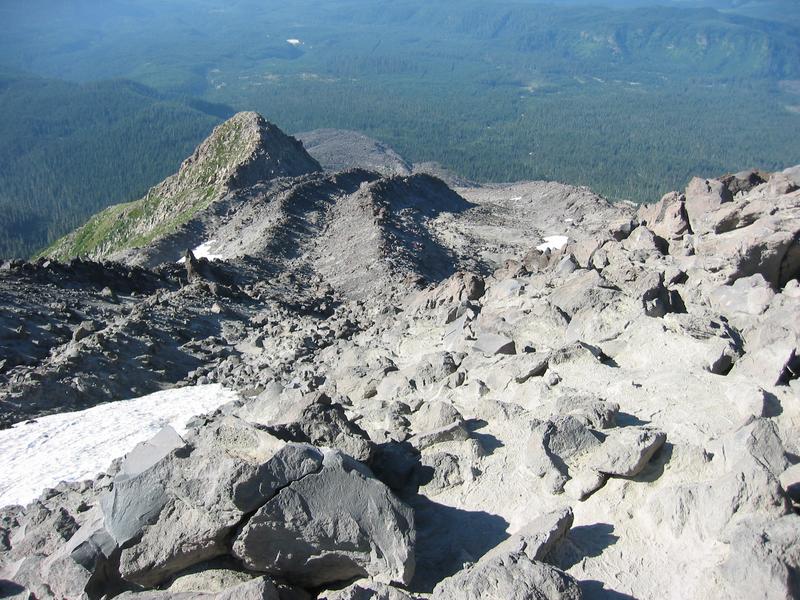
- A picture from high on the flank of the mountain looking back down one of the lava flows from the 1980 eruption. Notice the green patch on the hill to the left, which was missed by the lava flow.
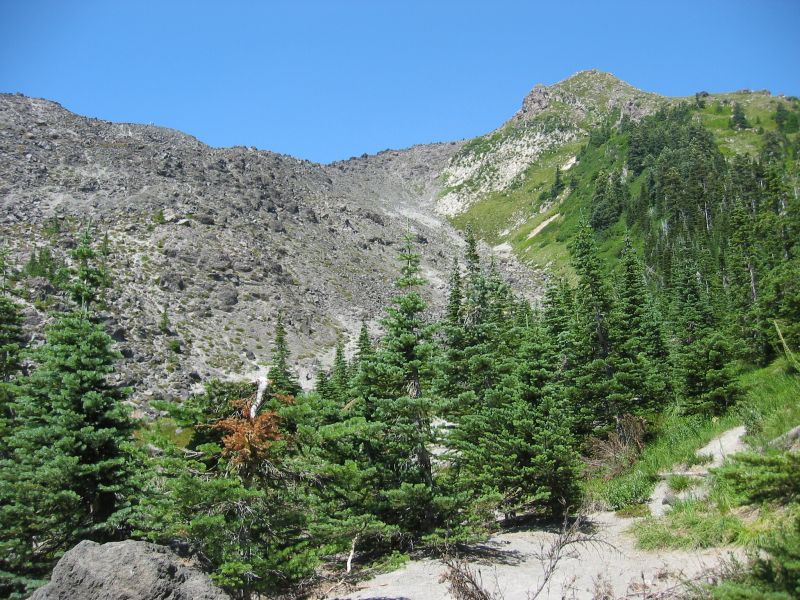
- Looking at the same spot, this time from below. You can really see the effects of that hill here -- it diverted the lava, and everything behind it is green, while everything else was destroyed.
- A panorama from the rim of the mountain, looking down into the crater. This should give you an idea of how big a crater the eruption left. The top of the mountain was simply blown away. Even while we were there, every few minutes we could here rock tumbling down into the crater, some of them huge boulders. The sides of the caldera still aren't stable, 23 years after the fact.
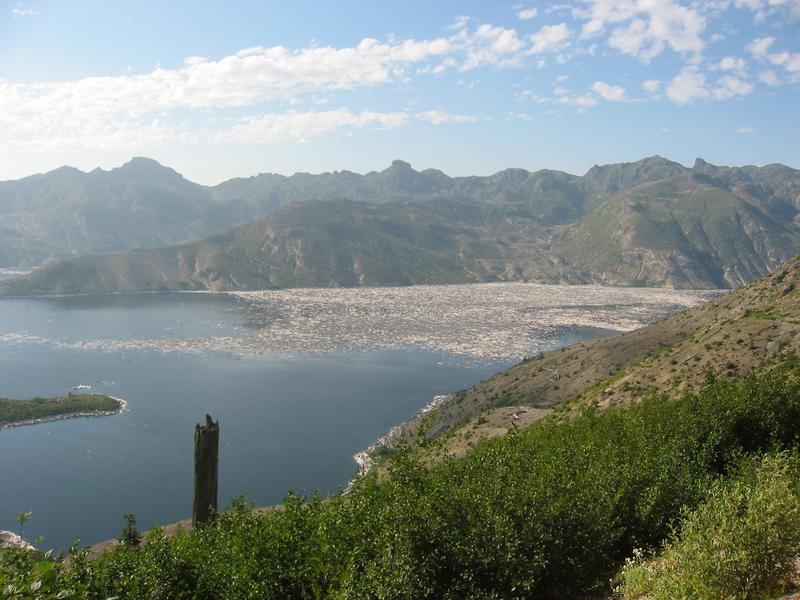
- Spirit Lake. All that gray stuff you see are trees. Thousands of them. They were all killed in 1980 eruption, and are now just floating on the lake. It's called the "floating forest" of Spirit Lake.
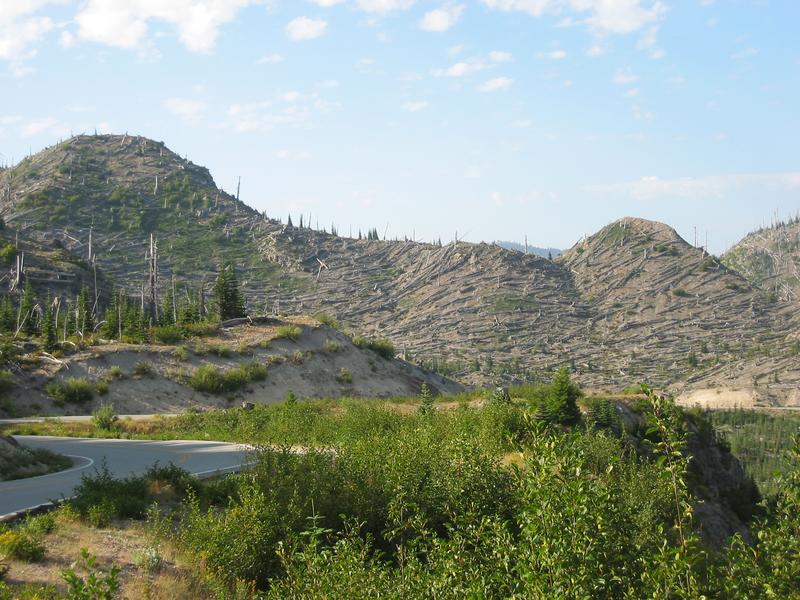
- This is a hillside about TEN MILES from the blast site. See how the trees were just blown right over? And no, this one isn't a clearcut. According to this page, most of the trees within a 600 square kilometer area were blown over by the blast.
-
Re:A wonderful place to visitUhhh... are you kidding?
I was there last summer, 23 years since the 1980 eruption, and the power with which that thing erupted is still evident all over the area.
For instance:
- A picture from high on the flank of the mountain looking back down one of the lava flows from the 1980 eruption. Notice the green patch on the hill to the left, which was missed by the lava flow.
- Looking at the same spot, this time from below. You can really see the effects of that hill here -- it diverted the lava, and everything behind it is green, while everything else was destroyed.
- A panorama from the rim of the mountain, looking down into the crater. This should give you an idea of how big a crater the eruption left. The top of the mountain was simply blown away. Even while we were there, every few minutes we could here rock tumbling down into the crater, some of them huge boulders. The sides of the caldera still aren't stable, 23 years after the fact.
- Spirit Lake. All that gray stuff you see are trees. Thousands of them. They were all killed in 1980 eruption, and are now just floating on the lake. It's called the "floating forest" of Spirit Lake.
- This is a hillside about TEN MILES from the blast site. See how the trees were just blown right over? And no, this one isn't a clearcut. According to this page, most of the trees within a 600 square kilometer area were blown over by the blast.
-
Re:A wonderful place to visitUhhh... are you kidding?
I was there last summer, 23 years since the 1980 eruption, and the power with which that thing erupted is still evident all over the area.
For instance:
- A picture from high on the flank of the mountain looking back down one of the lava flows from the 1980 eruption. Notice the green patch on the hill to the left, which was missed by the lava flow.
- Looking at the same spot, this time from below. You can really see the effects of that hill here -- it diverted the lava, and everything behind it is green, while everything else was destroyed.
- A panorama from the rim of the mountain, looking down into the crater. This should give you an idea of how big a crater the eruption left. The top of the mountain was simply blown away. Even while we were there, every few minutes we could here rock tumbling down into the crater, some of them huge boulders. The sides of the caldera still aren't stable, 23 years after the fact.
- Spirit Lake. All that gray stuff you see are trees. Thousands of them. They were all killed in 1980 eruption, and are now just floating on the lake. It's called the "floating forest" of Spirit Lake.
- This is a hillside about TEN MILES from the blast site. See how the trees were just blown right over? And no, this one isn't a clearcut. According to this page, most of the trees within a 600 square kilometer area were blown over by the blast.
-
Re:A wonderful place to visitUhhh... are you kidding?
I was there last summer, 23 years since the 1980 eruption, and the power with which that thing erupted is still evident all over the area.
For instance:
- A picture from high on the flank of the mountain looking back down one of the lava flows from the 1980 eruption. Notice the green patch on the hill to the left, which was missed by the lava flow.
- Looking at the same spot, this time from below. You can really see the effects of that hill here -- it diverted the lava, and everything behind it is green, while everything else was destroyed.
- A panorama from the rim of the mountain, looking down into the crater. This should give you an idea of how big a crater the eruption left. The top of the mountain was simply blown away. Even while we were there, every few minutes we could here rock tumbling down into the crater, some of them huge boulders. The sides of the caldera still aren't stable, 23 years after the fact.
- Spirit Lake. All that gray stuff you see are trees. Thousands of them. They were all killed in 1980 eruption, and are now just floating on the lake. It's called the "floating forest" of Spirit Lake.
- This is a hillside about TEN MILES from the blast site. See how the trees were just blown right over? And no, this one isn't a clearcut. According to this page, most of the trees within a 600 square kilometer area were blown over by the blast.
-
Re:A wonderful place to visitUhhh... are you kidding?
I was there last summer, 23 years since the 1980 eruption, and the power with which that thing erupted is still evident all over the area.
For instance:
- A picture from high on the flank of the mountain looking back down one of the lava flows from the 1980 eruption. Notice the green patch on the hill to the left, which was missed by the lava flow.
- Looking at the same spot, this time from below. You can really see the effects of that hill here -- it diverted the lava, and everything behind it is green, while everything else was destroyed.
- A panorama from the rim of the mountain, looking down into the crater. This should give you an idea of how big a crater the eruption left. The top of the mountain was simply blown away. Even while we were there, every few minutes we could here rock tumbling down into the crater, some of them huge boulders. The sides of the caldera still aren't stable, 23 years after the fact.
- Spirit Lake. All that gray stuff you see are trees. Thousands of them. They were all killed in 1980 eruption, and are now just floating on the lake. It's called the "floating forest" of Spirit Lake.
- This is a hillside about TEN MILES from the blast site. See how the trees were just blown right over? And no, this one isn't a clearcut. According to this page, most of the trees within a 600 square kilometer area were blown over by the blast.
-
Re:A wonderful place to visitUhhh... are you kidding?
I was there last summer, 23 years since the 1980 eruption, and the power with which that thing erupted is still evident all over the area.
For instance:
- A picture from high on the flank of the mountain looking back down one of the lava flows from the 1980 eruption. Notice the green patch on the hill to the left, which was missed by the lava flow.
- Looking at the same spot, this time from below. You can really see the effects of that hill here -- it diverted the lava, and everything behind it is green, while everything else was destroyed.
- A panorama from the rim of the mountain, looking down into the crater. This should give you an idea of how big a crater the eruption left. The top of the mountain was simply blown away. Even while we were there, every few minutes we could here rock tumbling down into the crater, some of them huge boulders. The sides of the caldera still aren't stable, 23 years after the fact.
- Spirit Lake. All that gray stuff you see are trees. Thousands of them. They were all killed in 1980 eruption, and are now just floating on the lake. It's called the "floating forest" of Spirit Lake.
- This is a hillside about TEN MILES from the blast site. See how the trees were just blown right over? And no, this one isn't a clearcut. According to this page, most of the trees within a 600 square kilometer area were blown over by the blast.
-
Re:Why were MP ever such a big deal?
I have a 3 megapixel camera, and I've gotten pictures from it blown up to as large as 16x20. In fact, I have 2 of them on the wall of the room I'm sitting in right now. If I look at them from 6 inches away, I can tell there isn't as much detail as I would get from film. But when I'm sitting 6 feet away as I am right now (and 99% of the time), you could never tell the difference. Same with the dozen 11x14s I have around my apartment.
In fact, when I brought the prints to a store to get them dry mounted and I told them they were digital, the response was "THESE are DIGITAL?" The fact that the enlargements were done with a photographic process vs. a printing process certainly helps. The 4x6 prints I get look just as good as anything I've gotten from film, but, as another poster stated, you can't get that kind of quality from your $99 inkjet.
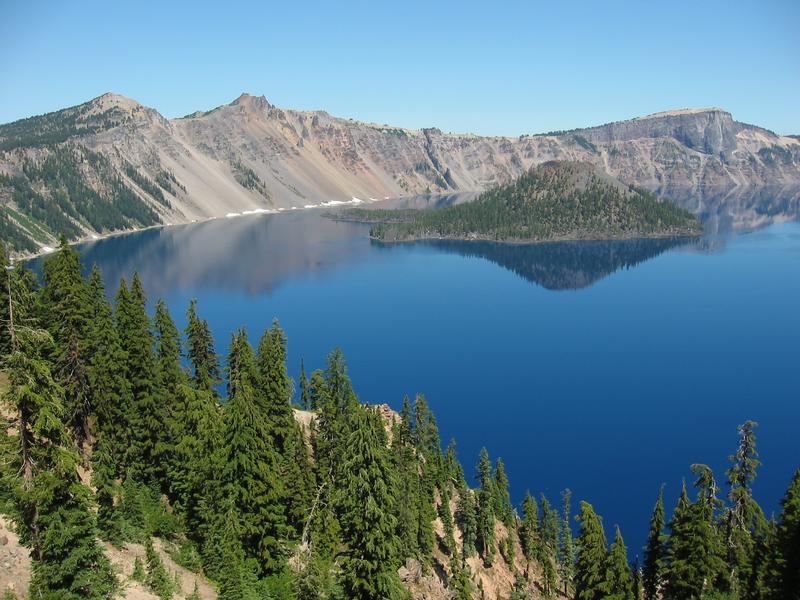
Check out http://www.adirondack-park.net/trip2003/ if you want to see the pictures I've gotten blown up (and a lot of others); they're all from a 13,000-mile trip around the U.S. last summer. The ones I've gotten at 16x20 are Bryce Canyon, Crater Lake, the mountain next to Mt. Dana in Yosemite N.P., and the Grand Tetons. -
Re:Why were MP ever such a big deal?
I have a 3 megapixel camera, and I've gotten pictures from it blown up to as large as 16x20. In fact, I have 2 of them on the wall of the room I'm sitting in right now. If I look at them from 6 inches away, I can tell there isn't as much detail as I would get from film. But when I'm sitting 6 feet away as I am right now (and 99% of the time), you could never tell the difference. Same with the dozen 11x14s I have around my apartment.
In fact, when I brought the prints to a store to get them dry mounted and I told them they were digital, the response was "THESE are DIGITAL?" The fact that the enlargements were done with a photographic process vs. a printing process certainly helps. The 4x6 prints I get look just as good as anything I've gotten from film, but, as another poster stated, you can't get that kind of quality from your $99 inkjet.
Check out http://www.adirondack-park.net/trip2003/ if you want to see the pictures I've gotten blown up (and a lot of others); they're all from a 13,000-mile trip around the U.S. last summer. The ones I've gotten at 16x20 are Bryce Canyon, Crater Lake, the mountain next to Mt. Dana in Yosemite N.P., and the Grand Tetons. -
Re:Why were MP ever such a big deal?
I have a 3 megapixel camera, and I've gotten pictures from it blown up to as large as 16x20. In fact, I have 2 of them on the wall of the room I'm sitting in right now. If I look at them from 6 inches away, I can tell there isn't as much detail as I would get from film. But when I'm sitting 6 feet away as I am right now (and 99% of the time), you could never tell the difference. Same with the dozen 11x14s I have around my apartment.
In fact, when I brought the prints to a store to get them dry mounted and I told them they were digital, the response was "THESE are DIGITAL?" The fact that the enlargements were done with a photographic process vs. a printing process certainly helps. The 4x6 prints I get look just as good as anything I've gotten from film, but, as another poster stated, you can't get that kind of quality from your $99 inkjet.
Check out http://www.adirondack-park.net/trip2003/ if you want to see the pictures I've gotten blown up (and a lot of others); they're all from a 13,000-mile trip around the U.S. last summer. The ones I've gotten at 16x20 are Bryce Canyon, Crater Lake, the mountain next to Mt. Dana in Yosemite N.P., and the Grand Tetons. -
Re:Why were MP ever such a big deal?
I have a 3 megapixel camera, and I've gotten pictures from it blown up to as large as 16x20. In fact, I have 2 of them on the wall of the room I'm sitting in right now. If I look at them from 6 inches away, I can tell there isn't as much detail as I would get from film. But when I'm sitting 6 feet away as I am right now (and 99% of the time), you could never tell the difference. Same with the dozen 11x14s I have around my apartment.
In fact, when I brought the prints to a store to get them dry mounted and I told them they were digital, the response was "THESE are DIGITAL?" The fact that the enlargements were done with a photographic process vs. a printing process certainly helps. The 4x6 prints I get look just as good as anything I've gotten from film, but, as another poster stated, you can't get that kind of quality from your $99 inkjet.
Check out http://www.adirondack-park.net/trip2003/ if you want to see the pictures I've gotten blown up (and a lot of others); they're all from a 13,000-mile trip around the U.S. last summer. The ones I've gotten at 16x20 are Bryce Canyon, Crater Lake, the mountain next to Mt. Dana in Yosemite N.P., and the Grand Tetons. -
Re:Why were MP ever such a big deal?
I have a 3 megapixel camera, and I've gotten pictures from it blown up to as large as 16x20. In fact, I have 2 of them on the wall of the room I'm sitting in right now. If I look at them from 6 inches away, I can tell there isn't as much detail as I would get from film. But when I'm sitting 6 feet away as I am right now (and 99% of the time), you could never tell the difference. Same with the dozen 11x14s I have around my apartment.
In fact, when I brought the prints to a store to get them dry mounted and I told them they were digital, the response was "THESE are DIGITAL?" The fact that the enlargements were done with a photographic process vs. a printing process certainly helps. The 4x6 prints I get look just as good as anything I've gotten from film, but, as another poster stated, you can't get that kind of quality from your $99 inkjet.
Check out http://www.adirondack-park.net/trip2003/ if you want to see the pictures I've gotten blown up (and a lot of others); they're all from a 13,000-mile trip around the U.S. last summer. The ones I've gotten at 16x20 are Bryce Canyon, Crater Lake, the mountain next to Mt. Dana in Yosemite N.P., and the Grand Tetons. -
Re:Lost?
You haven't checked the technology lately if you think you have to carry your weight in batteries. My GPS will (and does) run 10 hours on a set of batteries...Most of the time while hiking, the GPS is stowed not using batteries.
10 hours is fine if you're out for a day. But if you're out for several days (as I often am), and are hiking all day (as I often am), and using the thing constantly, then that's a lot of batteries you're going through. My original point with regards to this was that (as you said) the GPS should not be used constantly. But if it's not being used constantly, then you have to know how to use some alternate means of direction-finding, such as a compass. The GPS is not a 100% replacement for knowledge of how to use a compass.
I print my maps from the National Geographic topographic maps with the GPS grid on the map, so yes those numbers do mean something on my map.
My point was that without a map, those numbers mean absolutely nothing. Obviously with a map you can pinpoint your location (I've found UTM coords to be much better for this than lat/long, since I typically use USGS 7.5' maps with the UTM overlay). The reason I was trying to make that point was in response to the orginal's posters statement that knowing which way north is is useless, but with a GPS, he knows exactly where he is, which isn't necessarily true.
try Geocaching with a compass instead of a GPS.
I'm familiar with geocaching, and will never do it. I live near the largest wilderness area east of the Mississippi, and the only forests in the nation to have constitutional protection, and I'm not about to leave a tupperware container full of crap lying around in the woods. What ever happened to "if you carry it in, carry it out" or "leave no trace"? When I've hiked a dozen miles into the backcountry to a nice secluded lake, nothing ruins the wilderness feeling more than a blatant sign of mankind's disregard. Call me idealistic, but I'm just not a big fan of encouraging people to leave junk out in the woods. -
Re:In other words
The courts are not interfering with your right to link to ANYTHING. Putting up a link (as in an tag) to anywhere, no matter if it's linked deeply into a site or not, saying "click here to see this image" is not declared illegal by this decision. In the text of the decision, what the defendant did was incorporated the linked image into their OWN page. As in, It wasn't as if the thumbnail link went DIRECTLY to the image on the other server, where anyone with a clue could look at their location bar and say "oh lookie there, I'm at this other site now!" The thumbnail link went to ANOTHER one of the defandant's pages, which had the image in-lined, in the defendant's own context. As the decision says, displaying the image out of the creator's context violates the creator's exclusive right to publicly display his work. And as for my personal opinion on the matter, I have a webpage with lots of pictures on the Adirondack Mountains (shameless plug: www.adirondack-park.net), and if one day I was surfing the net and found someone doing this with one of my pictures, I'd be pissed.
-
TROLL! Alan is THE expert at everything!
First of all, I didn't see that what he wrote constituted an attack on Alan. He merely acknowledged that Alan, as a major kernel developer, would know what he was talking about when he says that money is influencing kernel development more and more.
Second, what do you mean, What did you do for Linux today? I'm sorry, but not everyone in the Linux community is a programmer. Obviously they're not capable of helping the community in the way that you require. Is it not good enough for these people to help spread awareness and use of the operating system? I have several images at the bottom of my webpage [www.adirondack-park.net] that tell visitors that my site is running Linux and Apache. Who knows, maybe a few people have clicked the links and have themselves gone on to install Linux. Everyone on my floor at college knows about the "guy down the hall with the 100-day uptime." And a lot of people, after rebooting their Windows 9x machines several times a day, install Linux just for the stability. Does this count to you as helping the community? I hope so. So before you go flaming somebody just because they're not a programmer, remember, everyone has their role.
---
Greg Smith
ipfwadm@adirondack-park.net
http://www.adirondack-park.net/ -
TROLL! Alan is THE expert at everything!
First of all, I didn't see that what he wrote constituted an attack on Alan. He merely acknowledged that Alan, as a major kernel developer, would know what he was talking about when he says that money is influencing kernel development more and more.
Second, what do you mean, What did you do for Linux today? I'm sorry, but not everyone in the Linux community is a programmer. Obviously they're not capable of helping the community in the way that you require. Is it not good enough for these people to help spread awareness and use of the operating system? I have several images at the bottom of my webpage [www.adirondack-park.net] that tell visitors that my site is running Linux and Apache. Who knows, maybe a few people have clicked the links and have themselves gone on to install Linux. Everyone on my floor at college knows about the "guy down the hall with the 100-day uptime." And a lot of people, after rebooting their Windows 9x machines several times a day, install Linux just for the stability. Does this count to you as helping the community? I hope so. So before you go flaming somebody just because they're not a programmer, remember, everyone has their role.
---
Greg Smith
ipfwadm@adirondack-park.net
http://www.adirondack-park.net/ -
TROLL! Alan is THE expert at everything!
First of all, I didn't see that what he wrote constituted an attack on Alan. He merely acknowledged that Alan, as a major kernel developer, would know what he was talking about when he says that money is influencing kernel development more and more.
Second, what do you mean, What did you do for Linux today? I'm sorry, but not everyone in the Linux community is a programmer. Obviously they're not capable of helping the community in the way that you require. Is it not good enough for these people to help spread awareness and use of the operating system? I have several images at the bottom of my webpage [www.adirondack-park.net] that tell visitors that my site is running Linux and Apache. Who knows, maybe a few people have clicked the links and have themselves gone on to install Linux. Everyone on my floor at college knows about the "guy down the hall with the 100-day uptime." And a lot of people, after rebooting their Windows 9x machines several times a day, install Linux just for the stability. Does this count to you as helping the community? I hope so. So before you go flaming somebody just because they're not a programmer, remember, everyone has their role.
---
Greg Smith
ipfwadm@adirondack-park.net
http://www.adirondack-park.net/ -
another mirror
Here's another mirror:
http://lonewolf.rh.rit.edu/prequel
---
Greg Smith
ipfwadm@adirondack-park.net
http://www.adirondack-park.net