Slashdot Mirror
Domain: atsb.gov.au
Stories and comments across the archive that link to atsb.gov.au.
Stories · 5
-
New MH370 Analysis Again Suggests Plane Came Down Outside Search Area (theregister.co.uk)
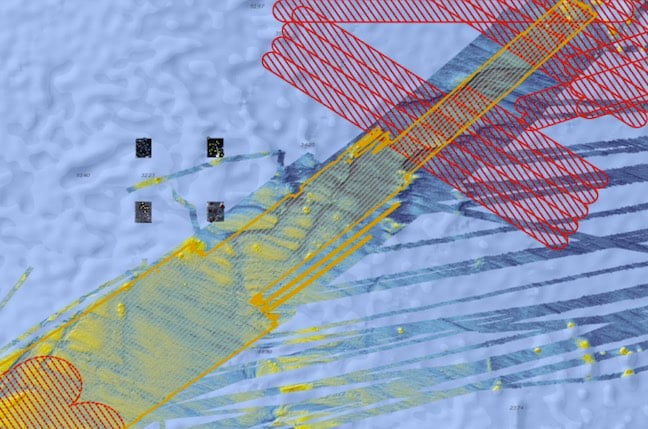
An anonymous reader shares a report: New analysis of images thought to depict wreckage from missing Malaysian Airlines flight MH 370 suggest the Boeing 777 came down to the north of the area searched during efforts to find the plane. A new document [PDF] released yesterday by Geoscience Australia (GA) detailed analysis of four images captured by the PLEIADES 1A Earth-imaging satellite on March 23rd, 2014, not long after the March 8th disappearance of the plane. The images were provided to GA by the French Ministry of Defence. The images depict an area to the north and east of the area searched by underwater survey, and in-between areas where search and rescue operations were conducted in the wake of the plane's disappearance. The image displays the areas covered by underwater survey in yellow and the search and rescue zones in red. Extensive manual analysis of the images -- there was not enough data to use machine learning -- yielded a dozen objects that researchers were happy to classify as "probably not natural." Several of those objects were clustered in the northern parts of the areas depicted in the photos. The document is at pains to point out that it is not possible to identify the objects as airplane debris. The new analysis referred back to drift pattern analysis made on debris known to have come from MH370 and released in December 2016. That analysis suggested the search area be extended by 25,000km2. More detailed drift analysis released in April 2017 also called for a new search to the north, as did a July talk by scientists from Australia's Commonwealth Scientific and Industrial Research Organisation. -
737 'Tailstrike' Caused By Typo On a Tablet (arstechnica.com)
An anonymous reader writes: In August of last year, a Boeing 737 operated by Qantas experienced a tailstrike while taking off — the thrust wasn't great enough for the tail to clear the runway, so it clipped the ground. The investigation into the incident (PDF) has finally been completed, and it found the cause of the accident: the co-pilot accidentally entered the wrong plane weight data into the iPad used to make calculations about the takeoff thrust. "First, when working out the plane's takeoff weight on a notepad, the captain forgot to carry the "1," resulting in an erroneous weight of 66,400kg rather than 76,400kg. Second, the co-pilot made a "transposition error" when carrying out the same calculation on the Qantas on-board performance tool (OPT)—an iPad app for calculating takeoff speed, amongst other things. "Transposition error" is an investigatory euphemism for "he accidentally hit 6 on the keyboard rather than 7." This caused the problem: "For a weight of 76,400kg and temperature of 35C, the engine thrust should've been set at 93.1 percent with a takeoff speed of 157 knots; instead, due to the errors, the thrust was set to 88.4 percent and takeoff speed was 146 knots." -
Botched Repair Likely Cause of Combusting iPhone After Flight
aesoteric writes "The combustion of an Apple iPhone 4 after a regional flight in Australia was likely caused by a botched repair of the handset by an unauthorized repairer, according to air safety investigators in the U.S. and Australia. A small metal screw had been misplaced in the battery bay of the handset. The screw punctured the battery casing and caused an internal short circuit, making the iPhone emit dense smoke (PDF)." -
Software Bug Caused Qantas Airbus A330 To Nose-Dive
pdcull writes "According to Stuff.co.nz, the Australian Transport Safety Board found that a software bug was responsible for a Qantas Airbus A330 nose-diving twice while at cruising altitude, injuring 12 people seriously and causing 39 to be taken to the hospital. The event, which happened three years ago, was found to be caused by an airspeed sensor malfunction, linked to a bug in an algorithm which 'translated the sensors' data into actions, where the flight control computer could put the plane into a nosedive using bad data from just one sensor.' A software update was installed in November 2009, and the ATSB concluded that 'as a result of this redesign, passengers, crew and operators can be confident that the same type of accident will not reoccur.' I can't help wondering just how a piece of code, which presumably didn't test its input data for validity before acting on it, could become part of a modern jet's onboard software suite?" -
Gliding Into the Stratosphere
iAlex writes "Apparently flying around the world in a balloon isn't enough for Steve Fossett. Currently he is attempting to exceed the sailplane altitude record of 49,000 feet. The intention is to fly a two seat glider into the stratosphere on a mountain wave while wearing a pressure suit. Later on the intention is to exceed 100,000 feet in a pressurized glider. There is also a Wired article." Here's a nutshell description of the plan and a primer on mountain waves.