Slashdot Mirror
Domain: chicagoboyz.net
Stories and comments across the archive that link to chicagoboyz.net.
Comments · 10
-
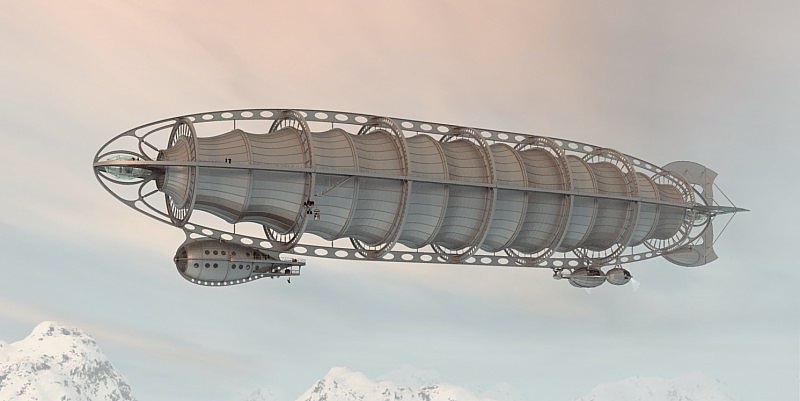
Re:Use Vacuum instead of Helium
Here's a concept photo, though I can't say how detached it is from physics.
-
Re:Hilarious
-
Re:The dangers of stupid taxes
Which their warehouse has property taxes, the employees pay income tax on, also the fed-ex and ups charges include fuel costs and taxes.
The fuel costs and taxes are insufficient to cover the cost of the damage done by shipping. On average a semi-tractor with a reefer unit will get about 6-7 mpg, which is a third to a quarter (say) of the mileage of an auto, yet it does more than three or four times the damage that the car would do; The relative damaging effect of an axle is considered to be approximately proportional to the fourth power of the load. In other words, a 40 ton truck can easily cause as much damage to a typical road as 60,000 one-ton cars. Yet they pay only a few times as much in fuel taxes (since that is tied to fuel consumption) and only a few times as much in registration fees. There are several orders of magnitude unaccounted for here. Where do you propose the difference should come from? The pockets of those who live in the same tax region?
-
Nature Article is Not "Peer Reviewed"
Nature is a journal that publishes "peer reviewed" articles. However the article linked in the OP is not peer reviewed. It is clearly marked as an "Editorial". Furthermore, as it is unsigned, we do not know who wrote it, whether he, she, it, or they know whereof they speak, nor the nature and sources of their biases and viewpoints.
Furthermore: "Peer Review" is not synonymous with audited, verified, nor replicated:
In the end, it is the anonymous and secret nature of the peer review process that marks it as not part of actual science. The entire point of science is that all observers of a phenomenon can agree they see the same thing. Critical to creating that agreement is ruthless transparency. Secrecy is antithetical to the functioning of science, and peer review is a secret process.
Mere peer review should never be the basis of public policy, because when you get right down to it, we have only the word of the journal's editor that a peer review was even performed. There is no formal mechanism to assure that peer reviewed is performed or that the reviewers have the competence to review the paper in question. If the journal's editor is corrupt, then there is no independent mechanism that forces a peer review or ensures its quality. The entire system is based on a presumption of trust and on the discipline of the free market in scientific publishing.
Even if everyone is honest, the inevitable professional biases of peer reviewers can cause them to reject papers that call into question the tenets upon which the reviewer's own work rests. If a scientific field is relatively small and all the peers share the same scientific blind spots or misapprehensions, then peer review can't catch even gross errors that become obvious in hindsight. It is common for peer reviewers to repeatedly reject papers that substantially alter a major tenet of a field. Most of the game-changing papers of the last century were rejected by multiple peer reviewers at multiple journals.
People who try to defend a scientific assertion by claiming it appears in a peer reviewed journal are making the weakest defense possible for the assertion. All it means is that some editor and the reviewers he selected thought it met their minimum quality standards for publishing. Once you raise the specter of political corruption on the part of editors and peer reviewers, it doesn't even mean that.
Replication and proven predictive power, not the opinions of peers, test science assertions. Those iron objective tests separate science from all other disciplines.
-
Re:2nd VT Republic
Here in Ohio, we don't let our grain rot in silos.
No, sir - that would be inefficient, and wasteful.
We just let it rot in huge fucking piles on the ground in front of the silos, like this.
Hope this helps! -
Re:Hysterical Junk Science
I was impressed enough with your comment to read some of what you wrote in the website you reference: http://www.chicagoboyz.net/
A lot of what you wrote is well thought out. However I have to agree with others that some of your conclusions are not logically correct. I would classify one of your errors in logic as "It does not follow" (il non sequitur).
For example.
While it is true that some "super weeds" have aquired immunity to herbicides it does not follow that people have not been breding in robustness to other environmental challenges. Hense some GM plants can literally grow faster and more aggressively. If we step out of the kingdom of the Plantea over into the kingdom of Animalia we find killer bees as an example of an experiment gone wrong. Genetic transferance of genes was the objective. GM modification is just a more efficient technology (which you pointed out).
The fallacies in your logic continue with the attempt to "paint" the picture. For instance instead of suggesting that the artical makes a "supposition" which is probably true - but not fatal - you suggest that they make a "hysterical supposition". Clarification of what you mean by the adjective "hysterical" would be useful... to me it is a red flag that you are trying to trash the artical.
Your point #3 is well taken. Indeed - where is the evidence that supports gene transfer from older technology takes place? Well - there is a lot of evidence and the killer bees example I used above is one. However you are talking about the world of plants. The specific fallacy here is "proving non-existence". Embedded in this is a "bandwagon fallacy" in that this is a subtle appeal to the majority... the assumption being that many people have not observed anything as a "major problem" hense it must be concluded that there isn't one.
Your last paragraph again contains a fallacy. The term "as fast as they claim" illustrates this. It isn't necessary for genes to jump fast in order for there to be a serious problem. The simple fact of the matter is that if they jump at all then we can have a problem because we are introducing genes that never existed in nature and we are doing this at a rate that exceeds the evolutionatry processes by orders of magnitude.
The later fallacy is found in paragraph #4 as well. In part this might be an "excluded middle" fallacy where the tacit assumption is made that if we have genes quickly spreading through the enviroment then there clearly may be a problem and if they spread not at all then there is no problem
In short I liked your post. It is well written. It also illustrates that a well written post modded up to the max may still be full of fallacies.
Today I am a moderator but I didn't mod your post down because I think this serves as a good example that people need to look more critically at things. -
Re:No magic bullet to generate power yet.
Energy problems are not technological problems. Technology is a McGuffin:
The McGuffin Delusion arises when someone argues that an instance of technology, and not the individual who controls the technology, represents the source of a problem. This delusion shows up in a lot of technology-related political discussions.
That essay really bugged me. I don't agree with the author's premise at all, and found that her remarks on each of the three examples overly simplified the issues to render them almost meaningless. It seems like a cheap trick that one would apply to a complex set of interrelated ideas in order to avoid having to think about their complexity. For example, arguing that people and not guns are the real problem is disingenuous at best. Certainly the real set of problems lies in the intersection between human nature and technology. Sure, guns would present no problem if people weren't hotheaded, impulsive, aggressive beings. But don't try to convince me that a murder of passion is as likely to happen with a knife or a club as it is with a gun.
I don't like the idea of labeling one's concerns with certain artifacts and their use a delusion. These artifacts, be they weapons or drugs or computers, are not simply inert, powerless things that possess no meaning or influence in absense of the individual human who decides to engage with them. Artifacts both support and constrain human behavior and cognition. We do not think or act independently of the physical and social structures around us. The author's argument against the "McGuffin Delusion" assumes that we do.
-
The worst problemThe worst case (and sadly common) is when bad science and bad journalism go hand in hand. The classic case is where a study finds an increased risk of disease X when using chemical Y. The change was from 1 in a million to 2 in a million... data noise. But the grant seekers^H^H^H^H^H^H^H^H^H^H^H^H^H researchers publish anyway, and the media breathlessly proclaims "Chemical Y causes a 100% increase in disease X!"
This happens over and over again. You hear it a lot on the news capsules they do on the radio (and a lot of people hear). Any group with who knows what agenda can issue a press release and the media just parrots it.
Another recent case is the report by The Lancet that US troops have killed 100,000 civilians. This number is being reported everywhere as a recorded facts, as if there's a book somewhere with every name dutifully recorded. The Antibushites use it as if it were an article of faith and an unimpeachable fact, despite that every other estimate made everywhere else is an order or two of magnitude lower.
If you download the actual report, however, you see it's just complete bullshit. It was a statistical analysis, extrapolated from 63 (yes, sixty three, and a biased sample of 63 at that) death certificates, and the 95% confidence interval, even with their data massaging, ranges from 8000 to 192,000.
From the report itself:
"We obtained January, 2003, population estimates for each of Iraq's 18 Governorates from the Ministry of Health. No attempt was made to adjust these numbers for recent displacement or immigration."Translation: our data has no connection with reality at all! In engineering, we call that a "wild ass guess" or, at other times, a "proposal."
Here's further anaylsis: http://www.chicagoboyz.net/archives/002543.html
So, yeah, it sucks when journalists can't report real science well, but that's a much lesser problem than journalists reporting poor science poorly. I've seen various activists hold press conferences and spout all sorts of fantasy figures, and not a single reporter questions any of them. No one asks "how were these figures obtained". They just scribble it down and regurgitate it later.
This is just one of many reasons I hope for the ELE asteroid. Humanity's capacity for self delusion is depressing.
-
Re:No magic bullet to generate power yet.
Good Post. Energy problems are not technological problems. Technology is a McGuffin:
The McGuffin Delusion arises when someone argues that an instance of technology, and not the individual who controls the technology, represents the source of a problem. This delusion shows up in a lot of technology-related political discussions.
The real debate is not about the technology. It is about who will be the rider and who will be the horse. Who will have the whip in his hand and who will bear the lash patiently.
It is named after Alfred Hitchock's description of his plot device, a McGuffin, that every character in the story searches for believing it will solve their problem. In Hitchock's movies, however, the real issues are the relationships between people, not the physical objects they seek.
My favorite debaters are the environmental advocates (many related to an assassinated President) who feel very strongly that the United States needs renewable energy sources but not where the machines can be seen from their summer homes. Then there are who insist that all of our energy problems can be solved by conservation. Few of them maintain the lifestyles of Bengali Peasants, and some of them own their own airplanes and multiple mansions.
There is no hope of progress until such time, if ever, as there is a recognition that there are problems that need to be solved, that the solutions to these problems will impose costs and create benefits, that the costs must be shared across society on an equitable basis and in proportion to the benefits received (no free riders) and that the benefits must be shared on an equitable basis and in proportion to the costs paid (capitalism is the only economic system).
There can be no sacred cows or caribou or snail darters. The residents of New York will have to bear the (very slim) risk of an adverse event at Indian Point and probably 2 or 3 other nuclear plants as well, the Kennedys will have to look at a bunch of wind machines and the folks in Nevada will have to deal with Yucca Mountain and die in the knowledge that 10,000 years from now it may leak (the Pyramids are only 4500 years old). These are all costs that we will have to bear and there will be more of them and others. Taxes will go up. Energy prices will go up. Prices of appliances, buildings and automobiles will go up.
Technology will not make the cost problem go away. It cannot. There is no such thing as a free lunch, that is a law of both physics and economics. If we want to have energy we will have to incur and allocate costs for it. That is a political and economic, not a technological, problem. -
Re:Wow.. you memorized the RNC talking points to t
Except of course that 100,000 Iraqi civilians haven't dies due to our liberation of Iraq. The Lancet used notoriously inappropriate sampling for an estimate rather than some kind of actual tally. I know, it's shameful that such an august body would trade its credibility and respectability for cheap political grandstanding. Shameful, but as The Economist has shown, hardly unprecedented.