Slashdot Mirror
Domain: donhopkins.com
Stories and comments across the archive that link to donhopkins.com.
Comments · 180
-
Re:Legendary
You can actually look at the Gosling source code here. It was a library for drawing updates to the screen (with a dynamic programming library), and actually the source code got shared and was being used in a lot of places, not just emacs. That was the main thing Stallman had to rewrite, and when he did, he ended up making it more efficient.
This description understates the EMACS-related achievements of both.
RMS was the primary creator of the original EMACS, written in TECO macros and PDP-10 assembly (though note that EMACS itself was an extension of earlier work by others, and Guy Steele also contributed a huge amount to EMACS). Gosling reimplemented EMACS in C, including his own extension language called Mocklisp, which looked like LISP, but lacked key features of LISP, like lists.
The most clever part of Gosling EMACS (Gosmacs) was the drawing library, but calling it a "drawing library" kind of trivializes it. At the time, "drawing" meant updating a display terminal's character display. Because data connections to terminals were often slow, it was important to do this in the most efficient way possible. So this was an instance of the classic "string to string" problem, which is taking string A (what's already in the terminal display buffer) and string B (what needs to be displayed) and find the most efficient way of changing A into B with a sequence of cursor movement and write commands. These days, of course, it would never occur to us even to care; we're just rewrite the entire display 120 times per second. Oh, and because computers were slow, finding the efficient edit sequence had to be done efficiently. Gosling's implementation was clever, and novel, and very complex, so much so that he put a skull and crossbones in the comment and warned people against changing it because they probably didn't understand it, even after they thought they did. That displays some hubris, but it was an impressive piece of work. Go read the code and see if you understand it.
RMS wrote GNU EMACS. He did use Gosmacs as a starting point but he replaced Mocklisp with a proper(ish) LISP interpreter, which required essentially a full rewrite of the editor, though some bits of Gosmacs stuck around, including the clever drawing functions. Gosling sold Gosmacs to Unipress, who commercialized it and attempted to stop all other use of the code they had purchased, which caused Stallman to rewrite the remaining bits of Gosmacs, including the scary display routines. In the process he made the already very-efficient code more efficient as well as simpler and cleaner.
The experience with Unipress, along with similar experiences with Symbolics, led RMS to invent the notion of copyleft as a sort of legal judo to prevent copyright being used to restrict access to GNU software.
-
Re:Legendary
You can actually look at the Gosling source code here. It was a library for drawing updates to the screen (with a dynamic programming library), and actually the source code got shared and was being used in a lot of places, not just emacs. That was the main thing Stallman had to rewrite, and when he did, he ended up making it more efficient.
-
Micropolis
(aka Sim City[tm]) would be a nice addition. The source is available under the GPL, but a bit of Googling didn't find me any pre-compiled Windows version. Anyone know where one might be ? There are certainly deb packages for Debian/Ubuntu around.
-
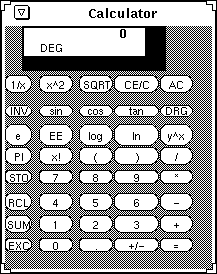
XCalc.gif : State of the art X-Windows calculator
Uglier than goatse.cx:
http://www.donhopkins.com/home/catalog/unix-haters/x-windows/XCalc.gifThat's what used to happen when you resize XCalc several times in a row. No wonder they call it the X-Stoolkit!
-Don
-
Re:NeWS was good and bad
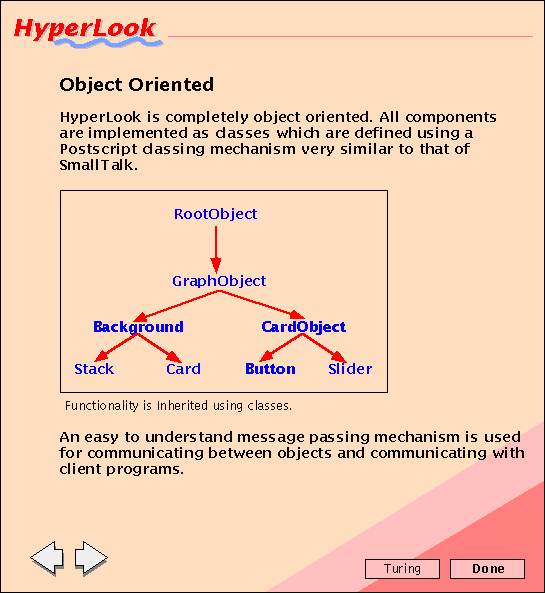
PostScript is more like Lisp with three stacks: operand, return and dictionary (scope). And as you point out, it's easy to use the dictionary stack to implement an object oriented programming system, like Smalltalk.
Owen Densmore wrote "object.ps" in about two pages of code, which implemented Smalltalk's object oriented programming model in PostScript.
It was eventually extended to support multiple inheritance and other features, and used to implement several user interface toolkits and many applications, utilities and components.
-Don
-
GoodNeWS / HyperNeWS / HyperLook
In 1989, Arthur van Hoff developed a HyperCard-inspired system called GoodNeWS, written in PostScript, for James Gosling's NeWS window system. Arthur later went on to work at Sun on Java, wrote the Java compiler in Java, the AWT gui toolkit, and the HotJava web browser.
GoodNeWS was later renamed HyperNeWS, then later HyperLook. I went to Glasgow to work with Arthur at the Turing Institute, to develop HyperLook into a product, and I used it to develop the first Unix version of SimCity.
HyperLook was really wonderful, because it combined the strengths of HyperCard with the superior graphics and programmability of PostScript, and the network communication model currently known as AJAX.
I've written down some Ideas for Sugar development environment from HyperLook SimCity, with lots of links and illustrations, relating it with many different programming languages, user interface systems and applications that have inspired me.
Here is just the stuff about HyperLook -- the article goes on further to discuss and compare other technologies I think are interesting and applicable to the OLPC's constructionist education project.
Ideas for Sugar development environment from HyperLook SimCity
I love the ideas behind Smalltalk, EToys and HyperCard, and would like to combine them with ideas from visual programming languages like Robot Odyssey, KidSim, Klik-and-Play, SimAntics, Body Electric/Bounce, Max/MSP/Jitter, etc.
Here are some ideas about HyperLook and other systems, that could be applied to Sugar:
HyperLook was a PostScript-based user interface development environment for the NeWS window system, which Arthur van Hoff created at the Turing Institute in Glasgow. http://www.donhopkins.com/home/catalog/hyperlook/
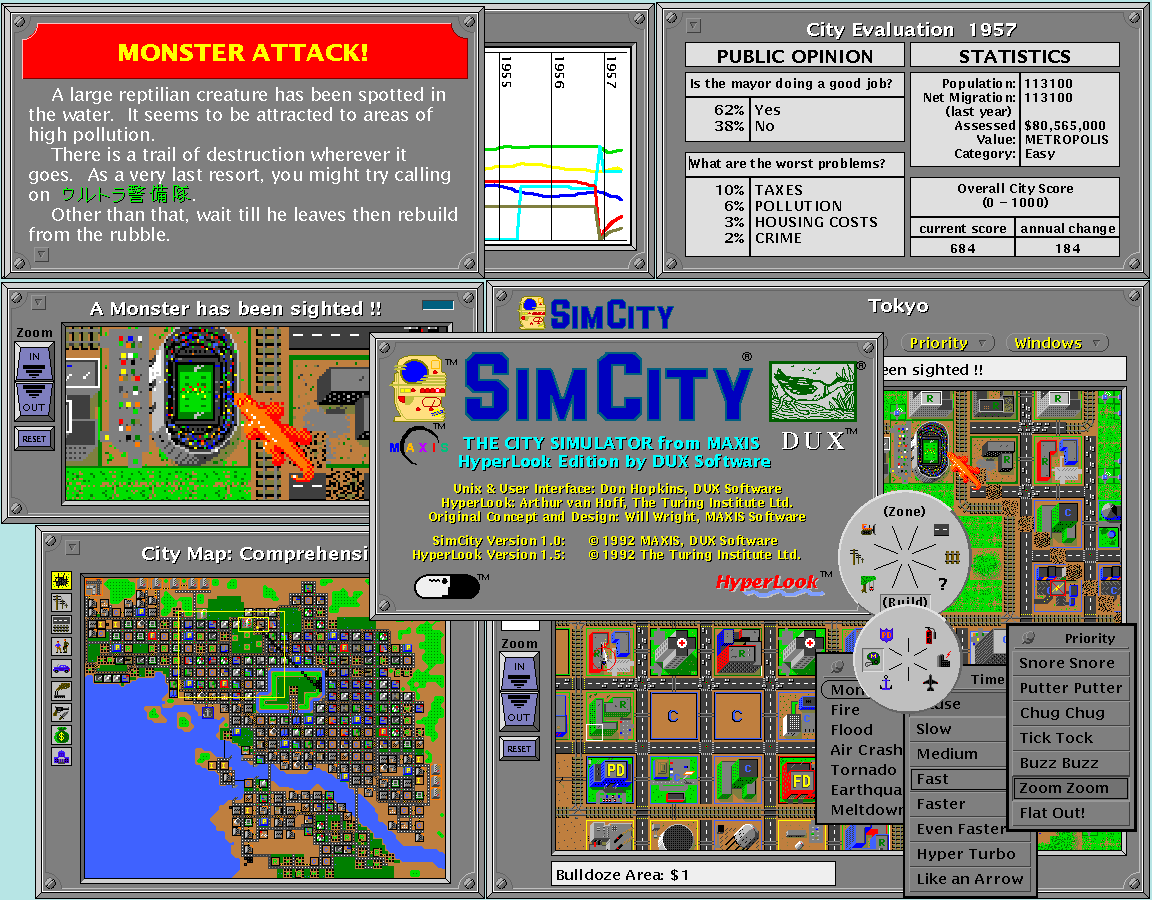
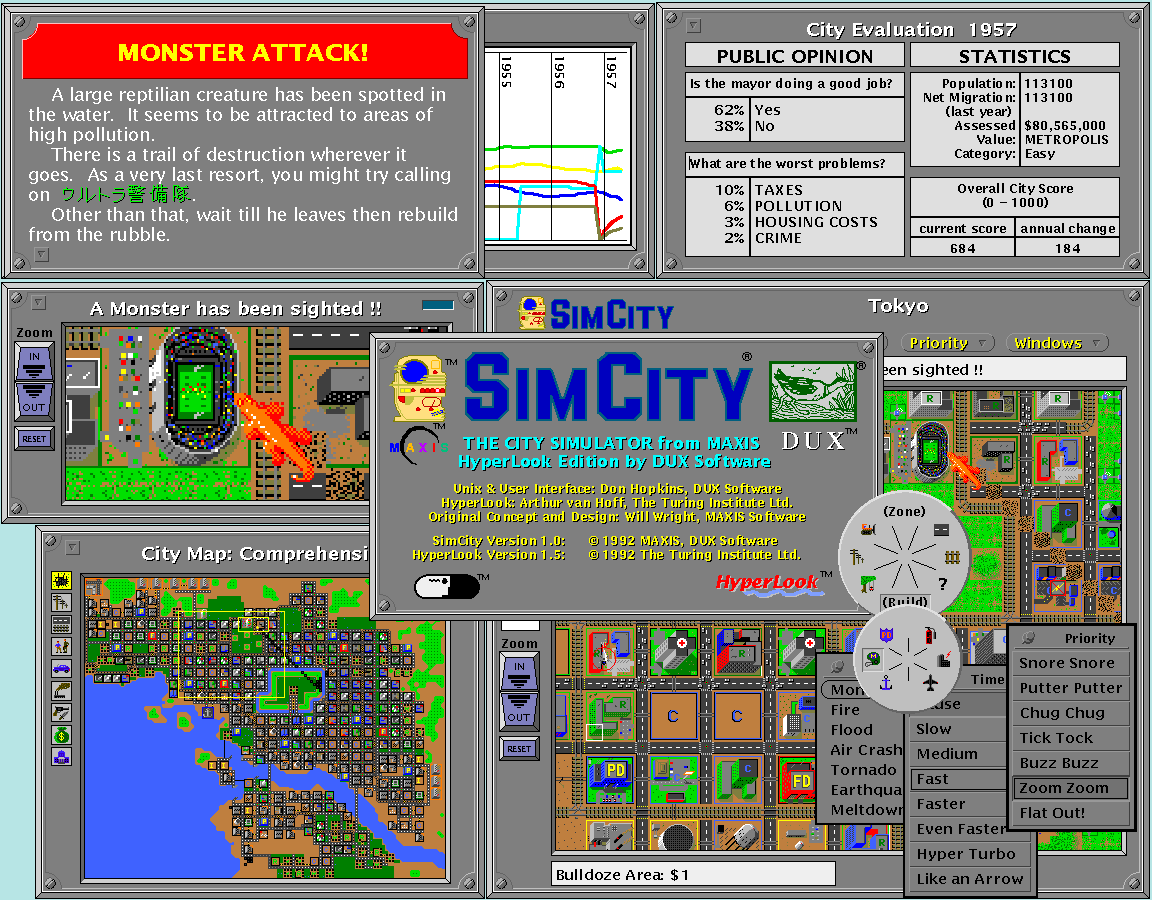
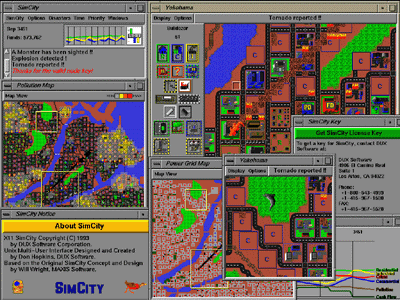
I helped develop HyperLook into a commercial product, with a editable user interface development environment, as well as a redistributable non-editable runtime, and I used it to port SimCity to Unix, and develop other components and applications . http://www.donhopkins.com/home/catalog/hyperlook/ http://www.donhopkins.com/home/catalog/hyperlook/HyperLook-SimCity.gif
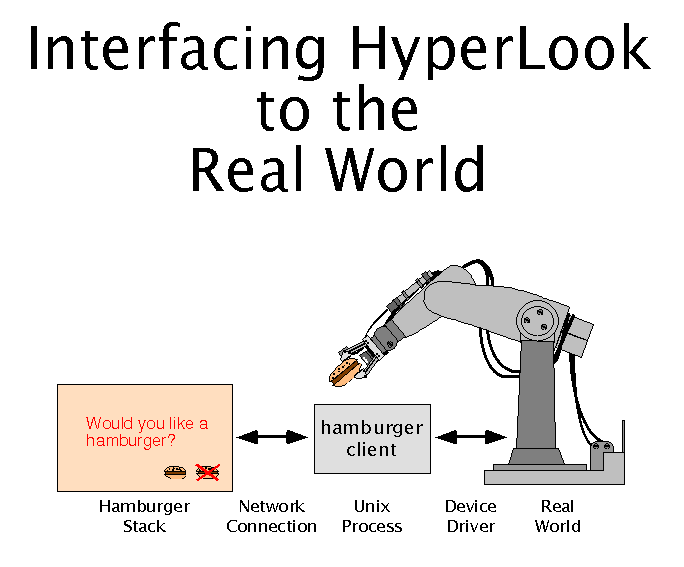
HyperLook was inspired by HyperCard, but it additionally provided a client/server programming model, and more powerful graphics and scripting based on NeWS's object oriented dialect of PostScript. http://www.donhopkins.com/home/catalog/hyperlook/TalkInterfacing.gif
The NeWS window system was like AJAX, but with:
1) PostScript code instead of JavaScript code
2) PostScript graphics instead of DHTML graphics, and
3) PostScript data instead of XML data.It had a unified programming/graphics/data/networking model based on NeWS's extended multi-threaded object-oriented dialect of PostScript, instead of a hodge-podge of accidental technologies. (Although I will be the first to admit the X11/NeWS merge was quite a hodge-podge and huge-kludge!) NeWS had an object system based on the simple dynamic ideas of Smalltalk, implemented with the PostScript dictionary stack, supporting multiple inheritance and runtime modification of objects and classes. http://www.donhopkins.com/home/catalog/hyperlook/HyperLookInfo10.g
-
GoodNeWS / HyperNeWS / HyperLook
In 1989, Arthur van Hoff developed a HyperCard-inspired system called GoodNeWS, written in PostScript, for James Gosling's NeWS window system. Arthur later went on to work at Sun on Java, wrote the Java compiler in Java, the AWT gui toolkit, and the HotJava web browser.
GoodNeWS was later renamed HyperNeWS, then later HyperLook. I went to Glasgow to work with Arthur at the Turing Institute, to develop HyperLook into a product, and I used it to develop the first Unix version of SimCity.
HyperLook was really wonderful, because it combined the strengths of HyperCard with the superior graphics and programmability of PostScript, and the network communication model currently known as AJAX.
I've written down some Ideas for Sugar development environment from HyperLook SimCity, with lots of links and illustrations, relating it with many different programming languages, user interface systems and applications that have inspired me.
Here is just the stuff about HyperLook -- the article goes on further to discuss and compare other technologies I think are interesting and applicable to the OLPC's constructionist education project.
Ideas for Sugar development environment from HyperLook SimCity
I love the ideas behind Smalltalk, EToys and HyperCard, and would like to combine them with ideas from visual programming languages like Robot Odyssey, KidSim, Klik-and-Play, SimAntics, Body Electric/Bounce, Max/MSP/Jitter, etc.
Here are some ideas about HyperLook and other systems, that could be applied to Sugar:
HyperLook was a PostScript-based user interface development environment for the NeWS window system, which Arthur van Hoff created at the Turing Institute in Glasgow. http://www.donhopkins.com/home/catalog/hyperlook/
I helped develop HyperLook into a commercial product, with a editable user interface development environment, as well as a redistributable non-editable runtime, and I used it to port SimCity to Unix, and develop other components and applications . http://www.donhopkins.com/home/catalog/hyperlook/ http://www.donhopkins.com/home/catalog/hyperlook/HyperLook-SimCity.gif
HyperLook was inspired by HyperCard, but it additionally provided a client/server programming model, and more powerful graphics and scripting based on NeWS's object oriented dialect of PostScript. http://www.donhopkins.com/home/catalog/hyperlook/TalkInterfacing.gif
The NeWS window system was like AJAX, but with:
1) PostScript code instead of JavaScript code
2) PostScript graphics instead of DHTML graphics, and
3) PostScript data instead of XML data.It had a unified programming/graphics/data/networking model based on NeWS's extended multi-threaded object-oriented dialect of PostScript, instead of a hodge-podge of accidental technologies. (Although I will be the first to admit the X11/NeWS merge was quite a hodge-podge and huge-kludge!) NeWS had an object system based on the simple dynamic ideas of Smalltalk, implemented with the PostScript dictionary stack, supporting multiple inheritance and runtime modification of objects and classes. http://www.donhopkins.com/home/catalog/hyperlook/HyperLookInfo10.g
-
GoodNeWS / HyperNeWS / HyperLook
In 1989, Arthur van Hoff developed a HyperCard-inspired system called GoodNeWS, written in PostScript, for James Gosling's NeWS window system. Arthur later went on to work at Sun on Java, wrote the Java compiler in Java, the AWT gui toolkit, and the HotJava web browser.
GoodNeWS was later renamed HyperNeWS, then later HyperLook. I went to Glasgow to work with Arthur at the Turing Institute, to develop HyperLook into a product, and I used it to develop the first Unix version of SimCity.
HyperLook was really wonderful, because it combined the strengths of HyperCard with the superior graphics and programmability of PostScript, and the network communication model currently known as AJAX.
I've written down some Ideas for Sugar development environment from HyperLook SimCity, with lots of links and illustrations, relating it with many different programming languages, user interface systems and applications that have inspired me.
Here is just the stuff about HyperLook -- the article goes on further to discuss and compare other technologies I think are interesting and applicable to the OLPC's constructionist education project.
Ideas for Sugar development environment from HyperLook SimCity
I love the ideas behind Smalltalk, EToys and HyperCard, and would like to combine them with ideas from visual programming languages like Robot Odyssey, KidSim, Klik-and-Play, SimAntics, Body Electric/Bounce, Max/MSP/Jitter, etc.
Here are some ideas about HyperLook and other systems, that could be applied to Sugar:
HyperLook was a PostScript-based user interface development environment for the NeWS window system, which Arthur van Hoff created at the Turing Institute in Glasgow. http://www.donhopkins.com/home/catalog/hyperlook/
I helped develop HyperLook into a commercial product, with a editable user interface development environment, as well as a redistributable non-editable runtime, and I used it to port SimCity to Unix, and develop other components and applications . http://www.donhopkins.com/home/catalog/hyperlook/ http://www.donhopkins.com/home/catalog/hyperlook/HyperLook-SimCity.gif
HyperLook was inspired by HyperCard, but it additionally provided a client/server programming model, and more powerful graphics and scripting based on NeWS's object oriented dialect of PostScript. http://www.donhopkins.com/home/catalog/hyperlook/TalkInterfacing.gif
The NeWS window system was like AJAX, but with:
1) PostScript code instead of JavaScript code
2) PostScript graphics instead of DHTML graphics, and
3) PostScript data instead of XML data.It had a unified programming/graphics/data/networking model based on NeWS's extended multi-threaded object-oriented dialect of PostScript, instead of a hodge-podge of accidental technologies. (Although I will be the first to admit the X11/NeWS merge was quite a hodge-podge and huge-kludge!) NeWS had an object system based on the simple dynamic ideas of Smalltalk, implemented with the PostScript dictionary stack, supporting multiple inheritance and runtime modification of objects and classes. http://www.donhopkins.com/home/catalog/hyperlook/HyperLookInfo10.g
-
GoodNeWS / HyperNeWS / HyperLook
In 1989, Arthur van Hoff developed a HyperCard-inspired system called GoodNeWS, written in PostScript, for James Gosling's NeWS window system. Arthur later went on to work at Sun on Java, wrote the Java compiler in Java, the AWT gui toolkit, and the HotJava web browser.
GoodNeWS was later renamed HyperNeWS, then later HyperLook. I went to Glasgow to work with Arthur at the Turing Institute, to develop HyperLook into a product, and I used it to develop the first Unix version of SimCity.
HyperLook was really wonderful, because it combined the strengths of HyperCard with the superior graphics and programmability of PostScript, and the network communication model currently known as AJAX.
I've written down some Ideas for Sugar development environment from HyperLook SimCity, with lots of links and illustrations, relating it with many different programming languages, user interface systems and applications that have inspired me.
Here is just the stuff about HyperLook -- the article goes on further to discuss and compare other technologies I think are interesting and applicable to the OLPC's constructionist education project.
Ideas for Sugar development environment from HyperLook SimCity
I love the ideas behind Smalltalk, EToys and HyperCard, and would like to combine them with ideas from visual programming languages like Robot Odyssey, KidSim, Klik-and-Play, SimAntics, Body Electric/Bounce, Max/MSP/Jitter, etc.
Here are some ideas about HyperLook and other systems, that could be applied to Sugar:
HyperLook was a PostScript-based user interface development environment for the NeWS window system, which Arthur van Hoff created at the Turing Institute in Glasgow. http://www.donhopkins.com/home/catalog/hyperlook/
I helped develop HyperLook into a commercial product, with a editable user interface development environment, as well as a redistributable non-editable runtime, and I used it to port SimCity to Unix, and develop other components and applications . http://www.donhopkins.com/home/catalog/hyperlook/ http://www.donhopkins.com/home/catalog/hyperlook/HyperLook-SimCity.gif
HyperLook was inspired by HyperCard, but it additionally provided a client/server programming model, and more powerful graphics and scripting based on NeWS's object oriented dialect of PostScript. http://www.donhopkins.com/home/catalog/hyperlook/TalkInterfacing.gif
The NeWS window system was like AJAX, but with:
1) PostScript code instead of JavaScript code
2) PostScript graphics instead of DHTML graphics, and
3) PostScript data instead of XML data.It had a unified programming/graphics/data/networking model based on NeWS's extended multi-threaded object-oriented dialect of PostScript, instead of a hodge-podge of accidental technologies. (Although I will be the first to admit the X11/NeWS merge was quite a hodge-podge and huge-kludge!) NeWS had an object system based on the simple dynamic ideas of Smalltalk, implemented with the PostScript dictionary stack, supporting multiple inheritance and runtime modification of objects and classes. http://www.donhopkins.com/home/catalog/hyperlook/HyperLookInfo10.g
-
GoodNeWS / HyperNeWS / HyperLook
In 1989, Arthur van Hoff developed a HyperCard-inspired system called GoodNeWS, written in PostScript, for James Gosling's NeWS window system. Arthur later went on to work at Sun on Java, wrote the Java compiler in Java, the AWT gui toolkit, and the HotJava web browser.
GoodNeWS was later renamed HyperNeWS, then later HyperLook. I went to Glasgow to work with Arthur at the Turing Institute, to develop HyperLook into a product, and I used it to develop the first Unix version of SimCity.
HyperLook was really wonderful, because it combined the strengths of HyperCard with the superior graphics and programmability of PostScript, and the network communication model currently known as AJAX.
I've written down some Ideas for Sugar development environment from HyperLook SimCity, with lots of links and illustrations, relating it with many different programming languages, user interface systems and applications that have inspired me.
Here is just the stuff about HyperLook -- the article goes on further to discuss and compare other technologies I think are interesting and applicable to the OLPC's constructionist education project.
Ideas for Sugar development environment from HyperLook SimCity
I love the ideas behind Smalltalk, EToys and HyperCard, and would like to combine them with ideas from visual programming languages like Robot Odyssey, KidSim, Klik-and-Play, SimAntics, Body Electric/Bounce, Max/MSP/Jitter, etc.
Here are some ideas about HyperLook and other systems, that could be applied to Sugar:
HyperLook was a PostScript-based user interface development environment for the NeWS window system, which Arthur van Hoff created at the Turing Institute in Glasgow. http://www.donhopkins.com/home/catalog/hyperlook/
I helped develop HyperLook into a commercial product, with a editable user interface development environment, as well as a redistributable non-editable runtime, and I used it to port SimCity to Unix, and develop other components and applications . http://www.donhopkins.com/home/catalog/hyperlook/ http://www.donhopkins.com/home/catalog/hyperlook/HyperLook-SimCity.gif
HyperLook was inspired by HyperCard, but it additionally provided a client/server programming model, and more powerful graphics and scripting based on NeWS's object oriented dialect of PostScript. http://www.donhopkins.com/home/catalog/hyperlook/TalkInterfacing.gif
The NeWS window system was like AJAX, but with:
1) PostScript code instead of JavaScript code
2) PostScript graphics instead of DHTML graphics, and
3) PostScript data instead of XML data.It had a unified programming/graphics/data/networking model based on NeWS's extended multi-threaded object-oriented dialect of PostScript, instead of a hodge-podge of accidental technologies. (Although I will be the first to admit the X11/NeWS merge was quite a hodge-podge and huge-kludge!) NeWS had an object system based on the simple dynamic ideas of Smalltalk, implemented with the PostScript dictionary stack, supporting multiple inheritance and runtime modification of objects and classes. http://www.donhopkins.com/home/catalog/hyperlook/HyperLookInfo10.g
-
Re:Whence RMS?RMS definitely counts as a language designer.
From this page:EMACS is unusual among screen editors because it is powerful and extensible. EMACS contains its own programming facility which I used to provide commands that other editors don't have, and which users use to provide any commands they want which I didn't give them. Users can make libraries of commands and share them, and when they do a good job, the libraries become part of the standard EMACS system just by being included in the manual.
-
GPL Micropolis (SimCity) on Google Code
The GPL version of SimCity Classic from Maxis is called "Micropolis", and is available on Google Code.
There's an old version based on TCL/Tk, which runs on the OLPC, Linux, and also on the Mac with X11.
And I'm in the process of rewriting it in C++/Python/GTK/Cairo/Pango, which runs on Windows, Mac OS/X and Linux (including the OLPC of course).
Lots more stuff about it on my web site.
-Don
-
SimCity / Micropolis
The original version of SimCity was recently Open Sourced, more info at http://en.wikipedia.org/wiki/Micropolis_(software) and download. at
http://www.donhopkins.com/home/micropolis/ -
Micropolis (SimCity) for OLPC/Linux/Mac/Windows
I'm working with the OLPC project to develop the open source version of Micropolis (SimCity) for the OLPC, in C++ and Python, and we're looking for students who want to work on it for the Summer of Code.
The source is portable C++ and Python code, and compiles and runs on Linux, Mac and Windows. It uses GTK, Cairo and Pango to draw graphics and text. Here is the Micropolis project home on Google Code, and some development ideas on my web site.
I've been working on the MicropolisCore code in my spare time, and just checked in some changes to support map editing and multiple views. More details are in the news and development plan.
-Don
-
The Soul of The Sims
The Soul of The Sims, by Will Wright
Macintosh HD:XmotiveHarness:src/Motive.c
Tuesday, January 28, 1997 / 9:25 AMThis is the prototype for the soul of The Sims, which Will Wright wrote on January 23, 1997.
I had just started working at the Maxis Core Technology Group on "Project X" aka "Dollhouse", and Will Wright brought this code in one morning, to demonstrate his design for the motives, feedback loop and failure conditions of the simulated people. While going through old papers, I ran across this print-out that I had saved, so I scanned it and cleaned the images up, and got permission from Will to publish it.
This code is a interesting example of game design, programming and prototyping techniques. The Sims code has certainly changed a lot since Will wrote this original prototype code. For example, there is no longer any "stress" motive. And the game doesn't store motives in global variables, of course.
My hope is that this code will give you a glimpse of how Will Wright designs games, and what was going on in his head at the time!
Read The Soul of The Sims code here...
-Don
-
The Soul of The Sims
The Soul of The Sims, by Will Wright
Macintosh HD:XmotiveHarness:src/Motive.c
Tuesday, January 28, 1997 / 9:25 AMThis is the prototype for the soul of The Sims, which Will Wright wrote on January 23, 1997.
I had just started working at the Maxis Core Technology Group on "Project X" aka "Dollhouse", and Will Wright brought this code in one morning, to demonstrate his design for the motives, feedback loop and failure conditions of the simulated people. While going through old papers, I ran across this print-out that I had saved, so I scanned it and cleaned the images up, and got permission from Will to publish it.
This code is a interesting example of game design, programming and prototyping techniques. The Sims code has certainly changed a lot since Will wrote this original prototype code. For example, there is no longer any "stress" motive. And the game doesn't store motives in global variables, of course.
My hope is that this code will give you a glimpse of how Will Wright designs games, and what was going on in his head at the time!
Read The Soul of The Sims code here...
-Don
-
Re:If you read the article...
Because you complained that I already translated it to C++, and said you wanted to rewrite it in Objective C to waste my time and annoy me. Don't let me stop you! How's the rewrite going?
Have you been following the discussion I've been having with Alan Kay?
-Don
-
Re:What the fuck are you talking about?
Of course it's possible to rewrite the simulator in any other language. It's just a question of how much work would it be, and how sure you would be that it did the same thing.
It was comparatively little work to rewrite C code in C++, because that's exactly what C++ was designed to do: take old C code with global variables and functions, and encapsulate it in a class with a well defined interface. Because C++ has the implicit this parameter to each member function, and it's not necessary to explicitly specify this when accessing member variables and methods, you don't have to change C code very much to translate it to C++. A different language with explicit this (or self) would require meticulously changing every line of code, and that would be orders of magnitude more work.
The first step to translating a big pile of C code to another higher level language is understanding and strictly defining what it does. Translating it to C++ is the first step in that process. That gives the code a lot more structure and coherence, without disrupting how it works.
The next step is to clean it up and toss out everything that isn't relevent -- all the old user interface and operating system hacks that no longer are necessary and have nothing to do with the simulator.
Once you have a clean core of code that verifyable works with well defined interfaces and without any irrelavent crap in it, it's much easier to start rewriting it in other languages like Python or Lua. (I would NOT suggest using Perl, though. That is a horrible, dead end language, antithetical to teaching kids how to program.)
Alan Kay and I have been having an interesting discussion about how to rewrite SimCity in much higher level languages than Python and Perl, specifically visual programming languages like eToys, Star Logo, Max/MSP, KidSim (Stagecraft Creator), Bounce (Body Electric), SimAntics, etc, along the lines of Robot Odyssey.
What we want to do is to open up SimCity to the Python scripting language as a first step, and then write a high level visual programming language in Python, easy enough for kids to use, but powerful enough for real programming.
Here are some references:
Ideas for Sugar development environment from HyperLook SimCity
OLPC Visual Programming Languages for Education
Discussion with Alan Kay about Visual Programming
Discussion with Alan Kay about Robot Odyssey
OLPC Visual Programming Language Discussion with Guido van Rossum and Alan Kay
Alan Kay on Programming Languages
The Shape of PSIBER Space: PostScript Interactive Bug Eradication Routines
Kurt Schmucker (inventor of the C++ Barf Bag
Tim Smith at Anglia Polytechnic University in Essex wrote "A review of simulated and micro-world environments"
Brad Myers: Taxonomies of Visual Programming and Program Visualization
-Don
-
Re:What the fuck are you talking about?
Of course it's possible to rewrite the simulator in any other language. It's just a question of how much work would it be, and how sure you would be that it did the same thing.
It was comparatively little work to rewrite C code in C++, because that's exactly what C++ was designed to do: take old C code with global variables and functions, and encapsulate it in a class with a well defined interface. Because C++ has the implicit this parameter to each member function, and it's not necessary to explicitly specify this when accessing member variables and methods, you don't have to change C code very much to translate it to C++. A different language with explicit this (or self) would require meticulously changing every line of code, and that would be orders of magnitude more work.
The first step to translating a big pile of C code to another higher level language is understanding and strictly defining what it does. Translating it to C++ is the first step in that process. That gives the code a lot more structure and coherence, without disrupting how it works.
The next step is to clean it up and toss out everything that isn't relevent -- all the old user interface and operating system hacks that no longer are necessary and have nothing to do with the simulator.
Once you have a clean core of code that verifyable works with well defined interfaces and without any irrelavent crap in it, it's much easier to start rewriting it in other languages like Python or Lua. (I would NOT suggest using Perl, though. That is a horrible, dead end language, antithetical to teaching kids how to program.)
Alan Kay and I have been having an interesting discussion about how to rewrite SimCity in much higher level languages than Python and Perl, specifically visual programming languages like eToys, Star Logo, Max/MSP, KidSim (Stagecraft Creator), Bounce (Body Electric), SimAntics, etc, along the lines of Robot Odyssey.
What we want to do is to open up SimCity to the Python scripting language as a first step, and then write a high level visual programming language in Python, easy enough for kids to use, but powerful enough for real programming.
Here are some references:
Ideas for Sugar development environment from HyperLook SimCity
OLPC Visual Programming Languages for Education
Discussion with Alan Kay about Visual Programming
Discussion with Alan Kay about Robot Odyssey
OLPC Visual Programming Language Discussion with Guido van Rossum and Alan Kay
Alan Kay on Programming Languages
The Shape of PSIBER Space: PostScript Interactive Bug Eradication Routines
Kurt Schmucker (inventor of the C++ Barf Bag
Tim Smith at Anglia Polytechnic University in Essex wrote "A review of simulated and micro-world environments"
Brad Myers: Taxonomies of Visual Programming and Program Visualization
-Don
-
Re:What the fuck are you talking about?
Of course it's possible to rewrite the simulator in any other language. It's just a question of how much work would it be, and how sure you would be that it did the same thing.
It was comparatively little work to rewrite C code in C++, because that's exactly what C++ was designed to do: take old C code with global variables and functions, and encapsulate it in a class with a well defined interface. Because C++ has the implicit this parameter to each member function, and it's not necessary to explicitly specify this when accessing member variables and methods, you don't have to change C code very much to translate it to C++. A different language with explicit this (or self) would require meticulously changing every line of code, and that would be orders of magnitude more work.
The first step to translating a big pile of C code to another higher level language is understanding and strictly defining what it does. Translating it to C++ is the first step in that process. That gives the code a lot more structure and coherence, without disrupting how it works.
The next step is to clean it up and toss out everything that isn't relevent -- all the old user interface and operating system hacks that no longer are necessary and have nothing to do with the simulator.
Once you have a clean core of code that verifyable works with well defined interfaces and without any irrelavent crap in it, it's much easier to start rewriting it in other languages like Python or Lua. (I would NOT suggest using Perl, though. That is a horrible, dead end language, antithetical to teaching kids how to program.)
Alan Kay and I have been having an interesting discussion about how to rewrite SimCity in much higher level languages than Python and Perl, specifically visual programming languages like eToys, Star Logo, Max/MSP, KidSim (Stagecraft Creator), Bounce (Body Electric), SimAntics, etc, along the lines of Robot Odyssey.
What we want to do is to open up SimCity to the Python scripting language as a first step, and then write a high level visual programming language in Python, easy enough for kids to use, but powerful enough for real programming.
Here are some references:
Ideas for Sugar development environment from HyperLook SimCity
OLPC Visual Programming Languages for Education
Discussion with Alan Kay about Visual Programming
Discussion with Alan Kay about Robot Odyssey
OLPC Visual Programming Language Discussion with Guido van Rossum and Alan Kay
Alan Kay on Programming Languages
The Shape of PSIBER Space: PostScript Interactive Bug Eradication Routines
Kurt Schmucker (inventor of the C++ Barf Bag
Tim Smith at Anglia Polytechnic University in Essex wrote "A review of simulated and micro-world environments"
Brad Myers: Taxonomies of Visual Programming and Program Visualization
-Don
-
Re:What the fuck are you talking about?
Of course it's possible to rewrite the simulator in any other language. It's just a question of how much work would it be, and how sure you would be that it did the same thing.
It was comparatively little work to rewrite C code in C++, because that's exactly what C++ was designed to do: take old C code with global variables and functions, and encapsulate it in a class with a well defined interface. Because C++ has the implicit this parameter to each member function, and it's not necessary to explicitly specify this when accessing member variables and methods, you don't have to change C code very much to translate it to C++. A different language with explicit this (or self) would require meticulously changing every line of code, and that would be orders of magnitude more work.
The first step to translating a big pile of C code to another higher level language is understanding and strictly defining what it does. Translating it to C++ is the first step in that process. That gives the code a lot more structure and coherence, without disrupting how it works.
The next step is to clean it up and toss out everything that isn't relevent -- all the old user interface and operating system hacks that no longer are necessary and have nothing to do with the simulator.
Once you have a clean core of code that verifyable works with well defined interfaces and without any irrelavent crap in it, it's much easier to start rewriting it in other languages like Python or Lua. (I would NOT suggest using Perl, though. That is a horrible, dead end language, antithetical to teaching kids how to program.)
Alan Kay and I have been having an interesting discussion about how to rewrite SimCity in much higher level languages than Python and Perl, specifically visual programming languages like eToys, Star Logo, Max/MSP, KidSim (Stagecraft Creator), Bounce (Body Electric), SimAntics, etc, along the lines of Robot Odyssey.
What we want to do is to open up SimCity to the Python scripting language as a first step, and then write a high level visual programming language in Python, easy enough for kids to use, but powerful enough for real programming.
Here are some references:
Ideas for Sugar development environment from HyperLook SimCity
OLPC Visual Programming Languages for Education
Discussion with Alan Kay about Visual Programming
Discussion with Alan Kay about Robot Odyssey
OLPC Visual Programming Language Discussion with Guido van Rossum and Alan Kay
Alan Kay on Programming Languages
The Shape of PSIBER Space: PostScript Interactive Bug Eradication Routines
Kurt Schmucker (inventor of the C++ Barf Bag
Tim Smith at Anglia Polytechnic University in Essex wrote "A review of simulated and micro-world environments"
Brad Myers: Taxonomies of Visual Programming and Program Visualization
-Don
-
Re:What the fuck are you talking about?
Of course it's possible to rewrite the simulator in any other language. It's just a question of how much work would it be, and how sure you would be that it did the same thing.
It was comparatively little work to rewrite C code in C++, because that's exactly what C++ was designed to do: take old C code with global variables and functions, and encapsulate it in a class with a well defined interface. Because C++ has the implicit this parameter to each member function, and it's not necessary to explicitly specify this when accessing member variables and methods, you don't have to change C code very much to translate it to C++. A different language with explicit this (or self) would require meticulously changing every line of code, and that would be orders of magnitude more work.
The first step to translating a big pile of C code to another higher level language is understanding and strictly defining what it does. Translating it to C++ is the first step in that process. That gives the code a lot more structure and coherence, without disrupting how it works.
The next step is to clean it up and toss out everything that isn't relevent -- all the old user interface and operating system hacks that no longer are necessary and have nothing to do with the simulator.
Once you have a clean core of code that verifyable works with well defined interfaces and without any irrelavent crap in it, it's much easier to start rewriting it in other languages like Python or Lua. (I would NOT suggest using Perl, though. That is a horrible, dead end language, antithetical to teaching kids how to program.)
Alan Kay and I have been having an interesting discussion about how to rewrite SimCity in much higher level languages than Python and Perl, specifically visual programming languages like eToys, Star Logo, Max/MSP, KidSim (Stagecraft Creator), Bounce (Body Electric), SimAntics, etc, along the lines of Robot Odyssey.
What we want to do is to open up SimCity to the Python scripting language as a first step, and then write a high level visual programming language in Python, easy enough for kids to use, but powerful enough for real programming.
Here are some references:
Ideas for Sugar development environment from HyperLook SimCity
OLPC Visual Programming Languages for Education
Discussion with Alan Kay about Visual Programming
Discussion with Alan Kay about Robot Odyssey
OLPC Visual Programming Language Discussion with Guido van Rossum and Alan Kay
Alan Kay on Programming Languages
The Shape of PSIBER Space: PostScript Interactive Bug Eradication Routines
Kurt Schmucker (inventor of the C++ Barf Bag
Tim Smith at Anglia Polytechnic University in Essex wrote "A review of simulated and micro-world environments"
Brad Myers: Taxonomies of Visual Programming and Program Visualization
-Don
-
Re:What the fuck are you talking about?
Of course it's possible to rewrite the simulator in any other language. It's just a question of how much work would it be, and how sure you would be that it did the same thing.
It was comparatively little work to rewrite C code in C++, because that's exactly what C++ was designed to do: take old C code with global variables and functions, and encapsulate it in a class with a well defined interface. Because C++ has the implicit this parameter to each member function, and it's not necessary to explicitly specify this when accessing member variables and methods, you don't have to change C code very much to translate it to C++. A different language with explicit this (or self) would require meticulously changing every line of code, and that would be orders of magnitude more work.
The first step to translating a big pile of C code to another higher level language is understanding and strictly defining what it does. Translating it to C++ is the first step in that process. That gives the code a lot more structure and coherence, without disrupting how it works.
The next step is to clean it up and toss out everything that isn't relevent -- all the old user interface and operating system hacks that no longer are necessary and have nothing to do with the simulator.
Once you have a clean core of code that verifyable works with well defined interfaces and without any irrelavent crap in it, it's much easier to start rewriting it in other languages like Python or Lua. (I would NOT suggest using Perl, though. That is a horrible, dead end language, antithetical to teaching kids how to program.)
Alan Kay and I have been having an interesting discussion about how to rewrite SimCity in much higher level languages than Python and Perl, specifically visual programming languages like eToys, Star Logo, Max/MSP, KidSim (Stagecraft Creator), Bounce (Body Electric), SimAntics, etc, along the lines of Robot Odyssey.
What we want to do is to open up SimCity to the Python scripting language as a first step, and then write a high level visual programming language in Python, easy enough for kids to use, but powerful enough for real programming.
Here are some references:
Ideas for Sugar development environment from HyperLook SimCity
OLPC Visual Programming Languages for Education
Discussion with Alan Kay about Visual Programming
Discussion with Alan Kay about Robot Odyssey
OLPC Visual Programming Language Discussion with Guido van Rossum and Alan Kay
Alan Kay on Programming Languages
The Shape of PSIBER Space: PostScript Interactive Bug Eradication Routines
Kurt Schmucker (inventor of the C++ Barf Bag
Tim Smith at Anglia Polytechnic University in Essex wrote "A review of simulated and micro-world environments"
Brad Myers: Taxonomies of Visual Programming and Program Visualization
-Don
-
Re:What the fuck are you talking about?
Of course it's possible to rewrite the simulator in any other language. It's just a question of how much work would it be, and how sure you would be that it did the same thing.
It was comparatively little work to rewrite C code in C++, because that's exactly what C++ was designed to do: take old C code with global variables and functions, and encapsulate it in a class with a well defined interface. Because C++ has the implicit this parameter to each member function, and it's not necessary to explicitly specify this when accessing member variables and methods, you don't have to change C code very much to translate it to C++. A different language with explicit this (or self) would require meticulously changing every line of code, and that would be orders of magnitude more work.
The first step to translating a big pile of C code to another higher level language is understanding and strictly defining what it does. Translating it to C++ is the first step in that process. That gives the code a lot more structure and coherence, without disrupting how it works.
The next step is to clean it up and toss out everything that isn't relevent -- all the old user interface and operating system hacks that no longer are necessary and have nothing to do with the simulator.
Once you have a clean core of code that verifyable works with well defined interfaces and without any irrelavent crap in it, it's much easier to start rewriting it in other languages like Python or Lua. (I would NOT suggest using Perl, though. That is a horrible, dead end language, antithetical to teaching kids how to program.)
Alan Kay and I have been having an interesting discussion about how to rewrite SimCity in much higher level languages than Python and Perl, specifically visual programming languages like eToys, Star Logo, Max/MSP, KidSim (Stagecraft Creator), Bounce (Body Electric), SimAntics, etc, along the lines of Robot Odyssey.
What we want to do is to open up SimCity to the Python scripting language as a first step, and then write a high level visual programming language in Python, easy enough for kids to use, but powerful enough for real programming.
Here are some references:
Ideas for Sugar development environment from HyperLook SimCity
OLPC Visual Programming Languages for Education
Discussion with Alan Kay about Visual Programming
Discussion with Alan Kay about Robot Odyssey
OLPC Visual Programming Language Discussion with Guido van Rossum and Alan Kay
Alan Kay on Programming Languages
The Shape of PSIBER Space: PostScript Interactive Bug Eradication Routines
Kurt Schmucker (inventor of the C++ Barf Bag
Tim Smith at Anglia Polytechnic University in Essex wrote "A review of simulated and micro-world environments"
Brad Myers: Taxonomies of Visual Programming and Program Visualization
-Don
-
Re:What the fuck are you talking about?
Of course it's possible to rewrite the simulator in any other language. It's just a question of how much work would it be, and how sure you would be that it did the same thing.
It was comparatively little work to rewrite C code in C++, because that's exactly what C++ was designed to do: take old C code with global variables and functions, and encapsulate it in a class with a well defined interface. Because C++ has the implicit this parameter to each member function, and it's not necessary to explicitly specify this when accessing member variables and methods, you don't have to change C code very much to translate it to C++. A different language with explicit this (or self) would require meticulously changing every line of code, and that would be orders of magnitude more work.
The first step to translating a big pile of C code to another higher level language is understanding and strictly defining what it does. Translating it to C++ is the first step in that process. That gives the code a lot more structure and coherence, without disrupting how it works.
The next step is to clean it up and toss out everything that isn't relevent -- all the old user interface and operating system hacks that no longer are necessary and have nothing to do with the simulator.
Once you have a clean core of code that verifyable works with well defined interfaces and without any irrelavent crap in it, it's much easier to start rewriting it in other languages like Python or Lua. (I would NOT suggest using Perl, though. That is a horrible, dead end language, antithetical to teaching kids how to program.)
Alan Kay and I have been having an interesting discussion about how to rewrite SimCity in much higher level languages than Python and Perl, specifically visual programming languages like eToys, Star Logo, Max/MSP, KidSim (Stagecraft Creator), Bounce (Body Electric), SimAntics, etc, along the lines of Robot Odyssey.
What we want to do is to open up SimCity to the Python scripting language as a first step, and then write a high level visual programming language in Python, easy enough for kids to use, but powerful enough for real programming.
Here are some references:
Ideas for Sugar development environment from HyperLook SimCity
OLPC Visual Programming Languages for Education
Discussion with Alan Kay about Visual Programming
Discussion with Alan Kay about Robot Odyssey
OLPC Visual Programming Language Discussion with Guido van Rossum and Alan Kay
Alan Kay on Programming Languages
The Shape of PSIBER Space: PostScript Interactive Bug Eradication Routines
Kurt Schmucker (inventor of the C++ Barf Bag
Tim Smith at Anglia Polytechnic University in Essex wrote "A review of simulated and micro-world environments"
Brad Myers: Taxonomies of Visual Programming and Program Visualization
-Don
-
Re:What the fuck are you talking about?
Of course it's possible to rewrite the simulator in any other language. It's just a question of how much work would it be, and how sure you would be that it did the same thing.
It was comparatively little work to rewrite C code in C++, because that's exactly what C++ was designed to do: take old C code with global variables and functions, and encapsulate it in a class with a well defined interface. Because C++ has the implicit this parameter to each member function, and it's not necessary to explicitly specify this when accessing member variables and methods, you don't have to change C code very much to translate it to C++. A different language with explicit this (or self) would require meticulously changing every line of code, and that would be orders of magnitude more work.
The first step to translating a big pile of C code to another higher level language is understanding and strictly defining what it does. Translating it to C++ is the first step in that process. That gives the code a lot more structure and coherence, without disrupting how it works.
The next step is to clean it up and toss out everything that isn't relevent -- all the old user interface and operating system hacks that no longer are necessary and have nothing to do with the simulator.
Once you have a clean core of code that verifyable works with well defined interfaces and without any irrelavent crap in it, it's much easier to start rewriting it in other languages like Python or Lua. (I would NOT suggest using Perl, though. That is a horrible, dead end language, antithetical to teaching kids how to program.)
Alan Kay and I have been having an interesting discussion about how to rewrite SimCity in much higher level languages than Python and Perl, specifically visual programming languages like eToys, Star Logo, Max/MSP, KidSim (Stagecraft Creator), Bounce (Body Electric), SimAntics, etc, along the lines of Robot Odyssey.
What we want to do is to open up SimCity to the Python scripting language as a first step, and then write a high level visual programming language in Python, easy enough for kids to use, but powerful enough for real programming.
Here are some references:
Ideas for Sugar development environment from HyperLook SimCity
OLPC Visual Programming Languages for Education
Discussion with Alan Kay about Visual Programming
Discussion with Alan Kay about Robot Odyssey
OLPC Visual Programming Language Discussion with Guido van Rossum and Alan Kay
Alan Kay on Programming Languages
The Shape of PSIBER Space: PostScript Interactive Bug Eradication Routines
Kurt Schmucker (inventor of the C++ Barf Bag
Tim Smith at Anglia Polytechnic University in Essex wrote "A review of simulated and micro-world environments"
Brad Myers: Taxonomies of Visual Programming and Program Visualization
-Don
-
Re:If you read the article...
I've posted here an on my site why I chose to use C++. Since you're so motivated to waste my time by annoying me by porting Micropolis to another language (and you're really sure it will annoy me), then go right ahead! Get started! What are you waiting for? Stop wasting your time on slashdot! Please report back when you're done, and I will pretend to be annoyed, if that is what truly motivates you.
For inspiration and ideas, you might want to read some of the stuff Alan Kay and I were discussing about opening up and programming SimCity with visual languages, ala Robot Odyssey, on my blog.
-Don
-
Re:Opportunity for a more realistic SimCity...
Other people wanted to use SimCity for the less noble goal of teaching people what to think, instead of just teaching them to think.
Everyone notices the obvious built-in political bias, whatever that is. But everyone sees it from a different perspective, so nobody agrees what its real political agenda actually is. I don't think it's all that important, since SimCity's political agenda pales in comparison to the political agenda in the eye of the beholder.
Some muckety-muck architecture magazine was interviewing Will Wright about SimCity, and they asked him a question something like "which ontological urban paridigm most influenced your design of the simulator, the Exo-Hamiltonian Pattern Language Movement, or the Intra-Urban Deconstructionist Sub-Culture Hypothesis?" He replied, "I just kind of optimized for game play."
-Don
-
Re:No, its worse
To clear up some confusion: The old version of SimCity/Micropolis uses TCL/Tk to implement the user interface. That is the version currently being distributed on the OLPC. The new version is rewritten in C++, and has all the TCL/Tk and user interface stuff ripped out of it. I converted it to C++ for the reasons I described in other posts (quoted above), so it is now modular and can be run through SWIG to integrate it with many different scripting languages.
But the core simulator is independent of Python, and runs extremely fast (the TCL/Tk version can run more than a year a second on the relatively slow OLPC). The OLPC uses Python as its standard system wide programming language, and all of its important libraries (like Cairo and Pango) are integrated as Python modules. So it makes the most sense to use SWIG to cast Micropolis into a Python module, first. Of course SWIG also makes it easy to integrate it with any other scripting language.
If it's not immediately obvious to you (or even if it is), why anyone would want to integrate SimCity with a scripting language, instead of just writing the whole thing in C, then you should read some of the discussions I've been having with Alan Key about that topic, on my blog.
-Don
-
It's stated in the article
It actually states the history of where it's come from in one of the linked articles (emphasis added):
- The original version of SimCity was developed by Maxis on the C64, and ported to various platforms, including the Macintosh. Maxis licensed the Macintosh SimCity source code to DUX software, to port to Unix.
- DUX Software contracted me (Don Hopkins) to port SimCity to Unix, and I developed "SimCity HyperLook Edition", while working at the Turing Institute on HyperLook with Arthur van Hoff. The user interface was written in PostScript, which ran on the NeWS window system on Sun workstations, and it supported multiple zoomable views, pie menus, annotating and printing maps, and many user interface improvements.
- After Sun canceled NeWS, DUX Software contracted me to rewrite the HyperLook user interface in TCL/Tk for X11, and I developed a multi-player networked user interface using the X11 protocol. The TCL/Tk version of SimCity has been ported to various Unix and non-Unix platforms, including SunOS, Solaris, Irix, HP/UX, OSF/1, Quarterdeck Desqview/X, NDC X Terminals, Warp, and Linux. The contract to sell SimCity for Unix expired after ten years, so the TCL/Tk version was no longer commercially available.
- OLPC SimCity is based on the TCL/Tk version of SimCity. SimCity is a trademark of Electronic Arts. Don Hopkins adapted SimCity to the OLPC, thanks to the support of John Gilmore. OLPC SimCity will be shipped with the OLPC, and it has been run through EA's quality assurance process and reviewed for integrity. EA reserves the right to review and approve any version of the game distributed under the name SimCity.
So it looks as if it's some kind of mutated version of SimCity Classic which dates back to the C64 version.
-
If you read the article...
This is actually clearly explained in one of the linked articles:
In the long term, Micropolis can be recast from C to C++ classes, so it's possible to define clean interfaces between software modules, and make multiple instances of the simulator that don't interfere with each other, as well as easily interfacing it to Python using the SWIG interface generator. That should be done in a language-neutral way, so you could plug the simulator engine into many different languages and programming systems. Then more work needs to be done to open it up, and make it re-vectorable (plug-ins, events, callbacks, hooks, aspect oriented programming, etc), so you can replace and extend the various modules with the host language(s), eventually re-implementing most if not all of SimCity in another language.
-
Re:Version?
And, because nyud.net is slow-as-hell, here is a direct link.
(there is a larger version on the website but I'm trying NOT to set fire to his provider's systems) -
Re:Marketing to the inevitable
Think of the market! (3. Profit!)
Well, this isn't such a far-fetched idea, considering that EA donated Sim City to the OLPC project and I don't think it was a completely altruist move. -
Blog postings about OLPC SimCity and Alan Kay
I've just posted a whole bunch of stuff about OLPC SimCity, including some exciting discussion with Alan Kay about eToys, Robot Odyssey, Visual Programming, and teaching kids to program, to my blog:
http://www.donhopkins.com/drupal
Here is the flurry of recent posts:
SimCity Rules: http://www.donhopkins.com/drupal/node/145
Python Plug-In Technologies for Extending OLPC SimCity: http://www.donhopkins.com/drupal/node/144
OLPC Visual Programming Languages for Education: http://www.donhopkins.com/drupal/node/143
Redesigning the SimCity User Interface for the OLPC: http://www.donhopkins.com/drupal/node/142
Ideas about OLPC SimCity GUI, Turtle Graphics, and Cellular Automata: http://www.donhopkins.com/drupal/node/141
Discussion with Alan Kay about Visual Programming: http://www.donhopkins.com/drupal/node/140
Discussion with Alan Kay about Robot Odyssey: http://www.donhopkins.com/drupal/node/139
SimCity, Robot Odyssey, and Visual Programming: http://www.donhopkins.com/drupal/node/138
OLPC Visual Programming Language Discussion with Guido van Rossum and Alan Kay: http://www.donhopkins.com/drupal/node/137
Slashdot OLPC SimCity Discussion: http://www.donhopkins.com/drupal/node/136
Responding to Alan Kay's criticisms of SimCity: http://www.donhopkins.com/drupal/node/135
Alan Kay's ideas about SimCity for OLPC: http://www.donhopkins.com/drupal/node/134
SJ Klein's OLPC Keynote at GDC Serious Games Summit: http://www.donhopkins.com/drupal/node/133
Alan Kay on Programming Languages: http://www.donhopkins.com/drupal/node/132
History and Future of OLPC SimCity / Micropolis: http://www.donhopkins.com/drupal/node/131
GPL Open Source Code of "OLPC SimCity" to be called "Micropolis": http://www.donhopkins.com/drupal/node/130
SimCity for OLPC (One Laptop Per Child): Applying Papert's Ideas About Constructionist Education and Teaching Kids to Program: http://www.donhopkins.com/drupal/node/129
Pie Menus for OLPC Sugar User Interface, in Python with GTK, Cairo and Pango modules: http://www.donhopkins.com/drupal/node/128
-
Blog postings about OLPC SimCity and Alan Kay
I've just posted a whole bunch of stuff about OLPC SimCity, including some exciting discussion with Alan Kay about eToys, Robot Odyssey, Visual Programming, and teaching kids to program, to my blog:
http://www.donhopkins.com/drupal
Here is the flurry of recent posts:
SimCity Rules: http://www.donhopkins.com/drupal/node/145
Python Plug-In Technologies for Extending OLPC SimCity: http://www.donhopkins.com/drupal/node/144
OLPC Visual Programming Languages for Education: http://www.donhopkins.com/drupal/node/143
Redesigning the SimCity User Interface for the OLPC: http://www.donhopkins.com/drupal/node/142
Ideas about OLPC SimCity GUI, Turtle Graphics, and Cellular Automata: http://www.donhopkins.com/drupal/node/141
Discussion with Alan Kay about Visual Programming: http://www.donhopkins.com/drupal/node/140
Discussion with Alan Kay about Robot Odyssey: http://www.donhopkins.com/drupal/node/139
SimCity, Robot Odyssey, and Visual Programming: http://www.donhopkins.com/drupal/node/138
OLPC Visual Programming Language Discussion with Guido van Rossum and Alan Kay: http://www.donhopkins.com/drupal/node/137
Slashdot OLPC SimCity Discussion: http://www.donhopkins.com/drupal/node/136
Responding to Alan Kay's criticisms of SimCity: http://www.donhopkins.com/drupal/node/135
Alan Kay's ideas about SimCity for OLPC: http://www.donhopkins.com/drupal/node/134
SJ Klein's OLPC Keynote at GDC Serious Games Summit: http://www.donhopkins.com/drupal/node/133
Alan Kay on Programming Languages: http://www.donhopkins.com/drupal/node/132
History and Future of OLPC SimCity / Micropolis: http://www.donhopkins.com/drupal/node/131
GPL Open Source Code of "OLPC SimCity" to be called "Micropolis": http://www.donhopkins.com/drupal/node/130
SimCity for OLPC (One Laptop Per Child): Applying Papert's Ideas About Constructionist Education and Teaching Kids to Program: http://www.donhopkins.com/drupal/node/129
Pie Menus for OLPC Sugar User Interface, in Python with GTK, Cairo and Pango modules: http://www.donhopkins.com/drupal/node/128
-
Blog postings about OLPC SimCity and Alan Kay
I've just posted a whole bunch of stuff about OLPC SimCity, including some exciting discussion with Alan Kay about eToys, Robot Odyssey, Visual Programming, and teaching kids to program, to my blog:
http://www.donhopkins.com/drupal
Here is the flurry of recent posts:
SimCity Rules: http://www.donhopkins.com/drupal/node/145
Python Plug-In Technologies for Extending OLPC SimCity: http://www.donhopkins.com/drupal/node/144
OLPC Visual Programming Languages for Education: http://www.donhopkins.com/drupal/node/143
Redesigning the SimCity User Interface for the OLPC: http://www.donhopkins.com/drupal/node/142
Ideas about OLPC SimCity GUI, Turtle Graphics, and Cellular Automata: http://www.donhopkins.com/drupal/node/141
Discussion with Alan Kay about Visual Programming: http://www.donhopkins.com/drupal/node/140
Discussion with Alan Kay about Robot Odyssey: http://www.donhopkins.com/drupal/node/139
SimCity, Robot Odyssey, and Visual Programming: http://www.donhopkins.com/drupal/node/138
OLPC Visual Programming Language Discussion with Guido van Rossum and Alan Kay: http://www.donhopkins.com/drupal/node/137
Slashdot OLPC SimCity Discussion: http://www.donhopkins.com/drupal/node/136
Responding to Alan Kay's criticisms of SimCity: http://www.donhopkins.com/drupal/node/135
Alan Kay's ideas about SimCity for OLPC: http://www.donhopkins.com/drupal/node/134
SJ Klein's OLPC Keynote at GDC Serious Games Summit: http://www.donhopkins.com/drupal/node/133
Alan Kay on Programming Languages: http://www.donhopkins.com/drupal/node/132
History and Future of OLPC SimCity / Micropolis: http://www.donhopkins.com/drupal/node/131
GPL Open Source Code of "OLPC SimCity" to be called "Micropolis": http://www.donhopkins.com/drupal/node/130
SimCity for OLPC (One Laptop Per Child): Applying Papert's Ideas About Constructionist Education and Teaching Kids to Program: http://www.donhopkins.com/drupal/node/129
Pie Menus for OLPC Sugar User Interface, in Python with GTK, Cairo and Pango modules: http://www.donhopkins.com/drupal/node/128
-
Blog postings about OLPC SimCity and Alan Kay
I've just posted a whole bunch of stuff about OLPC SimCity, including some exciting discussion with Alan Kay about eToys, Robot Odyssey, Visual Programming, and teaching kids to program, to my blog:
http://www.donhopkins.com/drupal
Here is the flurry of recent posts:
SimCity Rules: http://www.donhopkins.com/drupal/node/145
Python Plug-In Technologies for Extending OLPC SimCity: http://www.donhopkins.com/drupal/node/144
OLPC Visual Programming Languages for Education: http://www.donhopkins.com/drupal/node/143
Redesigning the SimCity User Interface for the OLPC: http://www.donhopkins.com/drupal/node/142
Ideas about OLPC SimCity GUI, Turtle Graphics, and Cellular Automata: http://www.donhopkins.com/drupal/node/141
Discussion with Alan Kay about Visual Programming: http://www.donhopkins.com/drupal/node/140
Discussion with Alan Kay about Robot Odyssey: http://www.donhopkins.com/drupal/node/139
SimCity, Robot Odyssey, and Visual Programming: http://www.donhopkins.com/drupal/node/138
OLPC Visual Programming Language Discussion with Guido van Rossum and Alan Kay: http://www.donhopkins.com/drupal/node/137
Slashdot OLPC SimCity Discussion: http://www.donhopkins.com/drupal/node/136
Responding to Alan Kay's criticisms of SimCity: http://www.donhopkins.com/drupal/node/135
Alan Kay's ideas about SimCity for OLPC: http://www.donhopkins.com/drupal/node/134
SJ Klein's OLPC Keynote at GDC Serious Games Summit: http://www.donhopkins.com/drupal/node/133
Alan Kay on Programming Languages: http://www.donhopkins.com/drupal/node/132
History and Future of OLPC SimCity / Micropolis: http://www.donhopkins.com/drupal/node/131
GPL Open Source Code of "OLPC SimCity" to be called "Micropolis": http://www.donhopkins.com/drupal/node/130
SimCity for OLPC (One Laptop Per Child): Applying Papert's Ideas About Constructionist Education and Teaching Kids to Program: http://www.donhopkins.com/drupal/node/129
Pie Menus for OLPC Sugar User Interface, in Python with GTK, Cairo and Pango modules: http://www.donhopkins.com/drupal/node/128
-
Blog postings about OLPC SimCity and Alan Kay
I've just posted a whole bunch of stuff about OLPC SimCity, including some exciting discussion with Alan Kay about eToys, Robot Odyssey, Visual Programming, and teaching kids to program, to my blog:
http://www.donhopkins.com/drupal
Here is the flurry of recent posts:
SimCity Rules: http://www.donhopkins.com/drupal/node/145
Python Plug-In Technologies for Extending OLPC SimCity: http://www.donhopkins.com/drupal/node/144
OLPC Visual Programming Languages for Education: http://www.donhopkins.com/drupal/node/143
Redesigning the SimCity User Interface for the OLPC: http://www.donhopkins.com/drupal/node/142
Ideas about OLPC SimCity GUI, Turtle Graphics, and Cellular Automata: http://www.donhopkins.com/drupal/node/141
Discussion with Alan Kay about Visual Programming: http://www.donhopkins.com/drupal/node/140
Discussion with Alan Kay about Robot Odyssey: http://www.donhopkins.com/drupal/node/139
SimCity, Robot Odyssey, and Visual Programming: http://www.donhopkins.com/drupal/node/138
OLPC Visual Programming Language Discussion with Guido van Rossum and Alan Kay: http://www.donhopkins.com/drupal/node/137
Slashdot OLPC SimCity Discussion: http://www.donhopkins.com/drupal/node/136
Responding to Alan Kay's criticisms of SimCity: http://www.donhopkins.com/drupal/node/135
Alan Kay's ideas about SimCity for OLPC: http://www.donhopkins.com/drupal/node/134
SJ Klein's OLPC Keynote at GDC Serious Games Summit: http://www.donhopkins.com/drupal/node/133
Alan Kay on Programming Languages: http://www.donhopkins.com/drupal/node/132
History and Future of OLPC SimCity / Micropolis: http://www.donhopkins.com/drupal/node/131
GPL Open Source Code of "OLPC SimCity" to be called "Micropolis": http://www.donhopkins.com/drupal/node/130
SimCity for OLPC (One Laptop Per Child): Applying Papert's Ideas About Constructionist Education and Teaching Kids to Program: http://www.donhopkins.com/drupal/node/129
Pie Menus for OLPC Sugar User Interface, in Python with GTK, Cairo and Pango modules: http://www.donhopkins.com/drupal/node/128
-
Blog postings about OLPC SimCity and Alan Kay
I've just posted a whole bunch of stuff about OLPC SimCity, including some exciting discussion with Alan Kay about eToys, Robot Odyssey, Visual Programming, and teaching kids to program, to my blog:
http://www.donhopkins.com/drupal
Here is the flurry of recent posts:
SimCity Rules: http://www.donhopkins.com/drupal/node/145
Python Plug-In Technologies for Extending OLPC SimCity: http://www.donhopkins.com/drupal/node/144
OLPC Visual Programming Languages for Education: http://www.donhopkins.com/drupal/node/143
Redesigning the SimCity User Interface for the OLPC: http://www.donhopkins.com/drupal/node/142
Ideas about OLPC SimCity GUI, Turtle Graphics, and Cellular Automata: http://www.donhopkins.com/drupal/node/141
Discussion with Alan Kay about Visual Programming: http://www.donhopkins.com/drupal/node/140
Discussion with Alan Kay about Robot Odyssey: http://www.donhopkins.com/drupal/node/139
SimCity, Robot Odyssey, and Visual Programming: http://www.donhopkins.com/drupal/node/138
OLPC Visual Programming Language Discussion with Guido van Rossum and Alan Kay: http://www.donhopkins.com/drupal/node/137
Slashdot OLPC SimCity Discussion: http://www.donhopkins.com/drupal/node/136
Responding to Alan Kay's criticisms of SimCity: http://www.donhopkins.com/drupal/node/135
Alan Kay's ideas about SimCity for OLPC: http://www.donhopkins.com/drupal/node/134
SJ Klein's OLPC Keynote at GDC Serious Games Summit: http://www.donhopkins.com/drupal/node/133
Alan Kay on Programming Languages: http://www.donhopkins.com/drupal/node/132
History and Future of OLPC SimCity / Micropolis: http://www.donhopkins.com/drupal/node/131
GPL Open Source Code of "OLPC SimCity" to be called "Micropolis": http://www.donhopkins.com/drupal/node/130
SimCity for OLPC (One Laptop Per Child): Applying Papert's Ideas About Constructionist Education and Teaching Kids to Program: http://www.donhopkins.com/drupal/node/129
Pie Menus for OLPC Sugar User Interface, in Python with GTK, Cairo and Pango modules: http://www.donhopkins.com/drupal/node/128
-
Blog postings about OLPC SimCity and Alan Kay
I've just posted a whole bunch of stuff about OLPC SimCity, including some exciting discussion with Alan Kay about eToys, Robot Odyssey, Visual Programming, and teaching kids to program, to my blog:
http://www.donhopkins.com/drupal
Here is the flurry of recent posts:
SimCity Rules: http://www.donhopkins.com/drupal/node/145
Python Plug-In Technologies for Extending OLPC SimCity: http://www.donhopkins.com/drupal/node/144
OLPC Visual Programming Languages for Education: http://www.donhopkins.com/drupal/node/143
Redesigning the SimCity User Interface for the OLPC: http://www.donhopkins.com/drupal/node/142
Ideas about OLPC SimCity GUI, Turtle Graphics, and Cellular Automata: http://www.donhopkins.com/drupal/node/141
Discussion with Alan Kay about Visual Programming: http://www.donhopkins.com/drupal/node/140
Discussion with Alan Kay about Robot Odyssey: http://www.donhopkins.com/drupal/node/139
SimCity, Robot Odyssey, and Visual Programming: http://www.donhopkins.com/drupal/node/138
OLPC Visual Programming Language Discussion with Guido van Rossum and Alan Kay: http://www.donhopkins.com/drupal/node/137
Slashdot OLPC SimCity Discussion: http://www.donhopkins.com/drupal/node/136
Responding to Alan Kay's criticisms of SimCity: http://www.donhopkins.com/drupal/node/135
Alan Kay's ideas about SimCity for OLPC: http://www.donhopkins.com/drupal/node/134
SJ Klein's OLPC Keynote at GDC Serious Games Summit: http://www.donhopkins.com/drupal/node/133
Alan Kay on Programming Languages: http://www.donhopkins.com/drupal/node/132
History and Future of OLPC SimCity / Micropolis: http://www.donhopkins.com/drupal/node/131
GPL Open Source Code of "OLPC SimCity" to be called "Micropolis": http://www.donhopkins.com/drupal/node/130
SimCity for OLPC (One Laptop Per Child): Applying Papert's Ideas About Constructionist Education and Teaching Kids to Program: http://www.donhopkins.com/drupal/node/129
Pie Menus for OLPC Sugar User Interface, in Python with GTK, Cairo and Pango modules: http://www.donhopkins.com/drupal/node/128
-
Blog postings about OLPC SimCity and Alan Kay
I've just posted a whole bunch of stuff about OLPC SimCity, including some exciting discussion with Alan Kay about eToys, Robot Odyssey, Visual Programming, and teaching kids to program, to my blog:
http://www.donhopkins.com/drupal
Here is the flurry of recent posts:
SimCity Rules: http://www.donhopkins.com/drupal/node/145
Python Plug-In Technologies for Extending OLPC SimCity: http://www.donhopkins.com/drupal/node/144
OLPC Visual Programming Languages for Education: http://www.donhopkins.com/drupal/node/143
Redesigning the SimCity User Interface for the OLPC: http://www.donhopkins.com/drupal/node/142
Ideas about OLPC SimCity GUI, Turtle Graphics, and Cellular Automata: http://www.donhopkins.com/drupal/node/141
Discussion with Alan Kay about Visual Programming: http://www.donhopkins.com/drupal/node/140
Discussion with Alan Kay about Robot Odyssey: http://www.donhopkins.com/drupal/node/139
SimCity, Robot Odyssey, and Visual Programming: http://www.donhopkins.com/drupal/node/138
OLPC Visual Programming Language Discussion with Guido van Rossum and Alan Kay: http://www.donhopkins.com/drupal/node/137
Slashdot OLPC SimCity Discussion: http://www.donhopkins.com/drupal/node/136
Responding to Alan Kay's criticisms of SimCity: http://www.donhopkins.com/drupal/node/135
Alan Kay's ideas about SimCity for OLPC: http://www.donhopkins.com/drupal/node/134
SJ Klein's OLPC Keynote at GDC Serious Games Summit: http://www.donhopkins.com/drupal/node/133
Alan Kay on Programming Languages: http://www.donhopkins.com/drupal/node/132
History and Future of OLPC SimCity / Micropolis: http://www.donhopkins.com/drupal/node/131
GPL Open Source Code of "OLPC SimCity" to be called "Micropolis": http://www.donhopkins.com/drupal/node/130
SimCity for OLPC (One Laptop Per Child): Applying Papert's Ideas About Constructionist Education and Teaching Kids to Program: http://www.donhopkins.com/drupal/node/129
Pie Menus for OLPC Sugar User Interface, in Python with GTK, Cairo and Pango modules: http://www.donhopkins.com/drupal/node/128
-
Blog postings about OLPC SimCity and Alan Kay
I've just posted a whole bunch of stuff about OLPC SimCity, including some exciting discussion with Alan Kay about eToys, Robot Odyssey, Visual Programming, and teaching kids to program, to my blog:
http://www.donhopkins.com/drupal
Here is the flurry of recent posts:
SimCity Rules: http://www.donhopkins.com/drupal/node/145
Python Plug-In Technologies for Extending OLPC SimCity: http://www.donhopkins.com/drupal/node/144
OLPC Visual Programming Languages for Education: http://www.donhopkins.com/drupal/node/143
Redesigning the SimCity User Interface for the OLPC: http://www.donhopkins.com/drupal/node/142
Ideas about OLPC SimCity GUI, Turtle Graphics, and Cellular Automata: http://www.donhopkins.com/drupal/node/141
Discussion with Alan Kay about Visual Programming: http://www.donhopkins.com/drupal/node/140
Discussion with Alan Kay about Robot Odyssey: http://www.donhopkins.com/drupal/node/139
SimCity, Robot Odyssey, and Visual Programming: http://www.donhopkins.com/drupal/node/138
OLPC Visual Programming Language Discussion with Guido van Rossum and Alan Kay: http://www.donhopkins.com/drupal/node/137
Slashdot OLPC SimCity Discussion: http://www.donhopkins.com/drupal/node/136
Responding to Alan Kay's criticisms of SimCity: http://www.donhopkins.com/drupal/node/135
Alan Kay's ideas about SimCity for OLPC: http://www.donhopkins.com/drupal/node/134
SJ Klein's OLPC Keynote at GDC Serious Games Summit: http://www.donhopkins.com/drupal/node/133
Alan Kay on Programming Languages: http://www.donhopkins.com/drupal/node/132
History and Future of OLPC SimCity / Micropolis: http://www.donhopkins.com/drupal/node/131
GPL Open Source Code of "OLPC SimCity" to be called "Micropolis": http://www.donhopkins.com/drupal/node/130
SimCity for OLPC (One Laptop Per Child): Applying Papert's Ideas About Constructionist Education and Teaching Kids to Program: http://www.donhopkins.com/drupal/node/129
Pie Menus for OLPC Sugar User Interface, in Python with GTK, Cairo and Pango modules: http://www.donhopkins.com/drupal/node/128
-
Blog postings about OLPC SimCity and Alan Kay
I've just posted a whole bunch of stuff about OLPC SimCity, including some exciting discussion with Alan Kay about eToys, Robot Odyssey, Visual Programming, and teaching kids to program, to my blog:
http://www.donhopkins.com/drupal
Here is the flurry of recent posts:
SimCity Rules: http://www.donhopkins.com/drupal/node/145
Python Plug-In Technologies for Extending OLPC SimCity: http://www.donhopkins.com/drupal/node/144
OLPC Visual Programming Languages for Education: http://www.donhopkins.com/drupal/node/143
Redesigning the SimCity User Interface for the OLPC: http://www.donhopkins.com/drupal/node/142
Ideas about OLPC SimCity GUI, Turtle Graphics, and Cellular Automata: http://www.donhopkins.com/drupal/node/141
Discussion with Alan Kay about Visual Programming: http://www.donhopkins.com/drupal/node/140
Discussion with Alan Kay about Robot Odyssey: http://www.donhopkins.com/drupal/node/139
SimCity, Robot Odyssey, and Visual Programming: http://www.donhopkins.com/drupal/node/138
OLPC Visual Programming Language Discussion with Guido van Rossum and Alan Kay: http://www.donhopkins.com/drupal/node/137
Slashdot OLPC SimCity Discussion: http://www.donhopkins.com/drupal/node/136
Responding to Alan Kay's criticisms of SimCity: http://www.donhopkins.com/drupal/node/135
Alan Kay's ideas about SimCity for OLPC: http://www.donhopkins.com/drupal/node/134
SJ Klein's OLPC Keynote at GDC Serious Games Summit: http://www.donhopkins.com/drupal/node/133
Alan Kay on Programming Languages: http://www.donhopkins.com/drupal/node/132
History and Future of OLPC SimCity / Micropolis: http://www.donhopkins.com/drupal/node/131
GPL Open Source Code of "OLPC SimCity" to be called "Micropolis": http://www.donhopkins.com/drupal/node/130
SimCity for OLPC (One Laptop Per Child): Applying Papert's Ideas About Constructionist Education and Teaching Kids to Program: http://www.donhopkins.com/drupal/node/129
Pie Menus for OLPC Sugar User Interface, in Python with GTK, Cairo and Pango modules: http://www.donhopkins.com/drupal/node/128
-
Blog postings about OLPC SimCity and Alan Kay
I've just posted a whole bunch of stuff about OLPC SimCity, including some exciting discussion with Alan Kay about eToys, Robot Odyssey, Visual Programming, and teaching kids to program, to my blog:
http://www.donhopkins.com/drupal
Here is the flurry of recent posts:
SimCity Rules: http://www.donhopkins.com/drupal/node/145
Python Plug-In Technologies for Extending OLPC SimCity: http://www.donhopkins.com/drupal/node/144
OLPC Visual Programming Languages for Education: http://www.donhopkins.com/drupal/node/143
Redesigning the SimCity User Interface for the OLPC: http://www.donhopkins.com/drupal/node/142
Ideas about OLPC SimCity GUI, Turtle Graphics, and Cellular Automata: http://www.donhopkins.com/drupal/node/141
Discussion with Alan Kay about Visual Programming: http://www.donhopkins.com/drupal/node/140
Discussion with Alan Kay about Robot Odyssey: http://www.donhopkins.com/drupal/node/139
SimCity, Robot Odyssey, and Visual Programming: http://www.donhopkins.com/drupal/node/138
OLPC Visual Programming Language Discussion with Guido van Rossum and Alan Kay: http://www.donhopkins.com/drupal/node/137
Slashdot OLPC SimCity Discussion: http://www.donhopkins.com/drupal/node/136
Responding to Alan Kay's criticisms of SimCity: http://www.donhopkins.com/drupal/node/135
Alan Kay's ideas about SimCity for OLPC: http://www.donhopkins.com/drupal/node/134
SJ Klein's OLPC Keynote at GDC Serious Games Summit: http://www.donhopkins.com/drupal/node/133
Alan Kay on Programming Languages: http://www.donhopkins.com/drupal/node/132
History and Future of OLPC SimCity / Micropolis: http://www.donhopkins.com/drupal/node/131
GPL Open Source Code of "OLPC SimCity" to be called "Micropolis": http://www.donhopkins.com/drupal/node/130
SimCity for OLPC (One Laptop Per Child): Applying Papert's Ideas About Constructionist Education and Teaching Kids to Program: http://www.donhopkins.com/drupal/node/129
Pie Menus for OLPC Sugar User Interface, in Python with GTK, Cairo and Pango modules: http://www.donhopkins.com/drupal/node/128
-
Blog postings about OLPC SimCity and Alan Kay
I've just posted a whole bunch of stuff about OLPC SimCity, including some exciting discussion with Alan Kay about eToys, Robot Odyssey, Visual Programming, and teaching kids to program, to my blog:
http://www.donhopkins.com/drupal
Here is the flurry of recent posts:
SimCity Rules: http://www.donhopkins.com/drupal/node/145
Python Plug-In Technologies for Extending OLPC SimCity: http://www.donhopkins.com/drupal/node/144
OLPC Visual Programming Languages for Education: http://www.donhopkins.com/drupal/node/143
Redesigning the SimCity User Interface for the OLPC: http://www.donhopkins.com/drupal/node/142
Ideas about OLPC SimCity GUI, Turtle Graphics, and Cellular Automata: http://www.donhopkins.com/drupal/node/141
Discussion with Alan Kay about Visual Programming: http://www.donhopkins.com/drupal/node/140
Discussion with Alan Kay about Robot Odyssey: http://www.donhopkins.com/drupal/node/139
SimCity, Robot Odyssey, and Visual Programming: http://www.donhopkins.com/drupal/node/138
OLPC Visual Programming Language Discussion with Guido van Rossum and Alan Kay: http://www.donhopkins.com/drupal/node/137
Slashdot OLPC SimCity Discussion: http://www.donhopkins.com/drupal/node/136
Responding to Alan Kay's criticisms of SimCity: http://www.donhopkins.com/drupal/node/135
Alan Kay's ideas about SimCity for OLPC: http://www.donhopkins.com/drupal/node/134
SJ Klein's OLPC Keynote at GDC Serious Games Summit: http://www.donhopkins.com/drupal/node/133
Alan Kay on Programming Languages: http://www.donhopkins.com/drupal/node/132
History and Future of OLPC SimCity / Micropolis: http://www.donhopkins.com/drupal/node/131
GPL Open Source Code of "OLPC SimCity" to be called "Micropolis": http://www.donhopkins.com/drupal/node/130
SimCity for OLPC (One Laptop Per Child): Applying Papert's Ideas About Constructionist Education and Teaching Kids to Program: http://www.donhopkins.com/drupal/node/129
Pie Menus for OLPC Sugar User Interface, in Python with GTK, Cairo and Pango modules: http://www.donhopkins.com/drupal/node/128
-
Blog postings about OLPC SimCity and Alan Kay
I've just posted a whole bunch of stuff about OLPC SimCity, including some exciting discussion with Alan Kay about eToys, Robot Odyssey, Visual Programming, and teaching kids to program, to my blog:
http://www.donhopkins.com/drupal
Here is the flurry of recent posts:
SimCity Rules: http://www.donhopkins.com/drupal/node/145
Python Plug-In Technologies for Extending OLPC SimCity: http://www.donhopkins.com/drupal/node/144
OLPC Visual Programming Languages for Education: http://www.donhopkins.com/drupal/node/143
Redesigning the SimCity User Interface for the OLPC: http://www.donhopkins.com/drupal/node/142
Ideas about OLPC SimCity GUI, Turtle Graphics, and Cellular Automata: http://www.donhopkins.com/drupal/node/141
Discussion with Alan Kay about Visual Programming: http://www.donhopkins.com/drupal/node/140
Discussion with Alan Kay about Robot Odyssey: http://www.donhopkins.com/drupal/node/139
SimCity, Robot Odyssey, and Visual Programming: http://www.donhopkins.com/drupal/node/138
OLPC Visual Programming Language Discussion with Guido van Rossum and Alan Kay: http://www.donhopkins.com/drupal/node/137
Slashdot OLPC SimCity Discussion: http://www.donhopkins.com/drupal/node/136
Responding to Alan Kay's criticisms of SimCity: http://www.donhopkins.com/drupal/node/135
Alan Kay's ideas about SimCity for OLPC: http://www.donhopkins.com/drupal/node/134
SJ Klein's OLPC Keynote at GDC Serious Games Summit: http://www.donhopkins.com/drupal/node/133
Alan Kay on Programming Languages: http://www.donhopkins.com/drupal/node/132
History and Future of OLPC SimCity / Micropolis: http://www.donhopkins.com/drupal/node/131
GPL Open Source Code of "OLPC SimCity" to be called "Micropolis": http://www.donhopkins.com/drupal/node/130
SimCity for OLPC (One Laptop Per Child): Applying Papert's Ideas About Constructionist Education and Teaching Kids to Program: http://www.donhopkins.com/drupal/node/129
Pie Menus for OLPC Sugar User Interface, in Python with GTK, Cairo and Pango modules: http://www.donhopkins.com/drupal/node/128
-
Blog postings about OLPC SimCity and Alan Kay
I've just posted a whole bunch of stuff about OLPC SimCity, including some exciting discussion with Alan Kay about eToys, Robot Odyssey, Visual Programming, and teaching kids to program, to my blog:
http://www.donhopkins.com/drupal
Here is the flurry of recent posts:
SimCity Rules: http://www.donhopkins.com/drupal/node/145
Python Plug-In Technologies for Extending OLPC SimCity: http://www.donhopkins.com/drupal/node/144
OLPC Visual Programming Languages for Education: http://www.donhopkins.com/drupal/node/143
Redesigning the SimCity User Interface for the OLPC: http://www.donhopkins.com/drupal/node/142
Ideas about OLPC SimCity GUI, Turtle Graphics, and Cellular Automata: http://www.donhopkins.com/drupal/node/141
Discussion with Alan Kay about Visual Programming: http://www.donhopkins.com/drupal/node/140
Discussion with Alan Kay about Robot Odyssey: http://www.donhopkins.com/drupal/node/139
SimCity, Robot Odyssey, and Visual Programming: http://www.donhopkins.com/drupal/node/138
OLPC Visual Programming Language Discussion with Guido van Rossum and Alan Kay: http://www.donhopkins.com/drupal/node/137
Slashdot OLPC SimCity Discussion: http://www.donhopkins.com/drupal/node/136
Responding to Alan Kay's criticisms of SimCity: http://www.donhopkins.com/drupal/node/135
Alan Kay's ideas about SimCity for OLPC: http://www.donhopkins.com/drupal/node/134
SJ Klein's OLPC Keynote at GDC Serious Games Summit: http://www.donhopkins.com/drupal/node/133
Alan Kay on Programming Languages: http://www.donhopkins.com/drupal/node/132
History and Future of OLPC SimCity / Micropolis: http://www.donhopkins.com/drupal/node/131
GPL Open Source Code of "OLPC SimCity" to be called "Micropolis": http://www.donhopkins.com/drupal/node/130
SimCity for OLPC (One Laptop Per Child): Applying Papert's Ideas About Constructionist Education and Teaching Kids to Program: http://www.donhopkins.com/drupal/node/129
Pie Menus for OLPC Sugar User Interface, in Python with GTK, Cairo and Pango modules: http://www.donhopkins.com/drupal/node/128
-
Blog postings about OLPC SimCity and Alan Kay
I've just posted a whole bunch of stuff about OLPC SimCity, including some exciting discussion with Alan Kay about eToys, Robot Odyssey, Visual Programming, and teaching kids to program, to my blog:
http://www.donhopkins.com/drupal
Here is the flurry of recent posts:
SimCity Rules: http://www.donhopkins.com/drupal/node/145
Python Plug-In Technologies for Extending OLPC SimCity: http://www.donhopkins.com/drupal/node/144
OLPC Visual Programming Languages for Education: http://www.donhopkins.com/drupal/node/143
Redesigning the SimCity User Interface for the OLPC: http://www.donhopkins.com/drupal/node/142
Ideas about OLPC SimCity GUI, Turtle Graphics, and Cellular Automata: http://www.donhopkins.com/drupal/node/141
Discussion with Alan Kay about Visual Programming: http://www.donhopkins.com/drupal/node/140
Discussion with Alan Kay about Robot Odyssey: http://www.donhopkins.com/drupal/node/139
SimCity, Robot Odyssey, and Visual Programming: http://www.donhopkins.com/drupal/node/138
OLPC Visual Programming Language Discussion with Guido van Rossum and Alan Kay: http://www.donhopkins.com/drupal/node/137
Slashdot OLPC SimCity Discussion: http://www.donhopkins.com/drupal/node/136
Responding to Alan Kay's criticisms of SimCity: http://www.donhopkins.com/drupal/node/135
Alan Kay's ideas about SimCity for OLPC: http://www.donhopkins.com/drupal/node/134
SJ Klein's OLPC Keynote at GDC Serious Games Summit: http://www.donhopkins.com/drupal/node/133
Alan Kay on Programming Languages: http://www.donhopkins.com/drupal/node/132
History and Future of OLPC SimCity / Micropolis: http://www.donhopkins.com/drupal/node/131
GPL Open Source Code of "OLPC SimCity" to be called "Micropolis": http://www.donhopkins.com/drupal/node/130
SimCity for OLPC (One Laptop Per Child): Applying Papert's Ideas About Constructionist Education and Teaching Kids to Program: http://www.donhopkins.com/drupal/node/129
Pie Menus for OLPC Sugar User Interface, in Python with GTK, Cairo and Pango modules: http://www.donhopkins.com/drupal/node/128
-
Blog postings about OLPC SimCity and Alan Kay
I've just posted a whole bunch of stuff about OLPC SimCity, including some exciting discussion with Alan Kay about eToys, Robot Odyssey, Visual Programming, and teaching kids to program, to my blog:
http://www.donhopkins.com/drupal
Here is the flurry of recent posts:
SimCity Rules: http://www.donhopkins.com/drupal/node/145
Python Plug-In Technologies for Extending OLPC SimCity: http://www.donhopkins.com/drupal/node/144
OLPC Visual Programming Languages for Education: http://www.donhopkins.com/drupal/node/143
Redesigning the SimCity User Interface for the OLPC: http://www.donhopkins.com/drupal/node/142
Ideas about OLPC SimCity GUI, Turtle Graphics, and Cellular Automata: http://www.donhopkins.com/drupal/node/141
Discussion with Alan Kay about Visual Programming: http://www.donhopkins.com/drupal/node/140
Discussion with Alan Kay about Robot Odyssey: http://www.donhopkins.com/drupal/node/139
SimCity, Robot Odyssey, and Visual Programming: http://www.donhopkins.com/drupal/node/138
OLPC Visual Programming Language Discussion with Guido van Rossum and Alan Kay: http://www.donhopkins.com/drupal/node/137
Slashdot OLPC SimCity Discussion: http://www.donhopkins.com/drupal/node/136
Responding to Alan Kay's criticisms of SimCity: http://www.donhopkins.com/drupal/node/135
Alan Kay's ideas about SimCity for OLPC: http://www.donhopkins.com/drupal/node/134
SJ Klein's OLPC Keynote at GDC Serious Games Summit: http://www.donhopkins.com/drupal/node/133
Alan Kay on Programming Languages: http://www.donhopkins.com/drupal/node/132
History and Future of OLPC SimCity / Micropolis: http://www.donhopkins.com/drupal/node/131
GPL Open Source Code of "OLPC SimCity" to be called "Micropolis": http://www.donhopkins.com/drupal/node/130
SimCity for OLPC (One Laptop Per Child): Applying Papert's Ideas About Constructionist Education and Teaching Kids to Program: http://www.donhopkins.com/drupal/node/129
Pie Menus for OLPC Sugar User Interface, in Python with GTK, Cairo and Pango modules: http://www.donhopkins.com/drupal/node/128
-
Blog postings about OLPC SimCity and Alan Kay
I've just posted a whole bunch of stuff about OLPC SimCity, including some exciting discussion with Alan Kay about eToys, Robot Odyssey, Visual Programming, and teaching kids to program, to my blog:
http://www.donhopkins.com/drupal
Here is the flurry of recent posts:
SimCity Rules: http://www.donhopkins.com/drupal/node/145
Python Plug-In Technologies for Extending OLPC SimCity: http://www.donhopkins.com/drupal/node/144
OLPC Visual Programming Languages for Education: http://www.donhopkins.com/drupal/node/143
Redesigning the SimCity User Interface for the OLPC: http://www.donhopkins.com/drupal/node/142
Ideas about OLPC SimCity GUI, Turtle Graphics, and Cellular Automata: http://www.donhopkins.com/drupal/node/141
Discussion with Alan Kay about Visual Programming: http://www.donhopkins.com/drupal/node/140
Discussion with Alan Kay about Robot Odyssey: http://www.donhopkins.com/drupal/node/139
SimCity, Robot Odyssey, and Visual Programming: http://www.donhopkins.com/drupal/node/138
OLPC Visual Programming Language Discussion with Guido van Rossum and Alan Kay: http://www.donhopkins.com/drupal/node/137
Slashdot OLPC SimCity Discussion: http://www.donhopkins.com/drupal/node/136
Responding to Alan Kay's criticisms of SimCity: http://www.donhopkins.com/drupal/node/135
Alan Kay's ideas about SimCity for OLPC: http://www.donhopkins.com/drupal/node/134
SJ Klein's OLPC Keynote at GDC Serious Games Summit: http://www.donhopkins.com/drupal/node/133
Alan Kay on Programming Languages: http://www.donhopkins.com/drupal/node/132
History and Future of OLPC SimCity / Micropolis: http://www.donhopkins.com/drupal/node/131
GPL Open Source Code of "OLPC SimCity" to be called "Micropolis": http://www.donhopkins.com/drupal/node/130
SimCity for OLPC (One Laptop Per Child): Applying Papert's Ideas About Constructionist Education and Teaching Kids to Program: http://www.donhopkins.com/drupal/node/129
Pie Menus for OLPC Sugar User Interface, in Python with GTK, Cairo and Pango modules: http://www.donhopkins.com/drupal/node/128