Slashdot Mirror
Domain: dvinfo.net
Stories and comments across the archive that link to dvinfo.net.
Comments · 13
-
Re:Several decades?
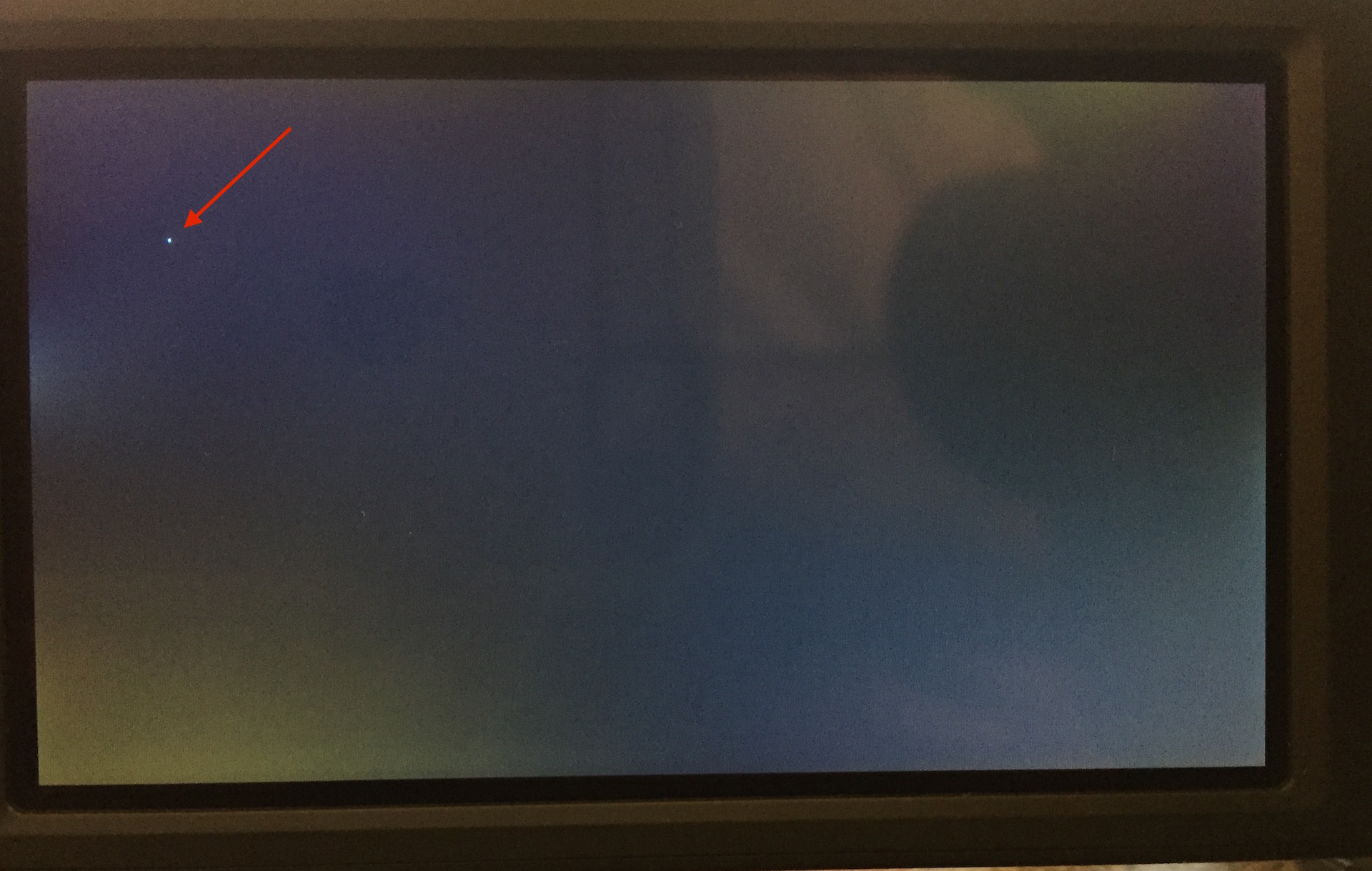
It depends on how the error occurs in the output. If all the pixels are off by ~1% in their RGB values, it will be barely noticeable. If 1% of the pixels have a random wrong color, it could look very bad. For instance, assume a 4k monitor (3840x2160), which has ~8.3 million pixels. If only 1% are bad, that's 82,944 bad pixels.
Imagine something like this picture, but with ~83,000 of them:
http://www.dvinfo.net/forum/at...
Given people are very frustrated by even a single stuck pixel, 83,000 would be horribly annoying, especially if there's very little noise or busyness in the image.
Note: I have no idea how the error occurs in the output, or what future algorithms may be developed to deal with such error. -
Re:Edit a standard-def proxy
Someone got proxy video editing working in Premiere. It's probably even easier in anything that can output an AviSynth
-
Re:Octo-Why?I did some googling around and found a couple possibilities.
http://www.dvinfo.net/forum/micro-pov-camera-systems/488817-r-c-helicopter-vs-quad-fpv-camera-flight.htmlBeing both a bit of a cinematographer and an R/C heli pilot, let me see if I can clear this up. As far as consumer-level helicopters go, the multi-rotor copters are much easier to fly and much more stable. However, their stability works against them outdoors when you need a fast, responsive helicopter to deal with any wind. While the multi-rotor helis can fly outdoors, they will fly ONLY if there is ZERO wind. (Trust me; I know.) The multi-rotors are good for first learning how to fly, but they get boring fast once you get good on the sticks. The key thing to remember with helicopters is that they are inherently unstable. This means if you take your hands off the sticks for even one second to scratch your nose or slap a mosquito, you WILL crash. (Trust me; if you think I am kidding, go fly a single-rotor helicopter outside and just see if you can scratch your nose!) Therefore, unless you are getting into the commercial end of the market, the only helicopter that will work for your purposes is a single-rotor with the traditional tail rotor blade. Consumer-level multi-rotor helicopters will NOT work unless all your flying is indoors. The other thing to remember is that learning to fly a radio-control helicopter is actually HARDER to fly than the real thing. (I fly both.) The learning curve is VERY VERY steep. Most people try it, crash a few times and give it up. It takes a LOT of work. (It is a lot like learning to ride a unicycle
As someone who owns a couple of RC Helis (including a blade eflite 450) I can absolutely back up what's he's saying. Literally scratching your nose can result in a crash if you're not careful. I've never flown a multi-rotor copter, so I can't comment on that.
-
Re:Great something
For AVCHD I put minimum requirements at:
i7-930 CPU, 6 GB memory, 3 SATA 7200 disks and a decent video card.
For CS5 / MPE the minimum video card is GTX-285.
More memory is better.
I edit AVCHD on a C2D 2.53 with 4GB of memory, 5400 RPM HDD, and a non-discrete video card.
-
Re:"ownership" & "publishing rights"
i am a videographer so this issue is something I have fought with for a while.
Some of the best info about music copyright can be found here (DVInfo.net a site for video producers) because video productions require music (unless they are bad ones) and music on film / DVD / internet requires complicated licensing.
Unless you go with royalty free productions straight from the producer / talent and bypass the label (if allowed by the artists contract).
jason -
what about recording audio/video?
This sounds like an interesting book, and I'll probably buy it, but looking over the Table of Contents, this book is geared more toward Linux Multimedia Management (PVR, mp3s) than doing actual recording and capturing.
I'm a podcaster trying to figure out the best way to input mike/mixer into my linux laptop, and had the damnest time figuring out.
Mastering the software stuff is easy (relatively speaking). Much harder is figuring out how to get your hardware to work. About the best resource I've found for that is this usb device database . Under each multimedia device are user comments about how they made it work.
Also, a few months ago I reviewed a book, Digital Video Hacks. More about video production than linux, the book nonetheless a few things from a linux perspective. Highly recommended!
On another note, why hasn't anyone published a decent GIMP manual yet? The last book is a good three years old, and a lot has happened to gimp since then. I would love to see a Gimp Hacks book sometime. I could really use that! -
Ask on DVInfo
I'll agree with the other poster who said
-
Re:Adobe & The HDV Z1
There are good disscusions for editing the Z1 and FX1 HDV footage on http://sonyhdvinfo.com/ and http://dvinfo.net/.
-
Canon XL-1
You can't go wrong with the Canon XL-1. It's not water resistant, but I'm sure you can get a water-resistant/water-proof housing for it.
-
A very useful site
Check out:
http://www.dvinfo.net/conf/
They have fantastic boards, very active, mostly on-topic (*ahem*), and with tons of information on every aspect of video production, from planning to purchasing to shooting to editing. They also have a decent classifieds section, you might find a good used camera, now that the XL2 has been announced, it would be a good time to get an XL1s for a steal. -
I think the most highly recommended camera is . .The Sony VX2100. The Canon GL2 is also highly rated. You should try to look at the dvinfo site for more info.
Of more importance is lighting. If you have bad lighting, the video will look bad no matter what kind of camera you have. This book is highly recommended for learning how to light.
-
Re:LUX Rating
The Lens is important
This is very true -- but don't get fooled by cameras that have the name of some prestigeous optics maker plastered all over them.
Lens makers (like most manufactures) have good products and not-so-good products.
Just because you see a camera selling for $200 that claims to have lenses made by a top-spec company doesn't mean that you will be getting top-spec lenses -- chances are you'll be getting a budget lens.
Also take note that in some cases, the name only reflects the *designer* of the lens, not necessarily the manufacturer. Once again this means you may not be getting the primo-quality you expect.
It's really worth doing some searches and trawling the various video camcorder websites. One that's quite good is www.dvinfo.net/ -
Re:1 CCD. Foveon are only ones like 3 CCDcheck out this EF lens