Slashdot Mirror
Domain: findarticles.com
Stories and comments across the archive that link to findarticles.com.
Stories · 13
-
Brain-Scan Lie Detection Rejected By Brooklyn Court
blair1q writes "A judge in Brooklyn has excluded Functional Magnetic Resonance Imaging (fMRI) lie-detector evidence from a trial there. However, the decision will not set a precedent, as it was made without even conducting a hearing on the method's validity, but on the principle, argued by the defense, that 'juries are supposed to decide the credibility of the witness, and fMRI lie detection, even if it could be proven completely accurate, infringes on that right.' That principle can be tested in later hearings, such as one scheduled for May 13, 2010, in Tennessee; in this case, the defense wants to use fMRI evidence it has already collected to prove its client is innocent. fMRI has been shown to be 76-90% accurate. That number seems significantly larger than the rate of false convictions." -
SCO's Lawsuit Gets Even Crazier
I Don't Believe in Imaginary Property writes "With SCO in Chapter 11 bankruptcy and there being little to read other than status reports and the boring financial details of how the company is wasting its last few dollars, one could be excused for thinking the SCO lawsuits had lost their zip. But things just got a bit more interesting. Jonathan Lee Riches has asked the court to take over. Yes, the man also known as inmate #40948-018 is now bringing his legal experience to the table, having previously filed pro se lawsuits against such entities as Michael Vick, Michael Jordan, Mickey Mantle, the Lincoln Memorial, the Thirteen Tribes of Israel, 'Various Buddhist Monks,' Mein Kampf, Denny's, George W. Bush, the Soviet Gulag Archipelago, Bellevue Hospital, Iran's Evin Prison, Auschwitz, and Plato. In his hand-written pro se motion (PDF), he asks to intervene as Plaintiff pursuant to FRCP 24(a)(2). As best anyone can read the motion, it appears that he offered Novell some 'royalty payments' and they refused them, so he wants to protect his UnixWare rights. He also claims to have proof of SCO's claims, but he wants take over part of the case via FRCP 24 because SCO isn't competent, and allegedly he could do a better job. To be fair, between him and Darl, it's something of a toss-up." -
Casting Doubt On the Hawkeye Ball-Calling System
Human judgment by referees is increasingly being supplemented (and sometimes overridden) by computerized observation systems. nuke-alwin writes "It is obvious that any model is only as accurate as the data in it, and technologies such as Hawkeye can never remove all doubt about the position of a ball. Wimbledon appears to accept the Hawkeye prediction as absolute, but researchers at Cardiff University will soon publish a paper disputing the accuracy of the system." -
IBM Wants To Patent Restaurant Waits
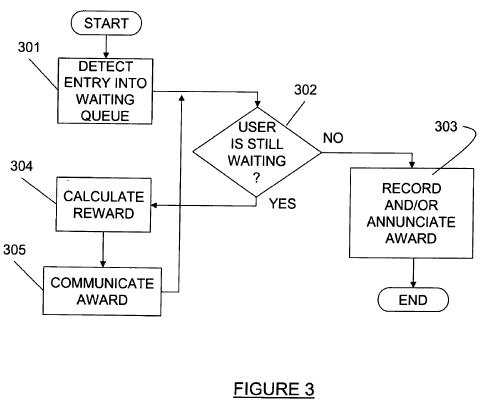
theodp writes "If all goes IBM's way, it'll soon constitute patent infringement if Bennigan's gives you a free lunch for being inconvenienced by a long wait for your meal. Big Blue is seeking a patent for its Method and Structure for Automated Crediting to Customers for Waiting, the purported 'invention' of three IBM researchers, which IBM notes, 'could be implemented completely devoid of computerization or automation of any kind.' Can we count on IBM to withdraw this patent claim, or will Big Blue weasel out of its patent reform pledge again?" -
Hi, I Want To Meet (17.6% of) You!
Frequent Slashdot contributor Bennett Haselton wants to make online dating better. Here's how he wants to do it. "Suppose you're an entrepreneur who wants to break into the online personals business, but you face impossible odds because everybody wants to go where everybody else already is (basically, either Match.com or Yahoo Personals). Here is a suggestion that would give you an edge. In a nutshell: Each member lists the criteria for people that they are looking for. Then when people contact them, they choose whether or not to respond. After the system has been keeping track of who contacts you and who you respond to, the site lists your profile in other people's search results along with your criteria-specific response rate: "Lisa has responded to 56% of people who contacted her who meet her criteria." Read on for the rest of his thoughts. I realize that every time I write something along the lines of "They should do it this way instead of the way they do it now", whether for search engines, spam filters, content rating systems or whatever, I leave some people shrugging and wondering why anyone should switch to my idea. So let me try something new: I want to prove mathematically that this change would result in some (in fact, most) of the participants being better off, while nobody would be worse off (what economists call a Pareto improvement). I am not necessarily saying that it would lead to a good outcome for everybody; basically, it will lead to better outcomes for most users (although some of those will still be bad outcomes), and will do so in a lot less time.
If as soon as you read the phrase "I can prove mathematically" you thought, "Oh well no wonder he gets such a low response rate if he talks like that all the time", then I humbly submit that (1) while I like my Slashdot persona of a pedant banging people over the head with what I think is a brilliant idea, I do have other programmable settings, like conversation about movies, and (2) for once, it's not just me. Sites like eDateReview.com list hundreds of reviews for the most popular sites like Yahoo, Match.com and eHarmony, all of which got an average rating of about 2 out of 5. Another site hosting reviews of online personals services, DatingSitesReviews.com, posted a message urging people to take the predominantly negative reviews with a grain of salt, since users with a bad experience are much more likely to post a review than users with a positive one, but that only generated comments from the site's users reiterating, "No, they really do suck." Most of the complaints from men are not just about the number of obviously fake profiles (which led to lawsuits against Yahoo and Match.com), but about the low response rate even from women who are ostensibly real.
Not that I blame the women. Having watched over the shoulder of some female friends scrolling through their Yahoo Personals inboxes, some of them get far too many messages to reply to (and even if they had time to reply, they'd only be leading on most of the correspondents, since there would never be enough time to actually meet all of them). Yahoo Personals formats your inbox so that you see each person's picture along with the first few words of what they wrote, so if you have too many messages, all you can really do is scroll through the pictures (yes, women do care about that). In fact, Yahoo has a feature that lets you see the users who have viewed your profile -- which may have revealed more than Yahoo intended, since sometimes after writing to 20 or 30 people, I find out that none of them even clicked through to my profile anyway -- so if you're a guy, take Yahoo's advice about "polishing your profile" with a grain of salt. (In fact, many users with Yahoo Personals profiles are not paid members, which means they cannot reply to the messages you send them except with boilerplate like "I liked your message", and Yahoo blocks you from sending them your e-mail address. So Yahoo is listing them as people that you can contact through their service, even though Yahoo knows those people won't be able to write you back. If this strikes you as something between bad site design and actionable fraud, then you are not a Yahoo employee.)
So, yes, there is a problem worth solving. For the purpose of describing the response-rate system, I'm going to dispense with political correctness and refer to the people sending the messages as the "men" and to the people receiving messages as the "women". I hear from the pilot episode of Sex and the City that after the "mid-thirties power flip", the odds shift the other way (due to women getting older and the men accumulating more money, although the show doesn't put it quite so bluntly), so if you're in that age bracket, substitute the appropriate genders in the discussion below.
Note that I when I talk about listing women's response rates, I am talking about their response rates to men who meet their criteria. If you only want to meet men aged 28 to 29 who are interested in paddleboating, then your displayed response rate is only affected by the percentage of messages that you respond to from men in that group.
The mathematical argument commences: If you're a man writing to women on a site, for every women there are two essential variables: the probability P that she will reply to you, and how much value V you would place on getting a reply from her (say, on a scale of 1 to 10). For any woman that you write to, if P = (probability of getting a reply) and V = (value of getting a reply), then then probabilistic benefit of writing to her is P x V. (And I swear I didn't notice this until after I'd written the article, but I do not want to hear anything juvenile about framing a discussion of men meeting women in terms of the "P" and the "V".) If you have non-standard tastes, such as a preference for "Big Beautiful Women", that's great, since the women that you consider to be 9s and 10s may also be the ones that you have the highest chance of getting a reply from, since fewer other men are writing to them, and P x V for those women will be -- in a manner of speaking -- huge. Unfortunately, if your tastes are fairly typical, then the women you consider to be 9s and 10s are also getting lots of messages from other men, and have the lowest probability of replying to you. So as V = (value of getting a reply) goes up, P = (probability of getting a reply) goes down, and the product doesn't vary as much as you would like. There's nothing that the response-rate system can do about that.
In any case, if you're allocating your time rationally, you would first write to the members where you estimate P x V to be the highest, and then write to the members where P x V was the next highest, and then based on the cost-benefit principle, you'd continue writing until P x V of writing to the next person is exceeded by the value of the time it would take you to do it. (The incremental value of each additional minute of your time is not constant -- after a long time spent sending messages, you might get bored, and would require a larger incentive to spend an additional minute of your time doing it.) All of this is basically intuition and common sense, even if people don't think of it in terms of these equations (except me!).
But here's the advantage of the response-rating system: With a conventional personals site, you're only guessing the value of P x V -- to be precise, you know the value of V (at least as well as anyone can possibly know it from reading someone's profile), but you're only estimating P, based on how many messages you think she's probably getting from other people. Because of that randomness, that means some of the time you are sending messages without the best possible P x V value, and probably some of the time you are even sending messages where P x V would not even be worth the effort of sending the message, if you knew how low P was. Whereas with a system that shows a woman's response rate to people who meet her criteria, if you're someone who meets her criteria, you know roughly the probability P of getting a reply. (Actually, the probability P for you of getting a response, might not be the percentage-response-rate displayed by the site -- if you have an especially attractive or unattractive face, but there's no way for the woman to specify that in her criteria, then your chance of getting a reply might be higher or lower than the displayed percentage-response-rate. But, then you could just scale all of the displayed response rates upwards or downwards to gauge your probability P of getting a reply. It would still be better than making a total guess on a conventional personals site that didn't display percentage response rates at all.) So this is an unambiguous improvement from the point of view of the men. Another reason why men would be much better off is a specific case of this: they would avoid the time sink of writing to women who do not or cannot respond to most of the messages they're getting. With a response-rate system, those women's profiles would gradually display lower and lower response rates until the percentage was low enough to dissuade all but the most optimistic (or handsome) suitors. Without a display of the response rate, those users continue getting ridiculously large numbers of messages for as long as their profiles are active (as some of my female friends with profiles could attest).
Then consider from the women's point of view. Suppose you're a woman interested in meeting people who meet certain criteria, and you're sincerely interested in replying to at least a significant portion of people who fit those criteria. The problem is that of the men who meet those requirements, some of their attention is still going to be siphoned off by them writing to other women who only have a low chance of responding. Even if you have very specific criteria, so the men who meet your criteria have a great chance of getting a reply from you, on a conventional personals site they might not realize that. But if your response rate were displayed by your profile, then when men searched for women whose criteria they met (and who met their own criteria as well), you would be listed as one of the people with the highest chance of replying, and you'd have a greater chance of hearing from men who met your requirements. (This is not a huge benefit for women, because most women get enough messages that there will usually be some who meet their criteria anyway. The response-rate system would mainly be beneficial to men; I'm just saying it would not be worse for women and would in fact be a little better for some of them.)
Now there's one group of people who would not be better off: Women who create accounts mainly for the ego boost of getting huge numbers of messages and not replying to them. I talked with a few women who used the personals sites for this purpose; some I knew in person, some of them I talked to back when Yahoo Personals would display a woman's Yahoo Messenger screen name, and if you sent them an instant message they would sometimes reply out of sheer boredom and admit that that was what they were doing. These people would not be better off in a system that displayed response rates, since after their response rates dwindled low enough, so would the number of messages. So this would not be a true Pareto improvement, since the definition of a Pareto improvements insists on nobody being worse off, and doesn't make judgments as to people's reasons. Fine, but I submit that people who use the personals sites for the ego boost of ignoring messages are going against the site's purpose, and any improvement that pisses them off but improves things for everybody else, is still a good thing.
You might worry that the ego-trippers would continue to game the system by writing trivially short replies to all the messages they got, in order to keep their "response rate" high and keep the messages coming. I'm not sure, but I don't think that would be very common, because my impression from talking to the girls who do this is that the whole point of the ego boost is that the messages keep coming in without them having to do anything. If they had to exert themselves at all -- even long enough to reply to each message and say "yeah" -- then it wouldn't feel as much fun. Probably some would do this anyway. But of the men who kept getting responses like "yeah" and "I dunno", hopefully they would get the message quickly and stop wasting time. I could be wrong about some of these things, but my point is that it would not be any worse than the old system, where so many users already waste time writing to people who don't write back, and the new system would probably be better since it would eliminate some of the time-wasters.
There are some design decisions that I didn't specify here -- for example, do you display each user's response rate over their entire history on the site, or just over the last 24-72 hours, or both? A trickier question: Do you display the user's criteria that they have entered to specify what they're looking for, and which are used when the site calculates their response rate to all users who "meet their criteria"? Most sites do of course let users list what they are looking for. But suppose a woman is only interested in meeting men who make more than $75,000 per year, but she thinks it would be crass to list that on her profile. On the other hand, if she doesn't list it as a requirement, then her percentage response rate will be dragged down by all the men writing to her who make less than $75,000 but who she's not interested in replying to. One alternative would be that she could still have one set of public criteria displayed on her profile, and one set of "secret" criteria that included the $75,000 cutoff. Then men who made $75,000 or more would be steered toward her profile with the message, "You meet her criteria, and she responds to 50% of men who meet her requirements!" But you'd have the ticklish business of men who somehow find her profile, and meet all of her public criteria, but can't figure out why the system is telling them that they weren't a match for her -- and they contact the service to ask why, and tech support has to tactfully explain that sometimes you don't meet all of someone's secret requirements. In any case, a man would be able to reverse-engineer a woman's "secret" requirements by varying his own characteristics on his profile until the system said, "Ding! You're a match for her!" (But then what are you going to do, send her a message calling her a gold digger? Go ahead, it doesn't affect her percentage response rate anyway.)
In concluding that "everyone" would be better off under this system, I did make the type of assumptions that are common in mathematical/economic models, such as assuming that all participants are cold rationalists maximizing benefit to themselves. Such assumptions often do model human behavior pretty well, even in romantic pairings -- it explains why 10's usually end up with 10's, 9's usually end up with 9's, and so on. But these axioms may not take seemingly "irrational" preferences into account. For example, I've assumed that if it would be a waste of time for a user to write to 10 women who are not going to write back, then the new system is an improvement if it dissuades him from ever writing to those 10 women in the first place, because the end result is the same (nothing) and you've saved them the effort. But on a conventional personals site, after someone has written to 10 people and before they realize they're not getting any responses, they still have the hope that they might get answers, and that can be a good feeling. They'll be disappointed later on once they realize they're not getting any responses, but if they have a personality that is especially receptive to hope and especially resistant to disappointment, then it could average out to a better overall experience under the old system. Well, the old-style Match.com and Yahoo Personals would still be around for people who prefer to dream. I'm just saying the new-style system would better suit people looking for results.
The real problem with starting a competing personals site around this system (apart from pulling in enough users to reach "critical mass", but assume you had an ad campaign to do that), is that even if your system produced better matches for everybody in the long run, Yahoo Personals and Match.com would still be better at luring people in with the hope of getting a fabulous match-up. Even if Yahoo Personals got rid of all the fake profiles, and even if they gave anyone listed as a "member" a way to reply to people who send them messages (which among other things would bring them in line with laws against false advertising), their gallery would still be glittering with all the profiles of people who are getting too much mail to possibly reply to it all -- but as a new user, you wouldn't know that. On the other hand, with a personals site that listed criteria-specific response rates next to each profile, if you didn't have a good chance of getting a response from the most popular users, you'd know that from the beginning. You could then come back down to Earth and focus on the users whose criteria you met and who responded to most of their mail. But the site wouldn't be able to use its superstars to lure people in and string them along like Yahoo and Match.com can do.
So, to the business that launches a personals site around this system, this is what I'd propose to do: Since your system really does work better, contact a bunch of single reporters (I mean, higher up than me) and tell them to sign up for an account with Yahoo Personals, an account with Match.com, and an account with your new response-rating site, and spend twenty minutes on each site writing to users that they're interested in meeting. Or sponsor a controlled study where dozens of users try the same thing. Your site will be the only one where the participants can find and write to the members with the highest response rate for people meeting their criteria, and if the system really does result in more efficient matches, then the reporters and the study organizers ought to be able to verify that. Then you have your new ad campaign!
It's easy to list all the problems that would occur in this system: People could lie on their profiles, you can't always judge someone from a profile even if they're honest, people could waste your time starting a conversation and then bailing on you, just because people meet through the site doesn't mean they'll be a good match in person, etc. But these are problems with any personals site. This system only addresses the specific problem of efficiency; I haven't come up with an algorithmic solution to all of the problems of dating and love. It's only Tuesday. -
Impress Your Friends While Watching "Untraceable"
Frequent Slashdot contributor Bennett Haselton writes in today with a nerd-oriented review of "Untraceable," which opened in theaters last Friday. Read on for Bennett's take on what the movie gets right — a surprising amount as these movies usually go — but be warned, his review contains spoilers.
I went into the theater planning to come out with notes for an article like "Everything that 'Untraceable' gets wrong" (feeling pessimistic after "Swordfish" and "Firewall"), but it actually doesn't do that bad. Oh, it gets stuff wrong -- I don't think the FBI can "blackhole" an IP address by clicking a button -- but the errors are for dramatic license, not technical howlers, and the plot holes fall more in the category of things that could have been accomplished more easily some other way. In fact the dialog goes out of its way in several spots to make sure we know they know what they're talking about; screenwriters can't win with these movies, because they'll get grief for getting too much stuff wrong, but if they explain things correctly, it breaks the reality when we can feel the writers telegraphing their knowledge to the geeks in the audience. But it is mostly accurate, and the movie throws you just enough softballs for you to impress your movie-mates as well as the patrons two rows in front and back of you.
The movie takes its first stab at geek realism right at the top, when Diane Lane tells Colin Hanks that his Internet date is never going to see him again because she's more attractive in person than he is. (So far, the only thing wrong with this is that Colin Hanks has exactly the kind of adorable-nerd face that appeals to girls who like to think they don't care about looks.) Then Diane Lane explains how she's ensnaring the cyber-criminal on her screen, in a set piece that has nothing to do with the rest of the plot, like the pre-title action sequence in a Bond movie. First, in a horde of pop-ups covers her monitor, and a site tries to entice her into downloading and running a program that contains a trojan horse. She runs the trojan horse on a virtual machine, where she watches it steal a file full of passwords and financial records, but she inserts her own trojan into the data that's uploaded back to the criminal's computer. In a few moments they find the user's IP address and realize that it must be a neighbor stealing that person's wireless service.
Batter up! I think that an FBI cyber crime expert would have a pop-up blocker installed, but moving on. If a criminal wanted to gain access to your machine to steal your financial records, tricking you into downloading and installing a trojan horse as part of another program, is probably exactly how they'd do it. (However, a trojan wouldn't automatically and instantly find a file full of passwords, even if she did named it "passwords.txt" as bait.) The biggest slip is that if you upload a trojan horse back to someone who was downloading data from your machine, there's still no way to force the remote criminal's computer to run it, as happens in the movie. And a criminal that smart would probably be running the operation from the compromised PC of someone in another city, not stealing a neighbor's wireless access. (In any case, while having the criminal's IP address would allow you to go to someone's ISP and ask them to turn over the records of where that person lived, the characters should not have been able to narrow an IP address down to a person's house without that extra step.) Also, if I heard right, the FBI figures out who the guilty neighbor is even though he has no priors, based on the fact that he has two registered handguns. That will offend a certain portion of the audience, so viewers of "27 Dresses" in some cinemas may hear angry gunfire coming from the next theater.
However, most of these errors were probably necessary to show what the main character does in as short a time as possible and to end the set piece with the villain actually getting caught, so this is probably the best the movie could have done. Don't point that out to your date, of course, since she'll be more impressed by knowledgeable sneering, especially if everyone in the seats around you can hear what a smart guy she's with.
Then the main villain's site is introduced, and the movie has to handle the question of how a site with its own top-level domain like KillWithMe.com would be able to remain online despite showing real-time streaming video of a murder victim being killed. (The hook in the movie is that the more people visit the site, the faster some automated murder contraption kills the victim.) Diane Lane explains how, in a virtuoso sentence designed to silence the nerds who would otherwise say afterwards that there's no way that could ever happen. You'll know the line; it's the one right before her boss says, "I didn't understand anything you said; something about 'Russia'?" Apparently the domain is registered in Russia, and the DNS servers use a low TTL (yes, Diane Lane actually says "low TTL" -- sexy!) to switch the hostname between thousands of different IP addresses, each belonging to some compromised machine.
If you had to come up with a way to do this in a film, and if you assumed that Russian authorities could not be persuaded to go after the domain registrar (something nobody tries in the movie), this would probably be the simplest way that was semi-plausible. You need the site to resolve to thousands of possible IP addresses so that it can't be made to disappear by simply taking one machine offline. The way the movie demonstrates this, though, is for Diane Lane to make one of the site's many IP addresses go dark by clicking a button on her screen and causing it to be blackholed, before the hostname switches to the next IP. The only people who can actually do this in real life are backbone operators with an axe to grind, not the FBI (something the movie actually acknowledges with a passing reference to Net Neutrality legislation!). Ah, but here's where you can knock one out of the park: If you assume, as the movie does, that the FBI has the ability to blackhole individual IP addresses, then they could shut the site down not by blocking the site's IP addresses but by blocking the primary and secondary DNS servers for the killwithme.com domain in Russia, so that if people's computers couldn't communicate with the DNS servers, they'd have no way of resolving the hostname.
By now, the surrounding theatergoers should be threatening to jam your USB thumb drive keychain into your nostril, but you're not done yet. At one point a character targets an IP address beginning with "10.*", and everybody knows those are reserved for intranets, not the public Internet, so you can point out that that's like the 555 prefix for a movie phone number. Later, the heroine finds that a Trojan horse installed on her daughter's machine, has access to all files on all PCs in the house. That could work if (a) the other PCs were set to share out files to other PCs on the same local network, or (b) if the traffic between the other PCs and the wireless router were unencrypted, although it's unlikely the main character would make either of these mistakes.
But you don't want fellow viewers getting the idea you're too Net-savvy; one suspect is later described: "He blogged, he built web sites, he practically lived online," which sets the bar a little low for qualifying as a sociopathic online loner.
With regard to the non-Internet technical details, I have no idea if OnStar can actually help you get through a traffic jam the way they do in this movie, but I'm sure they paid a lot of money to have it appear that they could (although maybe they got a discount since the movie later shows the villain hacking into Diane Lane's car's system, during which the brand name "OnStar" is definitely not mentioned). Speaking of product placement, several in the audience snickered when the movie twice showed the heroine conspicuously logging into the Windows Live interface. But Microsoft may have gotten an even better deal: while the villain's operating system of choice is never mentioned, during closeups of his screen at the end, you can clearly see the word "GNU".
Or maybe it just fits with his overachieving character. After he ties his victims to a bedframe, he likes to elevate it into the path of the camera using a remote-controlled motorized winch evocative of a medieval torture device. Unless I'm mistaken, though, that happens before the site is actually streaming, which means he could have just as easily walked over and lifted up the bedframe. With that kind of fetish for doing simple things the horrendously hard way for no reason, why didn't he just go ahead and wear a "Got Linux?" t-shirt? -
IMDb Turns 15
An anonymous reader writes "15 years ago today, Col Needham posted some shell scripts to rec.arts.movies which allowed anyone to search lists of actors, actresses, directors, and biographies. From this humble beginning -- which predates Yahoo, Google, and even the web itself -- the IMDb has wrangled the collective wisdom of millions of submitters to become not only a top 100 website but also a standard Hollywood tool for filmmaking. IMDb is celebrating with a retrospective of the last 15 years of IMDb and movies. Congratulations to IMDb and the internet community that built it." -
Latest SCSI Drive Reviewed
Sivar writes "StorageReview got their hands on a Maxtor Atlas 10K V, the first SCSI hard drive in more than two years to double capacity. Considering how quickly storage was improving just a few years ago, and other news like Intel's cancellation of the 4GHz Pentium IV despite AMD's lead you have to wonder if the traditional predictions of the end of Moore's Observation are actually beginning to come true." -
Startup to Offer Open Source Insurance
ThePretender writes "From the Infoworld article, 'Open Source Risk Management LLC (OSRM), a startup company that last month hired Pamela Jones, editor of the popular Groklaw.net Web site, as director of litigation risk research, plans to soon begin offering insurance policies to companies using open source software but fear that they may be sued, according to a company spokeswoman'. What's next - Developers having to pick up 'code malpractice' insurance? Egads." Might as well get some alien abduction insurance while you're at it. -
USPS Providing Electronic Postmarks
isn't my name writes "Back in 2000, Clinton signed the ESIGN Legislation which set forth the requirements for making electronic signatures. But many questioned the weakness of its definitions that allowed an e-mail address to be used as an electronic signature. Well, it seems the USPS has come up with something stronger. They even have a Java and MS COM SDK's Apparently, the USPS feels that the strong legal protections against interfering with the US mail will apply to the EPM program. It seems that AuthentiDate is doing all the heavy lifting. According to the whitepaper on their site, it provides non-repudiation and legal timestamps of documentation by having the customer use a public-key to sign a hash of the document, which is then sent to AuthentiDate's servers which combine that with a timestamp and sign with their key. So, AuthentiDate does not have access to any of the data in the documentation. It sounds very similar to the free PGP Digital Timestamping Service, but it likely is more likely to be legally defensible in a US Court. They also have a new plug-in for MS Word documents. Interestingly, despite the mention of the SDK and it's ability to work with any documents, the only login setup I could find just allows you to use the MS Word version." -
The Boy and his Breeder Reactor
scubacuda writes "Here is an interesting tale about a Boy Scout who went a little too far in trying to achieve a merit badge in Atomic Energy. From smoke alarms, lantern components, the paint from radio clocks, and a little help from the Nuclear Regulator Commission, David Hahn attempted to build a nuclear reactor in his mother's shed. Regarding his excessive radioactive exposure, Hahn says, "I don't believe I took more than five years off my life."" While this is an oldish story (1998) it is not the pathetic self congratulatory lame princeton story. -
Duct Tape
CandyMan writes: "The incredible story of the 15-year-old kid who built a nuclear reactor in his mother's toolshed, using common household objects, aluminium foil and duct tape. Sample quote: 'When David's Geiger counter began picking up radiation five doors from his mom's house, he decided that he had "too much radioactive stuff in one place", and began to dissasemble the reactor'." Well, I tried to check this out and see if it was for real, and I found a much longer version of the same article which appears legit, if still rather unbelievable. If any of you irradiate yourselves, you didn't read about it here, okay? -
Windows Marketing Executive Doug Miller
Doug Miller is Director of Competitive Strategy in Microsoft's Windows Server Marketing Group. Doug is responsible for a team within Microsoft focused on competitive strategy and enterprise interoperability products. He's been spotted at Linux shows. He uses vi. He was a Unix guy for many years. His previous company, Softway Systems, was acquired by Microsoft in 1999. What are you going to ask him today? Up to you, but one question per post, please. We'll send Doug 10 of the highest-moderated questions and post his answers next week.