Slashdot Mirror
Domain: gnu.org
Stories and comments across the archive that link to gnu.org.
Comments · 13,360
-
Extention of Microsoft's SQL server does infringeMicrosoft licensed patented technology for only itself without granting the right for end users and developers to use the same patented technology. Microsoft licensed Database/Datawarehouse technology from Timeline Inc, but unlike Oracle and other database vendors, Microsoft chose a license that did not grant Microsoft's customers the right to fully use that technology . Timeline has extended it's patent claims to cover many featured widely used by developers, both ISV and in house.
Timeline Inc has won a US Washington Court of Appeal judgment against Microsoft for the right to sue Microsoft's customers, and subsequently sued Cognos. On February 13, 2004, Cognos settled at cost to Cognos totaling $1.75 million
In a lot of ways you are better with GPL licensed techology , which effectively grants all downstream users the right to use the patents from upstream developers under the terms of the GPL
Software Patent are inherently bad but are also pushing an interesting trend. Pushing vendors towards adopting the GPL-like licensing as a form of simpler form of cross licensing arrangement.
-
Re:Use autoconf.I agree. autoconf, and automake are very intimidating in the beginning, but after a short learning curve they seem quite simple, and elegant. Luckily there are some great resources to get going with it, thousands of examples, and autoscan(1) is your friend.
- Autobook A tutorial for Autoconf, Automake and Libtool
- The autoconf manual
- The automake manual
- The libtool manual
-
Re:Use autoconf.I agree. autoconf, and automake are very intimidating in the beginning, but after a short learning curve they seem quite simple, and elegant. Luckily there are some great resources to get going with it, thousands of examples, and autoscan(1) is your friend.
- Autobook A tutorial for Autoconf, Automake and Libtool
- The autoconf manual
- The automake manual
- The libtool manual
-
Re:Use autoconf.I agree. autoconf, and automake are very intimidating in the beginning, but after a short learning curve they seem quite simple, and elegant. Luckily there are some great resources to get going with it, thousands of examples, and autoscan(1) is your friend.
- Autobook A tutorial for Autoconf, Automake and Libtool
- The autoconf manual
- The automake manual
- The libtool manual
-
Re:I believe that GPL is pretty clear on this
Regarding who can execute the "written offer", from the GPL FAQ (also see this later question) seems to clearly indicate that you must have a copy of the written offer (or at least, "the information you received as to the offer"). Yes, 3c applies, not 3b. 3b applies to the party creating the written offer. 3c is what defines what additional parties receive as to a written offer, and thus defines the maximum requirement for being able to receive the sources (from the original 3b party). I'm just explaining why I worded it as "the information you received as to the offer" as opposed to "the written offer" - you may not have the written offer if you weren't the original recipient under 3b.
Again from the GPL FAQ, the mail order interpretation (you must, if requested, provide the requested source on physical media posted through the mail) seems at odds with the actual language of the GPL which merely requires the source to be provided on "customary media". Like, 500 floppy disks (and I get to charge you for the labor to copy all those disks). Or, how about punch cards or paper tape, traditional AND customary!
The GPL does say that access to the source when downloading a binary must be "the same place" and "equivalent access", but the FAQ says that putting in a link to another web/ftp site is either probably or definitely OK (latter link is also the one that claims that you can't distribute under 3b via anonymous FTP). However, I had always interpreted the 3a rule as not allowing an additional charge for the source code, while the interpretation seems to be that you can not charge more for the source than you did for the binary (based on size? A 1MB binary and 125MB source (including entire tool chain, compiler, library sources, etc) could make the cost for the source prohibitive. Or do they mean that if you charged $20 for the binary, you can't charge more than $20 for the sources, even if the sources take up 100 times as much space).
I'm looking at this from the viewpoint of someone trying to sell GPL software as if it was proprietary, making it as inconvenient and expensive for the average person to download the sources and pass them on, and attempt to prevent copying and redistribution of the binary as well, and see if the GPL properly blocks such attempts or if there are loopholes that should be fixed.
BTW, I hadn't seen the GPL quiz before. I took it cold and missed 1 question (LGPL and reverse engineering). Despite getting all the others correct, I still disagree with one of them (# 6, regarding fulfilling the written offer by providing the source for download - "but not everyone has access to the internet" is no more valid than "but not everyone has a CD-ROM drive" - if I'm on the ISS, mailing me a CD-ROM isn't going to do me much good).
-
Re:I believe that GPL is pretty clear on this
Regarding who can execute the "written offer", from the GPL FAQ (also see this later question) seems to clearly indicate that you must have a copy of the written offer (or at least, "the information you received as to the offer"). Yes, 3c applies, not 3b. 3b applies to the party creating the written offer. 3c is what defines what additional parties receive as to a written offer, and thus defines the maximum requirement for being able to receive the sources (from the original 3b party). I'm just explaining why I worded it as "the information you received as to the offer" as opposed to "the written offer" - you may not have the written offer if you weren't the original recipient under 3b.
Again from the GPL FAQ, the mail order interpretation (you must, if requested, provide the requested source on physical media posted through the mail) seems at odds with the actual language of the GPL which merely requires the source to be provided on "customary media". Like, 500 floppy disks (and I get to charge you for the labor to copy all those disks). Or, how about punch cards or paper tape, traditional AND customary!
The GPL does say that access to the source when downloading a binary must be "the same place" and "equivalent access", but the FAQ says that putting in a link to another web/ftp site is either probably or definitely OK (latter link is also the one that claims that you can't distribute under 3b via anonymous FTP). However, I had always interpreted the 3a rule as not allowing an additional charge for the source code, while the interpretation seems to be that you can not charge more for the source than you did for the binary (based on size? A 1MB binary and 125MB source (including entire tool chain, compiler, library sources, etc) could make the cost for the source prohibitive. Or do they mean that if you charged $20 for the binary, you can't charge more than $20 for the sources, even if the sources take up 100 times as much space).
I'm looking at this from the viewpoint of someone trying to sell GPL software as if it was proprietary, making it as inconvenient and expensive for the average person to download the sources and pass them on, and attempt to prevent copying and redistribution of the binary as well, and see if the GPL properly blocks such attempts or if there are loopholes that should be fixed.
BTW, I hadn't seen the GPL quiz before. I took it cold and missed 1 question (LGPL and reverse engineering). Despite getting all the others correct, I still disagree with one of them (# 6, regarding fulfilling the written offer by providing the source for download - "but not everyone has access to the internet" is no more valid than "but not everyone has a CD-ROM drive" - if I'm on the ISS, mailing me a CD-ROM isn't going to do me much good).
-
Re:I believe that GPL is pretty clear on this
Regarding who can execute the "written offer", from the GPL FAQ (also see this later question) seems to clearly indicate that you must have a copy of the written offer (or at least, "the information you received as to the offer"). Yes, 3c applies, not 3b. 3b applies to the party creating the written offer. 3c is what defines what additional parties receive as to a written offer, and thus defines the maximum requirement for being able to receive the sources (from the original 3b party). I'm just explaining why I worded it as "the information you received as to the offer" as opposed to "the written offer" - you may not have the written offer if you weren't the original recipient under 3b.
Again from the GPL FAQ, the mail order interpretation (you must, if requested, provide the requested source on physical media posted through the mail) seems at odds with the actual language of the GPL which merely requires the source to be provided on "customary media". Like, 500 floppy disks (and I get to charge you for the labor to copy all those disks). Or, how about punch cards or paper tape, traditional AND customary!
The GPL does say that access to the source when downloading a binary must be "the same place" and "equivalent access", but the FAQ says that putting in a link to another web/ftp site is either probably or definitely OK (latter link is also the one that claims that you can't distribute under 3b via anonymous FTP). However, I had always interpreted the 3a rule as not allowing an additional charge for the source code, while the interpretation seems to be that you can not charge more for the source than you did for the binary (based on size? A 1MB binary and 125MB source (including entire tool chain, compiler, library sources, etc) could make the cost for the source prohibitive. Or do they mean that if you charged $20 for the binary, you can't charge more than $20 for the sources, even if the sources take up 100 times as much space).
I'm looking at this from the viewpoint of someone trying to sell GPL software as if it was proprietary, making it as inconvenient and expensive for the average person to download the sources and pass them on, and attempt to prevent copying and redistribution of the binary as well, and see if the GPL properly blocks such attempts or if there are loopholes that should be fixed.
BTW, I hadn't seen the GPL quiz before. I took it cold and missed 1 question (LGPL and reverse engineering). Despite getting all the others correct, I still disagree with one of them (# 6, regarding fulfilling the written offer by providing the source for download - "but not everyone has access to the internet" is no more valid than "but not everyone has a CD-ROM drive" - if I'm on the ISS, mailing me a CD-ROM isn't going to do me much good).
-
Re:I believe that GPL is pretty clear on this
Regarding who can execute the "written offer", from the GPL FAQ (also see this later question) seems to clearly indicate that you must have a copy of the written offer (or at least, "the information you received as to the offer"). Yes, 3c applies, not 3b. 3b applies to the party creating the written offer. 3c is what defines what additional parties receive as to a written offer, and thus defines the maximum requirement for being able to receive the sources (from the original 3b party). I'm just explaining why I worded it as "the information you received as to the offer" as opposed to "the written offer" - you may not have the written offer if you weren't the original recipient under 3b.
Again from the GPL FAQ, the mail order interpretation (you must, if requested, provide the requested source on physical media posted through the mail) seems at odds with the actual language of the GPL which merely requires the source to be provided on "customary media". Like, 500 floppy disks (and I get to charge you for the labor to copy all those disks). Or, how about punch cards or paper tape, traditional AND customary!
The GPL does say that access to the source when downloading a binary must be "the same place" and "equivalent access", but the FAQ says that putting in a link to another web/ftp site is either probably or definitely OK (latter link is also the one that claims that you can't distribute under 3b via anonymous FTP). However, I had always interpreted the 3a rule as not allowing an additional charge for the source code, while the interpretation seems to be that you can not charge more for the source than you did for the binary (based on size? A 1MB binary and 125MB source (including entire tool chain, compiler, library sources, etc) could make the cost for the source prohibitive. Or do they mean that if you charged $20 for the binary, you can't charge more than $20 for the sources, even if the sources take up 100 times as much space).
I'm looking at this from the viewpoint of someone trying to sell GPL software as if it was proprietary, making it as inconvenient and expensive for the average person to download the sources and pass them on, and attempt to prevent copying and redistribution of the binary as well, and see if the GPL properly blocks such attempts or if there are loopholes that should be fixed.
BTW, I hadn't seen the GPL quiz before. I took it cold and missed 1 question (LGPL and reverse engineering). Despite getting all the others correct, I still disagree with one of them (# 6, regarding fulfilling the written offer by providing the source for download - "but not everyone has access to the internet" is no more valid than "but not everyone has a CD-ROM drive" - if I'm on the ISS, mailing me a CD-ROM isn't going to do me much good).
-
Re:I believe that GPL is pretty clear on this
Regarding who can execute the "written offer", from the GPL FAQ (also see this later question) seems to clearly indicate that you must have a copy of the written offer (or at least, "the information you received as to the offer"). Yes, 3c applies, not 3b. 3b applies to the party creating the written offer. 3c is what defines what additional parties receive as to a written offer, and thus defines the maximum requirement for being able to receive the sources (from the original 3b party). I'm just explaining why I worded it as "the information you received as to the offer" as opposed to "the written offer" - you may not have the written offer if you weren't the original recipient under 3b.
Again from the GPL FAQ, the mail order interpretation (you must, if requested, provide the requested source on physical media posted through the mail) seems at odds with the actual language of the GPL which merely requires the source to be provided on "customary media". Like, 500 floppy disks (and I get to charge you for the labor to copy all those disks). Or, how about punch cards or paper tape, traditional AND customary!
The GPL does say that access to the source when downloading a binary must be "the same place" and "equivalent access", but the FAQ says that putting in a link to another web/ftp site is either probably or definitely OK (latter link is also the one that claims that you can't distribute under 3b via anonymous FTP). However, I had always interpreted the 3a rule as not allowing an additional charge for the source code, while the interpretation seems to be that you can not charge more for the source than you did for the binary (based on size? A 1MB binary and 125MB source (including entire tool chain, compiler, library sources, etc) could make the cost for the source prohibitive. Or do they mean that if you charged $20 for the binary, you can't charge more than $20 for the sources, even if the sources take up 100 times as much space).
I'm looking at this from the viewpoint of someone trying to sell GPL software as if it was proprietary, making it as inconvenient and expensive for the average person to download the sources and pass them on, and attempt to prevent copying and redistribution of the binary as well, and see if the GPL properly blocks such attempts or if there are loopholes that should be fixed.
BTW, I hadn't seen the GPL quiz before. I took it cold and missed 1 question (LGPL and reverse engineering). Despite getting all the others correct, I still disagree with one of them (# 6, regarding fulfilling the written offer by providing the source for download - "but not everyone has access to the internet" is no more valid than "but not everyone has a CD-ROM drive" - if I'm on the ISS, mailing me a CD-ROM isn't going to do me much good).
-
Re:I believe that GPL is pretty clear on this
Regarding who can execute the "written offer", from the GPL FAQ (also see this later question) seems to clearly indicate that you must have a copy of the written offer (or at least, "the information you received as to the offer"). Yes, 3c applies, not 3b. 3b applies to the party creating the written offer. 3c is what defines what additional parties receive as to a written offer, and thus defines the maximum requirement for being able to receive the sources (from the original 3b party). I'm just explaining why I worded it as "the information you received as to the offer" as opposed to "the written offer" - you may not have the written offer if you weren't the original recipient under 3b.
Again from the GPL FAQ, the mail order interpretation (you must, if requested, provide the requested source on physical media posted through the mail) seems at odds with the actual language of the GPL which merely requires the source to be provided on "customary media". Like, 500 floppy disks (and I get to charge you for the labor to copy all those disks). Or, how about punch cards or paper tape, traditional AND customary!
The GPL does say that access to the source when downloading a binary must be "the same place" and "equivalent access", but the FAQ says that putting in a link to another web/ftp site is either probably or definitely OK (latter link is also the one that claims that you can't distribute under 3b via anonymous FTP). However, I had always interpreted the 3a rule as not allowing an additional charge for the source code, while the interpretation seems to be that you can not charge more for the source than you did for the binary (based on size? A 1MB binary and 125MB source (including entire tool chain, compiler, library sources, etc) could make the cost for the source prohibitive. Or do they mean that if you charged $20 for the binary, you can't charge more than $20 for the sources, even if the sources take up 100 times as much space).
I'm looking at this from the viewpoint of someone trying to sell GPL software as if it was proprietary, making it as inconvenient and expensive for the average person to download the sources and pass them on, and attempt to prevent copying and redistribution of the binary as well, and see if the GPL properly blocks such attempts or if there are loopholes that should be fixed.
BTW, I hadn't seen the GPL quiz before. I took it cold and missed 1 question (LGPL and reverse engineering). Despite getting all the others correct, I still disagree with one of them (# 6, regarding fulfilling the written offer by providing the source for download - "but not everyone has access to the internet" is no more valid than "but not everyone has a CD-ROM drive" - if I'm on the ISS, mailing me a CD-ROM isn't going to do me much good).
-
Re:I believe that GPL is pretty clear on this
Regarding who can execute the "written offer", from the GPL FAQ (also see this later question) seems to clearly indicate that you must have a copy of the written offer (or at least, "the information you received as to the offer"). Yes, 3c applies, not 3b. 3b applies to the party creating the written offer. 3c is what defines what additional parties receive as to a written offer, and thus defines the maximum requirement for being able to receive the sources (from the original 3b party). I'm just explaining why I worded it as "the information you received as to the offer" as opposed to "the written offer" - you may not have the written offer if you weren't the original recipient under 3b.
Again from the GPL FAQ, the mail order interpretation (you must, if requested, provide the requested source on physical media posted through the mail) seems at odds with the actual language of the GPL which merely requires the source to be provided on "customary media". Like, 500 floppy disks (and I get to charge you for the labor to copy all those disks). Or, how about punch cards or paper tape, traditional AND customary!
The GPL does say that access to the source when downloading a binary must be "the same place" and "equivalent access", but the FAQ says that putting in a link to another web/ftp site is either probably or definitely OK (latter link is also the one that claims that you can't distribute under 3b via anonymous FTP). However, I had always interpreted the 3a rule as not allowing an additional charge for the source code, while the interpretation seems to be that you can not charge more for the source than you did for the binary (based on size? A 1MB binary and 125MB source (including entire tool chain, compiler, library sources, etc) could make the cost for the source prohibitive. Or do they mean that if you charged $20 for the binary, you can't charge more than $20 for the sources, even if the sources take up 100 times as much space).
I'm looking at this from the viewpoint of someone trying to sell GPL software as if it was proprietary, making it as inconvenient and expensive for the average person to download the sources and pass them on, and attempt to prevent copying and redistribution of the binary as well, and see if the GPL properly blocks such attempts or if there are loopholes that should be fixed.
BTW, I hadn't seen the GPL quiz before. I took it cold and missed 1 question (LGPL and reverse engineering). Despite getting all the others correct, I still disagree with one of them (# 6, regarding fulfilling the written offer by providing the source for download - "but not everyone has access to the internet" is no more valid than "but not everyone has a CD-ROM drive" - if I'm on the ISS, mailing me a CD-ROM isn't going to do me much good).
-
Analysis of the 5.3 codebase at Ars Technica
The analysis reveals that this moribund operating system, in the throes of a long, agonizing death since approximately 1990, is only weeks away from death.
Why? Because FreeBSD is stealing code from Linux and the FreeBSD project will soon be named as a defendant in a lawsuit filed by the Free Software Foundation.
It comes as a shock to the entire Open Source community that the FreeBSD developers would resort to such measures, but, faced with the imment demise and subsequent rigor mortis of their labor of love, they have been driven to outright theft.
At this point, it's only a matter of weeks. This embattled, dying OS will soon be only a memory kept alive by tinkering hackers--as well as in the annals of shameful history, to be studied as an example of "what not to do" by software engineers and law students alike. -
another low bandwidth 'optimized' website...
-
Re:A brief lesson on prions...
No, I am not a microbiologist, I am just a lowly student that has to bow down to microbiologist profs.
By understanding how the creation of prions (may) happen, prevention methods may be found out. For instance, if an overload of chemical A over chemical B in a cell causes protein C to fold a certain way, one might either reduce chemical A levels, keep chemical B levels up, prevent chemical A from getting to protein C, or simply reversing the fold before protein C gets to protein D.Minority Report shows a sort of example of this: stop the disease by fully understanding it and stopping before it happens. This may involve a lot of science (which may include the horrid bad science ), but it does look promising and more research into it is very exciting.
There are many spectulated culprits ( randomness, heredities and free radicals ), but I believe I am going to be one of those graduate students doing 1000s of hours of expirments and research on this. Or maybe I will write a bash script for it instead (bash 3.0 released!)
-
Re:Apple helping out
Since this is a GNU project it is an example of Apple helping out the Free Software community.
This may seem pedantic, lumping a project in with a community that is expressly disclaimed by the people doing the work is rather rude.
-Peter -
Re:No.
While you make some great points, I must point out that some open source project don't even try to be small , do-one-thing-well programs.
Free software doesn't necessitate programs or projects being small. Just look at the freaking kernel. The strength in free software is flexibility. -
Re:Well, he does have a point ...
The classic example (at least 10 years old) is to hack up gcc so that it examines the code it's compiling, and if it decides that it's compiling
You're almost right. The hack you're referring to was done more than 20 years ago by Ken Thompson (of UNIX fame), and described in a seminal paper entitled Reflections On Trusting Trust. Actually, the hack was even cooler than you describe: not only could the complier recognize that it was compiling the login program and insert the backdoor, it could recognize that it was compiling the C compiler and insert the code to insert the backdoor. That's so cool it gives me a boner just thinking about it.
However, the compiler in question was not GCC; GCC was not released until 1987. -
F___ the specs; let's make our own
What if the patent depends on, say, some part of a public spec? Either violate the patent, violate the spec, or go home.
I'd choose violate the spec. CompuServe published the GIF specification based on a Unisys patent; we violated the spec. ISO published the MPEG audio specification based on a Fraunhofer patent; we violated the spec. ISO published the MPEG video specification based on numerous patents; we violated the spec. Bottom line: if a specification is patented, then f___ the spec; let's make our own.
Uh, okay, that'll show em. Hey microsoft! Your license to distribute Linux has just expired! TAKE THAT!
That's not sarcasm. Without Microsoft's license to distribute copies of the GNU operating system, the de facto standard userland layer on top of the Linux kernel, Microsoft won't be able to distribute copies of Services For UNIX, and between the termination of the GNU license and such time as Microsoft develops its own alternative, it will lose government contracts that depend on conformance to the POSIX spec.
And how will "the guy in the basement" enforce this anyway???
By handing over the copyright in a free software package to the Free Software Foundation so that FSF's attorneys can take the case.
-
More a commentary on software than open source.
You should also disagree with section 3 ("All software should be free") because the author purposefully uses the wrong definition of free (the one pertaining to cost, not freedom) to conflate the differences between the two movements. Furthermore, the author apparently has no idea what RMS stands for:
3. "All software should be free" One of the central tenets of the Open Source philosophy (as it seems to be understood by the average person, at any rate) is that all software should be free.
This is wholly untrue. The open source movement has never pitched its message based on software freedom, it was founded to reject software freedom and pitch instead a practical software methodology message--programs are better when they are less buggy, cheaper to develop, and run faster--because it is believed that this movement's audience (chiefly businesses) are scared with freedom talk. There's nothing wrong with these practical values, but they are not the values of the older free software movement, they don't give you software freedom, and they don't speak to the same audience as the free software movement. Continuing with the article:
[T]his all started because some people (RMS et al, for whom I have nothing but respect) wanted to share code with fellow developers, which also has its basis in the longstanding scientific traditions of sharing knowledge.
RMS has never said he was a member of the open source movement nor did he start the Open Source Initiative which defines that movement's goals and terms for license acceptance. RMS has asked explicitly not to be lumped in with the open source movement. RMS started the free software movement about 20 years ago, well before the open source movement started, and co-wrote the GNU GPL with Prof. Eben Moglen, and RMS started the GNU project in order to spread software freedom (the freedoms to inspect, copy, run, distribute, and modify computer software at any time for any reason).
This author is making (and getting lost in) his own economic-justification message. Meanwhile the Free Software Foundation tells us that distributing free software for a fee can be okay, and that we should make as much money as we can from distributing free software for a fee and building paid services atop the software. I would add that it is not the FSF's or the free software community's job to define how businesses can make money with free software (however the FSF does have some suggestions which they give us in their talks). It is a businesses responsibility to define how they will make money. The FSF is not a business plan nor was it ever intended to be. If the open source movement wants to be seen as such, they are choosing to take on that job.
Also, in section 6 ("More choice is always better") the author falls into the trap of thinking choice is a key value: Freedom of choice is deceptively attractive because people who focus on choice can easily be undermined. If we only had 3 web browsers to choose from (say, Microsoft Internet Explorer, Opera, and Netscape) choice would be satisfied. We would not have software freedom, however, because none of those browsers are free software. They are all proprietary programs. Choice is not bad to have but it is not the heart of either the free software or open source philosophies and choice alone will not bring you the ability to share and modify software.
I'm left thinking this report is little more than his view of what's right and wrong with software today, not an informed essay on busting "open source myths" by examining what the open source movement stands for and how it goes about pursuing its goals.
-
More a commentary on software than open source.
You should also disagree with section 3 ("All software should be free") because the author purposefully uses the wrong definition of free (the one pertaining to cost, not freedom) to conflate the differences between the two movements. Furthermore, the author apparently has no idea what RMS stands for:
3. "All software should be free" One of the central tenets of the Open Source philosophy (as it seems to be understood by the average person, at any rate) is that all software should be free.
This is wholly untrue. The open source movement has never pitched its message based on software freedom, it was founded to reject software freedom and pitch instead a practical software methodology message--programs are better when they are less buggy, cheaper to develop, and run faster--because it is believed that this movement's audience (chiefly businesses) are scared with freedom talk. There's nothing wrong with these practical values, but they are not the values of the older free software movement, they don't give you software freedom, and they don't speak to the same audience as the free software movement. Continuing with the article:
[T]his all started because some people (RMS et al, for whom I have nothing but respect) wanted to share code with fellow developers, which also has its basis in the longstanding scientific traditions of sharing knowledge.
RMS has never said he was a member of the open source movement nor did he start the Open Source Initiative which defines that movement's goals and terms for license acceptance. RMS has asked explicitly not to be lumped in with the open source movement. RMS started the free software movement about 20 years ago, well before the open source movement started, and co-wrote the GNU GPL with Prof. Eben Moglen, and RMS started the GNU project in order to spread software freedom (the freedoms to inspect, copy, run, distribute, and modify computer software at any time for any reason).
This author is making (and getting lost in) his own economic-justification message. Meanwhile the Free Software Foundation tells us that distributing free software for a fee can be okay, and that we should make as much money as we can from distributing free software for a fee and building paid services atop the software. I would add that it is not the FSF's or the free software community's job to define how businesses can make money with free software (however the FSF does have some suggestions which they give us in their talks). It is a businesses responsibility to define how they will make money. The FSF is not a business plan nor was it ever intended to be. If the open source movement wants to be seen as such, they are choosing to take on that job.
Also, in section 6 ("More choice is always better") the author falls into the trap of thinking choice is a key value: Freedom of choice is deceptively attractive because people who focus on choice can easily be undermined. If we only had 3 web browsers to choose from (say, Microsoft Internet Explorer, Opera, and Netscape) choice would be satisfied. We would not have software freedom, however, because none of those browsers are free software. They are all proprietary programs. Choice is not bad to have but it is not the heart of either the free software or open source philosophies and choice alone will not bring you the ability to share and modify software.
I'm left thinking this report is little more than his view of what's right and wrong with software today, not an informed essay on busting "open source myths" by examining what the open source movement stands for and how it goes about pursuing its goals.
-
Re:GPL violations discussion at OLS
Here's the FSF link for reporting violations. I doubt that there is very much manpower at the other end of that email address, though.
-
Re:GPL violations discussion at OLSThe stuff you are quoting is about the "inititiatove to counter this," out of the Free Software Foundation. However, I suspect much of the elbow grease needed for such efforts is currently directed toward fighting new patent legislation. An understandable priority.
-
Re:StangelyI like to think that the GNU project (and FreeDOS for that matter) would still have found a way to make free operating systems, even if they had to not base them at all whatsoever on any existing ones.
GNU has one, it's called HURD
-
UNIX was meant as a hoaxRead this article:
-
Re:I assume we'll do the usual then
> Name me five open source products that aren't simply
> a clone of a commercial products.
Pick any five you like
In software business it's all about implementing the 10 or 20 things users want to do with their computers, so i don't expect very much "really new" software, be it OS or CS, since VisiCalc and Mosaic
-
Linux looking to buy BSD Chick - BSD refuses.
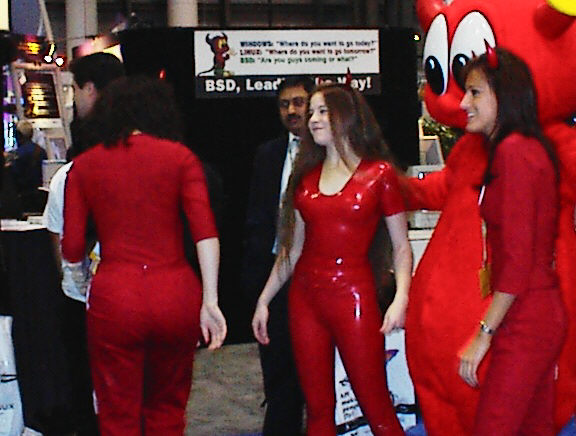
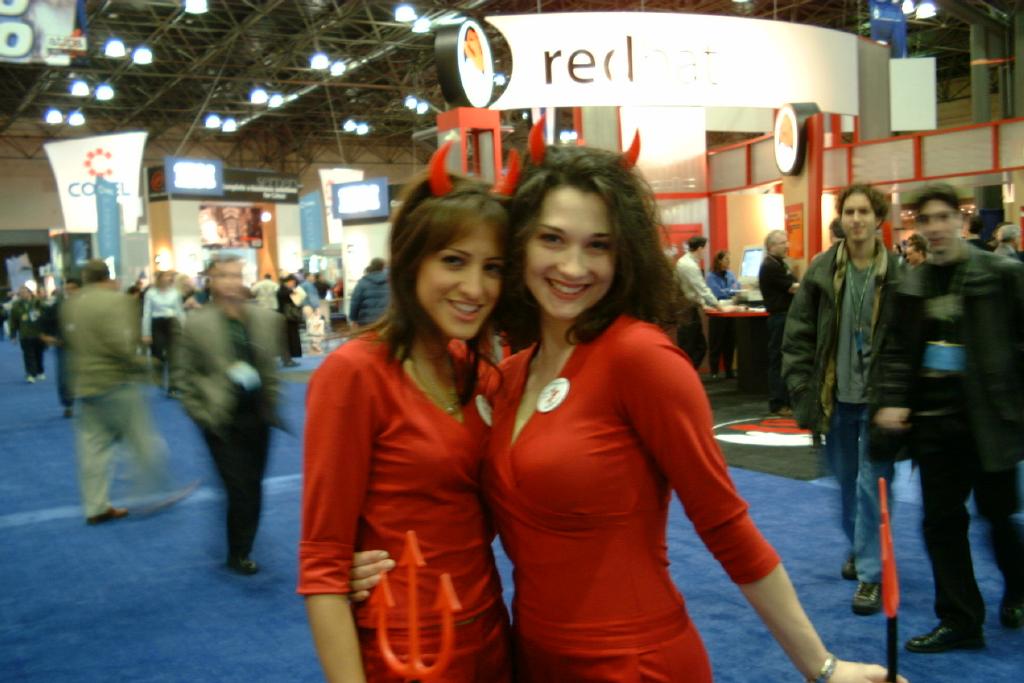
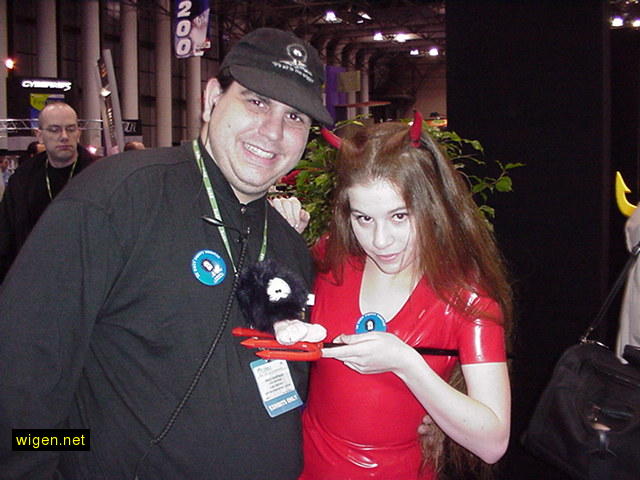
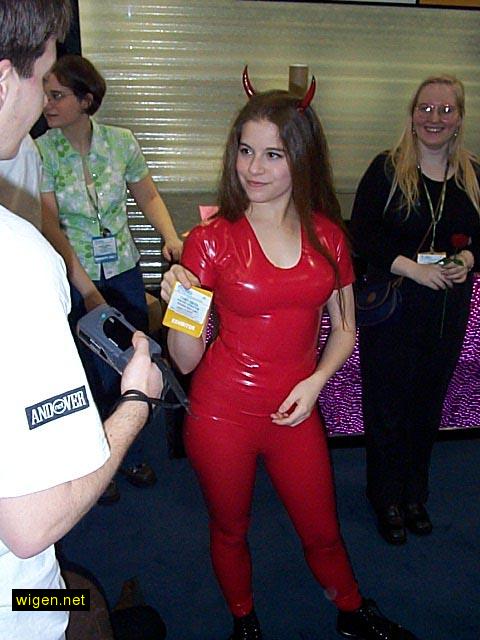
Is it any wonder people think Linux users are a bunch of flaming homosexuals when its fronted by obviously gay losers like these?! BSD has a mascot who leaves us in no doubt that this is the OS for real men! If Linux had more hot chicks and gorgeous babes then maybe it would be able to compete with BSD! Hell this girl should be a model!
Linux is a joke as long as it continues to lack sexy girls like her! I mean just look at this girl! Doesn't she excite you? I know this little hottie puts me in need of a cold shower! This guy looks like he is about to cream his pants standing next to such a fox. As you can see, no man can resist this sexy little minx. Don't you wish the guy in this pic was you? Are you telling me you wouldn't like to get your hands on this ass?! Wouldn't this just make your Christmas?! Yes doctor, this uber babe definitely gets my pulse racing! Oh how I envy the lucky girl in this shot! Linux has nothing that can possibly compete. Come on, you must admit she is better than an overweight penguin or a gay looking goat! Wouldn't this be more liklely to influence your choice of OS?
With sexy chicks like the lovely Ceren you could have people queuing up to buy open source products. Could you really refuse to buy a copy of BSD if she told you to? Personally I know I would give my right arm to get this close to such a divine beauty!
Don't be a fag! Join the campaign for more cute open source babes today!
$Id: ceren.html,v 7.0 2004/01/01 11:32:04 ceren_rocks Exp $ -
Re:Define 'free'
Free in this context means free as in freedom, not price. As the GNU people like to say, "Think of free speech, not free beer." You can read more about all that at the FSF web site.
-
Re:Define 'free'
Strange, I thought free meant you didn't have to pay for it.
No. Now go away and educate yourself. -
Re:The lesson of X11....
As I tried to express in my original comment, it's not just the license, though that's probably a factor.
Although there's no conflict here, per se, BSDers tend to prefer licenses with as few restrictions as possible. For example, this means that, all things being equal, they'll choose a BSD-style license over the GPL. But in my experience pragmatism rules -- if the GNU tool is better than a BSD-licensed one, the superior tool is generally the one chosen. And I suspect that if XFree86 were technically better than X.org, this switch wouldn't be happening (though that's just my opinion based on conversations I've had).
The interesting thing is that the original BSD license was quite similar to the new XFree86 license. The FSF (and others) objected to the original license since it had an "advertising clause" that read a lot like the new clause in the XFree86 license. The old BSD license read in part:
3. All advertising materials mentioning features or use of this software must display the following acknowledgement: This product includes software developed by the University of California, Berkeley and its contributors.
Although you'll still find BSD software here and there with this clause, the trend has been to eliminate it wherever possible. Thus XFree86's move to add san advertising clause is seen by many as a step backwards.-Ed
-
Re:So XFree Is Dead then
> That's not the desirable effect and also such proprietary situation was already existing before GIFT [my example] even started
Uh, this effect is quite desirable according to
those people in their copy-left argument. Note, it is an effect desired by the people who wrote that license, and often by those who use it. If that applies to you personally is another matter.
> You're contradicting yourself. If you license your code under the GPL and the BSD license while you don't want to push licenses, you are pushing a license with the GPL by putting your code under the GPL.
Uh? that is not about pushign a license but about wanting a specific result for the code I wrote.
> You try to push it as a rule of thumb for protocols. As i argumented, not by definition true. Sometimes GPL code can't even used on a different platform. I really depends on the situation, and i don't see how Samba or GIFT would be more succesful when they were BSD licensed.
This is entirely because the original implementation is not licensed in a way that allows you to reuse its source code (even if you do have access to it)
The situation would be entirely different when the original implementations were available with a GPL or BSD license or similar. For a free software developer it wouldn't matter much which as logn as it would be compatible with his/her license of choice, but to proprietary software makers it would matter.
Releasing Samba with a BSD license would allow SCO to stick a modified version into their unix versions with help of MS and never make the changes available.. this would obviously not help anyone
At any rate.. the situation can be different when you are re-implementing an already existing proprietary protocol, but for newly developed protocols, I'd definitely decide on a BSD style license for a reference implementation if I want it to be widely used (and not just in Linux) -
The GIF format may be encumbered still
As of June 21, 2004 (when the page was updated) the Free Software Foundation seems to consider the GIF format to be patent-encumbered. They say that the IBM patent would be an issue even if the Unisys patent was not an issue. Also, it is said that the IBM patent in the USA will expire on August 11, 2006. The FSF has said that they have not been able to search every patent database for every country (they have searched in the USA, Japan, Canada, and the European Union so far.) It is possible that there are additional patents that have not been found yet.
Interestingly, the FSF says that the patents for Unisys and IBM only covered LZW compression and not LZW decompression.
-
Re:Before partying..I want to maintain control of the copyrights to my code for exactly the same reason that the FSF wants me to give them the copyright -- to make sure that my code never, ever becomes proprietary."
Have a look at this. Basically, the FSF's copyright assignment contract prevents the code from being made proprietary.
-
A confusing word
The term ``software industry'' encourages people to imagine that software is always developed by a sort of factory and then delivered to consumers. The free software community shows this is not the case. Software businesses exist, and various businesses develop free and/or non-free software, but those that develop free software are not like factories. The term ``industry'' is being used as propaganda by advocates of software patents. They call software development ``industry'' and then try to argue that this means it should be subject to patent monopolies. The European Parliament, rejecting software patents in 2003, voted to define ``industry'' as ``automated production of material goods''.
from: http://www.gnu.org/philosophy/words-to-avoid.html# SoftwareIndustry -
Re:somewhat related question
Nonsense. The inverse of your statement is even explicitly spelt out in the FAQ.
-
Re:WindowsXP is free...Well if you have Windows XP, maybe once, at the most twice.
More like several times. I run Windows XP myself and can remember at least 5 or 6 times that I've had to reboot for a patch.
The problem is that Windows has a braindead file locking scheme. You ever notice how you can't delete or move certain files if it's used by a program? That comes into play when patches tell you to reboot. Only when the kernel and filecache is flushed can the patch take effect.
Compare this to Linux. It has a sane file locking method that will free access to a file if a program needs it. *nix got this right decades ago.
-
It's not "OSS", it's free software.
The story submitter wrote:
One key area that Richard Stallman, GNU project founder, hopes to develop is an OSS-based BIOS.
I can guarantee you that interpretation is incorrect. RMS doesn't advocate for "OSS" (open source software) or anything else to do with the open source movement. He is the founder of the free software movement and the GNU Project which aims to spread software freedom, something the open source movement does not discuss.
Given the following passage from the interview:
You clearly point out in many interviews and articles you write that you don't associate free software with the open source movement. Why is that?
A: The Free Software Movement holds that software users morally deserve the freedom to run, study, change, and redistribute the software they use. The term "open source" was coined, in 1998, to encourage free and not-quite-free software while leading attention away from the ethical foundations of free software. The rhetoric of "open source" presents the issue solely as a matter of practical convenience, not as a matter of freedom and cooperation. It does not say software *should* be open source, it just recommends a certain "development model" saying it usually leads to "better" software.
Open source proponents and the BSA disagree about how to produce "better" software, but they agree about what "better" means: powerful, reliable, convenient, and cheap. In the Free Software Movement, we have different basic values: we want to live in freedom in a community. Better software is software that we are free to share and change.
If a person persuaded of open source ideas comes across a powerful, reliable, non-free program, she may think it admirable. "I'm surprised they were able to do this without open source," she might say, "But I can't deny that it works well." When a free software advocate looks at the same thing, she will see a nasty, unethical license. "I don't care how 'powerful' it is, if it takes away my freedom," she will say. "Let's start writing the free replacement now!"
I'm guessing that the submitter failed to read the interview. But that wouldn't be the first time.
-
Re:You just ignored everything I've been sayingBut it has improved efficencies in things like short-lived objects, so it's not as far off as you think. By your own admission it's only off by a factor of two for storage even for the poor implementation you wrote.
No, you still don't understand.
The factor of two storage overhead is intrinsic given Java's semantics--it's not a question of compiler optimization.
The overhead in terms of running time is far larger than a factor of two, even with the best current compilers, and it is due to several factors: lack of locality, extra overhead on accesses, lack of vectorizability, lack of aliasing information, calls to the heap allocator that simply can't be eliminated, and garbage collection overhead, to name just a few.
There simply is no way to get anywhere near the efficiency of value classes without actually having value classes.
No, it's just a slightly different way of thinking about the problem. Your code shows that you are way too stuck on operator overloading, and will probably only produce trvial implementations in any language.
You bet I am stuck on operator overloading and that I only produce trivial implementations in any language anymore--numerical code is way too hard to write, debug, and understand otherwise, and numerical methods (the kind I myself come up with) have become far too complicated.
20 years ago, I used to write code in the style you suggest because that was the only way to get it to run fast. These days, we have languages that support abstractions efficiently. Languages like C# and C++. Java is just stuck in the past.
But if you'd like to find text supporting your poisiton, then by all means do so. I've already pasted legal text that supports my position, you go find anything that supports yours.
No, the text you pasted contradicts your position. Read it carefully:
Sun hereby grants you [... specific rights
So, Sun explicitly talks about their intellectual property rights that are "essential to practice the specification"; they only give you a license for that intellectual property subject to specific conditions. And they have the intellectual property that puts meat into that legal language: they have numerous patents related to Java, as well as the copyrights on the specs themselves.
What are the conditions?
(i) includes a complete implementation of the current version of the Specification, without subsetting or supersetting; (ii) implements all of the interfaces and functionality of the specification, as defined by Sun, without subsetting or supersetting; (iii) includes a complete implementation of any optional components
Those conditions are hard to meet. Furthermore, it is unclear whether there is any way you can independently prove that you have, in fact, met them. Even if you have met them, Sun can kill your work by changing the specification when they want to--they own the specification.
It's true to say you cannot officially lable a project with the "Java" trademark. But that is it - as for writing something exactly the same as Java, anyone can do it.
No, that is not the situation. The situation is that Sun owns the copyright on the specification and they own patents on key Java technologies. In order to practice the specification, you need a license for both. They only give you that license under specific, restrictive conditions, conditions that nobody has been able to meet for a full Java implementation so far.
I wonder what RMS thinks about MONO? I'm pretty sure he would dislike the patent laden spec it's built on quite a bit more.
Quite to the contrary. The FSF and RMS support both Mono and Portable.NET, two separate implementations of C#.
In contrast, RMS cautions people and asks them to stay away from Java. -
The HURDThe GNU Hurd, Stallman's OS doesn't seem to have made any progress since 2002 or so.
I was just looking at some of the source code. Those guys are coding like it's 1985. Pages of code to re-implement "stl::vector" for each type.
-
Re:I believe that GPL is pretty clear on this
There is, with one additional condition (in bold below), and you have to look closely to realize this restriction is there:
The fee for transmission of the source decides whether you're in section 3a) or section 3b) of the GPL. If you distribute the binary for free, but ask for a fee to transmit the source, then these are separate offerings and you're no longer in 3a). This means you have to make a written offer to provide the source to any third party, with all that implies regarding third party distribution and so forth. But if you do not provide such an offer, you are not in 3b) and must comply with 3a), which means the source must be downloadable for free if you offer the binary for free. This is covered in the FAQ. -
Re:I believe that GPL is pretty clear on this
The GPL is REALLY clear on this, but most people aren't.
Here's what they say:
"Many people believe that the spirit of the GNU project is that you should not charge money for distributing copies of software, or that you should charge as little as possible -- just enough to cover the cost.
Actually we encourage people who redistribute free software to charge as much as they wish or can." (emphasis is mine)
From: http://www.gnu.org/philosophy/selling.html
So that's why the wording is vague on what you can charge - they have absolutely no limit on it. -
Re:BahDRM might be required by law,
Unlikely, beside, the large number of people who used Napster, and still use P2P to download copyright material, clearly demonstrates that mere legislation is not the same as effective enforcement.
and Linus stated in an interview that he didn't oppose to DRM in Linux, so you might HAVE to accept it
Unless you (or someone else) take advantage of the rights afforded by the GPL to take the Linux source code and remove any DRM code from it, whatever Linus thinks about it. That's the whole point about the software freedoms which the GPL was designed to ensure.
-
Asking the same old questions
From the Article:
You clearly point out in many interviews and articles you write that you don't associate free software with the open source movement. Why is that?
Why do Interviewers keep asking him the same stupid questions over and over? Those questions are answered by every other interview hes ever done and his speeches. (he has a new one up, btw.)
I wish that sometimes they would target the interviews for people already familiar with Free Software. Most slashdotters know the relationship between GNU and linux, but what about the relationship between GNU and the BSDs. Something like that would be interesting to read about.
Maybe its time for slashdot to have another Ask Stallman. Alot has changed since the last one. -
BIOS bugs
Perhaps Stallman is just 1. frustrated about the HURD developers having to work around bugs in proprietary BIOS software and 2. afraid of treacherous computing.
-
Treacherous Computing
And what on earth is the problem with existing BIOS's?
Their makers are involved in Treacherous Computing Group, whose specification relies on keeping information secret from the owner of a piece of computer hardware in order to be able to sell you a computer capable of doing less.
-
Re:The real facts
4) Bleeding edge pre-release 'beta' firmwares require a subscription to download. I'm pretty sure linksys goes through beta cycles without widely releasing code. At some point they call is stable, and that becomes a release version.
The GPL makes no destinction between beta and release software, read section 6 of the GPL. Adding restrictions to software distribution is not allowed.
He is adding a restriction to redistribution by revoking the subscriptions of users acting well within their GPL rights. Example:
User A downloads 3 prereleases of the software and does not redistribute them. This costs user A the one-time $20 subscription fee.
User B downloads 3 prereleases as well. But User B redistributes the prerelease each time, having his subscription revoked every time. This costs User B $60 for 3 subscriptions. This assumes User B is even allowed to resubscribe.
This sure sounds like a restriction to me. The user redistributing the code under his GPL rights is being charged more.
I'm not sure what the real problem is here. These guys are trying to make money while improving and supporting an open source product. If you don't like it go use another firmware.
I'm not sure what the real problem is here. There guys are trying to use their GPL rights since the software was derived from GPL code. If the software creator doesn't like it, he can go use another codebase and license. -
Re:Full text of the exchange with the FSFFrom the GPL (emphasis mine):
6. Each time you redistribute the Program (or any work based on the Program), the recipient automatically receives a license from the original licensor to copy, distribute or modify the Program subject to these terms and conditions. You may not impose any further restrictions on the recipients' exercise of the rights granted herein. You are not responsible for enforcing compliance by third parties to this License.
The GPL makes no destinction between release, pre-release, beta, alpha, gamma, delta, googleplex, or whatever. The simple fact is the he is imposing an extra restriction: Redistribute code of mine that I don't want redestributed and I will revoke (without refund) a service that you have paid for. -
Re:The GPL aint about money
Ummm no, yourself. You *do* have to release any tools or scripts you use to create the binary, with some exceptions (see section 3 of the GPL):
The source code for a work means the preferred form of the work for making modifications to it. For an executable work, complete source code means all the source code for all modules it contains, plus any associated interface definition files, plus the scripts used to control compilation and installation of the executable. However, as a special exception, the source code distributed need not include anything that is normally distributed (in either source or binary form) with the major components (compiler, kernel, and so on) of the operating system on which the executable runs, unless that component itself accompanies the executable.
-
I believe that GPL is pretty clear on thisThe GPL FAQ on the GNU Site says:
But if you release the modified version to the public in some way, the GPL requires you to make the modified source code available to the program's users, under the GPL.
So, are the subscribers allowed to redistribute the modified source that they purchase? If so, there's no violation (at least, not on that point). If not, then yes; they are in violation of the gpl. -
Re:music hegemony
support open source music
Oh yeah. This will be the next feel-good hit of the summer.
-
Linux users unconditionally approve BSD Chick!
Is it any wonder people think Linux users are a bunch of flaming homosexuals when its fronted by obviously gay losers like these?! BSD has a mascot who leaves us in no doubt that this is the OS for real men! If Linux had more hot chicks and gorgeous babes then maybe it would be able to compete with BSD! Hell this girl should be a model!
Linux is a joke as long as it continues to lack sexy girls like her! I mean just look at this girl! Doesn't she excite you? I know this little hottie puts me in need of a cold shower! This guy looks like he is about to cream his pants standing next to such a fox. As you can see, no man can resist this sexy little minx. Don't you wish the guy in this pic was you? Are you telling me you wouldn't like to get your hands on this ass?! Wouldn't this just make your Christmas?! Yes doctor, this uber babe definitely gets my pulse racing! Oh how I envy the lucky girl in this shot! Linux has nothing that can possibly compete. Come on, you must admit she is better than an overweight penguin or a gay looking goat! Wouldn't this be more liklely to influence your choice of OS?
With sexy chicks like the lovely Ceren you could have people queuing up to buy open source products. Could you really refuse to buy a copy of BSD if she told you to? Personally I know I would give my right arm to get this close to such a divine beauty!
Don't be a fag! Join the campaign for more cute open source babes today!
$Id: ceren.html,v 7.0 2004/01/01 11:32:04 ceren_rocks Exp $