Slashdot Mirror
Domain: imgix.net
Stories and comments across the archive that link to imgix.net.
Stories · 2
-
New Kit Turns A Raspberry Pi Into A Robot Arm (raspberrypi.org)
An anonymous reader writes: A new kit turns your Raspberry Pi into a robotic arm. It's controlled by an on-board joystick, or even a web browser, and "because it's connected to the Pi you can program it through any of the various programming languages that already run on the Pi," according to its creators. "There's also free software available which lets you program it through a web interface using drag and drop programming environments like Scratch and Blockly or with Python and Javascript for the more experienced."
They explain in a video on Kickstarter that "Our mission is to get children excited about technology through building and programming their own robots," and they've already raised three times their original $12,411 fundraising goal. The Raspberry Pi blog describes it as "a great kit for anyone wanting to step into the world of digital making."
Long-time Slashdot reader bjpirt adds that "It's completely open source and hackable." -
Researchers Create Algorithm That Diagnoses Depression From Your Instagram Feed (inverse.com)
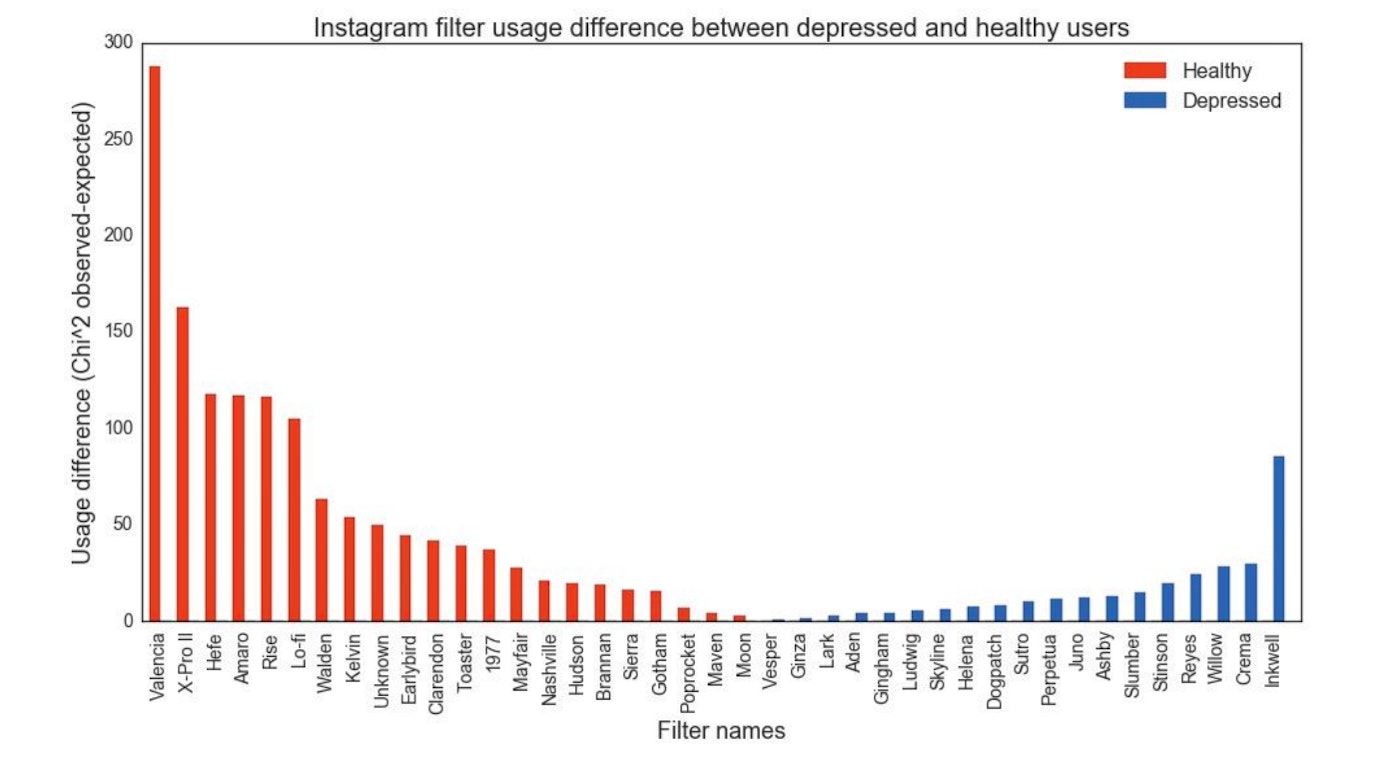
An anonymous reader quotes a report from Inverse: Harvard University's Andrew Reece and the University of Vermont's Chris Danforth crafted an algorithm that can correctly diagnose depression, with up to 70 percent accuracy, based on a patient's Instagram feed alone. After a careful screening process, the team analyzed almost 50,000 photos from 166 participants, all of whom were Instagram users and 71 of whom had already been diagnosed with clinical depression. Their results confirmed their two hypotheses: first, that "markers of depression are observable in Instagram user behavior," and second, that "these depressive signals are detectable in posts made even before the date of first diagnosis." The duo had good rationale for both hypotheses. Photos shared on Instagram, despite their innocent appearance, are data-laden: Photos are either taken during the day or at night, in- or outdoors. They may include or exclude people. The user may or may not have used a filter. You can imagine an algorithm drooling at these binary inputs, all of which reflect a person's preferences, and, in turn, their well-being. Metadata is likewise full of analyzable information: How many people liked the photo? How many commented on it? How often does the user post, and how often do they browse? Many studies have shown that depressed people both perceive less color in the world and prefer dark, anemic scenes and images. The majority of healthy people, on the other hand, prefer colorful things. [Reece and Danforth] collected each photo's hue, saturation, and value averages. Depressed people, they found, tended to post photos that were more bluish, unsaturated, and dark. "Increased hue, along with decreased brightness and saturation, predicted depression," they write. The researchers found that happy people post less than depressed people, happy people post photos with more people in them than their depressed counterparts. and that depressed participants were less likely to use filters. The majority of "healthy" participants chose the Valencia filter, while the majority of "depressed" participants chose the Inkwell filter. Inverse has a neat little chart embedded in their report that shows the usage of Instagram filters between depressed and healthy users.