Slashdot Mirror
Domain: jisho.org
Stories and comments across the archive that link to jisho.org.
Comments · 7
-
Re:Updated Policy:
95% of Han Unification doesn't seem like a problem to me. The slight stylistic differences between Chinese and Japanese where it's just a matter of "these tiny strokes point slightly left in Chinese and slightly right in Japanese" can still easily be understood no matter what font. Even slightly more stylistic differences don't actually cause any problems. For example, these two Kanji: http://jisho.org/search/%23kan... and other Kanji that have these shapes inside of them. The fonts tend to show the Chinese version: In the first, the top line is the same as the 3rd/4th, but Japanese usually write the top like a tiny dot almost, as seen in the stroke diagram graphic. In the second Kanji (scroll down), the last stroke is vertical in Chinese, but diagonal and connected differently in the Japanese version. Japanese people, in my experience, don't seem to have any problem with these kinds of differences.
Other more major differences caused by Kanji simplification over the years has also resulted in two codepoints in Unicode, so the Chinese and Japanese characters that *historically* had the same drawing, are now actually usable in either language still. For example, https://translate.google.com/?... shows the Japanese and simplified Chinese "fish". Japanese still use 4 dots on the bottom, Chinese use a line. This was given two codepoints and doesn't seem to be a problem. Many other differences were given two codepoints and Chinese fonts typically don't include any definition for the Japanese version and vice-versa.
The example I gave in my original post, about the Kanji meaning "leader" is one that really baffles me. Why was such a major difference in drawing merged into only one codepoint, and why was it never separated out into two codepoints in the next version of Unicode? There are other Kanji with major difference in appearance that share a single codepoint because of Han Unification, and these ones cause a lot of trouble. Japanese people typically don't recognize the Chinese version of "leader" as having any meaning at all. It's just scribbles to them, and when a webpage or document tries to display Japanese text but Windows or whatever decides to fall back to a Chinese font, the entire meaning is lost, because of Unicode.
-
Re:Updated Policy:
The issue isn't how many characters exist. There is room to add more characters to Unicode when missing ones are found. The big failure of Unicode is Han Unification, which is basically like saying "Well the character A in America has the same *meaning* as the character B in Canada, so let's only issue one codepoint for A/B" and now when you type an A on your American computer, all Canadian's see a B because their fonts render the exact same character differently. This happened with many common characters that have the same *meaning* in Chinese and Japanese, but are drawn completely differently. As an example, try to copy the Kanji at http://jisho.org/search/%E5%B0... into MS Word and compare the Meiryo font vs Microsoft YaHei font.
-
Re:Fonts missing in action
I'm pretty sure most font systems already DO do this. In fact, this was the reason I rooted my Android phone - I wanted to change the font-fallback order so that certain Kanji would display with a Japanese font instead of Chinese one. An example is http://jisho.org/kanji/details... which is drawn completely different in Chinese fonts, to the point where Japanese readers would not know the symbol, yet both are supposed to be represented by the same codepoint, because they're the same character.
But anyway, fonts and display aren't a character set encoding issue. It doesn't matter how you represent the glyph on disk or in memory, if your fonts are all missing a rendering for the character, you're going to just see a placeholder box no matter what. -
Re:Han unification
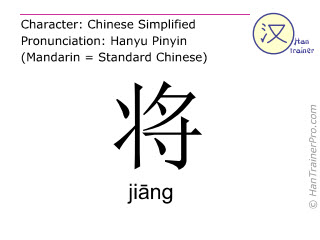
I ran into this problem recently. The kanji for "leader" is supposed to be like the diagram at: http://jisho.org/kanji/details... (note the 4 individual lines for the top right piece) but the fonts on my Android phone insisted on rendering this glyph using the Chinese font, that looks like http://www.hantrainerpro.com/h...
It's not just drawn differently, it's actually one less stroke in Chinese, but it's supposed to be the same glyph somehow!
Unicode has no way to indicate which language you actually want characters like this to display in. Sure for single-language documents like HTML, you can use a lang= attribute and hope the browser handles it right, but you certainly can't mix the two together very easily. -
Re:At the risk of incurring wrath from iFans...
Siri-ously? There's someone who still takes Siri for The New UI That Will Revolutionize The Phone?
Google doesn't have Siri-like app, it has its own voice recognition services without AI, and had it for a long time. There are Siri-like third-party apps (and Siri itself _was_ a third-party app until Apple bought it out and locked it to iOS5).
-
The Japanese have a word for it too: Waapuro-baka
This hardly a new phenomenon. In Japan it was noted ever since Japanese-language word processors began to be widely used, so much so that a term: 'waapuro-baka' was coined for them. Literally meaning 'word processor-stupid', it refers to someone whose kanji-writing ability has suffered due to over-reliance on the kanji conversion systems used to input Japanese text in a word processor or computer. I can imagine that waapuro-baka can only have gotten more prevalent in recent days, and perhaps might be a driver for orthographic reform in the countries that use the Han characters. The Koreans have all but abandoned the use of the Han characters (Hanja) in favor of their phonetic Hangul script and their use is now very much limited (and in North Korea has been completely forbidden). The Japanese have more inertia, from the looks of things, as it seems they have even recently increased the number of general-use kanji taught in their schools, rather than reducing their use in favor of the kana syllabaries instead. The Chinese don't have any native alternatives, and so what direction their orthographic reform will take is unclear.
-
It is japanese
Go here to understand how to read hiragana. If the characters don't appear right you may need a japanese font installed.