Slashdot Mirror
Domain: jonathancoulton.com
Stories and comments across the archive that link to jonathancoulton.com.
Stories · 11
-
Jonathan Coulton's New Dystopian Album Becomes a Graphic Novel (jonathancoulton.com)
An anonymous reader quotes NPR's report on one of Slashdot's long-time favorite musicians: In April, musician Jonathan Coulton released Solid State, a sci-fi concept album that represented a significant departure -- both from Coulton's wry, bright, tuneful back catalog and from any conventional understanding of what a sci-fi concept album sounds like... On first listen, with its shout-outs to futurist Ray Kurzweil, comment-section trolls, thinkpiece-gluts, and hack memes, Solid State seems a caustic critique of the internet -- which would be, as Coulton notes, "a little-off brand for me." Spend a bit more time with it, however, and its muted, melancholy songs reveal their true target: the toxic culture of glibness and hot takes that's leaching from the internet into every aspect of our lives.
The album features multiple perspectives and timelines, but its soundscape is allusive and impressionistic, resisting strict narrative. For that, Coulton turned to writer Matt Fraction and artist Albert Monteys, who with Coulton's input have taken some of the album's words, images and thematic preoccupations and crafted a graphic novel set largely in a future that will seem familiar to any reader of science fiction: a corporate-owned dystopia where humans have become dutiful, unthinking, unfeeling worker bees attending to menial tasks amid a culture engineered to keep them unthinking and unfeeling...These three creators believe that the roots of this dystopic future are all around us, but we're collectively choosing to ignore them in precisely the same way we blithely click past online Terms and Conditions agreements without bothering to read them.
The official music video for one of the songs takes the form of a text adventure. -
Interviews: Jonathan Coulton Answers Your Questions
We recently had the chance to talk with internet rock star and former code monkey Jonathan Coulton. We asked him a number of your questions and a few of our own about music, technology, and copyright issues. Read below to see what he had to say. A rundown of the tech you use during a show?
by Bhull
Can you give some details about the technology you use on stage when playing live without a band?
Jonathan: It depends on what I'm doing. I guess, when I'm not with a band, mostly I am comfortable playing on the acoustic guitar, which is a piece of wood with some wires attached to it. And a microphone, which vibrates and creates an electrical impulse that goes through wires. I have also been known to perform with gadgets. The thing is, I have a gadget problem. I'm looking around my office, right now, and I see, from where I am currently standing I can see eight or nine items that I purchased, because I saw a video of somebody doing something cool with it.
They have touchpads and buttons. Some of them are synthesizers and weird effect boxes, and weird grid instruments. I have a Tenori-On. I have performed a couple of songs with that. I did a version of Code Monkey, where I used a grid device called a "monome". And various pieces of software, and you know, crazy foot pedals. I would say that I'm sort of a frustrated musical technologist. I wish that I were better at using these devices, because they're very cool. What happens is I buy them in anticipation of learning how to play them really well. And I never really get to the "really well" part.
Samzenpus: You use RSS to announce a lot of your shows. Do you find that to be more effective than fliers or traditional advertising?
Jonathan: It's funny, the best way to communicate with people has really changed, over the years. Surprisingly, I find these days that the most guaranteed response, the best way to get people's attention, is with an email list, which surprises me. I'm an RSS guy. I am devoted to reading feeds throughout the day. So for me, the idea of essentially subscribing to someone from whom I want to hear news in the future, makes perfect sense. Like, if you want to know when my shows are, subscribe to my RSS feed, and it will be pushed to you when that information is available.
But I think that the basic problem on the Internet today is that we're all overwhelmed with stuff. I have this problem too. Keeping up with all of my feeds is a full time job, so stuff falls through cracks.
The same with Twitter. For a while, Twitter was a really effective and direct way of communicating with people. But as time has gone on, everybody follows more people. So you might not be able to keep up with that entire feed. If you haven't checked it in a day, and you look and you've got 250 unread tweets, you might be like, "You know what, I'm going to skip that route." Which results in everybody promoting things multiple times on Twitter, and that whole thing is a mess. But really, email is still a thing that sits in your inbox and waits for you to pay attention to it.
If you assume that you've got a number of people who actually want to get that information, then when you put that little flag in their inbox, they will wait until they have time, and then they will read it. That's still seems to be the most effective way of getting information out to people.
Revenue?
by ThatsDrDangerToYou
What is your approximate breakdown of revenue annually (i.e. % from digital downloads, CDs, live shows, royalties)? How has it changed over the years?
Jonathan: I would say, in a standard year when I'm doing the amount of touring that I am comfortable doing, between 20 and 30 dates, I will make probably equal money from touring and from downloads.
Which is to say that people do purchase downloads from me. Still. Today. I will say that that number has been in steady decline. I think, in part because of the rise of streaming music, instead of purchasing music. Also because there's no ignoring the fact that I haven't had any new material in a couple of years. There's only so long that a back catalog can stay relevant and active in people's lives.
To be honest, I haven't looked in a while, and I tend to not pay all that much attention to the specific numbers of the various components that make up what I do. Because it's like, what are you going to do? You put the stuff up for sale, and people are going to buy it, or not. I'm not going to spend a lot of time trying to convince people one way or the other.
For me, I'm lucky enough that I have a bunch of different income streams that add up to making a pretty decent living as a musician. So I'm not going to complain about this piece of it shrinking, or that piece of it shrinking. The world is what it is.
more karaoke tracks?
by Nick Number
Over the past five years I've taken on the mantle of karaoke nerd (I will also answer to diva), and I've really enjoyed performing the karaoke tracks which I bought from your website and persuaded various KJs to import. "First of May" tends to get me some funny looks, and despite the disclaimer, I've yet to be punched in the nose after singing it. Do you have plans to release any new karaoke tracks? Is there any chance that "Still Alive" will get one, or does Valve own those rights?
What about more sheet music?
Jonathan: The karaoke tracks are popular sellers. The thing about it that I love is thinking about all these completely unaware karaoke audiences around the country, you know, expecting to hear "Achy Breaky Heart". Instead, it's a song about a sad, giant squid. It's a lovely..So, you know, it really tickles me to think of those things floating around out there at karaoke nights.
In answer to your other question, yes. "Still Alive" is a song that is owned by Valve. Because it was a work-for-hire song, I have limited things that I can do with it. Although, I am allowed to record and release new versions of that song. So presumably, I could, because I did a new version of that song on my last album, I could take that and make a karaoke track out of it. Honestly, I just haven't gotten to it.
There are guitar tabs, in the Wiki on my website. That tends to solve the problem for most people. As far as sheet music, you know, that's a relatively complex task, taking a pop song arrangement, shrinking it down to some sort of piano version that makes sense, and is the right difficulty level, and all that stuff. That's just another thing that I think is, in terms of the hours it would take to do, or for me to hire somebody else to do it. Because I certainly wouldn't do it myself; It's sort of a question of return on investment. I don't know how many people would really buy it. I would love for it to exist. It's just a question of finding the time and the resources to create it.
Valve?
by Jaktar
Hi Jon. Have you been approached for Portal 3? Also, thanks for releasing all those tracks for Ultrastar DX. My son was absolutely terrified of the Creepy Doll song and my kids love to sing RE:Your Brains (They're 6 and 5).
Jonathan: I have not heard anything about Portal 3. When we were in the thick of doing Portal 2, there were a few people I talk to who were kind of like, "Ugh. People are already bugging us about Portal 3, and Portal 2 is not even out yet. And we're so sick of Portal."
It's that thing where you're up to your neck on some project, and the last thing you want to do is think about doing it ever again. So I don't know. I have no inside news on Portal 3, and that is the honest truth. But the caveat is that they don't tell me anything until they absolutely have to. So, who knows?
Thoughts on thing a week?
by smaddox
What are your retrospective thoughts on you're thing a week project? I'm particularly interested in if you thought it was a success (and what that might mean), and if you would suggest something similar to other artists. Loved your music ever since i heard about you through Slashdot 6 or 7 years ago! Thanks for all the laughs and entertainment!
Jonathan: Yes, boy, I'm really proud of "Thing a Week", and very happy with the way it behaved in my life. I did it really because I didn't know what else to do.
Not only was it a pretty effective way of getting attention, and kicking off what was then a brand new professional career as a musician. But I really learned a lot about song-writing, and recording, and the creative process, in general. It was such a hard year. The first two songs were easy. And then, everything after that was increasingly harder. It's the kind of thing, you hear this all the time from writers and creators of all stripes, that it never really gets easier.
The process is what it is to you, personally. There are few ways to make it better. You have to sit down and do it. That's the sad truth of it. It rarely falls out of the sky into your lap. Everything you make is the result of sitting down with your tools and making them go until a thing is done. You forget that that is true, but it is unquestionably the only way to get things done. So yes, I'm really proud of it. I'm really glad to have done it. And I certainly recommend that kind of process to anyone who is a frustrated, creative person.
I would say the components of it would be doing creative work on a regular basis, and also publishing on a regular basis, without regard to making everything perfect. That was a key component for me. Writing a song and releasing it, maybe even before it was done. Or before it was as good as I thought I could make it. Because as hard as it is to start something, it's even harder to finish something. So you trick yourself into doing both of those things, by setting a deadline... it's also that you have to make a lot of bad things in order to make one good thing. You can't filter that stuff on the way in. You can only filter it after it's out the door. Honestly, you've got to finish each song, and then decide what the good ones are.
Popularity of your songs
by Overzeetop
As a consumer listening to songs I find only a small percentage of work of any single artist strikes that perfect mix that makes me want to put a song on a "favorites" playlist. As you look back at your library of songs, is there a group that you think really are just meh and how many do you still really, really enjoy performing? As a followup - if the songs you perform the most get stale for you as a performer do you look to your catalog to keep things fresh or do you prefer to write new material?
Jonathan: Geez, my favorites rotate around. As you say, I get tired of certain songs, and songs fall out of favor. I forget about certain songs, and then am reminded how much I like them. My favorites, the ones that really stand the test of time, for me, are the ones that are not that funny, at all. I really like the sad ones, and the straight-ahead ones. The giant squid song is one of my favorites because it's weirdly personal for me, in a way that I'm not sure I fully understand. But I find it emotionally, really compelling.
"Shop Vac" is a good example of a song that I didn't realize how dark and weird it is, until a couple of years after I wrote it. I was like, "Oh, my... Did this guy kill his family?" I love "You Ruined Everything", which is a song about becoming a parent. Recently, I was on the JoCo Cruise Crazy fan cruise that we do every year. There was a woman who bugged me on Twitter, every couple of days before the cruise. She said, "Please play `Pizza Day'. Please play `Pizza Day'. Please play `Pizza Day'." Which is a song from "Thing a Week" that I kind of rushed through, and immediately forgot about, and have never played in concert since.
Because of her incessant harangue, I did play it on the cruise. I was reminded, it's a nice song. So stuff like that will happen, where songs that I haven't played in years, somebody will ask for them. I'll play them and say, "Oh, yes, that's a pretty good song, actually."
Samzenpus: For people who don't know, could you just give a little synopsis of the whole "Glee" issue?
Jonathan: Yes. I was alerted by someone on Twitter that there was a video review of some music from an upcoming episode, that was leaked by someone. And the music was the song, "Baby Got Back", in the exact style that I did it. Which is to say, they used the melody that I wrote. They used, almost precisely, the background vocals that I had arranged. They even used some of the lyric changes that I had made. For instance, "Dial 1-900-Johnny C" instead of "1-900-Mix-A-Lot".
As the air date of that episode approached, I got my lawyers involved. I also saw the song for sale on iTunes. We were trying to figure out, "What is the situation here?" It's a complicated intellectual property issue, because my song was kind of a cover song. But I had added new material to it, by writing a melody for a rap song, where there is no melody.
Without going into the details, because there are a lot of boring aspects to that. It was unclear how solid of a case we really had. Even though, when you listen to them, side by side, or even on top of each other, they line up exactly. There was also some indication that they might have used some of my tracks, because I had used this sound effect of a duck quaking, at some point in the song. I can hear that duck quack in their recording.
Where it ended up is, ultimately, I and my legal team decided that, while we could go further with it, the question I had to ask myself was, "Do I really want to be in a protracted legal battle with Fox?"...They had made it clear from the get-go, that they thought they were doing me a favor. And no way was I going to get any money. They were not open to really anything; they didn't give an inch, from the moment we started complaining to them.
As a sort of protest, I released my original track with a new name. I called it "Baby Got Back in the Style of Glee", which I think made them mad. Then people started buying that track, and rating it very highly. It shot past their version in the iTunes charts. And I gave away all the proceeds from that track, splitting it between the It Gets Better organization, and VH1 Save the Music.
You know, that to me felt like a bigger victory than I was likely to get in the legal process. So I said, "Well, let's call that `done'."
Samzenpus: As I'm sure you're aware, "The Good Wife" made an episode about it. Did they contact you?
Jonathan: It was another moment where I didn't hear about it until it was on television, and somebody Tweeted about it. I flipped over, and there was Matthew Lillard playing me, essentially. Suddenly my life was ripped from the headlines. It was a very strange experience.
They did not contact me ahead of time, but I thought it was really well done. I appreciated that they let the good guys win in their version. I love Matthew Lillard. I was flattered to be portrayed by him. They got in touch. I spoke with a couple of people there, and they said, "We want you to know we're really big fans, and we think what happened to you was terrible. We're sorry that we didn't contact you ahead of time. But honestly, our legal team was afraid of the Fox lawyers." To which I said, "I hear you, brothers."
Samzenpus: For those who don't know, could you explain how you license your music?
Jonathan: I use a creative commons license. It is "attribution, non- commercial", which is to say that, even though these songs still retain their copyright, creative commons is this caveat to standard copyright. Specifically, it gives anyone the right to share those songs, freely, and use them in non-commercial ways, provided they give me attribution. It's basically a way of declaring, ahead of time, what kinds of use you are okay with. For me, I love that people are able to do remixes, and make videos.
Samzenpus: It's led to some amazing videos, and many with World of Warcraft toons.
Jonathan: Yes, that's a great example. It's Cory Doctorow who talks about this idea of creative commons as being a way to turn your art into these dandelion seeds that float on the wind, and hopefully take purchase in some soil that you never would have found otherwise.
Those World of Warcraft videos are a perfect example. Because I didn't even know it was a thing, but it's a thing. There are communities of people who are really into making and watching music videos made using materials from World of Warcraft. Some of those videos, there's one particular user named "Spiff", some of his videos have been viewed literally millions of times. You can't buy that kind of exposure. Or I should say I can't buy that kind of exposure. Some people could, but not me.
What is your ideal Copyright system?
by wertigon
Hi Jonathan! These days it's quite popular to both bash the copyright system and sue those thieving filesharers to oblivion. I'd like to ask you what you, as an independent musician, think would be a good balance between the creator rights and the public interests? Would it be a RIAA wet dream where all the content is locked up behind paywalls and getting a copy from an unauthorized source, like say a library, would constitute a crime with a minimum of 6 months in jail? Do you believe more in the Pirate Parties vision of abolishing the monopoly on creating copies, but retaining the protection against economic abuse? Or are you more in favor of going full nuclear by abolishing the entire copyright system all together? Thank you for all the great songs you have produced over the years!
Jonathan: A lot of people in the music industry will tell you that. Creative commons is a clear and open declaration of the kind of thing that happens anyway, in a kind of don't ask, don't tell way. Take songs as an example. There are plenty of songs that get used in various ways, that are probably violations of copyright. But the holders of the IP of that song don't really mind. So they don't say anything.
They don't condone that kind of stuff, because they want to reserve their right in a future situation where they don't like it. But if something happens, and they're kind of okay with it, they'll be like, "eh, let's just let it go and not say anything." The way we use and consume media has changed a great deal in the last 10, 20 years. So to say that you can't use a song in a home movie of yours, which is, unquestionably, a violation of copyright, to say that you can't do that is kind of absurd at this point. The thing I like about creative commons is that it is a clear statement of what is already happening. It's a clear statement of how we all use and think about digital media.
How To Be JoCo?
by ThatsDrDangerToYou
So I'm here in my cube wondering how to reach escape velocity. I could maybe do a thing a quarter or maybe a thing a month though, and have a decent set within a year. What are the best first steps and what was your greatest challenge in leaving the day job?
Jonathan: I would say in general, for people who want to be professional, creative people, the same is true that has always been true. Which is that you need to make stuff, a lot. You need to get better and better, always, at making stuff. You need to publish that stuff, on a regular basis, whatever that means to you. It doesn't need to be a big deal, but you need to get it in front of other people. You need to try to find the groups of people who will like your stuff, and hope that they like it.
You notice, I haven't talked about money at all, yet. Because, if everything goes well, the money comes later. To describe my strategy generally, it was, get the stuff out there; attract some attention, and see what we can build this in to.
There are so many different ways to get your stuff out there. Try everything, and keep the stuff that works. It's not an easy line of work. The days when you could sit around dreamily in your room, coming up with poems, and then, a bunch of business people would turn that into money for you, that doesn't really exist any more.
It takes work. And not just the creative work. You have to be a bit of an entrepreneur, these days. If you're not into spreadsheets, at least a little bit. Then for goodness sake, don't go into the entertainment business. -
Crowdsourcing Concerts — the Future of Live Music?
New submitter roryed writes "Performer Jonathan Coulton, famous among some geeks for 'Code Monkey' and writing Portal's 'Still Alive' wrote on his blog, 'Salt Lake City, the last ticket link for the Nov/Dec tour, has finally gone up. The reason for the delay was that we were working on the details of this experimental ticketing thing called Bring the Gig.' Bring the Gig is a new form of crowdsourcing, much like a Kickstarter for concerts. The idea is to have fans put up the money to bring bands to their city by buying premium tickets. If the goal is met and the band is booked, general box office tickets are sold. If the show sells enough at the box office, or sells out, the original premium ticket holders get a full refund and keep their ticket, effectively seeing the show they helped bring for free. Coulton also writes, 'Could be a disaster! Exciting! Honestly I have no idea if this is going to work, but as you know, I am a scientist. I like to watch what happens.'" -
Ask Jonathan Coulton About the Transformation From Code Monkey to Internet Star
Even though he created the definitive guide to enjoying yourself outside, Jonathan Coulton is best known for the programmer anthem Code Monkey, his Thing a Week project, and writing the theme song to Portal. In 2005 Coulton left his programming job to pursue his music career, and has since become a successful one man music label. Jonathan has agreed to answer your questions about robots, life, and internet stardom. Normal Slashdot interview rules apply. -
Ask Jonathan Coulton About the Transformation From Code Monkey to Internet Star
Even though he created the definitive guide to enjoying yourself outside, Jonathan Coulton is best known for the programmer anthem Code Monkey, his Thing a Week project, and writing the theme song to Portal. In 2005 Coulton left his programming job to pursue his music career, and has since become a successful one man music label. Jonathan has agreed to answer your questions about robots, life, and internet stardom. Normal Slashdot interview rules apply. -
Ask Jonathan Coulton About the Transformation From Code Monkey to Internet Star
Even though he created the definitive guide to enjoying yourself outside, Jonathan Coulton is best known for the programmer anthem Code Monkey, his Thing a Week project, and writing the theme song to Portal. In 2005 Coulton left his programming job to pursue his music career, and has since become a successful one man music label. Jonathan has agreed to answer your questions about robots, life, and internet stardom. Normal Slashdot interview rules apply. -
Ask Jonathan Coulton About the Transformation From Code Monkey to Internet Star
Even though he created the definitive guide to enjoying yourself outside, Jonathan Coulton is best known for the programmer anthem Code Monkey, his Thing a Week project, and writing the theme song to Portal. In 2005 Coulton left his programming job to pursue his music career, and has since become a successful one man music label. Jonathan has agreed to answer your questions about robots, life, and internet stardom. Normal Slashdot interview rules apply. -
Jonathan Coulton Track Part of the Orange Box
Joystiq notes that along with Half-Life 2, Half-Life 2: Episode One, Half-Life 2: Episode 2, Portal, and Team Fortress 2, folks who purchase Valve's Orange Box compilation will also be getting a musical treat. 'Geek Troubadour' Jonathan Coulton composed an entirely new song for the offering, apparently with help from the Valve design team. "At this point, with less than a week to go before the game's (games'? gameses'?) release, we're surprised the track hasn't already made its way to the seedy, illicit , peer-to-peer underbelly of the internet. Hey record industry, you should take notes!" The official Coulton site has plenty of information about the singer, and you can see his command performance of 're: your brains' from this year's PAX at the Penny Arcade site. -
PAX 2007 In A Nutshell
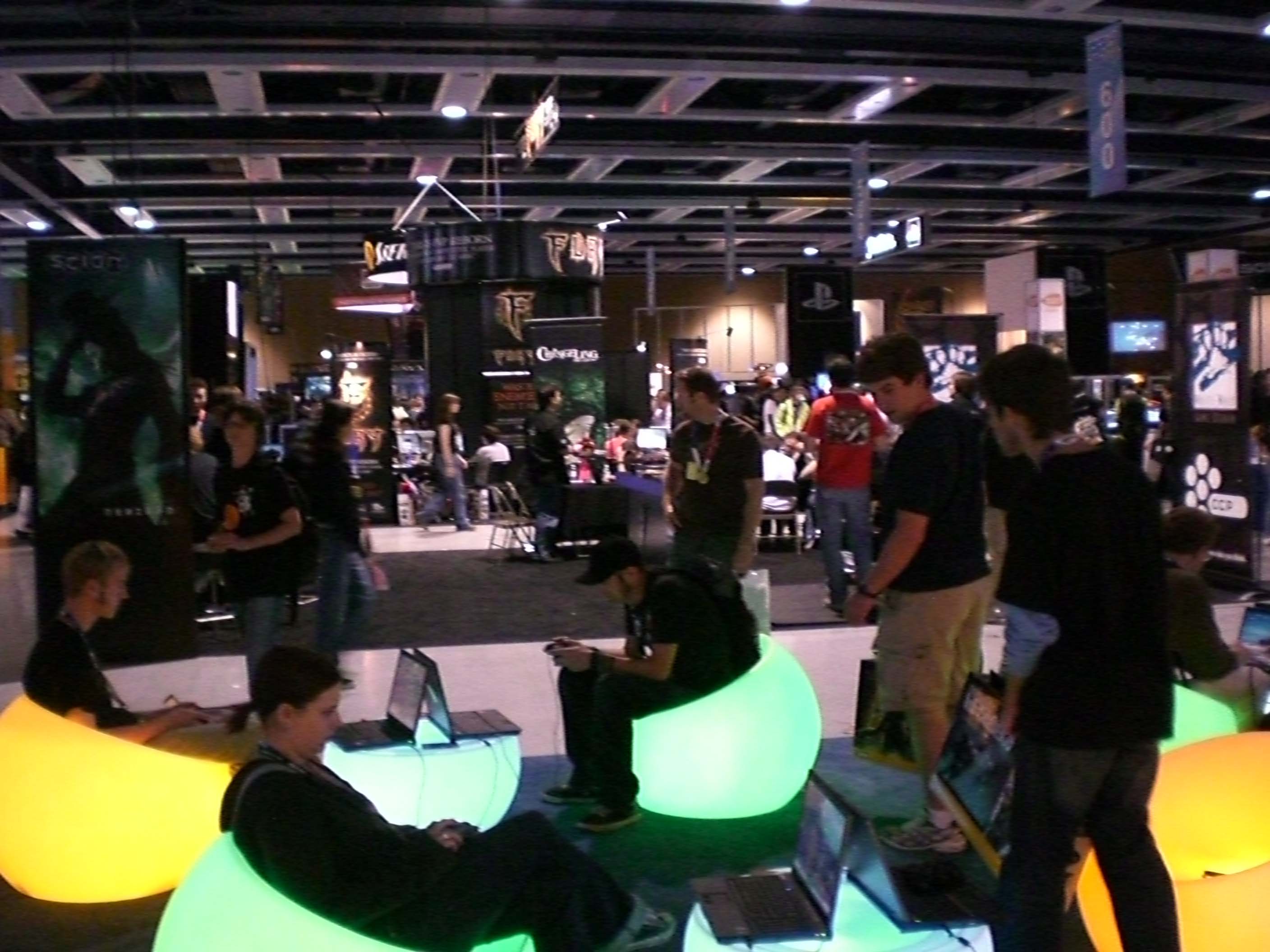
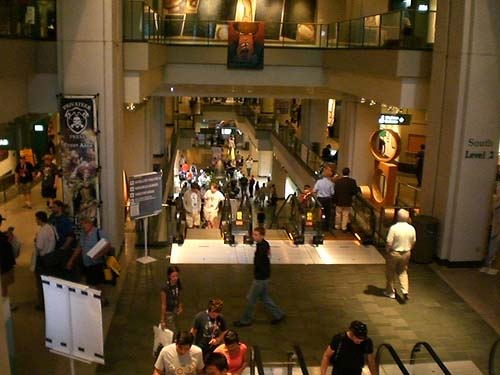
Last weekend the dark horde of nerddom descended on Seattle, entering the heart of the 'Emerald City' to gorge itself on the music, culture, and humor of gaming. The Penny Arcade Expo (PAX) once again brought together fans of the influential webcomic for a festival that, without even trying, seems to be taking the place of old E3. Though they were expecting around 30,000 people, the word was that by early Sunday they'd already gone through some 40,000 badges. There were DSes everywhere, concerts at night, a packed exhibit hall, and benchmark comic strips created by Mike Krahulik and Jerry Holkins adorned almost every wall. Despite all the people and the noise, somehow the event had a community feel to it that was hard to understand ... and even harder to describe. I'll try, though, along with impressions from games on the show floor and the incredible music of folks like Jonathan Coulton and the Minibosses. Read on, and All Hail Ball. The Early Weekend
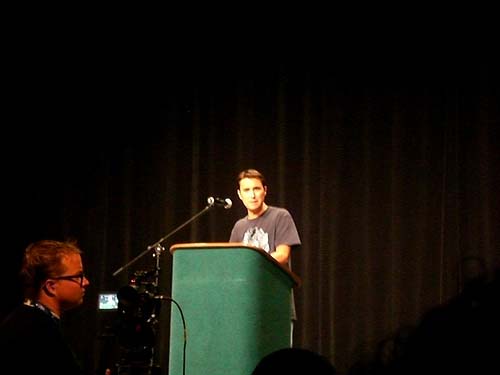
If you missed my discussion of Friday's events, it's understandable; it went up this past Saturday. Suffice it to say that Wil Wheaton's keynote speech was the highlight of the evening. His praise of social gaming, and the relationship-building power of the PAX-goer's favorite pastime resonated incredibly well with the packed theatre. The after-action report on his blog says it all: "My keynote went perfectly, and the audience (and the gaming press online) responded to it in ways I never dreamed possible. I didn't think there would be slightly more than 5000 people in the room when I spoke ..."
The first Penny Arcade Panel featured a lot of middlin' questions, highlighted by the incredible singing power of Jerry Holkins. A description of his performance is in my weekend update, but the real surprise didn't come until after the questions were done. The end of the panel turned ugly when the PA gents left the stage for Uwe Boll to have a chance at the mike. Gabe said later that weekend that he was surprised by the crowd reaction. "You can tell when a crowd is angry, and this was the first time I've felt that at at PAX." The unapologetic Boll was screamed at fairly mercilessly by the attendees.
Other events from the early weekend included a discussion of modern storytelling in videogames. Luminaries Ron Gilbert (Monkey Island), Dave Grossman (Sam and Max) and Nate Fox (Sly Cooper) came together to jaw on a topic near to their hearts. The group discussed linear stories vs. sandbox-style gameplay, user-created content, kids games, and the importance of theme even if your core story isn't all that great: "Grossman [said], 'Well, story isn't just about dialogue and narrative, right - I mean really you want to learn something about the human experience. I think that if I weren't doing adventure games I wouldn't think of myself as a narrator, but rather as the hand of fate. I'm going to kind of let you run around and do what you want and everything. Just to let the player go around and do what they want - they can feel like it's the good hand of fate or the bad hand of fate, but not that they're completely being controlled.'"
The Rain-Slick Precipice of Darkness, the Penny Arcade videogame currently in development, was a visible presence at the show all weekend. The Friday unveiling of a new game demo to the media at a special Q&A event was followed by a weekend's worth of running through the game for attendees on the show floor. Most everyone got to see the title, and hear the news that it will be coming to Xbox Live alongside its PC distribution avenues. The opening, grim, text still makes me smile: "Four gods wait on the windowsill / Where once eight gods did war and will / And if the gods themselves may die / What does that say for you and I?"
PA Panel II
While the first PA Q&A panel was entertaining just to hear Holkins and Krahulik talk, the second panel actually had a number of insightful questions, touching statements, and funny moments. And, thankfully, there were no stoned guys rambling about their paranoid fantasies at the microphone; always a plus. Long queues formed at the two microphones to question the gents, and here are some highlights:- Paul Barnett, Design Manager for the Warhammer Online Massively Multiplayer game, drew applause for his short advertisement during a trailers reel before the event started. He used his clipped British wit to compare Warhammer to World of Warcraft like so: If you're going up against the Beatles, don't try to be the Beatles. You'll end up looking like the Monkees. Instead, we're going to be Led Zeppelin.
- A question about the changes to the primary characters over the year led Mike Krahulik to discuss his influences, such as Stan Sakai. He's essentially 'never finished' with the characters, and we can expect to see further changes to his art style in the coming years.
- Drawings of Gabe and Tycho in ping pong outfits prompted readers to ask if we would ever see that as a project down the road. They're enthusiastic about it and would love to do it, as up until now readers have just seen a few simple images. To further tease us, they described the backstory to the piece: Set in the 80s, a cold war US is still facing down Russia. A little-known clause in the UN charter states that table tennis can be used to decide grudges; the loser forfeits their country. The US table tennis team is slain, and so a group of four people at ping pong camp (including our protagonists) are drawn into international excitement.
- A question about the appeal of the Halo franchise has the gents noting that the series has grown on them considerably.
- In negotiating the price for the XBLA version of the Rain-Slick Precipice of Darkness, they feel they'll have a good deal of leverage as regards pricing (and content as well).
- Several great ideas for projects and future PAX ideas are mentioned, including support of a nerdcore show currently touring the area and an Indie Games FreePlay area.
- When asked about origins of the hobos in Precipice of Darkness, Tycho notes that the game is a 'hobage' of different sources. The Achievement for 100 hobo kills? Hobicide.
- A reader challenges the two to a thumb war, which Jerry wins quite promptly by kicking Gabe in the nuts. He declines to continue, saying he 'values his beanbag.'
- When asked to endorse some games on the exhibit show floor, both gentlemen put their weight behind Eye of Judgement and Sega Rally.
- Someone notes that the current in-the-works game is very much a 'Tycho' game ... lots of words. He wonders what kind of 'Gabe' game they'd like to make. Mike ponders the concept of a brawler, or perhaps something not unlike Turtles in Time.
- The idea of making sure the ball comes back to PAX every year, 'to recharge' is brought up. It could then be sold on eBay to help fund the annual Child's Play charity. They both really like this idea.
- A reader asks what the 'worst thing' either of them have ever done is. Mike tells the story of a time when he set a trap for his family's cat in the backyard, and ended up stringing up the pet by the neck into a tree. It survived, but he has always felt terribly. Jerry, on the other hand, equivocates. When Mike gets tired of it, he tells a story of Jerry drinking a glass of Chai and finding a bug near the bottom of his glass ... which he then upended and finished after fishing out the bug.
Having had a good look at the game at Gen Con, I used my PAX chance to talk to the folks at EA Mythic to dig a little bit deeper on one of the game's claims to fame: Realm vs. Realm combat. Just hours before I spoke to the folks at EA, a team from their company had announced professions from the High Elf and Dark Elf factions for the very first time. I tried to glean just a little bit more PvP-specific information about these races for you, but it was not to be.
Just the same Ryan Barnard (game designer) and Eric Correll (producer on the game) were very forthcoming. The pair was happy to discuss different elements of their signature game feature. For example, new players will have the PvP-focused game introduced to them gradually at low levels. There's a soft introduction, beginning that portion of the title's seamless integration into the overall gameplay. Open-world PvP in specific parts of the starting zones will most likely be their first exposure. Quests will lead them to RvR areas, and eventually will direct them to the instanced 'Scenario'-style missions. Throughout the game, the portion of land that is focused on these activities starts small, but eventually dominates gameplay; the RvR 'city capture' system is Warhammer's 'end game'.
Warhammer Online's unique systems, like the Tome of Knowledge and the Public Quest, also touch on RvR. The Tome will explain elements of Player vs. Player combat, and will record your successes in battle. RvR Public Quests, meanwhile, are currently undergoing retooling. They want them 'right', and currently have taken them all out of the game to make sure they're just so; they hope to have them back into the game by launch.
This feel of 'rightness' is something they're aiming for in their scenarios as well, with the goal of integrating these instances not only into PvP progression, but the ongoing story of the game as well. Each is themed to the area they're in, and tells the tale of a specific conflict between the Order and Chaos armies.
Introducing players who might not otherwise participate in RvR into the fundamentals of that gameplay style is also something the team is focusing on. While they acknowledge that some people just don't want to play against other players, they see folks who are hard and fast about that rule as the minority. They're looking to make PvP a core part of the game, and as such they'll be approaching it differently than a primarily PvE focused game might. This affects multiple game design elements, all the way down to the 'hook' of Public Quests, which gets folks who might not even ever group thinking more favorably about gaming with others. Racial pride is also a factor; by priming characters from low levels to be 'pro-Dwarf', or whatever, players will be more likely to come to their society's aid. They're all steps in a chain, the team hopes, to changing outlooks soured by less focused titles.
On the other side of the equation, the end-game city capture system sees factions sacking the racial homes of their opponents. Though reluctant to use the term 'end game' specifically, the team members were happy to admit that it will be the focus at max-levels. RvR combat will funnel players towards the opposing side, hoping to push the 'antagonists' back to their city walls. They also pointed out, however, that there are other elements in play at that high level. PvE content and public quests are still around, though diminished, and they have plans to further expand both sides of the max-level content once the game is released.
Organized Play, as featured in Guild Wars and now World of Warcraft, is not something they're currently planning for. They'd love to eventually do tournaments for RvR teams at some point, but they're so focused on getting it out the door in a timely fashion that it's not particularly on their radar. As they put it, "we hope we have that problem".
The cutting edge of their work is, obviously, on the Elves at the moment. They're still working to tune the scenarios and open-world play for the Elven areas, and are always working to ensure that classes are balanced and the 'fun' is present.
This cutting edge blends well with some of the surprises that the team had in store for them when masses of people finally entered the Beta. Probably the most surprising for the RvR team: their carefully crafted points of control battlefield objective system, which requires holding targets in open-world PvP, are almost completely being ignored. While they worked hard on this mechanic, the players are more interested in the actual act of combat when in an open-world environment. Scenario tactics are welcomed, but outside of those instances the two sides really just want to enter the fray. The team hopes to have them in the game in some capacity, but they're going to undergo heavy retooling before that happens.
As we wrapped things up, we discussed the reflection this decision has on their overall attitude towards the game: if it's not working, it needs to go/be fixed/tuned/rehashed/whatever. Killing what you thought was going to be the end-all be-all is not outside the realm of possibility, even this late in the game. RvR, and the game in general, has to be fun. No exceptions.
Fury
I'll be honest: Fury came at me from nowhere. I'd read about it before coming to the show, knew that it was approaching an Open Beta, and that it was a free-to-play PvP title. That was just about all I knew when I sat down to play and chat with Fury's lead designer Adam Carpenter.
When you're trying to quantify Fury's gameplay type, it's better to think less about online RPGs and more about first-person shooters. Fury has essentially taken the swords and sorcery milieu and dropped that whole cloth into an FPS schema. In each match, players spawn in, rush out, and slam into each other in extremely fast altercations. Everything is fast; from character creation to combat can be just a few minutes.
This is the underpinning of developer Auran's outlook: fun, fast, and free. Instead of grinding through a PvE component, Fury characters are built entirely around a series of abilities and equipment available at character creation. Each character can play whatever role you want them to in a given match, and their role can be changed freely between altercations. Want to act as a support class in one match? You put on your gear that aids healing type abilities, load those healing abilities into your hotbar , and go. Want to act as a ranged DPS class? Swap those healing bits out for the appropriate gear and powers. Players will never have to whine about not having the right class for a fight, as everyone has flexibility.
Gameplay itself, character abilities, focuses on colors. Your ability bar is full of various attacks, and they are themed around different colors. Each player has a small gauge on their screen to help ascertain how many color points they have built up. These points are gained by using 'low level' colored abilities. A basic blue attack, for example, might give you one blue point. As you move through combat, your gauge will fill with colored points. Higher points unlock the use of more powerful abilities on your hotbar, which in turn use up your points. Fascinatingly, each ability color has a diametric opposite; red points counter blue points and players with red points in their bar will actually be less effective with blue abilities. This led the designers to create special point-manipulating abilities; in the middle of the fight you can switch a player's point colors. You can also steal points, leading to the 'change-their-color-steal-their-points' combo move, leaving your opponent defenseless and cold in the world.
Each color has a sort of 'theme', with green abilities having a sort of nature-y feel to it, while blue abilities being sort of icey. There are ranged and melee abilities in all colors, so there won't be any particular demanded role for a color ability. For most players the only real constraint will be up to what abilities you have on hand as a result of previous accomplishments. While most common abilities will be available by default when you purchase the game, new powers will be unlocked via achievements as you succeed in combat. Achievements include everything from taking the most objectives during a match, to killing the most people, to healing the most ... and your rewards are appropriate for what you accomplish.
Rewards on the equipment side are a bit more random. After completing a match, random loot is generated for the party, and people /roll for it. That's pretty much 'the way it is', going right around the usual sort of arguments at pick up group might have when dealing with looted gear. Gold is equally distributed, of course, and both items and gold are commensurate with your success in the just-completed mission.
It's worth noting here that Fury will have a for-pay option, allowing you to slap down a subscription fee if you want ... but it will have nothing to do with the quality of your in-game items. Money is only given to the Auran folks for the addition of convenience and depth. I should say there is some overlap with items: one of the for-pay conveniences is the ability to roll on three items instead of two. A for-pay player has a bit more in the way of item space, some options for purchasing things from vendors, and other simple things that makes the game just a little bit easier for having forked over your cash. Depth, in this case, is all about in-game ladders. While free players will compete on ladders of various types, paying players will have a long list of different ladder types to participate in. Server, guild, and individual progress will all be tracked for various rewards and bragging rights.
Those bragging rights will come in the form of an online representation of your character's escapades. Kill counts, 'flag' steals, and other metrics will be tracked on an official page for your character, and viewable by anyone. Guilds with an interest in going deeper into min-maxing can make use of the human-readable stats that will be generated locally by the client in a text file. Officers can collect these document to see which builds are working, which aren't, and where the group as a whole needs to focus.
The game build playable on the PAX show floor was already five months old, and showed it. There were server problems a few times, and the game looked more than a little bit jaggy. Even through the cruft, though, there was a lot of promise showing through. The settings were gorgeous despite the outdated rendering model, and the fun factor of actual play was very high. Fury is a simple, brutal combat game, and it makes no pretensions about it. With the promise of free online play for the price of a PC game title, this seems like a pretty nice package. It's definitely not going to be for everyone; there's none of the painstaking polish of Guild Wars, or the deep PvE experience of World of Warcraft. For folks looking for a quick, focused good time Fury may just be what you're looking for.
Jonathan Coulton, Frontalot, Minibosses Concert
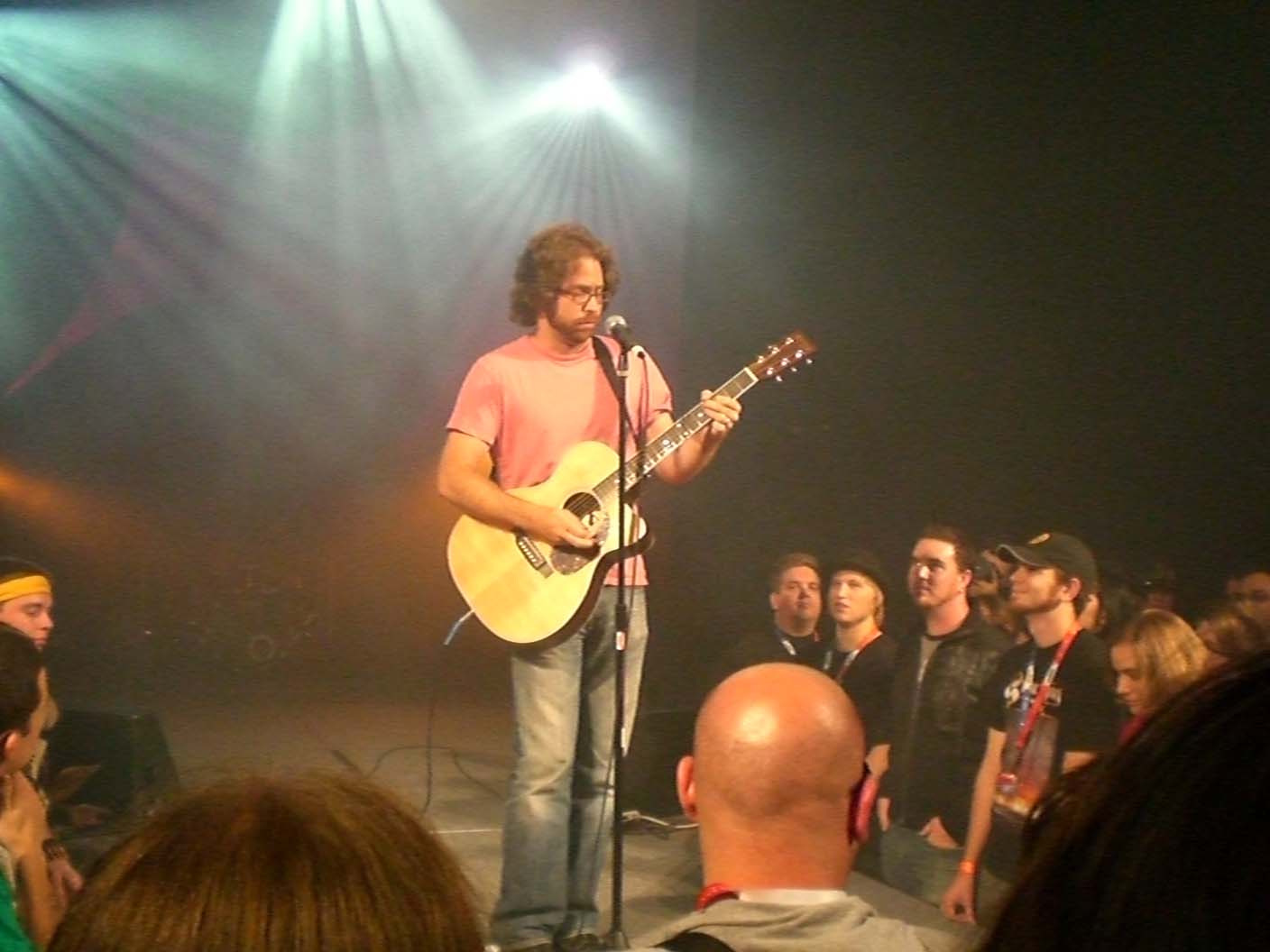
I'm sure many of you could have told me how transcendent Jonathan Coulton's music is, but when I entered the theatre on Saturday night for the triple-headed mega-show I was something of a Coulton newb. I'd heard Code Monkey, of course, but I'd never made much of an effort to seek out his music. Whether it was his intent to really reach the audience that night or not, he made a convert out of me. His haunting lyrics about superficiality, squid, cybernetics, robotics, technology, programming, and zombies were funny, touching, and thought provoking. I asked a friend who followed his music to confirm for me that he usually doesn't play terribly large venues. I had to ask because it was only really apparent during the few moments when he paused to take in the size of the audience. He was really, very good. Coulton had easily the largest crowd of the night, with his mass dwarfing even the groups on hand later for MC Frontalot and the Minibosses. His final song for the night, re: Your Brains was tremendous to experience in the midst of thousands of hand-waving flesh-craving growl/singing faux undead. Both Frontalot and the Minibosses put on amazing shows as well, of course, showing off their polished shows and firm grasp of their material. Frontalot was in rare form, with several new songs of his most recent album. Just the same ... Coulton was the show of the night for me, and it was a privilege to be able to see such a great act in person.
The Games And Panels of PAX
There were so many events and games, demos and panels, at the event that I couldn't make it to every interesting experience. Thankfully, other sites can pick up the slack.
The panel on licensed games explored the pros and cons of using someone else's IP to make a title. "Too many cooks in the kitchen" was seen as the primary problem, with the high cost associated with such a deal a close second.
"Pitch Your Game Idea" is always a very well-attended panel, and this year was no exception. Dozens and dozens of people lined up to present their game ideas to a panel of industry veterans. They were then 'cut', American Idol style, working through less solid game ideas towards the pearly center. There were apparently a surprising number of women there, and the contestant that won was one of them. Her simple, Pong-like concept had a graphical background that became more complicated as the game went on.
That showing would have been a relief to the folks at the very well attended "Women in Games" panel. The event focused around the challenges of entering the industry, and the issues associated with working the day to day grind once you're in.
A number of folks had hands-on time with titles I didn't get to, including Haze, Tabula Rasa -
PAX 2007 In A Nutshell
Last weekend the dark horde of nerddom descended on Seattle, entering the heart of the 'Emerald City' to gorge itself on the music, culture, and humor of gaming. The Penny Arcade Expo (PAX) once again brought together fans of the influential webcomic for a festival that, without even trying, seems to be taking the place of old E3. Though they were expecting around 30,000 people, the word was that by early Sunday they'd already gone through some 40,000 badges. There were DSes everywhere, concerts at night, a packed exhibit hall, and benchmark comic strips created by Mike Krahulik and Jerry Holkins adorned almost every wall. Despite all the people and the noise, somehow the event had a community feel to it that was hard to understand ... and even harder to describe. I'll try, though, along with impressions from games on the show floor and the incredible music of folks like Jonathan Coulton and the Minibosses. Read on, and All Hail Ball. The Early Weekend
If you missed my discussion of Friday's events, it's understandable; it went up this past Saturday. Suffice it to say that Wil Wheaton's keynote speech was the highlight of the evening. His praise of social gaming, and the relationship-building power of the PAX-goer's favorite pastime resonated incredibly well with the packed theatre. The after-action report on his blog says it all: "My keynote went perfectly, and the audience (and the gaming press online) responded to it in ways I never dreamed possible. I didn't think there would be slightly more than 5000 people in the room when I spoke ..."
The first Penny Arcade Panel featured a lot of middlin' questions, highlighted by the incredible singing power of Jerry Holkins. A description of his performance is in my weekend update, but the real surprise didn't come until after the questions were done. The end of the panel turned ugly when the PA gents left the stage for Uwe Boll to have a chance at the mike. Gabe said later that weekend that he was surprised by the crowd reaction. "You can tell when a crowd is angry, and this was the first time I've felt that at at PAX." The unapologetic Boll was screamed at fairly mercilessly by the attendees.
Other events from the early weekend included a discussion of modern storytelling in videogames. Luminaries Ron Gilbert (Monkey Island), Dave Grossman (Sam and Max) and Nate Fox (Sly Cooper) came together to jaw on a topic near to their hearts. The group discussed linear stories vs. sandbox-style gameplay, user-created content, kids games, and the importance of theme even if your core story isn't all that great: "Grossman [said], 'Well, story isn't just about dialogue and narrative, right - I mean really you want to learn something about the human experience. I think that if I weren't doing adventure games I wouldn't think of myself as a narrator, but rather as the hand of fate. I'm going to kind of let you run around and do what you want and everything. Just to let the player go around and do what they want - they can feel like it's the good hand of fate or the bad hand of fate, but not that they're completely being controlled.'"
The Rain-Slick Precipice of Darkness, the Penny Arcade videogame currently in development, was a visible presence at the show all weekend. The Friday unveiling of a new game demo to the media at a special Q&A event was followed by a weekend's worth of running through the game for attendees on the show floor. Most everyone got to see the title, and hear the news that it will be coming to Xbox Live alongside its PC distribution avenues. The opening, grim, text still makes me smile: "Four gods wait on the windowsill / Where once eight gods did war and will / And if the gods themselves may die / What does that say for you and I?"
PA Panel II
While the first PA Q&A panel was entertaining just to hear Holkins and Krahulik talk, the second panel actually had a number of insightful questions, touching statements, and funny moments. And, thankfully, there were no stoned guys rambling about their paranoid fantasies at the microphone; always a plus. Long queues formed at the two microphones to question the gents, and here are some highlights:- Paul Barnett, Design Manager for the Warhammer Online Massively Multiplayer game, drew applause for his short advertisement during a trailers reel before the event started. He used his clipped British wit to compare Warhammer to World of Warcraft like so: If you're going up against the Beatles, don't try to be the Beatles. You'll end up looking like the Monkees. Instead, we're going to be Led Zeppelin.
- A question about the changes to the primary characters over the year led Mike Krahulik to discuss his influences, such as Stan Sakai. He's essentially 'never finished' with the characters, and we can expect to see further changes to his art style in the coming years.
- Drawings of Gabe and Tycho in ping pong outfits prompted readers to ask if we would ever see that as a project down the road. They're enthusiastic about it and would love to do it, as up until now readers have just seen a few simple images. To further tease us, they described the backstory to the piece: Set in the 80s, a cold war US is still facing down Russia. A little-known clause in the UN charter states that table tennis can be used to decide grudges; the loser forfeits their country. The US table tennis team is slain, and so a group of four people at ping pong camp (including our protagonists) are drawn into international excitement.
- A question about the appeal of the Halo franchise has the gents noting that the series has grown on them considerably.
- In negotiating the price for the XBLA version of the Rain-Slick Precipice of Darkness, they feel they'll have a good deal of leverage as regards pricing (and content as well).
- Several great ideas for projects and future PAX ideas are mentioned, including support of a nerdcore show currently touring the area and an Indie Games FreePlay area.
- When asked about origins of the hobos in Precipice of Darkness, Tycho notes that the game is a 'hobage' of different sources. The Achievement for 100 hobo kills? Hobicide.
- A reader challenges the two to a thumb war, which Jerry wins quite promptly by kicking Gabe in the nuts. He declines to continue, saying he 'values his beanbag.'
- When asked to endorse some games on the exhibit show floor, both gentlemen put their weight behind Eye of Judgement and Sega Rally.
- Someone notes that the current in-the-works game is very much a 'Tycho' game ... lots of words. He wonders what kind of 'Gabe' game they'd like to make. Mike ponders the concept of a brawler, or perhaps something not unlike Turtles in Time.
- The idea of making sure the ball comes back to PAX every year, 'to recharge' is brought up. It could then be sold on eBay to help fund the annual Child's Play charity. They both really like this idea.
- A reader asks what the 'worst thing' either of them have ever done is. Mike tells the story of a time when he set a trap for his family's cat in the backyard, and ended up stringing up the pet by the neck into a tree. It survived, but he has always felt terribly. Jerry, on the other hand, equivocates. When Mike gets tired of it, he tells a story of Jerry drinking a glass of Chai and finding a bug near the bottom of his glass ... which he then upended and finished after fishing out the bug.
Having had a good look at the game at Gen Con, I used my PAX chance to talk to the folks at EA Mythic to dig a little bit deeper on one of the game's claims to fame: Realm vs. Realm combat. Just hours before I spoke to the folks at EA, a team from their company had announced professions from the High Elf and Dark Elf factions for the very first time. I tried to glean just a little bit more PvP-specific information about these races for you, but it was not to be.
Just the same Ryan Barnard (game designer) and Eric Correll (producer on the game) were very forthcoming. The pair was happy to discuss different elements of their signature game feature. For example, new players will have the PvP-focused game introduced to them gradually at low levels. There's a soft introduction, beginning that portion of the title's seamless integration into the overall gameplay. Open-world PvP in specific parts of the starting zones will most likely be their first exposure. Quests will lead them to RvR areas, and eventually will direct them to the instanced 'Scenario'-style missions. Throughout the game, the portion of land that is focused on these activities starts small, but eventually dominates gameplay; the RvR 'city capture' system is Warhammer's 'end game'.
Warhammer Online's unique systems, like the Tome of Knowledge and the Public Quest, also touch on RvR. The Tome will explain elements of Player vs. Player combat, and will record your successes in battle. RvR Public Quests, meanwhile, are currently undergoing retooling. They want them 'right', and currently have taken them all out of the game to make sure they're just so; they hope to have them back into the game by launch.
This feel of 'rightness' is something they're aiming for in their scenarios as well, with the goal of integrating these instances not only into PvP progression, but the ongoing story of the game as well. Each is themed to the area they're in, and tells the tale of a specific conflict between the Order and Chaos armies.
Introducing players who might not otherwise participate in RvR into the fundamentals of that gameplay style is also something the team is focusing on. While they acknowledge that some people just don't want to play against other players, they see folks who are hard and fast about that rule as the minority. They're looking to make PvP a core part of the game, and as such they'll be approaching it differently than a primarily PvE focused game might. This affects multiple game design elements, all the way down to the 'hook' of Public Quests, which gets folks who might not even ever group thinking more favorably about gaming with others. Racial pride is also a factor; by priming characters from low levels to be 'pro-Dwarf', or whatever, players will be more likely to come to their society's aid. They're all steps in a chain, the team hopes, to changing outlooks soured by less focused titles.
On the other side of the equation, the end-game city capture system sees factions sacking the racial homes of their opponents. Though reluctant to use the term 'end game' specifically, the team members were happy to admit that it will be the focus at max-levels. RvR combat will funnel players towards the opposing side, hoping to push the 'antagonists' back to their city walls. They also pointed out, however, that there are other elements in play at that high level. PvE content and public quests are still around, though diminished, and they have plans to further expand both sides of the max-level content once the game is released.
Organized Play, as featured in Guild Wars and now World of Warcraft, is not something they're currently planning for. They'd love to eventually do tournaments for RvR teams at some point, but they're so focused on getting it out the door in a timely fashion that it's not particularly on their radar. As they put it, "we hope we have that problem".
The cutting edge of their work is, obviously, on the Elves at the moment. They're still working to tune the scenarios and open-world play for the Elven areas, and are always working to ensure that classes are balanced and the 'fun' is present.
This cutting edge blends well with some of the surprises that the team had in store for them when masses of people finally entered the Beta. Probably the most surprising for the RvR team: their carefully crafted points of control battlefield objective system, which requires holding targets in open-world PvP, are almost completely being ignored. While they worked hard on this mechanic, the players are more interested in the actual act of combat when in an open-world environment. Scenario tactics are welcomed, but outside of those instances the two sides really just want to enter the fray. The team hopes to have them in the game in some capacity, but they're going to undergo heavy retooling before that happens.
As we wrapped things up, we discussed the reflection this decision has on their overall attitude towards the game: if it's not working, it needs to go/be fixed/tuned/rehashed/whatever. Killing what you thought was going to be the end-all be-all is not outside the realm of possibility, even this late in the game. RvR, and the game in general, has to be fun. No exceptions.
Fury
I'll be honest: Fury came at me from nowhere. I'd read about it before coming to the show, knew that it was approaching an Open Beta, and that it was a free-to-play PvP title. That was just about all I knew when I sat down to play and chat with Fury's lead designer Adam Carpenter.
When you're trying to quantify Fury's gameplay type, it's better to think less about online RPGs and more about first-person shooters. Fury has essentially taken the swords and sorcery milieu and dropped that whole cloth into an FPS schema. In each match, players spawn in, rush out, and slam into each other in extremely fast altercations. Everything is fast; from character creation to combat can be just a few minutes.
This is the underpinning of developer Auran's outlook: fun, fast, and free. Instead of grinding through a PvE component, Fury characters are built entirely around a series of abilities and equipment available at character creation. Each character can play whatever role you want them to in a given match, and their role can be changed freely between altercations. Want to act as a support class in one match? You put on your gear that aids healing type abilities, load those healing abilities into your hotbar , and go. Want to act as a ranged DPS class? Swap those healing bits out for the appropriate gear and powers. Players will never have to whine about not having the right class for a fight, as everyone has flexibility.
Gameplay itself, character abilities, focuses on colors. Your ability bar is full of various attacks, and they are themed around different colors. Each player has a small gauge on their screen to help ascertain how many color points they have built up. These points are gained by using 'low level' colored abilities. A basic blue attack, for example, might give you one blue point. As you move through combat, your gauge will fill with colored points. Higher points unlock the use of more powerful abilities on your hotbar, which in turn use up your points. Fascinatingly, each ability color has a diametric opposite; red points counter blue points and players with red points in their bar will actually be less effective with blue abilities. This led the designers to create special point-manipulating abilities; in the middle of the fight you can switch a player's point colors. You can also steal points, leading to the 'change-their-color-steal-their-points' combo move, leaving your opponent defenseless and cold in the world.
Each color has a sort of 'theme', with green abilities having a sort of nature-y feel to it, while blue abilities being sort of icey. There are ranged and melee abilities in all colors, so there won't be any particular demanded role for a color ability. For most players the only real constraint will be up to what abilities you have on hand as a result of previous accomplishments. While most common abilities will be available by default when you purchase the game, new powers will be unlocked via achievements as you succeed in combat. Achievements include everything from taking the most objectives during a match, to killing the most people, to healing the most ... and your rewards are appropriate for what you accomplish.
Rewards on the equipment side are a bit more random. After completing a match, random loot is generated for the party, and people /roll for it. That's pretty much 'the way it is', going right around the usual sort of arguments at pick up group might have when dealing with looted gear. Gold is equally distributed, of course, and both items and gold are commensurate with your success in the just-completed mission.
It's worth noting here that Fury will have a for-pay option, allowing you to slap down a subscription fee if you want ... but it will have nothing to do with the quality of your in-game items. Money is only given to the Auran folks for the addition of convenience and depth. I should say there is some overlap with items: one of the for-pay conveniences is the ability to roll on three items instead of two. A for-pay player has a bit more in the way of item space, some options for purchasing things from vendors, and other simple things that makes the game just a little bit easier for having forked over your cash. Depth, in this case, is all about in-game ladders. While free players will compete on ladders of various types, paying players will have a long list of different ladder types to participate in. Server, guild, and individual progress will all be tracked for various rewards and bragging rights.
Those bragging rights will come in the form of an online representation of your character's escapades. Kill counts, 'flag' steals, and other metrics will be tracked on an official page for your character, and viewable by anyone. Guilds with an interest in going deeper into min-maxing can make use of the human-readable stats that will be generated locally by the client in a text file. Officers can collect these document to see which builds are working, which aren't, and where the group as a whole needs to focus.
The game build playable on the PAX show floor was already five months old, and showed it. There were server problems a few times, and the game looked more than a little bit jaggy. Even through the cruft, though, there was a lot of promise showing through. The settings were gorgeous despite the outdated rendering model, and the fun factor of actual play was very high. Fury is a simple, brutal combat game, and it makes no pretensions about it. With the promise of free online play for the price of a PC game title, this seems like a pretty nice package. It's definitely not going to be for everyone; there's none of the painstaking polish of Guild Wars, or the deep PvE experience of World of Warcraft. For folks looking for a quick, focused good time Fury may just be what you're looking for.
Jonathan Coulton, Frontalot, Minibosses Concert
I'm sure many of you could have told me how transcendent Jonathan Coulton's music is, but when I entered the theatre on Saturday night for the triple-headed mega-show I was something of a Coulton newb. I'd heard Code Monkey, of course, but I'd never made much of an effort to seek out his music. Whether it was his intent to really reach the audience that night or not, he made a convert out of me. His haunting lyrics about superficiality, squid, cybernetics, robotics, technology, programming, and zombies were funny, touching, and thought provoking. I asked a friend who followed his music to confirm for me that he usually doesn't play terribly large venues. I had to ask because it was only really apparent during the few moments when he paused to take in the size of the audience. He was really, very good. Coulton had easily the largest crowd of the night, with his mass dwarfing even the groups on hand later for MC Frontalot and the Minibosses. His final song for the night, re: Your Brains was tremendous to experience in the midst of thousands of hand-waving flesh-craving growl/singing faux undead. Both Frontalot and the Minibosses put on amazing shows as well, of course, showing off their polished shows and firm grasp of their material. Frontalot was in rare form, with several new songs of his most recent album. Just the same ... Coulton was the show of the night for me, and it was a privilege to be able to see such a great act in person.
The Games And Panels of PAX
There were so many events and games, demos and panels, at the event that I couldn't make it to every interesting experience. Thankfully, other sites can pick up the slack.
The panel on licensed games explored the pros and cons of using someone else's IP to make a title. "Too many cooks in the kitchen" was seen as the primary problem, with the high cost associated with such a deal a close second.
"Pitch Your Game Idea" is always a very well-attended panel, and this year was no exception. Dozens and dozens of people lined up to present their game ideas to a panel of industry veterans. They were then 'cut', American Idol style, working through less solid game ideas towards the pearly center. There were apparently a surprising number of women there, and the contestant that won was one of them. Her simple, Pong-like concept had a graphical background that became more complicated as the game went on.
That showing would have been a relief to the folks at the very well attended "Women in Games" panel. The event focused around the challenges of entering the industry, and the issues associated with working the day to day grind once you're in.
A number of folks had hands-on time with titles I didn't get to, including Haze, Tabula Rasa -
Code Monkey Like Fritos
Greyjack writes "Jonathan Coulton's latest song in his thing-a-week series, Code Monkey, is an anthem for under-appreciated developers everywhere. From the song: 'Code Monkey get up get coffee / Code Monkey go to job / Code monkey have boring meeting, with boring manager Rob / Rob say Code Monkey very diligent / But his output stink / His code not functional or elegant / What do Code Monkey think?' Like virtually everything he does, he's released it under a Creative Commons license -- go forth, download, and share the goodness!" Update: 04/23 19:23 GMT by SM: Several users have also provided a torrent.