Slashdot Mirror
Domain: nasa.gov
Stories and comments across the archive that link to nasa.gov.
Comments · 16,365
-
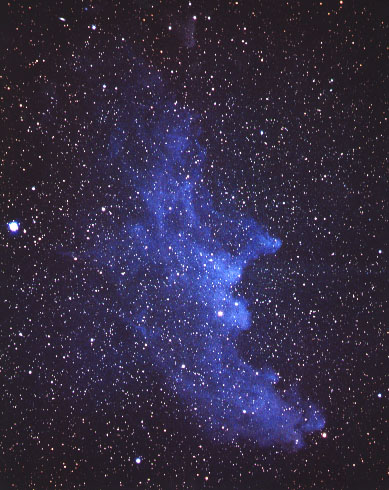
Re:Looks niftyThere's plenty of real photos already. Tell me this doesn't look like a witch's head. Obviously some residents of some planet orbiting Rigel created it to remind us that while we're chasing the Martians, not to forget the witches and goblins.
-
Re:I vote for the coffee monitor
KDE developers get better coffee!
But the KDE Tip of the Day told me that KDE developers drink tea!
NASA issued a coffee plane press release last week. They have another agricultural release, unfortunately titled NASA Satellite Technology Goes Down on the Farm, about putting Internet-based Global Differential GPS (IGDG) on tractors.
-
Re:I vote for the coffee monitor
KDE developers get better coffee!
But the KDE Tip of the Day told me that KDE developers drink tea!
NASA issued a coffee plane press release last week. They have another agricultural release, unfortunately titled NASA Satellite Technology Goes Down on the Farm, about putting Internet-based Global Differential GPS (IGDG) on tractors.
-
Re:I vote for the coffee monitor
KDE developers get better coffee!
But the KDE Tip of the Day told me that KDE developers drink tea!
NASA issued a coffee plane press release last week. They have another agricultural release, unfortunately titled NASA Satellite Technology Goes Down on the Farm, about putting Internet-based Global Differential GPS (IGDG) on tractors.
-
PathfinderI'm not sure why you find that second headline so amusing... The Pathfinders are really really cool 'planes' and watching coffee plantations is just one rather silly example of the incredible possibilities of these planes. I'd think that every true nerd would get a kick out of a nifty piece of equipment that can fly for an indefinite amount of time at heights up to 80.000 ft. I sure get a kick out of watching the MPG's of it on the DRFC site.
- Imagination is more important than knowledge.
-
Dangers of Tech Savvy PoliticiansI had short hair back then, doing the techno-grassroots rag -- suit and noose. The technolibertarianesque Dana Rohrabacher was supportive of our legislation (now Public Law 101-611) requiring NASA to follow existing presidential policy in procuring commercial launch services -- reserving Shuttle (is that anything like Joe?) for flights where orbital return was required. At the time, Bob Truax was flying his homebuilt out of the airport across the street from the office of our bill's sponsor, Ron Packard (a Mormon dentist who became Orange County, CA US Representative on a write-in ballot, campaigning as a Republican -- go figure) and his rocket shop was in one of the nearby facilities. Bob was a fantastic resource in helping Rep. Packard take our little grassroots group (San Diego L5) seriously because Truax had been a leading figure in the astoundingly successful (for the time) development of the Posiden missile (first ICBM to be launched from a submarine). Like most rocket guys, Bob didn't necessarily want to blow stuff to smithereens, he just wanted to do neat stuff with lots of energetic mass flow because, well, you have to admit, it's just so cool. Bob's current mission was to keep doing the work he loved by flying fast-turn-around reusable rockets. He hoped the earliest money-maker would be suborbital Fedex type services for high-value cargo and, true to his Posiden pedigree, he had a sea-launch rocket of exquisitely simple operation which could be rapidly shuttled between high value ports. Profits looked high.
So, while in Washington, D.C., I shared with Rep. Rohrabacher, Truax's vision of a rapid-turn-around reusable system and how additional legislation we were proposing, such as giving tax incentives for capitalization of commercial space transport systems, would help guys like Truax get people to plop down their own cash to help him get started.
I was pretty exhausted both physically and financially from all the political activism, so I took a position as VP of Public Affairs with E'Prime Aerospace Corporation, initially to acquire the first Ka-band orbital slot from the FCC. It was for Norris Communications' geostationary "Norstar" satellite -- one of E'Prime's potential customers. This was all keeping an eye to attract capital for both E'Prime and Norris Communications. As part of that work, I ended up in Los Angeles. There, cable companies were interested in the high-frequency of Ka-band (and consequently smaller dishes for direct-broadcast media services). We had some potential investors interested. In the middle of the day of meetings with our potential investors, they disappeared. When we investigated, it turned out that McDonnell-Douglas had just (and I mean that day) held a press conference announcing they were going into a "public private partnership" to develop what would come to be known as the DC-X for "Delta Clipper-Experimental". In addition to satellite launching, one of the early applications touted for this vehicle was to be commercial transportation services shuttling cargo between ports on earth.
McDonnell-Douglas's headquarters were located in Long Beach, CA just a few miles from our meeting place. Long Beach, CA was Rep. Rohrabacher's district.
-
mojo risin'
From the article:
NASA planned to send a crew to Mars as early as 1984 but abandoned it -- and other alternatives -- in favor of building the space shuttle.
As long as NASA bureacrats are planning the space program, we'll never do anything more interesting than Glorified Mailman Service (space shuttles). Well, unless you count the Infernally Stupid Station. That will get funded, I'm sure.
--Dan Goldin
Yep. Feelin' good here, goldy-mon. Got me some hot grits and a rectal thermometer... mojo risin' on up to mars. Whoop woop.
Get a fucking clue, goldboy. It takes someone with the balls to make decisions to do things like go to the moon; if 1967's NASA had been the same NASA we have today, Apollo 1 would have been the first and only manned Apollo rocket.
-
Re:Uh, no
No, the elevator would be stationary with regard to the earth's surface, not necessarily the magnetic field. And as you can see here, there is a huge difference in the shape of the magnetic field with regard to where the sun is. Thus every day you'd be going through huge variations in magnetic field strength. And if nothing else, fluctuations in the field would also have unpredictable effects, and likely cause all manner of stress and strain. This is another good FAQ.
cryptochrome -
Re:Uh, no
No, the elevator would be stationary with regard to the earth's surface, not necessarily the magnetic field. And as you can see here, there is a huge difference in the shape of the magnetic field with regard to where the sun is. Thus every day you'd be going through huge variations in magnetic field strength. And if nothing else, fluctuations in the field would also have unpredictable effects, and likely cause all manner of stress and strain. This is another good FAQ.
cryptochrome -
Reminding me of the Pathfinder images
They somehow remind me of the photos from the Pathfinder mission even though I'm not sure if the original images were RGB seperated. The camera (IMP) did have some filters and they did a fair amount of processing on the images, including combining images for 3D stereo (in color). I remember the first pictures to be greyscale, though.
-
Reminding me of the Pathfinder images
They somehow remind me of the photos from the Pathfinder mission even though I'm not sure if the original images were RGB seperated. The camera (IMP) did have some filters and they did a fair amount of processing on the images, including combining images for 3D stereo (in color). I remember the first pictures to be greyscale, though.
-
Re:The Amount of people searching for Asteriods
I saw that too somewhere. This page is a NASA site that lists the various projects currently going on to detect and catalog NEOs (Near Earth Objects). I'm fairly certain that one or more of the links from that page will find the exact quote. It's like a few dozen people at the most IIRC.
For a pretty good wow factor, this site has an online calculator that gives you the destructive force for impacts of different sizes and compositions of asteroids/comets/other BNRs (Big Nasty Rocks). -
It's more complicated than that.The government itself produces public domain works, but government contractors do not. The contractors can assign copyright to the government. This is covered in section 3.6 of the copyright FAQ.
The NSA's Linux version is from SAIC, I believe. And I'm not sure where a separate agency like NASA falls in the law.
-
Deep Space 1Thanks for the information about Deep Space 1. I found that very cool!
For those interested, here are some more links about Deep Space 1 and Lisp:
SOFTWARE FOR FIRST NEW MILLENNIUM MISSION CLOSEST YET TO "HAL 9000"
The Intelligent Execution Systems Project Home Page
Back to the Future: Is Worse (Still) Better?
That last paper is Richard Gabriel's follow-up to his original Is Worse Better?/i> paper. A cool quote from the "Back to the Future" paper:
Last year, this Common Lisp code was selected by a NASA panel for NASA's software of the year award. Despite this and despite the fact that the software works well in space, one of the high officials at NASA blocked the award and declared that it would not be given unless the system were re-coded in C, in which language it would be obviously better because
-
Deep Space 1Thanks for the information about Deep Space 1. I found that very cool!
For those interested, here are some more links about Deep Space 1 and Lisp:
SOFTWARE FOR FIRST NEW MILLENNIUM MISSION CLOSEST YET TO "HAL 9000"
The Intelligent Execution Systems Project Home Page
Back to the Future: Is Worse (Still) Better?
That last paper is Richard Gabriel's follow-up to his original Is Worse Better?/i> paper. A cool quote from the "Back to the Future" paper:
Last year, this Common Lisp code was selected by a NASA panel for NASA's software of the year award. Despite this and despite the fact that the software works well in space, one of the high officials at NASA blocked the award and declared that it would not be given unless the system were re-coded in C, in which language it would be obviously better because
-
Lisp as an Alternative to Java
http://www-aig.jpl.nasa.gov/public/home/gat/lisp-
s tudy.html
Blurb... "We have repeated Precheltís study using Lisp as the implementation language. Our results show that Lisp's performance is comparable to or better than C++ in terms of execution speed, with significantly lower variability which translates into reduced project risk. Furthermore, development time is significantly lower and less variable than either C++ or Java. Memory consumption is comparable to Java. Lisp thus presents a viable alternative to Java for dynamic applications where performance is important." -
Singularity w/ spin -> macroscopic effect?
This is really fascinating. The original start that formed the black hole was spinning. It had an easily observable property of rotation. Then it collapsed into a singularity which inherited that angular momentum. But once it's a singularity, the angular momentum (if I understand correctly) is only expressible as a quantum state of spin, which (from my one semester of quantum physics) doesn't really have any macroscopic meaning. (How can a point be rotating?) That's curious enough in itself to me. It's even more fascinating that now we've observed that indeed that spin does then cause a macroscopic effect, such that the matter falling into it tends to spin around it faster. The Rossi instrument also observed frame dragging a few years ago.
-
Re:Quantity/quality tradeoff is deliberate.Shortly after Mars Climate Observer disappeared, we had a good presentation at Orange County Astronomers from someone from JPL. He talked some about what they believed went wrong, and more in general about the reliability - cost tradeoffs.
The premise is that on one had they can build spacecraft cheap (relatively), and have much or most of them not work. Or spend vast amounts of money checking and rechecking everything, and desining in tons of reliability, then they'd still only reach the reliability of the launch vehicle itself, so they'd still lose 1 in 20 or so.
Their studies had concluded that to get the most amount of science done for a given amount of money spent, they should expect to lose about 1 in 5 spacecraft. Pretty close to what has actually happened.
-
Re:Quantity/quality tradeoff is deliberate.Shortly after Mars Climate Observer disappeared, we had a good presentation at Orange County Astronomers from someone from JPL. He talked some about what they believed went wrong, and more in general about the reliability - cost tradeoffs.
The premise is that on one had they can build spacecraft cheap (relatively), and have much or most of them not work. Or spend vast amounts of money checking and rechecking everything, and desining in tons of reliability, then they'd still only reach the reliability of the launch vehicle itself, so they'd still lose 1 in 20 or so.
Their studies had concluded that to get the most amount of science done for a given amount of money spent, they should expect to lose about 1 in 5 spacecraft. Pretty close to what has actually happened.
-
interesting fuel
The German U-791's used Hydrogen Peroxide for fuel, and I wonder if NASA altogether dropped this idea. Would be interesting to see someone power a car on peroxide and test the environmental hazards involved.
Well hopefully Carmack can get it up and going soon, maybe he can get people like Tito to give him 20 million to send them to space.
countdown continues
-
Re:Cool, But So What?
Well if you were to read the Pioneer web page that was linked in the article, you'd know that
The Pioneer 10 weak signal continues to be tracked by the DSN as part of a new advanced concept study of chaos theory.
I'm not sure what that means, but it looks like they are tracking it for a reason!
-
Re:The article is misleading
So the space station can't yet handle two docked spacecraft at once?
Yes. But three is more troublesome.
Let's see... If I'm not mistaken, there are at least two Soyuz/Progress docking ports: Zvezda's aft port, to which a Soyuz is currently attached, and Zarya's nadir port, at which the next Soyuz is to dock; other ports may be available (maybe on Zvezda) but apparently they are never used for docking (maybe thay are not equipped for automatic docking?)
Furthermore, there are two shuttle docking ports, one on Destiny, where Endeavour currently is, and another on Unity's side, but I don't think it's really usable.
So, in the current configuration (see NASA's diagram), if a Soyuz is to dock at Zarya's nadir port while a shuttle is there, it has to pass within a few meters of the shuttle's tail. Nobody really knows how this would affect the docking radars and so on.
Needless to say, the reckless Russians say it's not a problem, while paranoid NASA is scared to death of anybody even trying.
-
Re:It's not just memories he's buying
The Italian guy has never been in space, and is only there to "over see" unloading of Italian Rafaello module. It seems the only difference between Umberto Guidoni and Titto is ideological, they have about equal training, with the excpetion of the training that NASA refused to Mr. Titto.
Calm down. Umberto Guidoni is an ESA astronaut, he trained hard for this mission, and if you look at his biography, you'll see that it's his second space flight. He's not the one to compare with.
That said, I fully agree that people much less qualified than Dennis Tito have been sent on shuttle missions for purely political reasons. I don't see any reason why he shouldn't have flown.
On the other hand, the Russians haven't been too nice either, presenting all their partners with a fait accompli, totally disregarding those of NASA arguments which were valid (Canadarm2 testing is not exactly the best time for a tourist visit), not to speak of their attitude before the Service Module launch...
-
Space hotels!From NASA's own shuttle info page:
"The payload capability for the same satellite deploy mission with a 57-degree inclination is 41,000 pounds."
Assuning an average weight of 150 pounds (68kg) for people (some will weigh more, some less), that's enough for 273 people. So spread that $20,000,000 cost over a few hundred passengers and that cost starts to come down. We're at $73,000 per person now.
Couple this with more flights, corporate sponsoring, casinos, etc., and you could whittle this down to under $20,000 easy. Still a high price, but not so much for the jet set or for business to send some staff up. And for sure radio stations and such will buy tickets and give them away to contest winners.
The age of the common man in space may be nearer than you think.
-
Industrial Revolution 2000 years ago?
If it weren't for the regulation of society through the mechanism of slavery, and hence the suppression of the free market, we could have had the industrial revolution 2000 years ago.
200 BC: Alexandria, Egypt: A cultured city with a population of 500,000, the world's first lighthouse, university, library with 500,000 manuscripts/books, multi-decked shipping, theatres, temples with automatic sliding doors, and engineers working with a simple steam engine. From: Peter James and Nick Thorpe, Ancient Inventions.
In which case we would be about where we are now in high-tech back in AD 200. By AD
230 Billus Gaticus and Laurence of Ellisonius would be multi-trillionaires, clone many offspring, build a sanctuary in space, and then des troy the planet, so they can make version 3.1 the way it was supposed to be, and then encode their plan in DNA, enslave their new creations, and create a secret society so the information isn't lost.
Who needs money when you can have a planet of slaves? -
Likleyhood that the problem computer is Windows...
This document describes the Windows NT/95 based Station Support Computer (SCC) system. (see also this site for details on the computer systems and software aboard.)
This page details just some of the problems the crew has had with the SCC and this quote sums it up:
SHIP'S LOG: NARRATIVE OF JOINT OPS 08-09 DEC
...
Carlos trying to load the SSC upgrade for the FPP experiment. No go. He spends about 3 hours on this and finally gets it to load after multiple tries. This very consistent with our earlier SSC experience-and one of the big reasons we try to minimize computer reconfigurations.While these don't offer any hard evidence that the problem is Windows, having read the station logs, I could certainly understand why
-
Is the FCC's jurisdiction bounded?Ignorant question: Are there limits to the frequencies the FCC is permitted to regulate? We're getting to the point where the descendants of radio communications are beginning to blur into the descendants of visible-light communications. Heterodyne techniques are already used in astronomy for detecting infrared signals.
Someday in the future, could the FCC come after me for "pirate broadcasting" because I flashed my laser pointer at the wrong building? Could I be fined for unlicensed IR broadcasts because I happen to have a fever?
Those are tongue in cheek examples, but I am curious about the limits to the FCC's regulatory authority.
-
Not a troll - it's true
They use windows laptops. Do a search for "windows" on this text or on some of the other logs Michael linked to.
-
Re:Linux?
No, they're using Windows laptops. See here. Do a search on the text for "windows." You can see they've had lot's of problems.
-
Re:Bad form, Slashdot...I suggest that you read the International Space Station Familiarization pdf file (particularly page 40 of 399), as well as comments from an actual NASA employee at The Register.
The Command and Control (C&C) systems on the International Space Station (ISS) are apparently custom NASA systems. The crew interfaces with the C&C systems through software on one of several laptops referred to as a Portable Computer System (PCS). These PCS laptops run Solaris.
Windows 95 is run on separate laptops referred to as Station Support Computers (SSC). From the documentation I cited, these SSC laptops are apparently not involved in any interface capacity with the C&C systems that are apparently demonstrating a problem.
I have read other commentary, however, which seems to indicate that these laptops are configured for a dual-boot (either Solaris or Windows). In one such report, as I recall, the individual was receiving all sorts of errors under Solaris and in order to determine if there was a hardware error he rebooted into Windows. Apparently Windows came up clean.
Once you, Slashdot, or any other individual finds conclusive evidence that Microsoft Windows was somehow involved in the problems associated with the C&C systems... then you can justifiably bash Microsoft.
-
Guys... think and read before speaking
What is the connection with Microsoft here? Just that you once read in the past that Windows was used on some computers, and now it seems NASA has had trouble with their Command and Control computer number 1? Does this seem logically complete to all of you? Do you not require perhaps more information in order to draw any conclusions at all? If one reads page "2-5", or page 40 of 399, of International Space Station Familiarization you will begin to learn several things: 1) The Command and Control systems onboard the International Space Station (ISS) appear to be custom designed systems using custom NASA software and hardware. 2) Crew interface with the "Command and Control (C&C) U.S. systems" is via several "Portable Computer System (PCS)" laptops that run the "Solaris UNIX operating system". 3) The "Windows 95 operating system" is used on several "Station Support Computer (SSC)" laptops. Does this mean that Windows 95 was at fault? Doubtful given that the problem is apparently with the Command and Control computers, and the SSC laptops that run Win95 are not even used for crew interface to the Command and Control systems, nor was any mention made of SSC problems. Does it mean that Solaris was at fault? Doubtful, given that problem was not stated as a problem with the crew's interface to the Command and Control systems. Nope, if anything... this would seem to be a glitch that has to do with custom systems and custom software. Any slashdotters want to try to prove otherwise, and fully and completely state how Microsoft has any involvement or responsibility in this matter? Do each of you really get that much of a thrill from jumping to ill-reasoned conclusions in some pathetic attempt to slander Microsoft? Forget that, I know the answer to that last question. Sorry, it is Slashdot and all.
-
Re:Bad form, Slashdot...From a quick scan of the logs, I found:
We are apparently out of memory space on the disk, although we're not sure exactly how NT manages its memory.
At about 2200, we were reconfiguring some mail files which, with a lot of help from Windows NT, got put in the wrong place during the backup procedure.
-
Re:Bad form, Slashdot...From a quick scan of the logs, I found:
We are apparently out of memory space on the disk, although we're not sure exactly how NT manages its memory.
At about 2200, we were reconfiguring some mail files which, with a lot of help from Windows NT, got put in the wrong place during the backup procedure.
-
Re:Bad form, Slashdot...
There's *nothing* in the CNN article
Micro~1.oft spent a lot of time, energy and money to ensure that their OSes were dominant on the ISS. They have spent millions of $$$ just to place a few hundred copies on the ISS, in the space flight centre, and in the russian control centres. The reason for this massive cost was to use the ISS as a giant marketing tool, and they even created a whole marketing campaign around it.
Windoze is not the only OS on the ISS, but it is dominant. There are some *nixes running critical communication processes, such as the main link from the station to ground points, and these have not had many problems at all.
When the M$ servers started crashing, the whole micr~1.oft in space campaign was put on hold. If you read the logs created by the station crew, they are pretty upset having to spend entire days trying to fix micr~1.oft problems. NASA has a direct line into the best and brightest engineers at M$, but even they are clueless as to why certain processes hang, why backups fail to happen, why entire directories are blown away with no trace, or why new patches cause driver conflicts.
Since the Register article highlighting the ISS problems in the logs, micr~1.oft has been putting pressure on NASA to redact all mention of micr~1.oft. Certainly someone has been archiving copies of the logs since they appeared, so they can diff them later and see when NASA bows to micr~1.oft pressure.
As you noticed, none of the mainstream reporting now mentions micr~1.oft by name, that is due to a pressure campaign by one of the largest advertising bugdets in the US. But when the logs are posted for these events, you will notice a great many references to the machines running micr~1.oft, even if the name of OS is redacted out. If you do a little research, you will see these machines are running either DoS or windoze.
the AC -
Forget the BSOD, what about that fresh fruit?I mean, how are you to defend yourself if you are attacked by an astronaut armed with a piece of fresh fruit? To whit:
- Can't shoot him
- Can't just release a tiger on him
- Can't drop a 16-ton weight on him, zero gravity and all
-- -
Don't worry!They probably use one of them $10million, computer controlled, robot arm to press the ISS mainframe's reset button from earth.
Oh... wait a sec!
---
-
Deep link
The link that specifically mentions Windows, for those of you wondering, is here.
Now what do you guys make of this?
"Used the startup disk in the onboard software suite, but could not find a particular file while hunting around with DOS. This would have been much easier with some bootable media (CD-ROM?) that could run Windows. (Or if Shep was not indoctrinated by that "other" operating system). We may need an emergency boot capability again. After 5+ attempts, finally got the hard drive to take an image off the ghost CD. One of the Autoloader floppies went down, but SSC 2 is now running normally. ( 3+ hours troubleshooting). "
Guesses? Bets? -
SummaryCNN and the BBC report that all three Command & Control computers on International Space Station Alpha failed yesterday. They either weren't working or not communicating, although life support and navigation were not affected.
Apparently a single server is malfunctioning. Problems include not being able to communicate with the Station, command the new robot arm, nor turn off the Station navigation system. The Shuttle also cannot lift the orbit while the Station navigation system is flying the Station.
A NASA page says:
The primary result of today's computer problem was a loss of communication and data transfer between the Space Station Flight Control Room and the station. Communication capability was routed through Endeavour enabling the crew and flight controllers to talk to one another.
Despite the difficulties encountered with the computer system today, all systems on board the spacecraft continued to function properly.
We discussed some of the ISS computers in an April 4 article about ISS logs, although not the C&C computers. Apparently there is a malfunction of the Control & Data Handling C&C MDMs, not merely communications to the PCS C&C laptops. The 6MB PDF NASA ISS overview describes CDH in Section 2.
-
SummaryCNN and the BBC report that all three Command & Control computers on International Space Station Alpha failed yesterday. They either weren't working or not communicating, although life support and navigation were not affected.
Apparently a single server is malfunctioning. Problems include not being able to communicate with the Station, command the new robot arm, nor turn off the Station navigation system. The Shuttle also cannot lift the orbit while the Station navigation system is flying the Station.
A NASA page says:
The primary result of today's computer problem was a loss of communication and data transfer between the Space Station Flight Control Room and the station. Communication capability was routed through Endeavour enabling the crew and flight controllers to talk to one another.
Despite the difficulties encountered with the computer system today, all systems on board the spacecraft continued to function properly.
We discussed some of the ISS computers in an April 4 article about ISS logs, although not the C&C computers. Apparently there is a malfunction of the Control & Data Handling C&C MDMs, not merely communications to the PCS C&C laptops. The 6MB PDF NASA ISS overview describes CDH in Section 2.
-
Re:Back onlineA href="http://www.cnn.com/2001/TECH/space/04/25/sh
u ttle.spacestation.02/index.html">CNN; and the BBC; report that all three Command & Control computers on International Space Station Alpha failed yesterday. They either weren't working or not communicating, although life support and navigation were not affected.Apparently a single server is malfunctioning. Problems include not being able to communicate with the Station, command the new robot arm, nor turn off the Station navigation system. The Shuttle also cannot lift the orbit while the Station navigation system is flying the Station.
A NASA page says:
The primary result of today's computer problem was a loss of communication and data transfer between the Space Station Flight Control Room and the station. Communication capability was routed through Endeavour enabling the crew and flight controllers to talk to one another.
Despite the difficulties encountered with the computer system today, all systems on board the spacecraft continued to function properly.
We discussed some of the ISS computers in an April 4 article about ISS logs, although not the C&C computers. Apparently there is a malfunction of the Control & Data Handling C&C MDMs, not merely communications to the PCS C&C laptops. The 6MB PDF ISS overview describes CDH in Section 2.
-
Re:Back onlineA href="http://www.cnn.com/2001/TECH/space/04/25/sh
u ttle.spacestation.02/index.html">CNN; and the BBC; report that all three Command & Control computers on International Space Station Alpha failed yesterday. They either weren't working or not communicating, although life support and navigation were not affected.Apparently a single server is malfunctioning. Problems include not being able to communicate with the Station, command the new robot arm, nor turn off the Station navigation system. The Shuttle also cannot lift the orbit while the Station navigation system is flying the Station.
A NASA page says:
The primary result of today's computer problem was a loss of communication and data transfer between the Space Station Flight Control Room and the station. Communication capability was routed through Endeavour enabling the crew and flight controllers to talk to one another.
Despite the difficulties encountered with the computer system today, all systems on board the spacecraft continued to function properly.
We discussed some of the ISS computers in an April 4 article about ISS logs, although not the C&C computers. Apparently there is a malfunction of the Control & Data Handling C&C MDMs, not merely communications to the PCS C&C laptops. The 6MB PDF ISS overview describes CDH in Section 2.
-
Re:Great idea!
Maybe there is a reason that the MSnbc article doesn't mention anything about Operating Systems... Have you forgotten what the "MS" in MSNBC stands for? (Here's a hint: Microsoft!) Though the last line of the
-
Back online
-
Re:Is Hubble So useful? Adaptive optics is cheaper
Well, AO in optical wavelengths is still an immature technology, in the sense that every rigup is rather unique and experimental. It's only become really usable at all in the last year or so. And it's quite expensive too, though admittedly less so than Hubble.
It's a wonderful use of technology, and a terrific example of wholly separate fields of science aiding each other; but it's not the endall to telescopes, either. Space scopes have a number of advantages over even the best ground-based telescopes, like ESO and Keck-
- You need to build a bigger scope on the ground to get the same amount of light, due to atmospheric lossage. Admittedly it's relatively easy to build big scopes on the ground.
- Hubble can look at (almost) any target at any time, 24 hours a day, and it never rains up there. This means that in sheer amount of observing done, it needs to be compared to at least 3 telescopes, not just one.
- Good sites for ground telescopes are in increasingly short supply, as cities spread around the world. Many, for instance, now take sites in the Chilean Andes that are about as hard to get to, and work from, as any place on Earth. That ends up costing quite a bit, too.
- No ground-based scope can ever take an exposure lasting more than maybe eight hours. The Deep Field would be impossible to ever do on Earth. And the effectiveness of AO declines the longer your exposure, of course.
- While, tragically, launch prices are not coming down much yet, we can at least imagine that eventually they will, and space telescopes will be cheaper.
- It would be very hard, maybe impossible, to do long-baseline optical interferometry on Earth, because of things like ground tremors. It may be possible to use baselines miles long in space. This would utterly change the face of astronomy. The first test will be NASA's Terrestrial Planet Finder, sometime this decade. For optical interferometry, see Keck's web site- here.
- Hubble's successor, the NGST, will actually be a near-infrared telescope. Light from very distant objects is red-shifted all the way into the infrared, so NGST will be optimized for this kind of large-scale, cosomological research. This is hard to do from the ground, as the atmosphere is a tremendous source of infrared noise even at night in cold places.
So while AO is extremely valuable, I don't think any astronomer is prepared to say "Okay, let's ditch the space telescopes now." And if you can launch them working right the first time, and don't have to foot the bill for shuttle repair missions, they are not so expensive as most folks here seem to think.
-
Greenspun's Tenth Rule of ProgrammingWow. I have to take a look at this when I have a chance tomorrow. Greenspun is one of my personal heroes, due entirely and only to this statement: "Any sufficiently complicated C or Fortran program contains an ad-hoc, informally-specified bug-ridden slow implementation of half of Common Lisp."
Over time I've found this to be ridiculously true, and am deeply saddened by the lack of, well, not mainstream acceptance of Lisp, because mainstream acceptance always destroys anything good, but a willingness to let me, as a professional, select a language which:
- allows me to be incredibly productive
- is one of the few languages that really allow me to feel one with my code
- is not slow, nor necessarily (or usually) interpreted
- is not limited to AI
- does, in fact, allow iteration
- has many advanced data constructs beyond lists
- has the best general-purpose OO system I've ever seen
- is fun to hack in Emacs
Sigh. Anyone have any Lisp jobs for an enthusiast and advocate with about a year's informal experience and a love of the language?
--
-
Re:The Truth
Sorry to reply to myself but...
Here is NASA's page about Honeysuckle Creek and it's role in the Apollo moon landing.
-
wrong date?
Wasn't it July 20?
I remember this date because it's my father's B-day. -
Zoom in to Europa
In a similar vain, this Zoom in to Europa is pretty cool. Europa is the satellite of Jupiter that may have have a liquid water ocean under its icy surface.
-
Similar (and not so similar) StuffJohn Walker (of Autodesk fame) has his own site at http://www.fourmilab.ch with a lot of nifty stuff. Amongst other things is his astronomy section, where he has the Earth and Moon Viewer, which allows you to see beautiful images of what the earth or moon look like at any time, and from various viewpoints (including from satellites), Solar System Live, which is a virtual orrery that shows you what positions the planets are in at any time, and Home Planet, which is a Windows program that combines the first two sites with a few other features. There's also a few public domain UNIX programs (w/ source), but they're a bit old (OpenWindows, anyone?) and will require a bit of tinkering to convert to run natively in KDE or Gnome. (If only I knew how to program well...)
If you get Home Planet, other useful things are NISTime (freeware time synch program from NIST) available here, and you can get two-line satellite tracking (TLE) info (also useful at the Earth and Moon Viewer site) from NORAD's satellite catalog here. It's all text files, and there are several that are designed for automated downloads for the real fanatics.
In general, everything is surprisingly simple, and it doesn't take much to, say, get the latest telemtry on Endeavor (STS-100) here, cut-and-paste it into a Home Planet satellite database (text file), and see exactly where the shuttle is.
-
Virtual Galaxy, etc.First, there is this Milky Way simulation in VRML format from Nasa, part of the Virtual Universe project; web page here, complete with vrmls of the local galaxy area with a couple thousand galaxies.
Then there is this Freeware Dos program Virtual Galaxy which let's you navigate among the local stars. This one is okay, but needs to be updated to allow for a better grade of graphics. Worth checking out, though. Actually has the most stuff as far as science data goes. Maybe an open source project can be made from it.
There is also this little page, a nice collection of vrmls for the local area of the Milky way
Check out the Vinny the Vampire comic strip