Slashdot Mirror
Domain: state.va.us
Stories and comments across the archive that link to state.va.us.
Stories · 15
-
VA Supreme Court: Michael Mann Needn't Turn Over All His Email
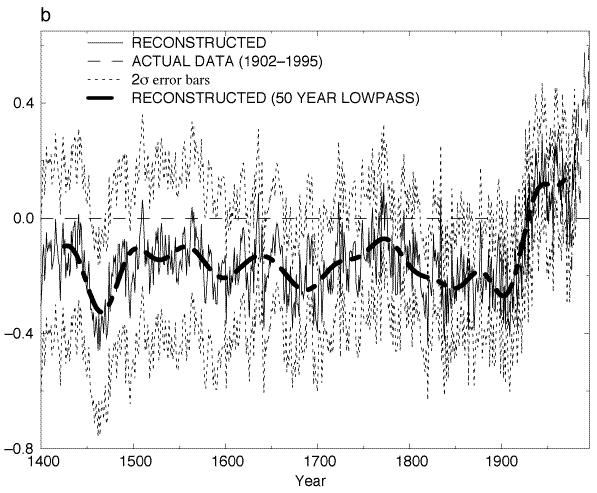
RoccamOccam sends news that the Virginia Supreme Court has ruled that Michael Mann, a climate scientist notable for his work on the "hockey stick" graph, does not have to turn over the entirety of his papers and emails under Freedom of Information laws. Roughly 1,000 documents were turned over in response to the request, but another 12,000 remain, which lawyers for the University of Virginia say are "of a proprietary nature," and thus entitled to an exemption. The VA Supreme Court ruled (PDF), "the higher education research exemption's desired effect is to avoid competitive harm not limited to financial matters," and said the application of "proprietary" was correct in this case. Mann said he hopes the ruling "can serve as a precedent in other states confronting this same assault on public universities and their faculty." -
Court Rules Against Online Anonymity
cstacy writes "The Virginia Court of Appeals has ruled (PDF) that people leaving negative feedback for a carpet cleaning service are not allowed to remain anonymous. Yelp must unmask seven critics to the carpet cleaner, who feels that they might not even be real customers." -
Virginia High Court Rejects Case Against Climatologist Michael Mann
ananyo writes "The Virgina Supreme Court on Friday tossed out an investigation by the state's conservative attorney general, Ken Cuccinelli, into Michael Mann, the former University of Virginia climatologist whose work on the now-famous hockey-stick graph has become a lightning rod for climate skeptics. 'In a dense and conflicted 26-page ruling (PDF) covering a century and a half of case law — including references to kings as well as modern "functional incongruities" that divided the judges themselves — Virginia’s high court ruled that the university is not a "person" and thus is not subject to Cuccinelli’s demands under the state’s Fraud Against Taxpayers Act.' The 'climategate' scientist has been cleared of wrongdoing by a number of investigations." -
Virginia AG Probing Michael Mann For Fraud
eldavojohn writes "Republican Virginia Attorney General Ken Cuccinelli has requested receipts and research documents relating to nearly half a million dollars in state taxpayer money used to conduct climate change research at the University of Virginia while under direction of Michael Mann, originator of the famous 2001 IPCC Hockey Stick graph depicting rapid climate change. Mann appears to be a prime target for Cuccinelli — who has also requested hearings with the EPA to contest the grounds of their carbon dioxide studies. Mann's expenditures of taxpayer money may become problematic if Cuccinelli finds violations of Virginia's Fraud Against Taxpayers Act. Cuccinelli has been active in pushing conservative views in the past, including an effort to remove the titillating mammary from the beloved Great Seal of Virginia. No end in sight for the politicizing of the science and research surrounding climate change." -
Slashdot Mentioned In Virginia Terrorism Report
megamerican alerted us to a leaked document (PDF) from a Virginia Fusion Center titled "2009 Virginia Terrorism Threat Assessment." The document is marked as "Law Enforcement Sensitive," not to be shown to public. Citizens for Legitimate Government has a write-up. Slashdot gets a mention on page 45 — not as a terrorist organization itself, but as one of the places that members of Anonymous may hang out: "A 'loose coalition of Internet denizens,' Anonymous consists largely of users from multiple internet sites such as 4chan, 711chan, 420chan, Something Awful, Fark, Encyclopedia Dramatica, Slashdot, IRC channels, and YouTube. Other social networking sites are also utilized to mobilize physical protests. ... Anonymous is of interest not only because of the sentiments expressed by affiliates and their potential for physical protest, but because they have innovated the use of e-protests and mobilization. Given the lack of a unifying creed, this movement has the potential to inspire lone wolf behavior in the cyber realms." According to the report, cell phones and digital music players have been used to transfer plans related to criminal activity, and therefore presumably could be grounds for suspicion. Podcasting is also suspicious. -
Virginia High Court Wrong About IP Addresses
Frequent Slashdot contributor Bennett Haselton writes "The Virginia Supreme Court has ruled that the state's anti-spam law, which prohibits the sending of bulk e-mail using falsified or forged headers, violates the First Amendment because it also applies to non-commercial political or religious speech. I agree that an anti-spam law should not outlaw anonymous non-commercial speech. But the decision contains statements about IP addresses, domain names, and anonymity that are rather basically wrong, and which may enable the state to win on appeal. The two basic errors are: concluding that anonymous speech on the Internet requires forged headers or other falsified information (and therefore that a ban on forged headers is an unconstitutional ban on anonymous speech), and assuming that use of forged headers actually does conceal the IP address that the message was sent from, which it does not." Click that magical little link below to read the rest of his story.
The first 20 pages of the decision, which are all about legal standing, jurisdiction, and overbreadth, made my eyes glaze over. I'm not analyzing those at all except to point out that on most of those issues, the lower court came to exactly the opposite conclusion from that of the Virginia Supreme Court, and there is no reason to think that the higher court is any more likely to be "correct" than the lower court (even granting the assumption that there is an objectively "correct" answer to these questions). Any time you feel intimidated by "experts," it's helpful to step back and ask whether the alleged experts even agree with each other.
Page 21 is where the technical stuff starts that we can tear apart directly. The decision says, in talking about the transmission of e-mail:The IP address and domain name do not directly identify the sender, but if the IP address or domain name is acquired from a registering organization, a database search of the address or domain name can eventually lead to the contact information on file with the registration organizations. A sender's IP address or domain name which is not registered will not prevent the transmission of the e-mail; however, the identity of the sender may not be discoverable through a database search and use of registration contact information.
These are statements that are only true if you play some kind of parlor game to find a way to read them as "true," not statements that indicate the court knew what was going on. To review: IP addresses in the U.S. are generally allocated by ARIN in blocks to Internet service providers and Web hosting companies; these companies then lease the IP addresses to their customers. You can look up an IP address with ARIN to determine which ISP or hosting company has been assigned that particular block, but the ISP or hosting company generally won't tell you the identity of their customer who has leased it from them. And anybody can register a domain, but most domain registrars give you the option of registering the domain anonymously, so that only the registrar knows the owner's true identity. So the court's statement that a database search "can eventually lead" to contact information is correct only if you clarify that it "can" lead there, but it usually won't. As a finding of fact, this is 100% true, and about as useful as "Obama might win in November. Or he might not."
But it's impossible to defend what the court says next:As shown by the record, because e-mail transmission protocol requires entry of an IP address and domain name for the sender, the only way such a speaker can publish an anonymous e-mail is to enter a false IP address or domain name. Therefore ... registered IP addresses and domain names discoverable through searchable data bases and registration documents "necessarily result[] in a surrender of [the speaker's] anonymity."
Now, there are two possible definitions of "anonymity" to consider: (1) you can be anonymous to the extent that ordinary citizens reading your content cannot determine your identity without a subpoena; or (2) you can be anonymous to the extent that even the government, armed with subpoenas and wiretaps, can never find out who you are. But under either interpretation of the word, the court's statement that "the only way such a speaker can publish an anonymous e-mail is to enter a false IP address or domain name," is wrong.
By default, almost all Internet users are already anonymous in the first sense, even without using forged headers or other tricks in their e-mails. When you send e-mail through your own Internet service provider's mail server, or when you log on to Hotmail and send messages from a Hotmail account, or when you lease a dedicated server from a Web hosting company and use it to send mails, the messages don't contain any more information about your true identity than you decide to put in them. Only the government could ordinarily discover your identity in those cases, by looking at the IP address that the message was sent from, and subpoenaing the Internet service provider or hosting company for the identity of the person using that IP address at that time.
But there are even ways to be anonymous in the second sense -- such that not even the government could identify you -- without resorting to forged e-mail headers. You can create Hotmail and Gmail accounts without giving the providers any of your true information. When you send messages through those services, they pass along the IP address that you used to connect to their Web sites, but you can obscure your IP address as well, by using an anonymizing proxy or a service like Tor.
Elsewhere in their decision, the court indicated that what they really wanted to protect was the right to send anonymous bulk e-mails that were political or otherwise non-commercial. But even by that standard, it's still possible to use Hotmail and Gmail together with an anonymizing proxy (the mail services do impose limits on how many messages each account can send in a day, but if you want to send bulk mails badly enough, you can always sign up for multiple accounts). And if you only care about staying beyond the reach of U.S. subpoena power, you can always sign up for a dedicated host overseas and send the bulk mails from there.
Apart from the court's misstatement that forged headers are the only way to publish anonymously in e-mail, there is the incorrect presumption that forged headers actually do afford anonymity in either of the senses given above. The court wrote, "[T]he only way such a speaker can publish an anonymous e-mail is to enter a false IP address or domain name." But while it is possible to enter any domain you want in your return e-mail address when you send an e-mail, the court apparently didn't know what it was talking about when it referred to "entering a false IP address." You can't just "enter" any arbitrary IP address when sending an e-mail. If user@domain name.com receives an e-mail, the mail server at domain name.com has to receive the message over a connection made from some other machine, and the domain name.com mail server can always see the IP address of the machine on the other end of the connection. Normally, this machine on the other end would be the mail server of the sender's Internet service provider. Or if the sender has leased a dedicated machine at a hosting company, that dedicated machine would be the one connecting to the domain name.com mail server. Some desktop spamming programs let you turn your home computer into the sending mail server, so that it connects directly with the remote mail server to send the message. In all of these cases, the receiving mail server can see the IP address of the sending machine, so a government subpoena would usually be enough to determine the sender's identity. (I know you all know this, but I have delusions that some helpful clerk will print out this article and explain this to the judge.)
When spammers "enter" false IP addresses in sending mails, that usually means entering made-up IP addresses in headers that are sent along with the contents of the message. However, these would normally only have the effect of throwing someone off the trail who opened the message sent to user@domain name.com and was reading the headers manually. Perhaps they would see some random IP addresses scattered in the headers, would go to ARIN and look up the hosting company or ISP that those IP addresses were assigned to, and would mistakenly file a complaint with that company. But the domain name.com server can always see the true IP address that the message was received from, and for people who know how to read the headers properly, that IP address will be indicated in the headers as the address that connected to the domain name.com mail server to send the mail.
So the court's statement that "the only way such a speaker can publish an anonymous e-mail is to enter a false IP address or domain name" is doubly wrong: because it's easy to send e-mails anonymously without using forged headers, and because forged headers do not in fact provide the level of anonymity that the court said should be protected anyway. The only way to truly obscure your identity by hijacking a third-party IP address without permission, would be to hack into a third party's computer, by infecting a user's home computer with a Trojan horse for example, and using it to send mail. Presumably the court was not contemplating that such an activity should be considered legal, even as a means of sending political speech.
It would presumably be unconstitutional for an anti-spam law to prohibit anonymous political e-mails which attempted to hide the sender's identity -- that is after all what "anonymous" means! You couldn't pass a law outlawing Tor, for example. But the Virginia law doesn't apply to senders merely trying to hide their identity, it applies only to the use of computers "to falsify or forge electronic mail transmission information or other routing information in any manner in connection with the transmission of unsolicited bulk electronic mail" (emphasis added). There is a difference between obscuring one's identity (which Tor and anonymous remailers allow you to do), and actively trying to frame an existing third party by using forged headers to make the mail appear that it came from somewhere else, especially when sending bulk mail, which is likely to generate complaints whether it's commercial or not.
By contrast, the Washington anti-spam law prohibits any mail which "misrepresents or obscures" the origin of the message (emphasis added). This is broader and could be construed to include a wider range of things, such as the use of overseas IP addresses to send bulk mail on behalf of a U.S. company, or the use of anonymously registered domains to hide the sender's identity. It would probably be unconstitutional to prohibit these obscuring techniques for non-commercial anonymous e-mail, which is why the Washington law specifically applies only to commercial messages.
But here I'm getting into issues like constitutional law where different experts might disagree. The clear-cut technical fact is that, contrary to the court's ruling, forged e-mail headers do not provide true anonymity when sending mail, whereas there are other, legal, ways of sending mail that do make the sender truly anonymous.
What is frustrating about the court's misstatements about IP addresses, domain names, and anonymity, is that the judge is obviously intelligent and could have understood the concepts if they had been explained correctly to him. I held some misconceptions for a long time myself about domain names and IP addresses, because the first explanations I read were incomplete or wrong, or I didn't understand them. But the mistakes in the ruling would have been caught if the judge had just showed a draft to an Internet guru and said, "Hey, can you check if there's anything wrong here?" I know, I know, that's "just not done" (and there are probably formal rules in most states against showing a draft of a ruling to a third party before publishing it, even if the third party reviewer is sworn to secrecy, as they should be). But there's nothing stopping the judge from asking a technical expert during the trial, "It seems to me that the only way to publish anonymously on the Internet would be to use forged headers in e-mail. Can you tell me if that's right before I go too far down that line of reasoning?"
I've appeared before judges in Small Claims court who did ask questions about any part of the technical issues that they wanted to understand, and were even willing to revise some prior misconceptions. But all of them, even the open-minded ones, proceed by gathering information during the trial, and then in the conclusion, spell out their argument and their ruling (during which time you're not allowed to interrupt), which is then set in stone unless you appeal. I've never seen a judge say, "Here's the line of reasoning in my head right now, and my tentative conclusion. Is there anything in that chain of reasoning that you want to dispute, before I make it final? I am not promising to change my mind just because you disagree with something. But I will take it into account." This is essentially what scientists do when they submit their papers for peer review before publishing them, to minimize the chance of making an error. Judges could do the same thing -- if not formally, because they're not allowed to show opinions to third parties, then at least informally, by running their ideas past the experts assembled in their courtroom -- to reduce the chance of making a mistake. But have you ever heard of a judge doing that?
The Virginia judges probably did about as well as one could be expected to do, having learned all these technical terms only recently, and then withdrawing to their chambers to form an argument without any feedback from any technical experts. So, given the technical howlers that ended up in the ruling, the moral is that forming an argument in isolation from experts is probably not the right way to go about it. -
Virginia High Court Wrong About IP Addresses
Frequent Slashdot contributor Bennett Haselton writes "The Virginia Supreme Court has ruled that the state's anti-spam law, which prohibits the sending of bulk e-mail using falsified or forged headers, violates the First Amendment because it also applies to non-commercial political or religious speech. I agree that an anti-spam law should not outlaw anonymous non-commercial speech. But the decision contains statements about IP addresses, domain names, and anonymity that are rather basically wrong, and which may enable the state to win on appeal. The two basic errors are: concluding that anonymous speech on the Internet requires forged headers or other falsified information (and therefore that a ban on forged headers is an unconstitutional ban on anonymous speech), and assuming that use of forged headers actually does conceal the IP address that the message was sent from, which it does not." Click that magical little link below to read the rest of his story.
The first 20 pages of the decision, which are all about legal standing, jurisdiction, and overbreadth, made my eyes glaze over. I'm not analyzing those at all except to point out that on most of those issues, the lower court came to exactly the opposite conclusion from that of the Virginia Supreme Court, and there is no reason to think that the higher court is any more likely to be "correct" than the lower court (even granting the assumption that there is an objectively "correct" answer to these questions). Any time you feel intimidated by "experts," it's helpful to step back and ask whether the alleged experts even agree with each other.
Page 21 is where the technical stuff starts that we can tear apart directly. The decision says, in talking about the transmission of e-mail:The IP address and domain name do not directly identify the sender, but if the IP address or domain name is acquired from a registering organization, a database search of the address or domain name can eventually lead to the contact information on file with the registration organizations. A sender's IP address or domain name which is not registered will not prevent the transmission of the e-mail; however, the identity of the sender may not be discoverable through a database search and use of registration contact information.
These are statements that are only true if you play some kind of parlor game to find a way to read them as "true," not statements that indicate the court knew what was going on. To review: IP addresses in the U.S. are generally allocated by ARIN in blocks to Internet service providers and Web hosting companies; these companies then lease the IP addresses to their customers. You can look up an IP address with ARIN to determine which ISP or hosting company has been assigned that particular block, but the ISP or hosting company generally won't tell you the identity of their customer who has leased it from them. And anybody can register a domain, but most domain registrars give you the option of registering the domain anonymously, so that only the registrar knows the owner's true identity. So the court's statement that a database search "can eventually lead" to contact information is correct only if you clarify that it "can" lead there, but it usually won't. As a finding of fact, this is 100% true, and about as useful as "Obama might win in November. Or he might not."
But it's impossible to defend what the court says next:As shown by the record, because e-mail transmission protocol requires entry of an IP address and domain name for the sender, the only way such a speaker can publish an anonymous e-mail is to enter a false IP address or domain name. Therefore ... registered IP addresses and domain names discoverable through searchable data bases and registration documents "necessarily result[] in a surrender of [the speaker's] anonymity."
Now, there are two possible definitions of "anonymity" to consider: (1) you can be anonymous to the extent that ordinary citizens reading your content cannot determine your identity without a subpoena; or (2) you can be anonymous to the extent that even the government, armed with subpoenas and wiretaps, can never find out who you are. But under either interpretation of the word, the court's statement that "the only way such a speaker can publish an anonymous e-mail is to enter a false IP address or domain name," is wrong.
By default, almost all Internet users are already anonymous in the first sense, even without using forged headers or other tricks in their e-mails. When you send e-mail through your own Internet service provider's mail server, or when you log on to Hotmail and send messages from a Hotmail account, or when you lease a dedicated server from a Web hosting company and use it to send mails, the messages don't contain any more information about your true identity than you decide to put in them. Only the government could ordinarily discover your identity in those cases, by looking at the IP address that the message was sent from, and subpoenaing the Internet service provider or hosting company for the identity of the person using that IP address at that time.
But there are even ways to be anonymous in the second sense -- such that not even the government could identify you -- without resorting to forged e-mail headers. You can create Hotmail and Gmail accounts without giving the providers any of your true information. When you send messages through those services, they pass along the IP address that you used to connect to their Web sites, but you can obscure your IP address as well, by using an anonymizing proxy or a service like Tor.
Elsewhere in their decision, the court indicated that what they really wanted to protect was the right to send anonymous bulk e-mails that were political or otherwise non-commercial. But even by that standard, it's still possible to use Hotmail and Gmail together with an anonymizing proxy (the mail services do impose limits on how many messages each account can send in a day, but if you want to send bulk mails badly enough, you can always sign up for multiple accounts). And if you only care about staying beyond the reach of U.S. subpoena power, you can always sign up for a dedicated host overseas and send the bulk mails from there.
Apart from the court's misstatement that forged headers are the only way to publish anonymously in e-mail, there is the incorrect presumption that forged headers actually do afford anonymity in either of the senses given above. The court wrote, "[T]he only way such a speaker can publish an anonymous e-mail is to enter a false IP address or domain name." But while it is possible to enter any domain you want in your return e-mail address when you send an e-mail, the court apparently didn't know what it was talking about when it referred to "entering a false IP address." You can't just "enter" any arbitrary IP address when sending an e-mail. If user@domain name.com receives an e-mail, the mail server at domain name.com has to receive the message over a connection made from some other machine, and the domain name.com mail server can always see the IP address of the machine on the other end of the connection. Normally, this machine on the other end would be the mail server of the sender's Internet service provider. Or if the sender has leased a dedicated machine at a hosting company, that dedicated machine would be the one connecting to the domain name.com mail server. Some desktop spamming programs let you turn your home computer into the sending mail server, so that it connects directly with the remote mail server to send the message. In all of these cases, the receiving mail server can see the IP address of the sending machine, so a government subpoena would usually be enough to determine the sender's identity. (I know you all know this, but I have delusions that some helpful clerk will print out this article and explain this to the judge.)
When spammers "enter" false IP addresses in sending mails, that usually means entering made-up IP addresses in headers that are sent along with the contents of the message. However, these would normally only have the effect of throwing someone off the trail who opened the message sent to user@domain name.com and was reading the headers manually. Perhaps they would see some random IP addresses scattered in the headers, would go to ARIN and look up the hosting company or ISP that those IP addresses were assigned to, and would mistakenly file a complaint with that company. But the domain name.com server can always see the true IP address that the message was received from, and for people who know how to read the headers properly, that IP address will be indicated in the headers as the address that connected to the domain name.com mail server to send the mail.
So the court's statement that "the only way such a speaker can publish an anonymous e-mail is to enter a false IP address or domain name" is doubly wrong: because it's easy to send e-mails anonymously without using forged headers, and because forged headers do not in fact provide the level of anonymity that the court said should be protected anyway. The only way to truly obscure your identity by hijacking a third-party IP address without permission, would be to hack into a third party's computer, by infecting a user's home computer with a Trojan horse for example, and using it to send mail. Presumably the court was not contemplating that such an activity should be considered legal, even as a means of sending political speech.
It would presumably be unconstitutional for an anti-spam law to prohibit anonymous political e-mails which attempted to hide the sender's identity -- that is after all what "anonymous" means! You couldn't pass a law outlawing Tor, for example. But the Virginia law doesn't apply to senders merely trying to hide their identity, it applies only to the use of computers "to falsify or forge electronic mail transmission information or other routing information in any manner in connection with the transmission of unsolicited bulk electronic mail" (emphasis added). There is a difference between obscuring one's identity (which Tor and anonymous remailers allow you to do), and actively trying to frame an existing third party by using forged headers to make the mail appear that it came from somewhere else, especially when sending bulk mail, which is likely to generate complaints whether it's commercial or not.
By contrast, the Washington anti-spam law prohibits any mail which "misrepresents or obscures" the origin of the message (emphasis added). This is broader and could be construed to include a wider range of things, such as the use of overseas IP addresses to send bulk mail on behalf of a U.S. company, or the use of anonymously registered domains to hide the sender's identity. It would probably be unconstitutional to prohibit these obscuring techniques for non-commercial anonymous e-mail, which is why the Washington law specifically applies only to commercial messages.
But here I'm getting into issues like constitutional law where different experts might disagree. The clear-cut technical fact is that, contrary to the court's ruling, forged e-mail headers do not provide true anonymity when sending mail, whereas there are other, legal, ways of sending mail that do make the sender truly anonymous.
What is frustrating about the court's misstatements about IP addresses, domain names, and anonymity, is that the judge is obviously intelligent and could have understood the concepts if they had been explained correctly to him. I held some misconceptions for a long time myself about domain names and IP addresses, because the first explanations I read were incomplete or wrong, or I didn't understand them. But the mistakes in the ruling would have been caught if the judge had just showed a draft to an Internet guru and said, "Hey, can you check if there's anything wrong here?" I know, I know, that's "just not done" (and there are probably formal rules in most states against showing a draft of a ruling to a third party before publishing it, even if the third party reviewer is sworn to secrecy, as they should be). But there's nothing stopping the judge from asking a technical expert during the trial, "It seems to me that the only way to publish anonymously on the Internet would be to use forged headers in e-mail. Can you tell me if that's right before I go too far down that line of reasoning?"
I've appeared before judges in Small Claims court who did ask questions about any part of the technical issues that they wanted to understand, and were even willing to revise some prior misconceptions. But all of them, even the open-minded ones, proceed by gathering information during the trial, and then in the conclusion, spell out their argument and their ruling (during which time you're not allowed to interrupt), which is then set in stone unless you appeal. I've never seen a judge say, "Here's the line of reasoning in my head right now, and my tentative conclusion. Is there anything in that chain of reasoning that you want to dispute, before I make it final? I am not promising to change my mind just because you disagree with something. But I will take it into account." This is essentially what scientists do when they submit their papers for peer review before publishing them, to minimize the chance of making an error. Judges could do the same thing -- if not formally, because they're not allowed to show opinions to third parties, then at least informally, by running their ideas past the experts assembled in their courtroom -- to reduce the chance of making a mistake. But have you ever heard of a judge doing that?
The Virginia judges probably did about as well as one could be expected to do, having learned all these technical terms only recently, and then withdrawing to their chambers to form an argument without any feedback from any technical experts. So, given the technical howlers that ended up in the ruling, the moral is that forming an argument in isolation from experts is probably not the right way to go about it. -
Virginia Anti-Spam Law; FTC Forum on Spam
kiwimate writes "According to this press release, the state of Virginia has just passed a statute making 'the worst, most egregious and fraudulent kinds of spam' legally actionable. And yes, this includes header forging. The article reads like a big AOL PR piece in some places -- the VA governor led the signing at the AOL HQ in Dulles. The story also states this comes on the eve of the first-ever FTC forum on spam in Washington D.C." The FTC also made the insightful discovery that most spam is fraudulent in some fashion. -
Slashback: Toys, Connections, Old Dominion
Toy companies sending data (no matter how innocuous) from your hard drive out into the wide world might not be such a hot idea, and it looks like that realization has spread. Virginia and D.C. residents (and truthfully, many others as well) may be ubterested in upcoming UCITA action. AT&T has won another round in the regulation / deregulation scuffle, and there's a suprize bit of tasty news to top to wash those down with.Don't worry, Ma'am, we're from the Toy Company. You can trust us. Kip writes: "The Associated Press is reporting that Mattel Interactive will provide a tool to remove software that was surreptitiously placed on customers' computers and is designed to transmit and receive information to and from Mattel. An uninstall program will be available late Monday for Windows 98, others to follow later in the week. This is a followup to last week's story."
Victory is in the eye of the beholder. Ant writes: " SAN FRANCISCO -- AT&T Corp., the No. 1 U.S. telephone and cable television company, claimed victory in a battle over high-speed Internet access Thursday when a federal appeals court ruled that local authorities cannot require it to open broadband access to rivals. In a unanimous decision, the 9th Circuit Court of Appeals concluded that Portland, Ore., could not regulate AT&T's Excite@Home (Nasdaq: ATHM) cable broadband infrastructure using laws designed to govern traditional cable services."
This will please some people (who'd rather not see network control handled by fiat) but there are quite a few places where your only 'choice' in network connectivity is along the lines of "any color so long as it's black."
Yes Virginia, there really is a legislature. Ristoril passed on on this press advisory which may be of interest to anyone following the passage of UCITA in its various state incarnations.
Richmond, VA--The Joint Commission on Technology and Science's Advisory Committee 5, which is charged with studying the impact of the Uniform Computer Information Transactions Act (UCITA) on Virginia's business, libraries, and consumers, will hold its first meeting on Thursday, June 29, 2000, 10:00 a.m. in House Room D of the General Assembly Building. This meeting will be for organizational purposes.
Although this meeting is not a public hearing, the Commission has set aside one hour so that members of the public can address the Advisory Committee. A sign up sheet will be available at 9:30 a.m. at the meeting location. Due to time constraints, only ten persons will be able to present their comments for five minutes each. If you wish to address the Advisory Committee, please sign up at the day of the meeting. You may not sign up prior to this date and time. In addition, please be prepared to submit a written transcript of your oral comments to the Commission. Even if you do not address the Advisory Committee at the meeting, you may always submit written comments. Written comments may be submitted to:
John S. Jung, Staff Attorney
910 Capitol Street, 2nd Floor
Richmond, VA 23219
E-mail: JJung@leg.state.va.us
Fax: 804-371-0169
Other opportunities for the public to address the Commission and/or the Advisory Committee will be scheduled in the future.
The proposed agenda for this meeting is available on the Commission's website http://jcots.state.va.us, under "Meeting Information.""
Note that the full commission is meeting Tuesday July 25, 2000 at 10:00 A.M. in the same location noted above.
Another trickle of palatable news. natpoor writes "The fan who had ironchef.com has brought it back to life as ironsteph.com to avoid trademark issues. She has trimmed away possibly objectionable copyrighted material, and linked to the fair use clause on the home page. It is clearly for educational purposes, and doesn't have any large copies of television footage. Slashdot covered the initial cease-and-desist letter from FujiTV, let's see what happens."
-
Network Solutions "Owns" Your Domain Name!
jvj24601 writes "A columnist at news.com reports that Network Solutions has recently changed its contracts -- it now 'owns' the domain name and can take it back at will. This has been held up in court. I am especially appalled that their agreement states 'NSI may terminate "domain name registration services" if the registrant uses them for "any improper purpose, as determined in our sole discretion."'" Time to check the DomainNameBuyersGuide again ... -
Lobbying Against UCITA: A Practical Guide
If you're a regular Slashdot reader, you've heard about UCITA by now. You have probably also gathered that many prominent spokespeople for the open source and free software communities, most notably Richard Stallman, don't like it. UCITA already passed in Virginia, but the governor hasn't yet signed it into law. Here in Maryland, where I live, UCITA is still under consideration. I'm working hard to block it, and I'm not alone. But this story is not as much about Virginia and Maryland as it is about the way UCITA is being "sold" to state legislatures all over the U.S. and how you can work effectively in your state to keep it from becoming the Law of the Land.Let's start with Virginia. There, UCITA has been passed by the Legislature and is awaiting signature by Governor Jim Gilmore. But all is not yet lost. Skip Lockwood of 4cite.org says, "It is very important that the Governor, the Speaker of the House and the President of the Senate all hear from dissatisfied consumers. Virginia has really put the 'horse before the cart' with the passage of this law. Call, e-mail and fax so that legislators know what a mistake they have made." And UCITA isn't scheduled to go into force in Virginia until next year, so there may be time to undo the damage. It's worth a try, certainly, even though UCITA is backed heavily both by Microsoft and Virginia's own "star" online business, AOL.
In Maryland, UCITA is is by no means a done deal. As House Bill #19 and Senate Bill #142, it is still being considered by legislative committees. This means UCITA could conceivably still be stopped in Maryland even before it came to a vote, although the forces working to push it through are both mighty and well-financed. One state senator told me this was the first time he'd ever seen actual lobbyists from Microsoft, in person, in Annapolis (Maryland's state capital). Many highly-paid "local" lobbyists are also cruising the legislative halls, busily telling the politicians why UCITA is a must-pass piece of legislation.
But apparently the lobbyists and their masters never told Maryland legislators exactly what UCITA was all about. I called the offices of all 13 members of the House of Delegates who are co-sponsoring Maryland UCITA, House Bill 19, and not one of them or any of their staff members to whom I spoke could tell me honestly that they had read the whole thing. All most of them seem to have read was this synopsis:
Adopting the Maryland Uniform Computer Information Transactions Act; establishing provisions of law applicable to agreements to create, modify, transfer, or distribute computer software, computer data and databases, Internet and online information, and computer information and products; establishing provisions of law applicable to licensing of computer information; etc.
But the bill goes just a little bit beyond this. If you have time (it's about 85 printed pages), here's the entire UCITA text.
Quite a difference, eh? If you actually read all the way through the document, you now know more than most of the Maryland legislators who are tasked with deciding whether or not it should be made into law.
The way things work here in Maryland - and in many other states - is that the heaviest political leaders call lesser politicians to whose campaigns they have donated or for whom they have done other favors and say, "I'm sending you a bill I want passed." If the lesser politician knows what's good for him or her, he or she salutes and follows orders, especially on somthing like UCITA, which is not an issue most ordinary citizens either understand or care about.
In my opinion, the single most politically powerful elected official in the State of Maryland is Casper R. Taylor, Jr., speaker of the House of Delegates. He consistently has one of the largest campaign fund "war chests" in the state and freely shares lucre from it with other legislators who support him. Mr. Taylor has personally assured me that the large sums of money he solicits - and gets - from assorted industry groups and other big donors do not influence his votes or buy his support. (I did not laugh out loud when he said this only because I am a professional journalist and have developed the ability to listen to almost any kind of outrageous statement without showing emotion. Please don't try this at home.)
Wherever you live in the U.S. (or almost anywhere else) there is a primary power broker like Taylor, and it is this person upon whom the Microsofts and AOLs and the Business Software Alliance and the rest of the big-money crowd will concentrate their efforts (and lavish funds). But don't think that people like Taylor are evil. They usually aren't, down deep inside, and if they get enough reasonable citizen input that opposes the lobbyists' desires, they can often be persuaded to do the right thing.
Guys like Casper Taylor actually like hearing from citizens; if they weren't basically gregarious and outgoing they wouldn't have gone into politics in the first place. If you don't believe me, give Casper a friendly call. His office phone number is 410-841-3800. If you don't live in Maryland, consider this a practice call for the UCITA fight that is likely to take place in your state sometime in the next year or two.
There are several things to bear in mind when calling a politician to express your opinion. The first is that yelling and acting nutsy gets you nowhere. Be sane and have *real reasons* handy for your opinion - and no, "because Richard Stallman doesn't like it" is not a good reason, because RMS is not widely-known in political circles. You need facts like the ones on this page. The second is to make sure you don't just say "UCITA." You need to refer to the correct bill number, in this case House Bill 19. Even if you speak to the lowest of Casper's underlings, and they only give you the chance to say, "I just want to ask Speaker Taylor to please withdraw his support for House Bill 19 because it is bad for consumers and will inhibit open source software development," you have done a good and valuable thing. A hundred brief calls can be worth more than $1000 in Microsoft lobbying money even if you feel like you haven't done much or that you were barely listened to.
Note that I mention phone calls, not e-mail. Politicians are generally more receptive to calls than to e-mails. They also like faxes (Taylor's fax number is 410-841-1138), but e-mail is still valid, as long as you only send one or two polite ones to each elected official you want to reach. (If you want to use Casper for a practice e-mail, send it to casper_taylor@house.state.md.us.)
So we've contacted the most powerful guy. Fine. But there are other leaders who should also hear from you. In Maryland, in this case, some of the most important are Governor Parris Glendening, Senate President Mike Miller (to whom you should mention Senate Bill 142, not House Bill 19), and Comptroller William Donald Schaefer. All of them have complete contact information on their Web pages, as do almost all public officials everywhere.
If you live in Maryland, besides these people, you'll want to contact the representatives from your district. Find them here. If you live in another state and want to find out if UCITA is about to become a burning issue there, check this page. And, no matter where you live in the U.S., here's a list of state and local government Web sites that can not only help you fight UCITA, but help you find out what your elected officials are up to in general, and who to contact if you have a beef or want to get something done.
Dealing with politics and politicians can often make you feel like you're pushing into a wall of warm fuzz, especially if you spend most of your time dealing with machine-style logic where each specific cause has a specific effect. And I don't know about you, but reading the lawyer jargon in which most proposed laws are written gives me a headache.
But if you and I and a bunch of other people don't take the trouble to go through this headache over UCITA and other legislative actions that directly affect our lives and livings, rest assured that Microsoft and the other companies and industry groups on "the other side" will keep slogging along, making sure their views get heard as loudly and strongly and often as possible.
And when your legislators hear from the industry groups and lobbyists over and over, and hear nothing from you, they will not only pass UCITA and other laws you don't like, but they'll be perfectly justified when they smugly say, afterwards, "Almost everyone I heard from about this matter was in favor of it!"
-
Lobbying Against UCITA: A Practical Guide
If you're a regular Slashdot reader, you've heard about UCITA by now. You have probably also gathered that many prominent spokespeople for the open source and free software communities, most notably Richard Stallman, don't like it. UCITA already passed in Virginia, but the governor hasn't yet signed it into law. Here in Maryland, where I live, UCITA is still under consideration. I'm working hard to block it, and I'm not alone. But this story is not as much about Virginia and Maryland as it is about the way UCITA is being "sold" to state legislatures all over the U.S. and how you can work effectively in your state to keep it from becoming the Law of the Land.Let's start with Virginia. There, UCITA has been passed by the Legislature and is awaiting signature by Governor Jim Gilmore. But all is not yet lost. Skip Lockwood of 4cite.org says, "It is very important that the Governor, the Speaker of the House and the President of the Senate all hear from dissatisfied consumers. Virginia has really put the 'horse before the cart' with the passage of this law. Call, e-mail and fax so that legislators know what a mistake they have made." And UCITA isn't scheduled to go into force in Virginia until next year, so there may be time to undo the damage. It's worth a try, certainly, even though UCITA is backed heavily both by Microsoft and Virginia's own "star" online business, AOL.
In Maryland, UCITA is is by no means a done deal. As House Bill #19 and Senate Bill #142, it is still being considered by legislative committees. This means UCITA could conceivably still be stopped in Maryland even before it came to a vote, although the forces working to push it through are both mighty and well-financed. One state senator told me this was the first time he'd ever seen actual lobbyists from Microsoft, in person, in Annapolis (Maryland's state capital). Many highly-paid "local" lobbyists are also cruising the legislative halls, busily telling the politicians why UCITA is a must-pass piece of legislation.
But apparently the lobbyists and their masters never told Maryland legislators exactly what UCITA was all about. I called the offices of all 13 members of the House of Delegates who are co-sponsoring Maryland UCITA, House Bill 19, and not one of them or any of their staff members to whom I spoke could tell me honestly that they had read the whole thing. All most of them seem to have read was this synopsis:
Adopting the Maryland Uniform Computer Information Transactions Act; establishing provisions of law applicable to agreements to create, modify, transfer, or distribute computer software, computer data and databases, Internet and online information, and computer information and products; establishing provisions of law applicable to licensing of computer information; etc.
But the bill goes just a little bit beyond this. If you have time (it's about 85 printed pages), here's the entire UCITA text.
Quite a difference, eh? If you actually read all the way through the document, you now know more than most of the Maryland legislators who are tasked with deciding whether or not it should be made into law.
The way things work here in Maryland - and in many other states - is that the heaviest political leaders call lesser politicians to whose campaigns they have donated or for whom they have done other favors and say, "I'm sending you a bill I want passed." If the lesser politician knows what's good for him or her, he or she salutes and follows orders, especially on somthing like UCITA, which is not an issue most ordinary citizens either understand or care about.
In my opinion, the single most politically powerful elected official in the State of Maryland is Casper R. Taylor, Jr., speaker of the House of Delegates. He consistently has one of the largest campaign fund "war chests" in the state and freely shares lucre from it with other legislators who support him. Mr. Taylor has personally assured me that the large sums of money he solicits - and gets - from assorted industry groups and other big donors do not influence his votes or buy his support. (I did not laugh out loud when he said this only because I am a professional journalist and have developed the ability to listen to almost any kind of outrageous statement without showing emotion. Please don't try this at home.)
Wherever you live in the U.S. (or almost anywhere else) there is a primary power broker like Taylor, and it is this person upon whom the Microsofts and AOLs and the Business Software Alliance and the rest of the big-money crowd will concentrate their efforts (and lavish funds). But don't think that people like Taylor are evil. They usually aren't, down deep inside, and if they get enough reasonable citizen input that opposes the lobbyists' desires, they can often be persuaded to do the right thing.
Guys like Casper Taylor actually like hearing from citizens; if they weren't basically gregarious and outgoing they wouldn't have gone into politics in the first place. If you don't believe me, give Casper a friendly call. His office phone number is 410-841-3800. If you don't live in Maryland, consider this a practice call for the UCITA fight that is likely to take place in your state sometime in the next year or two.
There are several things to bear in mind when calling a politician to express your opinion. The first is that yelling and acting nutsy gets you nowhere. Be sane and have *real reasons* handy for your opinion - and no, "because Richard Stallman doesn't like it" is not a good reason, because RMS is not widely-known in political circles. You need facts like the ones on this page. The second is to make sure you don't just say "UCITA." You need to refer to the correct bill number, in this case House Bill 19. Even if you speak to the lowest of Casper's underlings, and they only give you the chance to say, "I just want to ask Speaker Taylor to please withdraw his support for House Bill 19 because it is bad for consumers and will inhibit open source software development," you have done a good and valuable thing. A hundred brief calls can be worth more than $1000 in Microsoft lobbying money even if you feel like you haven't done much or that you were barely listened to.
Note that I mention phone calls, not e-mail. Politicians are generally more receptive to calls than to e-mails. They also like faxes (Taylor's fax number is 410-841-1138), but e-mail is still valid, as long as you only send one or two polite ones to each elected official you want to reach. (If you want to use Casper for a practice e-mail, send it to casper_taylor@house.state.md.us.)
So we've contacted the most powerful guy. Fine. But there are other leaders who should also hear from you. In Maryland, in this case, some of the most important are Governor Parris Glendening, Senate President Mike Miller (to whom you should mention Senate Bill 142, not House Bill 19), and Comptroller William Donald Schaefer. All of them have complete contact information on their Web pages, as do almost all public officials everywhere.
If you live in Maryland, besides these people, you'll want to contact the representatives from your district. Find them here. If you live in another state and want to find out if UCITA is about to become a burning issue there, check this page. And, no matter where you live in the U.S., here's a list of state and local government Web sites that can not only help you fight UCITA, but help you find out what your elected officials are up to in general, and who to contact if you have a beef or want to get something done.
Dealing with politics and politicians can often make you feel like you're pushing into a wall of warm fuzz, especially if you spend most of your time dealing with machine-style logic where each specific cause has a specific effect. And I don't know about you, but reading the lawyer jargon in which most proposed laws are written gives me a headache.
But if you and I and a bunch of other people don't take the trouble to go through this headache over UCITA and other legislative actions that directly affect our lives and livings, rest assured that Microsoft and the other companies and industry groups on "the other side" will keep slogging along, making sure their views get heard as loudly and strongly and often as possible.
And when your legislators hear from the industry groups and lobbyists over and over, and hear nothing from you, they will not only pass UCITA and other laws you don't like, but they'll be perfectly justified when they smugly say, afterwards, "Almost everyone I heard from about this matter was in favor of it!"
-
Lobbying Against UCITA: A Practical Guide
If you're a regular Slashdot reader, you've heard about UCITA by now. You have probably also gathered that many prominent spokespeople for the open source and free software communities, most notably Richard Stallman, don't like it. UCITA already passed in Virginia, but the governor hasn't yet signed it into law. Here in Maryland, where I live, UCITA is still under consideration. I'm working hard to block it, and I'm not alone. But this story is not as much about Virginia and Maryland as it is about the way UCITA is being "sold" to state legislatures all over the U.S. and how you can work effectively in your state to keep it from becoming the Law of the Land.Let's start with Virginia. There, UCITA has been passed by the Legislature and is awaiting signature by Governor Jim Gilmore. But all is not yet lost. Skip Lockwood of 4cite.org says, "It is very important that the Governor, the Speaker of the House and the President of the Senate all hear from dissatisfied consumers. Virginia has really put the 'horse before the cart' with the passage of this law. Call, e-mail and fax so that legislators know what a mistake they have made." And UCITA isn't scheduled to go into force in Virginia until next year, so there may be time to undo the damage. It's worth a try, certainly, even though UCITA is backed heavily both by Microsoft and Virginia's own "star" online business, AOL.
In Maryland, UCITA is is by no means a done deal. As House Bill #19 and Senate Bill #142, it is still being considered by legislative committees. This means UCITA could conceivably still be stopped in Maryland even before it came to a vote, although the forces working to push it through are both mighty and well-financed. One state senator told me this was the first time he'd ever seen actual lobbyists from Microsoft, in person, in Annapolis (Maryland's state capital). Many highly-paid "local" lobbyists are also cruising the legislative halls, busily telling the politicians why UCITA is a must-pass piece of legislation.
But apparently the lobbyists and their masters never told Maryland legislators exactly what UCITA was all about. I called the offices of all 13 members of the House of Delegates who are co-sponsoring Maryland UCITA, House Bill 19, and not one of them or any of their staff members to whom I spoke could tell me honestly that they had read the whole thing. All most of them seem to have read was this synopsis:
Adopting the Maryland Uniform Computer Information Transactions Act; establishing provisions of law applicable to agreements to create, modify, transfer, or distribute computer software, computer data and databases, Internet and online information, and computer information and products; establishing provisions of law applicable to licensing of computer information; etc.
But the bill goes just a little bit beyond this. If you have time (it's about 85 printed pages), here's the entire UCITA text.
Quite a difference, eh? If you actually read all the way through the document, you now know more than most of the Maryland legislators who are tasked with deciding whether or not it should be made into law.
The way things work here in Maryland - and in many other states - is that the heaviest political leaders call lesser politicians to whose campaigns they have donated or for whom they have done other favors and say, "I'm sending you a bill I want passed." If the lesser politician knows what's good for him or her, he or she salutes and follows orders, especially on somthing like UCITA, which is not an issue most ordinary citizens either understand or care about.
In my opinion, the single most politically powerful elected official in the State of Maryland is Casper R. Taylor, Jr., speaker of the House of Delegates. He consistently has one of the largest campaign fund "war chests" in the state and freely shares lucre from it with other legislators who support him. Mr. Taylor has personally assured me that the large sums of money he solicits - and gets - from assorted industry groups and other big donors do not influence his votes or buy his support. (I did not laugh out loud when he said this only because I am a professional journalist and have developed the ability to listen to almost any kind of outrageous statement without showing emotion. Please don't try this at home.)
Wherever you live in the U.S. (or almost anywhere else) there is a primary power broker like Taylor, and it is this person upon whom the Microsofts and AOLs and the Business Software Alliance and the rest of the big-money crowd will concentrate their efforts (and lavish funds). But don't think that people like Taylor are evil. They usually aren't, down deep inside, and if they get enough reasonable citizen input that opposes the lobbyists' desires, they can often be persuaded to do the right thing.
Guys like Casper Taylor actually like hearing from citizens; if they weren't basically gregarious and outgoing they wouldn't have gone into politics in the first place. If you don't believe me, give Casper a friendly call. His office phone number is 410-841-3800. If you don't live in Maryland, consider this a practice call for the UCITA fight that is likely to take place in your state sometime in the next year or two.
There are several things to bear in mind when calling a politician to express your opinion. The first is that yelling and acting nutsy gets you nowhere. Be sane and have *real reasons* handy for your opinion - and no, "because Richard Stallman doesn't like it" is not a good reason, because RMS is not widely-known in political circles. You need facts like the ones on this page. The second is to make sure you don't just say "UCITA." You need to refer to the correct bill number, in this case House Bill 19. Even if you speak to the lowest of Casper's underlings, and they only give you the chance to say, "I just want to ask Speaker Taylor to please withdraw his support for House Bill 19 because it is bad for consumers and will inhibit open source software development," you have done a good and valuable thing. A hundred brief calls can be worth more than $1000 in Microsoft lobbying money even if you feel like you haven't done much or that you were barely listened to.
Note that I mention phone calls, not e-mail. Politicians are generally more receptive to calls than to e-mails. They also like faxes (Taylor's fax number is 410-841-1138), but e-mail is still valid, as long as you only send one or two polite ones to each elected official you want to reach. (If you want to use Casper for a practice e-mail, send it to casper_taylor@house.state.md.us.)
So we've contacted the most powerful guy. Fine. But there are other leaders who should also hear from you. In Maryland, in this case, some of the most important are Governor Parris Glendening, Senate President Mike Miller (to whom you should mention Senate Bill 142, not House Bill 19), and Comptroller William Donald Schaefer. All of them have complete contact information on their Web pages, as do almost all public officials everywhere.
If you live in Maryland, besides these people, you'll want to contact the representatives from your district. Find them here. If you live in another state and want to find out if UCITA is about to become a burning issue there, check this page. And, no matter where you live in the U.S., here's a list of state and local government Web sites that can not only help you fight UCITA, but help you find out what your elected officials are up to in general, and who to contact if you have a beef or want to get something done.
Dealing with politics and politicians can often make you feel like you're pushing into a wall of warm fuzz, especially if you spend most of your time dealing with machine-style logic where each specific cause has a specific effect. And I don't know about you, but reading the lawyer jargon in which most proposed laws are written gives me a headache.
But if you and I and a bunch of other people don't take the trouble to go through this headache over UCITA and other legislative actions that directly affect our lives and livings, rest assured that Microsoft and the other companies and industry groups on "the other side" will keep slogging along, making sure their views get heard as loudly and strongly and often as possible.
And when your legislators hear from the industry groups and lobbyists over and over, and hear nothing from you, they will not only pass UCITA and other laws you don't like, but they'll be perfectly justified when they smugly say, afterwards, "Almost everyone I heard from about this matter was in favor of it!"
-
Lobbying Against UCITA: A Practical Guide
If you're a regular Slashdot reader, you've heard about UCITA by now. You have probably also gathered that many prominent spokespeople for the open source and free software communities, most notably Richard Stallman, don't like it. UCITA already passed in Virginia, but the governor hasn't yet signed it into law. Here in Maryland, where I live, UCITA is still under consideration. I'm working hard to block it, and I'm not alone. But this story is not as much about Virginia and Maryland as it is about the way UCITA is being "sold" to state legislatures all over the U.S. and how you can work effectively in your state to keep it from becoming the Law of the Land.Let's start with Virginia. There, UCITA has been passed by the Legislature and is awaiting signature by Governor Jim Gilmore. But all is not yet lost. Skip Lockwood of 4cite.org says, "It is very important that the Governor, the Speaker of the House and the President of the Senate all hear from dissatisfied consumers. Virginia has really put the 'horse before the cart' with the passage of this law. Call, e-mail and fax so that legislators know what a mistake they have made." And UCITA isn't scheduled to go into force in Virginia until next year, so there may be time to undo the damage. It's worth a try, certainly, even though UCITA is backed heavily both by Microsoft and Virginia's own "star" online business, AOL.
In Maryland, UCITA is is by no means a done deal. As House Bill #19 and Senate Bill #142, it is still being considered by legislative committees. This means UCITA could conceivably still be stopped in Maryland even before it came to a vote, although the forces working to push it through are both mighty and well-financed. One state senator told me this was the first time he'd ever seen actual lobbyists from Microsoft, in person, in Annapolis (Maryland's state capital). Many highly-paid "local" lobbyists are also cruising the legislative halls, busily telling the politicians why UCITA is a must-pass piece of legislation.
But apparently the lobbyists and their masters never told Maryland legislators exactly what UCITA was all about. I called the offices of all 13 members of the House of Delegates who are co-sponsoring Maryland UCITA, House Bill 19, and not one of them or any of their staff members to whom I spoke could tell me honestly that they had read the whole thing. All most of them seem to have read was this synopsis:
Adopting the Maryland Uniform Computer Information Transactions Act; establishing provisions of law applicable to agreements to create, modify, transfer, or distribute computer software, computer data and databases, Internet and online information, and computer information and products; establishing provisions of law applicable to licensing of computer information; etc.
But the bill goes just a little bit beyond this. If you have time (it's about 85 printed pages), here's the entire UCITA text.
Quite a difference, eh? If you actually read all the way through the document, you now know more than most of the Maryland legislators who are tasked with deciding whether or not it should be made into law.
The way things work here in Maryland - and in many other states - is that the heaviest political leaders call lesser politicians to whose campaigns they have donated or for whom they have done other favors and say, "I'm sending you a bill I want passed." If the lesser politician knows what's good for him or her, he or she salutes and follows orders, especially on somthing like UCITA, which is not an issue most ordinary citizens either understand or care about.
In my opinion, the single most politically powerful elected official in the State of Maryland is Casper R. Taylor, Jr., speaker of the House of Delegates. He consistently has one of the largest campaign fund "war chests" in the state and freely shares lucre from it with other legislators who support him. Mr. Taylor has personally assured me that the large sums of money he solicits - and gets - from assorted industry groups and other big donors do not influence his votes or buy his support. (I did not laugh out loud when he said this only because I am a professional journalist and have developed the ability to listen to almost any kind of outrageous statement without showing emotion. Please don't try this at home.)
Wherever you live in the U.S. (or almost anywhere else) there is a primary power broker like Taylor, and it is this person upon whom the Microsofts and AOLs and the Business Software Alliance and the rest of the big-money crowd will concentrate their efforts (and lavish funds). But don't think that people like Taylor are evil. They usually aren't, down deep inside, and if they get enough reasonable citizen input that opposes the lobbyists' desires, they can often be persuaded to do the right thing.
Guys like Casper Taylor actually like hearing from citizens; if they weren't basically gregarious and outgoing they wouldn't have gone into politics in the first place. If you don't believe me, give Casper a friendly call. His office phone number is 410-841-3800. If you don't live in Maryland, consider this a practice call for the UCITA fight that is likely to take place in your state sometime in the next year or two.
There are several things to bear in mind when calling a politician to express your opinion. The first is that yelling and acting nutsy gets you nowhere. Be sane and have *real reasons* handy for your opinion - and no, "because Richard Stallman doesn't like it" is not a good reason, because RMS is not widely-known in political circles. You need facts like the ones on this page. The second is to make sure you don't just say "UCITA." You need to refer to the correct bill number, in this case House Bill 19. Even if you speak to the lowest of Casper's underlings, and they only give you the chance to say, "I just want to ask Speaker Taylor to please withdraw his support for House Bill 19 because it is bad for consumers and will inhibit open source software development," you have done a good and valuable thing. A hundred brief calls can be worth more than $1000 in Microsoft lobbying money even if you feel like you haven't done much or that you were barely listened to.
Note that I mention phone calls, not e-mail. Politicians are generally more receptive to calls than to e-mails. They also like faxes (Taylor's fax number is 410-841-1138), but e-mail is still valid, as long as you only send one or two polite ones to each elected official you want to reach. (If you want to use Casper for a practice e-mail, send it to casper_taylor@house.state.md.us.)
So we've contacted the most powerful guy. Fine. But there are other leaders who should also hear from you. In Maryland, in this case, some of the most important are Governor Parris Glendening, Senate President Mike Miller (to whom you should mention Senate Bill 142, not House Bill 19), and Comptroller William Donald Schaefer. All of them have complete contact information on their Web pages, as do almost all public officials everywhere.
If you live in Maryland, besides these people, you'll want to contact the representatives from your district. Find them here. If you live in another state and want to find out if UCITA is about to become a burning issue there, check this page. And, no matter where you live in the U.S., here's a list of state and local government Web sites that can not only help you fight UCITA, but help you find out what your elected officials are up to in general, and who to contact if you have a beef or want to get something done.
Dealing with politics and politicians can often make you feel like you're pushing into a wall of warm fuzz, especially if you spend most of your time dealing with machine-style logic where each specific cause has a specific effect. And I don't know about you, but reading the lawyer jargon in which most proposed laws are written gives me a headache.
But if you and I and a bunch of other people don't take the trouble to go through this headache over UCITA and other legislative actions that directly affect our lives and livings, rest assured that Microsoft and the other companies and industry groups on "the other side" will keep slogging along, making sure their views get heard as loudly and strongly and often as possible.
And when your legislators hear from the industry groups and lobbyists over and over, and hear nothing from you, they will not only pass UCITA and other laws you don't like, but they'll be perfectly justified when they smugly say, afterwards, "Almost everyone I heard from about this matter was in favor of it!"
-
Virginia House Passes UCITA
Keith Kris writes, "Looks like Virginia [its House of Representatives] has passed the UCITA, got it through unanimously, too. This needs to be stopped quickly. Many people don't even know what this act is. Spread the word." Microsoft, AOL and the Business Software Alliance are pushing this heavily. Virginians, you need to call your state senators immediately since they're still considering the bill. Tell them who you are, tell them you're a constituent, tell them you oppose passage of UCITA because it will destroy consumer rights.