Slashdot Mirror
Domain: tropicalcoder.com
Stories and comments across the archive that link to tropicalcoder.com.
Comments · 20
-
Re:Why do they use Robots?
I read the entire paper, thinking OMG, how much effort they went to building those toys! There is no way that would produce useful results, especially in just 10 generations. The model is simply too crude, and 10 generations is absurdly brief to expect useful results with this set up.
I have spent years playing with genetic algorithms, and I have learned a great deal from them. You can never underestimate the effects of chance, and I found it takes thousands of generations to continuously break out of local maxima and move forward to achieve some substantial and interesting result.
For example, for a long time I was obsessed with breading some "super being". I would run some population over tens of thousands of generations until one of my organsims achieved the highest score ever seen, and imagine I had achieved my dream of a super hero. Then later, the colony would start "de-evolving" (they always do, in the end), I would drop that organism back into the game with the same genes that scored so high, and find that its performance now was just mediocre. The problem is, that it seems half the time I am breeding for Luck, and that turns out not to be an inheritable trait
Let me clarify that a bit: My experiments always involved organisms that wander around my computer screen looking for bits of food. There may be predators in some experiments, but mostly not because predators add so much turbulence. The organisms are in competition with each other, and those who score best go on to bread the next generation. I always employed small populations of 20 to 60 organisms, and a great variety of schemes in the design of their world and for dropping food into their world. During any given generation, some will score highly, and some will score poorly. Turns out, quite often this is just as much due to chance as it is to skill, and evolution goes sideways. Certainly over time I have had many "successes", however you might describe that, where organisms have developed certain traits exactly as you would expect or even exceeding expectation. However, in none of my experiments did I ever expect or observe some result in just 10 generations.
I would suggest that an experiment in software could be developed that would shed more light on the evolution of vertebrate then your toys could ever show, and I suggest that it doesn't have to have a complex physics engine that takes many months to develop. Compared to how crude you little toy fish were, I would bet I could develop a useful simulation in a matter of days. It doesn't have to model the physics of water. In fact, the effectiveness of different numbers of vertebrae in your model could be measured empirically and the resulting data transferred to the program, etc... The feeding and prey avoidance can be far more simply and effectively modeled in software. In short, I just don't think building little toy fish is at all practical to answer the questions about evolution that you pose. However, it seems you have been well taught and have conducted very good work that will serve you well when you go on to research something more practical.
If you are interested here is one of my neural network simulations that evolves via a genetic algorithm. They develop social behaviour - specifically, they learn to take turns: http://www.tropicalcoder.com/N...
Experiments like this make me believe that "survival of the fittest" is an overly simplistic statement about the mechanisms of natural selection, and that you cannot isolate the individual from the group. More and more, I forget about my original dreams of creating super beings and think about evolution at the level of the species, rather than the individual.
-
Re:Finally...
OK - if your a developer - or anybody who is - please tell me something...
I just made a big jump from Win XP Pro and MSVC 6 to Windows 7 64 bit and VS2008, and I am trying to get up to speed. I created a very simple benchmarking console app on the old system and compiled a release build under MSVC 6, and then compiled exactly the same code under VS2008 on the new machine. No matter what optimizations I used, or whether I created a 32 bit release build or a 64 bit release build with VS2008, the exe created under the old MSVC ran about 25% faster on my new platform than the new build on my new platform. Question - what is it with VS2008? This is intolerable!
Try it yourself and get back to me.
I had a buddy on my team, Mike Tauty, take a look at your results and here is what he got:
"Ok – took a look at it. Results I got on my Dual Core T9600 at 2.80GHz were;
Original executable from the guy’s website;
4 minutes, 27 seconds, 840 millisecondsRebuilt code from his website built with a “Vanilla” C++ console application (VS2008 SP1) changing no settings at all;
4 minutes, 13 seconds, 639 milliseconds"Below is the link to the VS project on my Skydrive:
http://cid-8240a465deae9c2e.skydrive.live.com/self.aspx/Public/WebGuy.zipMike doesn't really know what you're doing wrong but he offered a suggestion to "parallelize this on
If you still have doubts, email me (viralta@microsoft.com) and I'll connect you to Mike OR just contact him via his blog. http://www.mtaulty.com/
-
Re:Finally...
OK - if your a developer - or anybody who is - please tell me something...
I just made a big jump from Win XP Pro and MSVC 6 to Windows 7 64 bit and VS2008, and I am trying to get up to speed. I created a very simple benchmarking console app on the old system and compiled a release build under MSVC 6, and then compiled exactly the same code under VS2008 on the new machine. No matter what optimizations I used, or whether I created a 32 bit release build or a 64 bit release build with VS2008, the exe created under the old MSVC ran about 25% faster on my new platform than the new build on my new platform. Question - what is it with VS2008? This is intolerable!
Try it yourself and get back to me.
I had a buddy on my team, Mike Tauty, take a look at your results and here is what he got:
"Ok – took a look at it. Results I got on my Dual Core T9600 at 2.80GHz were;
Original executable from the guy’s website;
4 minutes, 27 seconds, 840 millisecondsRebuilt code from his website built with a “Vanilla” C++ console application (VS2008 SP1) changing no settings at all;
4 minutes, 13 seconds, 639 milliseconds"Below is the link to the VS project on my Skydrive:
http://cid-8240a465deae9c2e.skydrive.live.com/self.aspx/Public/WebGuy.zipMike doesn't really know what you're doing wrong but he offered a suggestion to "parallelize this on
If you still have doubts, email me (viralta@microsoft.com) and I'll connect you to Mike OR just contact him via his blog. http://www.mtaulty.com/
-
Re:Finally...
OK - if your a developer - or anybody who is - please tell me something...
I just made a big jump from Win XP Pro and MSVC 6 to Windows 7 64 bit and VS2008, and I am trying to get up to speed. I created a very simple benchmarking console app on the old system and compiled a release build under MSVC 6, and then compiled exactly the same code under VS2008 on the new machine. No matter what optimizations I used, or whether I created a 32 bit release build or a 64 bit release build with VS2008, the exe created under the old MSVC ran about 25% faster on my new platform than the new build on my new platform. Question - what is it with VS2008? This is intolerable!
Try it yourself and get back to me.
*DISCLAIMER* I work at Microsoft
the last few years, we've focused on enhancing
Check out why "10 is the New 6" http://channel9.msdn.com/pdc2008/TL13/
I'm curious on the perf issue myself so I'll try to get an answer back to you, but in the meantime, would you mind running the same test using Visual Studio 2010 Beta?
http://www.microsoft.com/visualstudio/en-gb/try/default.mspx -
Re:Finally...
OK - if your a developer - or anybody who is - please tell me something...
I just made a big jump from Win XP Pro and MSVC 6 to Windows 7 64 bit and VS2008, and I am trying to get up to speed. I created a very simple benchmarking console app on the old system and compiled a release build under MSVC 6, and then compiled exactly the same code under VS2008 on the new machine. No matter what optimizations I used, or whether I created a 32 bit release build or a 64 bit release build with VS2008, the exe created under the old MSVC ran about 25% faster on my new platform than the new build on my new platform. Question - what is it with VS2008? This is intolerable!
Try it yourself and get back to me.
*DISCLAIMER* I work at Microsoft
the last few years, we've focused on enhancing
Check out why "10 is the New 6" http://channel9.msdn.com/pdc2008/TL13/
I'm curious on the perf issue myself so I'll try to get an answer back to you, but in the meantime, would you mind running the same test using Visual Studio 2010 Beta?
http://www.microsoft.com/visualstudio/en-gb/try/default.mspx -
Re:Finally...
OK - if your a developer - or anybody who is - please tell me something...
I just made a big jump from Win XP Pro and MSVC 6 to Windows 7 64 bit and VS2008, and I am trying to get up to speed. I created a very simple benchmarking console app on the old system and compiled a release build under MSVC 6, and then compiled exactly the same code under VS2008 on the new machine. No matter what optimizations I used, or whether I created a 32 bit release build or a 64 bit release build with VS2008, the exe created under the old MSVC ran about 25% faster on my new platform than the new build on my new platform. Question - what is it with VS2008? This is intolerable!
Try it yourself and get back to me.
-
Re:Finally...
OK - if your a developer - or anybody who is - please tell me something...
I just made a big jump from Win XP Pro and MSVC 6 to Windows 7 64 bit and VS2008, and I am trying to get up to speed. I created a very simple benchmarking console app on the old system and compiled a release build under MSVC 6, and then compiled exactly the same code under VS2008 on the new machine. No matter what optimizations I used, or whether I created a 32 bit release build or a 64 bit release build with VS2008, the exe created under the old MSVC ran about 25% faster on my new platform than the new build on my new platform. Question - what is it with VS2008? This is intolerable!
Try it yourself and get back to me.
-
Just quickly checked out ur software
It crashed when I tried to load an mp3. Of course, too late I read that one needs to download a DLL for that, but it shouldn't just crash. Anyhow - very interesting concept. Unfortunately, couldn't try the main point, which is to, I believe, spray paint some frequencies, because it kept wanting to reload/reprocess and I couldn't wait any longer at the moment.
I have been working towards something vaguely like this but so far it is more of a toy in comparison to what you have done, though I believe it has useful functionality in its own right. Maybe we could colaborate. I don't have useful idea on marketing but I am sure others will supply that.
-
Re:The mother of all shill storms...
You could try not being a paranoid nutjob, for starters.
You got the paranoid nutjob punctuation rules nailed, at least. Now all you need is a wall-of-text website with dubious color choices and randomized font styles.
Oh wait, you got that covered: http://www.tropicalcoder.com/BrokenInternet.htm
I'll let you get back to your time cube theories, then.
-
Re:I've been waiting for this for years
I've been working on this backwards. I developed this wonderful spectrum analyser and now would like to stick it into a graphic environment where various visual events are generated from analysis of the audio. Download it and load in a wav file or mp3 and you will see the display. Individual musical notes are displayed. Then you could control a graphic based on the flow of the music, for example. Of course, it has all been done before, but I don't believe I have seen this level of resolution done in real time before. Ideas?
-
Re:What sizzle?
I would not easily accept the results of Professor Berger's informal research, without a great deal of detail about the methodology. The fact that he is getting the same results each year does help a bit, but does nothing to eliminate investigator bias. At a minimum a double-blind study is required, but there are many things beyond that that are essential. For one thing, we have a very short memory for audio details, and what is needed is A to B tests of short musical passages of about two seconds in duration with good equipment. I really doubt that much effort was put into these tests.
I would suggest that mp3 is not as bad as the audiophiles would have you believe, but the last thing I want to do is get into an argument with that group, so I will qualify that by saying "With the most common equipment and in the most common listening situations, mp3 is generally indistinguishable with lossless compression formats". I will go on to define the most common equipment would be iPods with ear buds or PCs with cheap on board sound cards and cheap computer speakers.
In my own experience, most music sounds great until you hit the odd passage that does not compress well and causes compression artefacts. However, you need good equipment to hear that.
As I write this I am listening to my mp3 collection on my computer using my own software that I created (and just updated) via an ASIO audio interface to an external sound card and high end studio monitors. I am satisfied with what I am hearing for the most part.
-
Life recorder
I find the concept of the "Life recorder" quite interesting. This idea has been around for awhile, but when reading the article or the comments below it, more dimensions then simply preserving the day to day experience came to my attention. For example, it was mentioned that perhaps a Life recorder - transmitting data recorded to remote data storage in real time - could identify the assailant of a person who was attacked or robbed. Such a thing could also identify who was at fault if you were involved in a car accident. And finally, there is the sinister side where in some future scenario, people could be compelled to always wear a Life recorder to prove they did not commit crimes. Anybody who did not wear one would be suspect.
While there is much food for thought in what I have just said, I have considered practical uses for a device constantly recording the daily experience. I developed a environmental audio monitor that I have experimented with running on my computer many hours a day. I have also left it running overnight or even days when I am away from the house. It records what it hears, saving the audio in mp3 format to minimize disk space. With triggering adjustable by both magnitude and frequency, it can be set up to capture only "interesting" data. I have been playing around with this concept for many years. One day I discovered a conversation I had recorded several years ago an old hard drive. It was very uncanny, an instant flashback to a long forgotten fleeting moment of the past. You would be welcome to experiment with this software (Windows platform) and share your ideas with me.
-
How should the Internet look in 15 years?
This topic has been discussed on slashdot several times before. It seems to me there is a growing consensus that this is not a good thing. Stanford University's Clean-Slate Program was originally conceived as a long term inquiry into two research questions: "With what we know today, if we were to start again with a clean slate, how would we design a global communications infrastructure?" and "How should the Internet look in 15 years?". I was quite surprised that TFA implies that by the end of the summer it will be running on eight campus networks around the country. Stanford University's Clean-Slate agenda appears to be entirely driven by big business - their seven corporate sponsors. Though they emphasise an inter-disciplinary approach, it turns out that the disciplines involved in this program are all technical or business and management oriented. They have not included disciplines appropriate to investigate social and political issues. Stanford's Clean Slate Design for a New Internet has no soul or social conscience. A new internet architecture such as proposed will open vast new markets and endless business opportunities - in short - a potential gold mine for the seven industrial sponsors. The fear is that the Stanford research program will trade off attention to social and political issues for expediency in the impetus to get the new infrastructure up and running sooner. I was so moved as to do some personal research into Stanford University's Clean-Slate Program a couple of years ago. See my blog The Internet is Broken!. Here as well you will find links to Stanfords site and the original proposal.
-
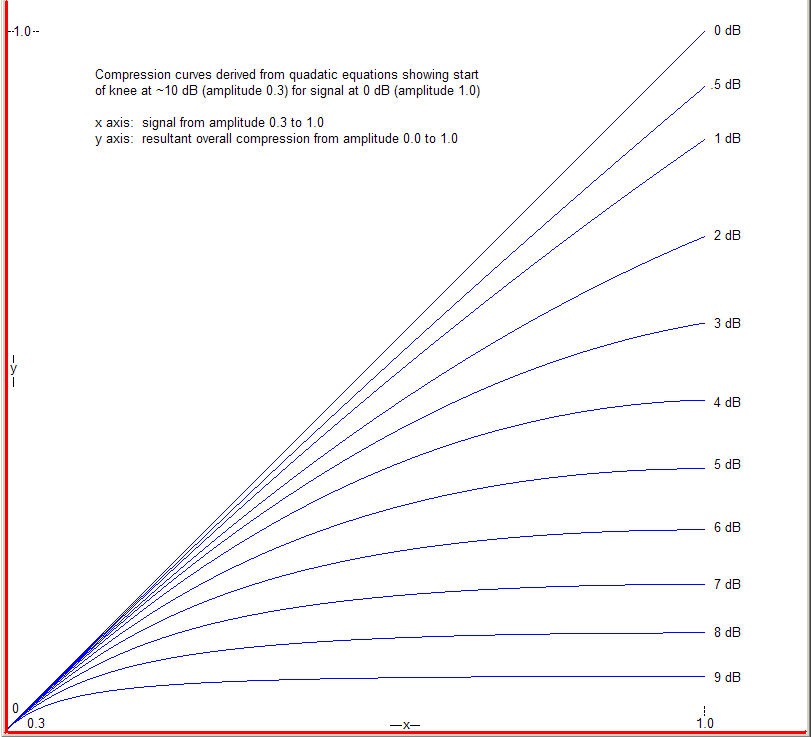
Re:Slopes and curves
Just threw a graph up on my web site of the family of curves the code generates
-
Re:In other words ...
I agree with you. Impetus to transform the internet is coming from every direction. They won't be happy until we have a "trusted path" to our "trusted computers". We discussed all this before from a different context, when Stanford University was announcing their Clean Slate Design initiative. I was so inspired by the slashdot discussion at the time that I did some in depth research on the topic and put up a blog Since then, Stanford has removed their Clean Slate design White Paper from their site. (Why?)
-
Re:About time
What mature, socially responsible individual could not agree with you? But again, the problem is getting somebody to act. Modern democracies are pretty good about being proactive on many issues, but they only got that way from broad social pressure. The majority of the public does not even understand this issue, and remains blissfully unaware of the full dimension of the problem. The situation on the internet these days is a crises waiting to happen, but nobody reacts. Granted, there are futile attempts along the lines that you suggest. For example, when a white hat security researcher takes his discovery to the FBI in the USA, the FBI has been known to act to shut down a botnet herder within its jurisdiction from time to time. Unfortunately, these efforts are woefully under-maned and underfunded. It is probably a similar situation in other countries you mention. We have seen some wonderfully coordinated actions on the international level (Interpol) to shut down child porn rings. If only we could give these same people a broader mandate and funding at the level the military enjoys. However, there is no evidence that is going to happen any time soon. Not until we are seeing daily headlines in the popular press and nightly news casts about the situation will anyone act. The general public does not have the vocabulary or knowledge to even begin to understand the issue. The newscasters don't understand the issues. How can they even begin to alert the public? We get action against child porn rings because everybody can understand that and are rightfully horrified when they learn what is going on. The problem with the botnets, however, is beyond their understanding. The truth that the vast majority doesn't understand is that the world exists in a state of perpetual warfare. Look at the world from a long ways away, from another planet perhaps, and what do you see? Beneath the surface on that third planet from the sun is a chess board, with move and counter move as diverse forces battle for power. People in modern democracies remain isolated by their own ignorance from the bulk of the drama. The entire earth is a forest or coal field where fires burn underground, breaking out to the surface here and there all over the globe. If you happen to live in one of these hot spots, then you are rudely confronted by reality, though may not be aware of the bigger picture. If you happen live in a modern, civilized country, you go blindly about your personal affairs blissfully unaware of the fire that burns beneath the soil. No government is going to react until a fire breaks out and the internet burns down.
-
Re:What about tic-tac-toe?
You may find using a genetic algorithm to solve tic tac toe an interesting approach. You can download the player and choose to play against the genetic algorithm, which you will never beat, or against a neural network which you may beat. Then you can give your four year old a chance to play against the random number generator.
-
Re:What about tic-tac-toe?
You may find using a genetic algorithm to solve tic tac toe an interesting approach. You can download the player and choose to play against the genetic algorithm, which you will never beat, or against a neural network which you may beat. Then you can give your four year old a chance to play against the random number generator.
-
Re:Safari & XP64 not in love ?
I had rebooted - but perhaps the state of my computer was 'confused' at that time. I was in the middle of something and had a lot of applications open. It's working great now - at least - it displays my new site, which is the whole reason I wanted to try out Safari.
-
Where's the photographer?
The picture shows a beautiful shot of the perfect silicon sphere. Out of curiosity, I looked very closly at the scene reflected by it's surface, thinking perhaps I might get a glimpse of the photographer. However, he was nowhere to be seen.
Then I got to thinking - it should be easy to reconstruct the scene that is portrayed in the reflection from the surface of the sphere. All that is needed is to cut out the image of the silicon sphere and paste onto the surface of a three dimensional sphere. Then we could rotate it this way and that and look around the scientist's lab. So I did this - using a software simulation. I cut out the silicon sphere from the article's photo, and used it as a texture on a spherical 3D mesh, and added a little code to rotate it back and forth so that I could look around the scientist's lab. Guess what - there is no sign of the photographer! What we see is a very messy lab, with a closed door on the right. There are florescent fixtures on the ceiling that are currently turned off. There is a large window at the end of the room. I do believe that the ceiling, though it meets the left wall at the usual 90 degree angle, curves down to the wall at the right - a very unusual space, as if it was crammed into to an attic. At the extreme right of the room I believe we see a curtain hastily thrown over whatever would have been on the right side of the view. If the photographer is in the room, as he must be, I think he must be kneeling to the left of the window about three-quarters of the way back, and using a telephoto lens.
I have made available the exe that I created on my web site so that you may take a look for yourself. The code is a hasty adaptation of Microsoft's DX3D mesh tutorial "Tut_06Meshes" from the DxSDK 9.0, which is also included. You can get the zip package here. Perhaps you could modify the code to produce an even better view, but unfortunately, the resolution of the original image is really too low to get much out of it. It was a lot of fun doing this, and if you come up with a better result than me I would like to hear from you.