Slashdot Mirror
Domain: water-data.com
Stories and comments across the archive that link to water-data.com.
Comments · 8
-
confess...
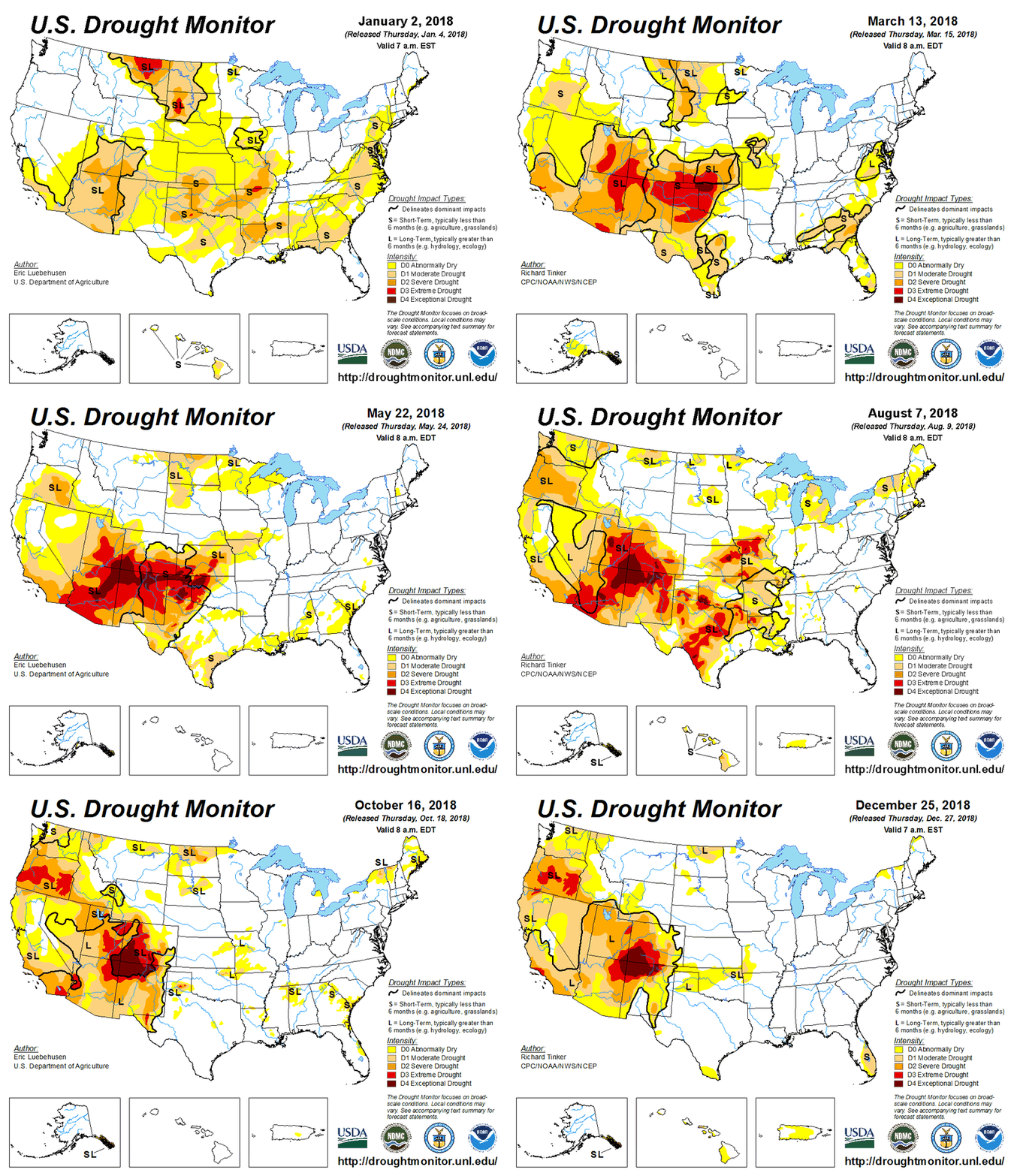
I watch it too. Do not even live in the southwest. A few years ago cali was dark red. Now it is light yellow/white.
https://droughtmonitor.unl.edu...
vs
https://droughtmonitor.unl.edu...I also watch the lake levels at http://lakepowell.water-data.c...
Just semi interesting. Next year is shaping up to be a 'dry one' http://graphs.water-data.com/u...
-
confess...
I watch it too. Do not even live in the southwest. A few years ago cali was dark red. Now it is light yellow/white.
https://droughtmonitor.unl.edu...
vs
https://droughtmonitor.unl.edu...I also watch the lake levels at http://lakepowell.water-data.c...
Just semi interesting. Next year is shaping up to be a 'dry one' http://graphs.water-data.com/u...
-
Re:I'm more worried about pollution than climate
I think we are at an inflection point. So it is your thesis that higher humidity has led to higher snow packs in the Colorado river basin and temperature has no effect on that? Why is the runoff just staring now? Go to http://lakepowell.water-data.c... and see that due to the cool spring runoff is just starting and the lake is 2-4 degrees cooler than it usually is this time of year. I suppose higher humidty caused the long winter in the North Eastern US this winter as well? It caused the unusually cool weather in the south? High humdity from global warming made it a cooler than normal winter?
-
Re:Manufactured Crisis
Yes Lake Mead is at 48% of full pool.
Unless they get a large amount of run off due to show melt, I don't see it
getting much better at current usage rates. -
Re:Oh noes! 11 mm in 20 years!
Somehow I screwed up a link in the previous reply. Before the Lake Powell link I wrote:
Lake Mead is currently 102 feet below full pool and 51.5^ of capacity.
-
Re:Oh noes! 11 mm in 20 years!
LA gets a large share of water from the Colorado River too and I think Phoenix as well. The Colorado River flow has been blow normal every year except for 2 since 2000.. Both Lake Mead behind Hoover Dam and Lake Powell behind Glen Canyon Dam are well below capacity. Lake Powell is at 85 feet below full and 54.5% capacity. They keep Powell a little fuller because they can always send it down to Mead if necessary.
The people who will really be hurt by the dry conditions are the farmers in Southern California and Eastern Arizona. They are completely dependent on Colorado River water.
(I pay attention to the Colorado because I'm a whitewater rafter and I got to row a boat through the Grand Canyon last spring. What an incredible journey.)
-
Re:Oh noes! 11 mm in 20 years!
LA gets a large share of water from the Colorado River too and I think Phoenix as well. The Colorado River flow has been blow normal every year except for 2 since 2000.. Both Lake Mead behind Hoover Dam and Lake Powell behind Glen Canyon Dam are well below capacity. Lake Powell is at 85 feet below full and 54.5% capacity. They keep Powell a little fuller because they can always send it down to Mead if necessary.
The people who will really be hurt by the dry conditions are the farmers in Southern California and Eastern Arizona. They are completely dependent on Colorado River water.
(I pay attention to the Colorado because I'm a whitewater rafter and I got to row a boat through the Grand Canyon last spring. What an incredible journey.)
-
Re:Worse?
Lake Mead was essentially full in 2000. Since then a series of drought years has dropped the water level by around 100 feet. 2011 was an exceptional water year in the Colorado drainage so the lake came up some but for 2012 the inflow is expected to be less than 30% of the average from 1981 to 2010. The Lake Mead Water Data web site has historical information about the water conditions in Lake Mead. In particular you might want to look at the Averages by Year data. Also, you can get a summary of the current conditions for the Upper Colorado basin that is updated monthly here.