Slashdot Mirror
Domain: worldscientific.com
Stories and comments across the archive that link to worldscientific.com.
Stories · 4
-
Feds Attempt To Censor Parts of a New Book About the Hydrogen Bomb
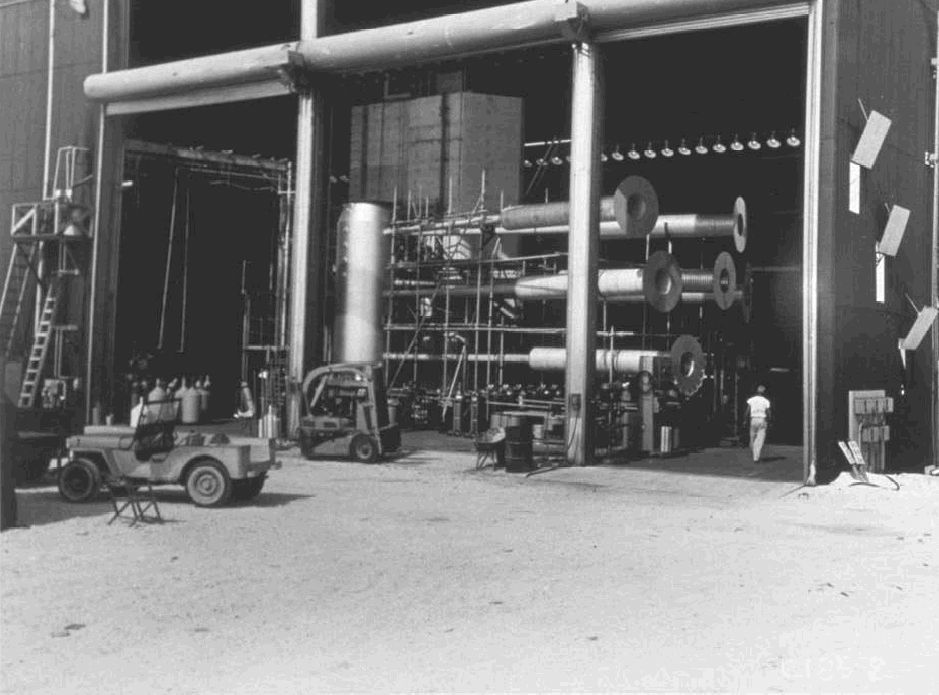
HughPickens.com writes: The atom bomb — leveler of Hiroshima and instant killer of some 80,000 people — is just a pale cousin compared to the hydrogen bomb, which easily packs the punch of a thousand Hiroshimas. That is why Washington has for decades done everything in its power to keep the details of its design out of the public domain. Now William J. Broad reports in the NY Times that Kenneth W. Ford has defied a federal order to cut material from his new book that the government says teems with thermonuclear secrets. Ford says he included the disputed material because it had already been disclosed elsewhere and helped him paint a fuller picture of an important chapter of American history. But after he volunteered the manuscript for a security review, federal officials told him to remove about 10 percent of the text, or roughly 5,000 words. "They wanted to eviscerate the book," says Ford. "My first thought was, 'This is so ridiculous I won't even respond.'" For instance, the federal agency wanted him to strike a reference to the size of the first hydrogen test device — its base was seven feet wide and 20 feet high. Dr. Ford responded that public photographs of the device, with men, jeeps and a forklift nearby, gave a scale of comparison that clearly revealed its overall dimensions.
Though difficult to make, hydrogen bombs are attractive to nations and militaries because their fuel is relatively cheap. Inside a thick metal casing, the weapon relies on a small atom bomb that works like a match to ignite the hydrogen fuel. Today, Britain, China, France, Russia and the United States are the only declared members of the thermonuclear club, each possessing hundreds or thousands of hydrogen bombs. Military experts suspect that Israel has dozens of hydrogen bombs. India, Pakistan and North Korea are seen as interested in acquiring the potent weapon. The big secret the book discusses is thermal equilibrium, the discovery that the temperature of the hydrogen fuel and the radiation could match each other during the explosion (PDF). World Scientific, a publisher in Singapore, recently made Dr. Ford's book public in electronic form, with print versions to follow. Ford remains convinced the book "contains nothing whatsoever whose dissemination could, by any stretch of the imagination, damage the United States or help a country that is trying to build a hydrogen bomb." "Were I to follow all — or even most — of your suggestions," says Ford, "it would destroy the book." -
Feds Attempt To Censor Parts of a New Book About the Hydrogen Bomb
HughPickens.com writes: The atom bomb — leveler of Hiroshima and instant killer of some 80,000 people — is just a pale cousin compared to the hydrogen bomb, which easily packs the punch of a thousand Hiroshimas. That is why Washington has for decades done everything in its power to keep the details of its design out of the public domain. Now William J. Broad reports in the NY Times that Kenneth W. Ford has defied a federal order to cut material from his new book that the government says teems with thermonuclear secrets. Ford says he included the disputed material because it had already been disclosed elsewhere and helped him paint a fuller picture of an important chapter of American history. But after he volunteered the manuscript for a security review, federal officials told him to remove about 10 percent of the text, or roughly 5,000 words. "They wanted to eviscerate the book," says Ford. "My first thought was, 'This is so ridiculous I won't even respond.'" For instance, the federal agency wanted him to strike a reference to the size of the first hydrogen test device — its base was seven feet wide and 20 feet high. Dr. Ford responded that public photographs of the device, with men, jeeps and a forklift nearby, gave a scale of comparison that clearly revealed its overall dimensions.
Though difficult to make, hydrogen bombs are attractive to nations and militaries because their fuel is relatively cheap. Inside a thick metal casing, the weapon relies on a small atom bomb that works like a match to ignite the hydrogen fuel. Today, Britain, China, France, Russia and the United States are the only declared members of the thermonuclear club, each possessing hundreds or thousands of hydrogen bombs. Military experts suspect that Israel has dozens of hydrogen bombs. India, Pakistan and North Korea are seen as interested in acquiring the potent weapon. The big secret the book discusses is thermal equilibrium, the discovery that the temperature of the hydrogen fuel and the radiation could match each other during the explosion (PDF). World Scientific, a publisher in Singapore, recently made Dr. Ford's book public in electronic form, with print versions to follow. Ford remains convinced the book "contains nothing whatsoever whose dissemination could, by any stretch of the imagination, damage the United States or help a country that is trying to build a hydrogen bomb." "Were I to follow all — or even most — of your suggestions," says Ford, "it would destroy the book." -
Study: Global Warming Solvable If Fossil Fuel Subsidies Given To Clean Energy
An anonymous reader writes A research team at the International Institute for Applied Systems Analysis in Laxenburg, Austria, says it has studied how much it would cost for governments to stick to their worldwide global warming goal. They've concluded that for "a 70 per cent chance of keeping below 2 degrees Celsius, the investment will have to rise to $1.2 trillion a year." Where to get that money? The researchers say that "global investment in energy is already $1 trillion a year and rising" with more than half going to fossil fuel energy. If those subsidies were spent on renewable energy instead, the researchers hypothesize that "global warming would be close to being solved." -
A Physicist Says He Can Tornado-Proof the Midwest With 1,000-Foot Walls
meghan elizabeth writes: Temple physicist Rongjia Tao has a utopian proposal to build three massive, 1,000-foot-high, 165-foot-thick walls around the American Midwest, in order to keep the tornadoes out. Building three unfathomably massive anti-tornado walls would count as the infrastructure project of the decade, if not the century. It would be also be exceedingly expensive. "Building such walls is feasible," Tao says. "They are much easier than constructing a skyscraper. For example, in Philadelphia, the newly completed Comcast building has about 300-meter height. The wall with similar height as the Comcast building should be much easier to be constructed." Update: 06/28 04:14 GMT by T : Note: originally, this story said that Tao was at Drexel rather than Temple -- now corrected