Slashdot Mirror
Search
Search the archive with full-text matching across story titles, bodies,
and comments. Phrases are quoted; or, -word,
and parentheses behave as in a web search. Queries must be at least
3 characters.
Stories · 13,059
-
Silicon Valley Could Be Heading For a New Stock Collapse.
First time accepted submitter billcarson writes "Even though for most of us the recession is far from over, analysts are worried the technology sector might be near the end of a bubble. Technology stocks are at records highs at the moment. Companies that have no sound business plan have no difficulty in raising capital to fund their crazy dreams. Even Yahoo is again buying companies without real profit (Tumblr). Andreessen Horowitz, a major venture capitalist in Silicon Valley is already pulling up the ladder. Might this be an indicator for more woe to come?"
-
Tesco To Use Face Detection Technology For In-Store Advertising
TinTops writes "Tesco has sparked privacy concerns following its decision to install technology that scans shoppers' faces in order to display video advertising on screens at its petrol stations. The UK's privacy watchdog the ICO is looking into the technology. This is the first national rollout of the system, known as OptimEyes, which claims to recognize facial characteristics that determine a customer's gender and age in order to show more relevant video adverts on screens as they queue at the till. Simon Sugar, chief executive of Amscreen, the firm which sells the technology, has admitted it has connotations of science fiction, but is looking to increase its reach further. 'Yes, it's like something out of Minority Report, but this could change the face of British retail and our plans are to expand the screens into as many supermarkets as possible,' he said."
-
BlackBerry Abandons Sale Plans, Will Replace CEO
An anonymous reader writes "BlackBerry has abandoned plans to sell the company to Fairfax Holdings after the shareholder could not raise enough money. CEO Thorsten Heins is to leave the company. From the article: 'The company also said that Prem Watsa, chairman and CEO of Fairfax, will be appointed Lead Director and chair of the compensation, nomination and governance committee. Mr. Watsa had resigned from the BlackBerry board earlier this year to explore a bid for the company.'"
-
Linux 3.12 Released, Linus Proposes Bug Fix-Only 4.0
An anonymous reader writes "Linus Torvalds announced the Linux 3.12 kernel release with a large number of improvements through many subsystems including new EXT4 file-system features, AMD Berlin APU support, a major CPUfreq governor improvement yielding impressive performance boosts for certain hardware/workloads, new drivers, and continued bug-fixing. Linus also took the opportunity to share possible plans for Linux 4.0. He's thinking of tagging Linux 4.0 following the Linux 3.19 release in about one year and is also considering the idea of Linux 4.0 being a release cycle with nothing but bug-fixes. Does Linux really need an entire two-month release cycle with nothing but bug-fixing? It's still to be decided by the kernel developers."
-
You're Only As Hirable As Your Google+ Circles
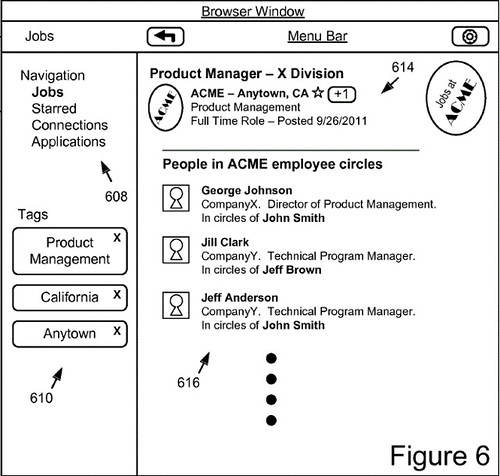
theodp writes "A pending Google patent for Identifying Prospective Employee Candidates via Employee Connections lays out plans for data mining employees' social graphs to find top job candidates. According to the patent application, the system would consider factors including the performance of the employees at the company whose circles you are in — under the assumption that the friends of top performers are more likely to be top performers themselves. It's the invention of three Googlers, including an HR VP who was quoted recently in an article that questioned the wisdom of certain Google hiring practices said to encourage 'echo chamber' hiring."
-
A Plan To Fix Daylight Savings Time By Creating Two National Time Zones
Hugh Pickens DOT Com writes "Allison Schrager writes in the Atlantic that losing another hour of evening daylight isn't just annoying. It's an economically harmful policy with minimal energy savings. "The actual energy savings are minimal, if they exist at all. Frequent and uncoordinated time changes cause confusion, undermining economic efficiency. There's evidence that regularly changing sleep cycles, associated with daylight saving, lowers productivity and increases heart attacks." So here's Schrager's proposal. This year, Americans on Eastern Standard Time should set their clocks back one hour (like normal), Americans on Central and Rocky Mountain time do nothing, and Americans on Pacific time should set their clocks forward one hour. This will result in just two time zones for the continental United States and the east and west coasts will only be one hour apart. "America already functions on fewer than four time zones," says Schrager. "I spent the last three years commuting between New York and Austin, living on both Eastern and Central time. I found that in Austin, everyone did things at the same times they do them in New York, despite the difference in time zone. People got to work at 8 am instead of 9 am, restaurants were packed at 6 pm instead of 7 pm, and even the TV schedule was an hour earlier. " Research based on time use surveys found American's schedules are already determined more by television than daylight suggesting, in effect, that Americans already live on two time zones. Schrager says that this strategy has already been proven to work in other parts of the world. China has been on one time zone since 1949, despite naturally spanning five time zones and in 1983, Alaska, which naturally spans four time zones, moved most of the state to a single time zone. "It sounds radical, but it really isn't. The purpose of uniform time measures is coordination. How we measure time has always evolved with the needs of commerce.," concludes Schrager. "Time is already arbitrary, why not make it work in our favor?""
-
Bill Gates: Internet Will Not Save the World
quantr points out an interview with Bill Gates in which he talks about setting priorities for making a difference in the world. Quoting: "The internet is not going to save the world, says the Microsoft co-founder, whatever Mark Zuckerberg and Silicon Valley's tech billionaires believe. But eradicating disease just might. Bill Gates describes himself as a technocrat. But he does not believe that technology will save the world. Or, to be more precise, he does not believe it can solve a tangle of entrenched and interrelated problems that afflict humanity's most vulnerable: the spread of diseases in the developing world and the poverty, lack of opportunity and despair they engender. 'I certainly love the IT thing,' he says. 'But when we want to improve lives, you've got to deal with more basic things like child survival, child nutrition.' These days, it seems that every West Coast billionaire has a vision for how technology can make the world a better place. A central part of this new consensus is that the internet is an inevitable force for social and economic improvement; that connectivity is a social good in itself. It was a view that recently led Mark Zuckerberg to outline a plan for getting the world's unconnected 5 billion people online, an effort the Facebook boss called 'one of the greatest challenges of our generation.' But asked whether giving the planet an internet connection is more important than finding a vaccination for malaria, the co-founder of Microsoft and world's second-richest man does not hide his irritation: 'As a priority? It's a joke.'"
-
Skunk Works Reveals Proposed SR-71 Successor: the Hypersonic SR-72
cold fjord writes "Aviation Week reports, 'Ever since Lockheed's unsurpassed SR-71 Blackbird was retired ... almost two decades ago, the perennial question has been: Will it ever be succeeded by a new-generation, higher-speed aircraft and, if so, when? That is, until now. After years of silence on the subject, Lockheed Martin's Skunk Works has revealed exclusively to AW&ST details of long-running plans for what it describes as an affordable hypersonic intelligence, surveillance and reconnaissance (ISR) and strike platform that could enter development in demonstrator form as soon as 2018. Dubbed the SR-72, the twin-engine aircraft is designed for a Mach 6 cruise, around twice the speed of its forebear, and will have the optional capability to strike targets. Guided by the U.S. Air Force's long-term hypersonic road map, the SR-72 is designed to fill what are perceived by defense planners as growing gaps in coverage of fast-reaction intelligence by the plethora of satellites, subsonic manned and unmanned platforms meant to replace the SR-71.'"
-
Lenovo Want Ashton Kutcher As More Than Just a Pretty Face
Nerval's Lobster writes "It's not clear whether managers at Lenovo were too starstruck to say 'no,' or whether the once-respected PC maker is having so much trouble hiring technical help it genuinely intends to allow lowbrow-sitcom staple Ashton Kutcher serve as both celebrity spokesman and full-on product engineer. Lenovo announced that it had hired Kutcher as a product engineer who will 'work with the company's engineering teams around the world to develop and market the Yoga line of tablets by providing input and decision-making into design, specifications, software and usage scenarios.' Kutcher – former Calvin Klein underwear model, star of such quality entertainment as That '70s Show, Punk'd, current star of Two-and-a-Half Men and, most recently, portrayer of Steve Jobs in the biopic Jobs – has a successful track record of investing in tech companies, Lenovo's announcement said as partial explanation for the arrangement. Kutcher also studied biomechanical engineering as an undergraduate at the University of Iowa, which USA Today and other news outlets used to help bolster the idea that the star of Dude, Where's My Car? could function effectively as part of an engineering product-development team. Kutcher did list his planned major at the university as biomechanical engineering when he enrolled in 1996, but he dropped out during the 1997-98 school year. He did found A-Grade Investments, which has been involved in or funded tech companies including Spotify, Path, Airbnb and Uber, according to Lenovo."
-
Root of Maths Genius Sought
ananyo writes "He founded two genetic-sequencing companies and sold them for hundreds of millions of dollars. He helped to sequence the genomes of a Neanderthal man and James Watson, who co-discovered DNA's double helix. Now, entrepreneur Jonathan Rothberg has set his sights on another milestone: finding the genes that underlie mathematical genius. Rothberg and physicist Max Tegmark, who is based at the Massachusetts Institute of Technology in Cambridge, have enrolled about 400 mathematicians and theoretical physicists from top-ranked US universities in a study dubbed 'Project Einstein'. They plan to sequence the participants' genomes using the Ion Torrent machine that Rothberg developed. Critics say that the sizes of these studies are too small to yield meaningful results for such complex traits. But Rothberg is pushing ahead. 'I'm not at all concerned about the critics,' he says, adding that he does not think such rare genetic traits could be useful in selecting for smarter babies. Some mathematicians, however, argue that maths aptitude is not born so much as made. 'I feel that the notion of "talent" may be overrated,' says Michael Hutchings, a mathematician also at Berkeley."
-
Genome Hacker Uncovers 13-Million-Member Family Tree
ananyo writes "Using data pulled from online genealogy sites, a renowned 'genome hacker' has constructed what is likely the biggest family tree ever assembled. The researcher and his team now plan to use the data — including a single uber-pedigree comprising 13 million individuals, which stretches back to the 15th century — to analyze the inheritance of complex genetic traits, such as longevity and facial features. In addition to providing the invitation list to what would be the world's largest family reunion, the work presented by computational biologist Yaniv Erlich at the American Society of Human Genetics annual meeting in Boston could provide a new tool for understanding the extent to which genes contribute to certain traits. The pedigrees have been made available to other researchers, but Erlich and his team at the Whitehead Institute in Cambridge, Massachusetts, have stripped the names from the data to protect privacy."
-
Chrome Will End XP Support in 2015; Firefox Has No Plans To Stop
Billly Gates writes "Microsoft is ending support for Windows XP in 2014. Fortunately for its users who want to keep browsing the web, Google is continuing to support Chrome until at least 2015. Firefox has no current plans to end support for XP. Hopefully this will delay the dreaded XPopacalypse — the idea that a major virus/worm/trojan will take down millions of systems that haven't been issued security patches. When these browsers finally do end XP support, does it mean webmasters will need to write seperate versions of CSS and JavaScript for older versions if the user base refuses to leave Windows XP (as happened with IE6)?" Update: 10/29 17:31 GMT by S : Changed headline and summary to reflect that Mozilla doesn't have plans to drop XP support any time soon.
-
How Kentucky Built the Country's Best ACA Exchange
Hugh Pickens DOT Com writes "Dylan Scott writes at TPM that Kentucky, with its deeply conservative congressional delegation, seems like an unlikely place for Obamacare to find success. Instead, Kentucky's online health insurance exchange has proven to be one of the best, and shows that the marketplace concept can work in practice. Kentucky routinely ranks toward the bottom in overall health, and better health coverage is one step toward reversing that norm. It started with the commitment to build the state's own website rather than default to the federal version. On July 17, 2012, a few weeks after the U.S. Supreme Court upheld the Affordable Care Act, Democratic Gov. Steve Beshear created the exchange via executive order, over the objections of a Republican-controlled state legislature, which sought other means — including an effort to prevent the exchange from finding office space — to block the site's creation. ... Testing was undertaken throughout every step of the process, says Carrie Banahan, kynect's executive director, and it was crucial because it allowed state officials to identify problems early in the process. ... From a design standpoint, Kentucky made the conscious choice to stick to the basics, rather than seeking to blow users away with a state-of-the-art consumer interface. It 'doesn't have all the bells and whistles that other states tried to incorporate,' says Jennifer Tolbert. 'It's very straightforward in allowing consumers to browse plans without first creating an account.' A big part of that was knowing their demographics: A simpler site would make it easer to access for people without broadband Internet access, and the content was written at a sixth-grade reading level so it would be as easy to understand as possible."
-
Is Europa Too Prickly To Land On?
astroengine writes "A deadly bed of icy javelins — known as penitentes — could be awaiting any spacecraft that tries to land on some parts of the ice-covered world Europa, say researchers who have carefully modeled the ice processes at work on parts of the Jovian moon to detect features beyond the current low resolution images. If the prediction of long vertical blades of ice is correct, it will not only help engineers design a lander to tame or avoid the sabers, but also help explain a couple of nagging mysteries about the strange moon. 'This is a game changer,' said planetary scientist Don Blankenship of the University of Texas in Austin. Blankenship has been involved in NASA's planning process for sending a reconnaissance spacecraft and eventually a lander to Europa."
-
8 US States Pushing For 3.3 Million Electric Cars
An anonymous reader writes "A coalition of eight U.S. states, including New York and California, have announced a plan to get 3.3 million zero-emission electric vehicles onto their roads by 2025. 'The states, which represent more than a quarter of the national car market, said they would seek to develop charging stations that all took the same form of payment, simplify rules for installing chargers and set building codes and other regulations to require the stations at workplaces, multifamily residences and at other places.' An editorial in Quartz says that while the initiative itself is fine, the states should really take cues from Tesla if they want to plan out an infrastructure that will convince people to switch. ' For longer distances, [Tesla drivers] can stop at "Supercharger" stations strategically placed along highways that let them add 150 miles of range in as little as 20 minutes. Currently, [government] money is being spent on installing much-slower chargers at stores, shopping malls and other urban locations in the hope that drivers will use them. Tesla says it will blanket the US with its Superchargers for a fraction of the cost, because it studies the driving patterms of its customers and installs charging stations only where they tend to travel. This isn't hard; most other electric cars also record their drivers' habits. If privacy concerns could be addressed and automakers would be willing to share that data with government transportation planners, the rollout of public charging stations could be more targeted and cash-efficient.'"
-
NYC's 250,000 Street Lights To Be Replaced With LEDs By 2017
An anonymous reader writes "New York City Mayor Michael Bloomberg announced that the city's 250,000 street light fixtures, which currently use incandescent bulbs, will be replaced with LEDs by 2017. It's part of a plan to reduce the city government's emissions by 30%. The LEDs have a lifespan of 20 years, more than three times that of the current incandescent bulbs, and Bloomberg says it will save $6 million in energy and $8 million in maintenance every year. It will be the largest LED retrofit in the country. 'The first of three phases to replace the standard "cobra-head" high-pressure sodium street lights, which will upgrade 80,000 at a time across the five boroughs, is expected to be completed in December 2015 with the final phase expected to be completed by 2017. Following the replacement of roadway lighting, decorative fixtures in the city's business and commercial districts will be addressed.'"
-
What If the "Sharing Economy" Organized a Strike, and Nobody Came?
Nerval's Lobster writes "In Boston, a number of UberX drivers reportedly planned to strike yesterday afternoon in response to a rate cut. (UberX is a low-cost program from Uber, which is attempting to "disrupt" the traditional cab industry via a mobile app that connects ordinary drivers in need of cash with passengers who want to go somewhere.) Uber tried to preempt the strike with a blog posting explaining that the rate cut actually translated into more customers and thus more revenue to drivers, but it needn't have bothered: according to local media (the same media that reported a strike was in the making) a strike failed to materialize. Many of the biggest firms of the so-called 'sharing economy,' such as Uber and Airbnb, are locked in battle with some combination of deeply entrenched industries and government regulators. But if the 'labor' that drives the sharing economy becomes more agitated about its compensation, it could create yet another interesting wrinkle. The Boston strike may have fizzled, but that doesn't mean another one, in a different city, won't enjoy more success." Free (or freer) entry makes occupation-based roadblocks harder to enforce, though, so Uber and other crowd-sourcing matchmakers are tougher to pin down and disrupt in the way that more tightly controlled enterprises are. (Not that city councils and other bodies aren't trying to corral crowd-sourced undertakings into their regulatory purviews, putting a damper on some of that freewheeling disintermediation.)
-
New Goggles Offer Minority Report-Style Interface With Heads-Up Display
Lucas123 writes "A Taiwanese non-profit R&D organization is demonstrating a new heads-up type display that allows users to interact with the floating virtual screens using finger swipes. The new i-Air Touch technology from the Industrial Technology Research Institute is being developed for an array of devices, including PCs, wearable computers and mobile devices. The technology allows a user's hand to be free of any physical device such as a touchpad or keyboard for touch input. ITRI plans to license the patented technology to manufacturers. The company sees the technology being used in not only consumer arenas (video), but also for medical applications such as endoscopic surgery and any industrial applications that benefit from hands-free input."
-
Top US Lobbyist Wants Broadband Data Caps
sl4shd0rk writes "Michael Powell, A former United States FCC chairman, is pushing for 'usage-based internet access' which he says is good for consumers who are 'accustomed to paying for what they use'. Apparently Time Warner and Comcast (maybe others) are already developing plans to set monthly rates based on bandwidth usage. The reasoning on the NCTA website lays out the argument behind Powell's plan."
-
Ask Slashdot: How Do You Choose Frameworks That Will Survive?
First time accepted submitter waslap writes "I have a leading role at a small software development company. I am responsible for giving guidance and making decisions on tool usage within the shop. I find the task of choosing frameworks to use within our team, and specifically UI frameworks, exceedingly difficult. A couple of years back my investigation of RIA frameworks lead me to eventually push for Adobe Flex [adobe.com] as the UI framework of choice for our future web development. This was long before anyone would have guessed that Adobe would abandon the Linux version of Flash. I chose Flex mainly for its maturity, wealth of documentation, commercial backing, and the superior abilities of Flash, at a time when HTML 5 was still in the early stages of planning. Conversely, about 15 years ago I made a switch to Qt for desktop applications and it is still around and thriving. I am trying to understand why it was the right choice and the others not. Perhaps Qt's design was done so well that it could not be improved. I'm not sure whether that assessment is accurate. I cannot find a sound decision-tree based on my experiences to assist me in making choices that have staying power. I hope the esteemed Slashdot readers can provide helpful input on the matter. We need a set of fail-safe axioms" Read on for more context. The backing of Adobe, an industry giant, gave me what I later discovered was a false sense of security. I thought that the Flex framework would not get lost in a back alley like so many open source projects. We invested heavily in Flex and were disillusioned a couple of years later when Linux support for Flash was ended. (Linux support is vital for us for reasons outside this discussion.)
I had evaluated Adobe Flex alongside OpenLaszlo, which at the time had the ability to use a DHTML back-end instead of Flash with the flick of a switch. In retrospect, this alone apparently made it a better choice in the long run regardless of its flaky state when I first looked at it.
A similar scenario arose with CodeIgniter, which we chose for getting away from classical spaghetti PHP. CodeIgniter was recently dropped after we've invested a Tesla Model X worth of money into using it. (EllisLab Seeking New Owner for CodeIgniter.)
I am standing at a cross-roads once again as people are pushing Laravel [laravel.com] for PHP, and giving other suggestions. I am scratching my (sore) head and wondering how to prevent eventual failures in the future. It seems there is no way to predict whether a tool will survive.
Even in retrospect, when I consider my decision-making processes, everything was reasonable at the time I made the choices, yet some turned out to be wrong.