 Slashdot Mirror
Help Solve the Mystery of the Pioneer Anomaly
deglr6328 writes "Very soon, NASA will be dismantling and scrapping its only computer left which is able to access and process the data on its ancient 7- and 9-track magnetic tapes. "Who cares", you say? Well, the Planetary Society for one and they're hoping you might care as well. The data held on these (few hundred) tapes is no ordinary forgettable data, it is the complete archive of the first 15 years of all the data returned to Earth by the Pioneer spacecraft which were sent into interstellar space. This additional and thus far unexamined data (the data after 1988 is available and has already been examined) may hold the key to solving what is considered one of the top problems in physics today, the so called Pioneer anomaly, where the observed trajectory of these spacecraft (and a couple others) deviates noticeably from our very precise expectation. The reason for the anomaly may be as mundane as uneven radiation pressure or escaping thruster fuel or it may be as groundbreaking as a clue to completely new physics, perhaps related to dark matter or dark energy. The Planetary Society is planning on recovering this data and poring over it meticulously to look for something which may have been missed or hidden from current investigations into the phenomenon. They need money to do this, about $250,000, and are asking for donations to fund the project. You do not need to be a member to donate. There are no serious proposals to send any more spin-stabilized spacecraft on solar escape trajectories any time in the near future and this is probably the only tenable method we have to directly investigate this mystery in the interim."
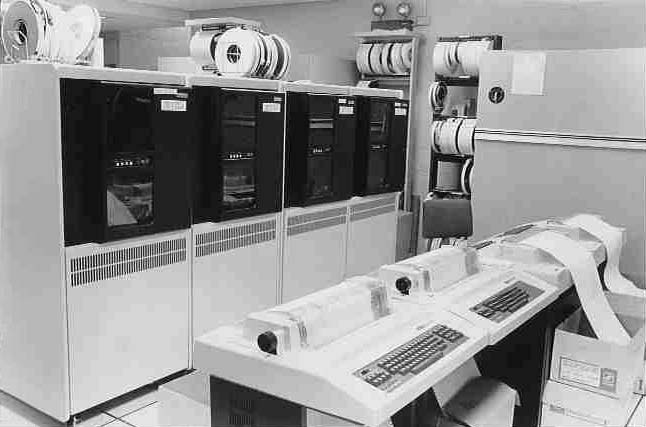
I'm not making a joke. Can't they just rip the tapes to a hard drive? This isn't Star Wars where you can't copy the "data tapes" after all.
Pulp Audio Weekly - Geek News and Reviews
That those several hundred tapes will fit on a $10 USB key? That's what 128 or 256MB these days?
Slashdot's rate-of-post filter: Preventing you from posting too many great ideas at once.
If we donate, and they reach the amount, will the data be open to everyone?
That is absolutely critical, I will not donate unless I can see the data.
$250,000 sounds like very little money compared to other NASA projects. Why can't my tax dollars go to these projects instead of the military?
The Planetary Society is planning on recovering this data and poring over it meticulously to look for something which may have been missed or hidden from current investigations into the phenomenon. They need money to do this, about $250,000, and are asking for donations to fund the project.
:-(
Let me sum up: the USA boldly sends a probe in space, at a very great cost to taxpayers. Some decades later, NASA is forced to scrap the only computer that can access the unique (and very expensive) data collected by said probe, because the administration refuses to fund them properly.
That's sad enough, but the saddest thing is: a bunch of passionate guys (the planetary society) are begging a measly quarter million bucks to save that priceless data, and the administration just stands there! That's like the cost of running a humvee for a week in Iraq or something. How does that look to the outside world? like a decrepit country where non-profit orgs are forced to take matters into their own hands to save their national treasures. Well done USA
"A door is what a dog is perpetually on the wrong side of" - Ogden Nash
Yep, the military probably spends $250,000 for just ass wipe per day in Iraq.
Also, I would be shocked if NASA didn't document any of the file formats used. I've worked on a NASA project and they are all about documentation. In fact, I was writing a system used to document the shuttle booster production process.
Lasers Controlled Games!
What I'm listening to now on Pandora...
First, the data first must be recovered, validated, documented, and preliminary analyses must be done. After those tasks are completed (probably taking months to a year),
Why not publish the data immediately, and qualify and expand it as they go along?
Rich.
libguestfs - tools for accessing and modifying virtual machine disk images
Yes, but the only urgent part of this project is recovering the data.
In theory for far less you could simply recover the data, test that it was recovered properly, and then stick it on a webpage for anybody in the world to analyze.
Their proposal is to solve the secrets of the universe for $250k. I might suggest that maybe the goal should be to simply transfer the data for $10k, and let somebody else pay for solving the secrets of the universe. The data recovery project is also far more likely to be successful...
...this? Get your damn wallet out!
Doesn't it make you feel good to know that our freedoms are protected by politicans, lawyers and journalists.
That Planetary Society FAQ does seem like... now what's the right word.... bullshit. So they came up with a suspiciously large and round number ($250K) but, as far as we've seen, no detailed budget behind it? No explanation of what happens to excess funds?
For fuck's sake, Planetary Society people, it looks disturbingly like a "don't think just donate! QUICKLY!" campaign, built around fear of NASA apparently doing something extraordinarily stupid. There are just too many holes in the story, too much that makes no sense.
I strongly suspect that they really just want to fund a few qualified people to work on the data full-time for 6-12 months. But if that's so, a little honesty would be appreciated. There's no fucking way I'd donate to support some ridiculous US salary, when I'm sure there are an enormous number of university-based people all around the world that would love to spend time analysing this kind of data and would do it for free.
And yeah, it is kind of hazy regarding what information of value they hope to extract from this data. The slashdot writeup "...or it may be as groundbreaking as a clue to completely new physics, perhaps related to dark matter or dark energy" sounds like a nutcase trying to sell something.