 Slashdot Mirror
Help Solve the Mystery of the Pioneer Anomaly
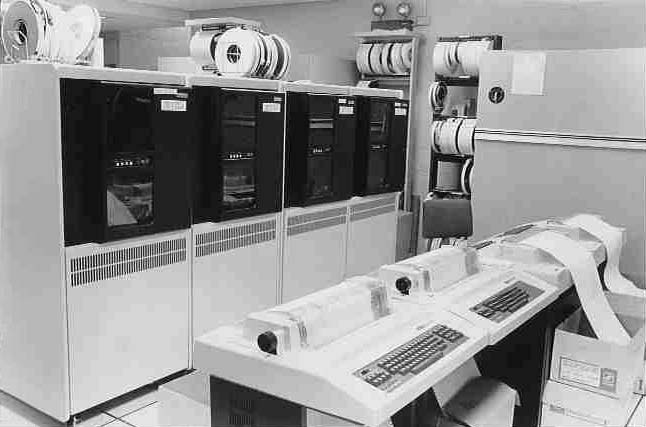
deglr6328 writes "Very soon, NASA will be dismantling and scrapping its only computer left which is able to access and process the data on its ancient 7- and 9-track magnetic tapes. "Who cares", you say? Well, the Planetary Society for one and they're hoping you might care as well. The data held on these (few hundred) tapes is no ordinary forgettable data, it is the complete archive of the first 15 years of all the data returned to Earth by the Pioneer spacecraft which were sent into interstellar space. This additional and thus far unexamined data (the data after 1988 is available and has already been examined) may hold the key to solving what is considered one of the top problems in physics today, the so called Pioneer anomaly, where the observed trajectory of these spacecraft (and a couple others) deviates noticeably from our very precise expectation. The reason for the anomaly may be as mundane as uneven radiation pressure or escaping thruster fuel or it may be as groundbreaking as a clue to completely new physics, perhaps related to dark matter or dark energy. The Planetary Society is planning on recovering this data and poring over it meticulously to look for something which may have been missed or hidden from current investigations into the phenomenon. They need money to do this, about $250,000, and are asking for donations to fund the project. You do not need to be a member to donate. There are no serious proposals to send any more spin-stabilized spacecraft on solar escape trajectories any time in the near future and this is probably the only tenable method we have to directly investigate this mystery in the interim."
If the difference of their expected trajectories have no commonality, it would seem to mean either some new force is affecting the craft differently, or each craft has its own mechanical explanation as to why they aren't staying the course.
Do *none* of these craft follow the expected trajectory? If not, then we really can't be sure whether this is a collection of mechanical issues or various effects of the unknown force. If one or two craft followed course perfectly, I would be inclined to say that the rest have mechanical issues knocking them off course.
Computers are useless. They can only give you answers.
-- Pablo Picasso
Anyone care to shed any further light on what format these tapes are in, how many there are and in what condition?
I had a summer job a decade ago ripping 9-track tapes (geophys data) to CD-R (back when CD-Rs were $20 each and a burner was $5k!), pretty sure the people I did it for still have the gear. Planetary guys - I couldn't see a contact address on your page!
If you think this data loss would be unfortunate, you should check out the Earth Resource Observing Satellite (EROS) Data Center run by the US Geological Survey in Sioux Falls South Dakota. For years NASA has been dumping all manner of data tapes there. 9-track, 24-track, literally hundreds of Terabytes of data. And many of those tapes are literally growing mold, sitting in boxes and racks in the basement, for lack of funding to transfer them to more permanent media.
Think about it, decades of climate data , going back to the 1970's, is being lost due to lethargy on the part of Clowngress. Or is it lethargy.
Let's see, three and a half decades of climate change data, detailed and explicit. Hmmmm.... who *wouldn't* want that data placed online where researchers could access it? I wonder.....
"Sic Semper Path of Least Resistance"
Surely considering the priceless data on these tapes, I'm sure they could hire engineers to rebuild the original tape readers, perhap with modern heads to account for magnetic fading.
Frankly, I've worked for companies that paid a great deal of money to save their software assets that were stored on old, seemingly unreadable media (a shitload of Digital Research files, the recovery cost us $50k), and that data wasn't even close to the value of the Pioneer probe data. If that's what stops NASA from salvaging that data, somebody needs to be fired there...
"A door is what a dog is perpetually on the wrong side of" - Ogden Nash
Actually it shoulnd't be that hard... as an embedded software engineer, i would say run the signal from the tape head to a DAC (if analog) and just write out the data the same way a wav file is written. When you "write out" the data, you only need to signal the USB serial protocol which would wrap the (analog?) data. The actual mediaum for USB data is a differential pair of wires. Some micro geek with tape reading experience could probably build a tape -to-usb reader for a few bucks. You wouldn't even need a USB tranceiver, though it probably would make it much, much easier.
All in all, remmeber you only have to take some data and wrap it in a protocol that is expressed on a differential pair. Not that hard...
Slashdot's rate-of-post filter: Preventing you from posting too many great ideas at once.
Does anyone know why NASA is dismantling the computers if there really is such a potential treasure-trove of knowledge on these tapes?
My guess is the operating cost. Those old machines are very VERY costly to run, between the power they need, the special rooms, and the ridiculous MTBF of the componentry that's measured in dozens of minutes.
But still, I agree. Scrapping the computer on that reason alone is forgetting the hundreds of millions spent on sending the probe out in space in the first place.
"A door is what a dog is perpetually on the wrong side of" - Ogden Nash
Possibly because the computer is the size of a large room, the tape drive is half the size of a car, and the air-conditioning for it is in danger of melting. Maybe.
When I was a physicist we had a DEC VAX with a tape drive, it took a whole room, and probably had less power than my laptop. Tape drives are not small things.
First of all, why would NASA have years worth of data coming in from a spacecraft they launched, and NOT have analysed it? I find this very hard to believe. Also, if they thought this information held valuable clues to a puzzling scientific mystery, they would have surely looked into it. In addition, how can this tape player be the only one on Earth that can read these tapes?
I think that the issue is being distorted and blown out of proportion. I have a feeling that someone wanted to further their pet cause and they didn't mind letting pesky facts get in their way.
As far as I understand it, this need to bake tapes to resuce them was only an issue because of a specific type of "binder" glue used in their original production. I believe Maxell was one of the companies responsible for using what turned out to be poor binder, between a certain set of production years, for example.
That's why you'll see plenty of people having no problem playing back 20+ year old tapes, yet others have huge problems.
Several years ago my father (who is a retired research scientist) commented that he had the cumulative data of some 7 years of research in a obsolete database system (MUMPS) on a 9 track tape squirreled away in his office closet...He really would have liked to look at that data, but no drive was available to read it.
Thanks to the Internet, and one international mail list I was a member of, I found a wonderful lady at a government data center who was willing to copy the data to a modern medium. And, it was a good thing I put in my request when I did; their one remaining 9 track tape drive was being decommissioned the next month!
A quick visit to the the UPS fairy and the tape was on its way. A week later I get an email to check a particular ftp for a tar ball and there it was: 30 mbs. - 7 years of research; a mere blip on a modern jump drive......
Dad was delighted. That data is now on CD, 4 separate hard drives in 2 physical locations, and even an actual paper printout.
- Minutus cantorum, minutus balorum, minutus carborata descendum pantorum.
Because thee are probably hundreds of tapes of data that would take weeks to read and transfer. You have to pay someone to do this, as well as pay someone to maintain the machine in the interm. Neither of which is cheap. Particularly for a mission whose funding has long since turned to dust.
At my lab in grad school we had some Voyager tapes that were only readable by one type of (obsolete) machine. We always wanted to get rid of the machine because it was taking up a ton of space and was a bitch to keep working. But getting the people reasonsible to copy the data to a new format was an uphill battle because there was no money to pay someone (even a student) to do it.
I'm not saying that this is the way things should be or that priorities have been well-set, here. But the economic reality is that it's not as simple as you think.
Nine track tapes were an industry standard for a LONG time. Finding drives to read them isn't that big a deal. I've got about six of them. One of which is connected to a Linux box right here, for the purpose of writing boot tapes for my PDP-11. SCSI MO drives aren't hard to find either. I've got several, and they turn up often. There are lots of people out there in the computer collecting community with VAXen and MO drives and tape drives of all sorts. I hear often of people that can't find a machine "anywhere" to read their old data. They apparently don't look too hard. There are several mailing lists and newsgroups of computer collectors, and it wouldn't be hard to find someone to help you recover your data. Us computer collectors love to have someone _else_ think that our hardware is useful.
And, if NASA is getting rid of an archaic machine and drives - someone should save it! There are LOTS of collectors out there, lots of hardware hackers and geeks like myself that love working on old machines, and could keep the machine operational and help transfer data.
In other words, yes, there is still a way to get data read in, even if you're sure that the media is too obsolete that nobody has a working drive. Nine track tapes, Magneto Optical, 8" floppies, Bernoulli cartridges, TK50 CompacTapes, QIC cartridges, MFM hard drives, SyQuest cartridges, paper tape, punched cards... The hardware is piled up all over the place, in the basements and bedrooms of people like me. Wether it's as common as a Commodore 64 5 1/4" floppy or as exotic as an Exatron Stringy Floppy or a 1600BPI nine track tape, chances are you can find someone with the machine and willing to help you.