 Slashdot Mirror
Review: Black and White 2
- Title: Black and White 2
- Developer: Lionhead Studios
- Publisher: EA
- System: PC
- Reviewer: Zonk
- Score: 7/10
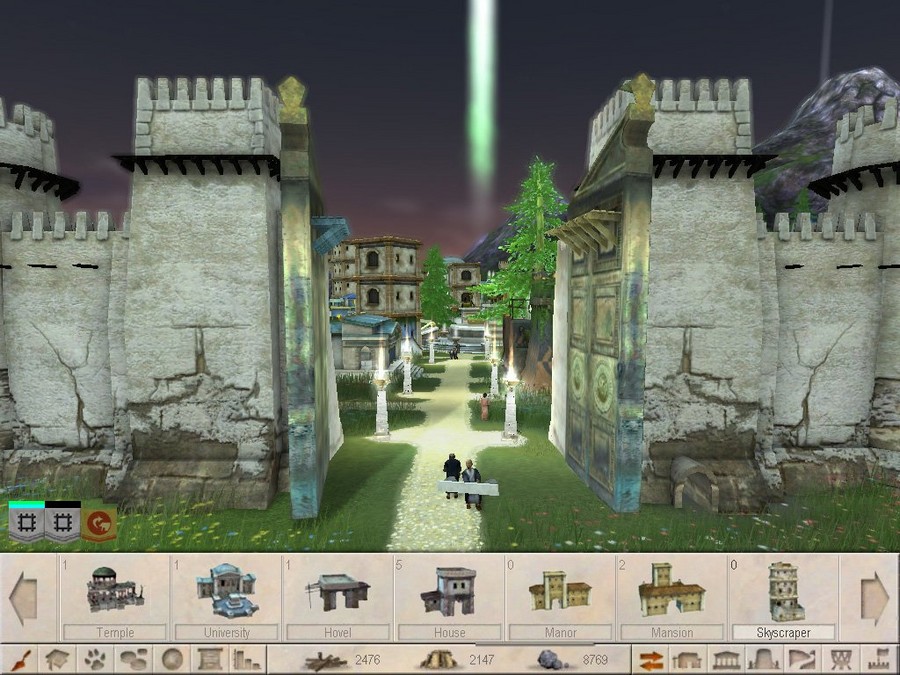
As your people's almighty, you are tasked with propping up and expanding the influence of their civilization. Gameplay to accomplish this is an interesting blend of the open-ended structure of the previous title and more traditional RTS elements. Your presence within the mortal world is personified by a great hand, which you can use to manipulate the physical realm. Using the hand, you can harvest grain from a field or turn trees into lumber. You can dictate roles to your citizens, instructing them to act as fieldworkers or breeders as you see fit. Via interface elements, you can indicate where you'd like to place structures within your civilization's sphere of influence. Structure placement is very intuitive, and every building has some effect on the well-being of your people. The goal is to be as impressive as possible by placing structures on high points, ensuring that the citizenry is happy, and designing the city with certain elements in mind. Simple rules like placing homes a little ways apart to ensure privacy add a layer of strategy to what might otherwise be a mindless mechanical process.
In this fashion you can take on the role of caretaker, and usher your people into a new golden age. Impressive cities attract people from other villages, and if you manage to impress the citizenry of the entire island you are successful by default. The only problem is that if you're dedicated to using this tactic to defeat the game, it may take you longer than some television seasons to work through the title. In a word, the 'good' gameplay is boring. While it's fun to get your civilization up and running, once you've run through all the building types you'll spend hours and hours breeding more citizens, building more homes, seeding new fields, rinsing and repeating.
Besides playing caretaker to your people, you have a pet to look after as well. The Creature was one of the most entertaining aspects of the first Black and White, but training it was often a source of headaches. The attempt at a realistic AI meant that it was hard to determine what exactly your critter felt about any given activity. Thankfully, the sequel has made the Creature's AI more transparent in the interests of playability. If your Creature (be it Cow, Lion, or Wolf) intends to do something, it vocalizes the intent via a large and obvious thought bubble. "I'm going to poop on those trees" might be something you see hovering over your critter's head. At that point you have two options. If you want him to fertilize the trees (not a bad idea), you would click in with your hand and rub his tummy. If you wanted to discourage him from doing that, you'd smack him back and forth across the chops. When you start modifying your Creature's feelings in this manner, a meter will appear above his head. "I'll always poop on trees" is at one end, and "I'll never poop on trees" is at the other. Like the interface elements included to ease city construction, the meter allows you more direct control by stepping back from the free-form nature of the previous title. The Creature is generally more helpful as well, running to and fro to assist your citizenry with their tasks and defending your walls from encroaching invaders.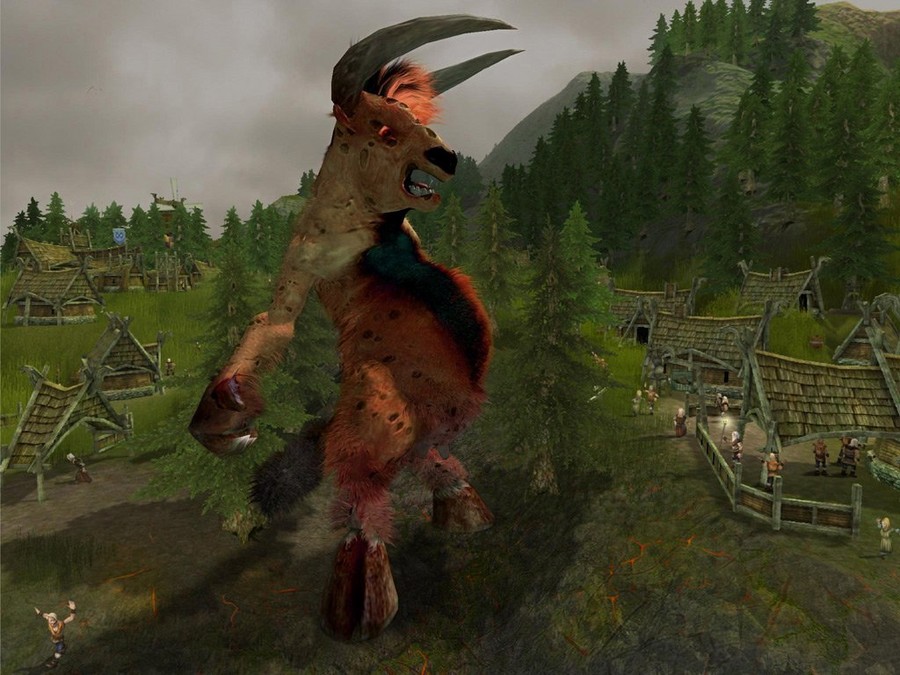
On that note, placing nursing homes in your cities will make people happier but won't let you kill the enemy any more effectively. (Though the idea of crack trained granny ninjas is appealing.) Armories are the structures that allow you to build military units, platoons of swordsmen and archers. These platoons are your offense and defense, and along with your Creature are your only means of waging war against your enemies. By placing a flag from an armory, you call your citizens to arms and form a platoon. Platoons can vary in size from 10 men to more than 50. The number of able-bodied men available in that particular city dictates the maximum size of the platoon. Once you've formed your platoon, they start consuming a lot more food. They consume even more food when on the march, meaning that quickly your idyllic city will start craving grain.
This is where your evil side can quickly gain hold, as it's tempting to turn your cities into nothing more than food producing slave factories. Waging war at all is regarded as an evil act by the game, meaning that if you enjoy the combat elements of the game you'll gain at least some evility. Raising some platoons to take vacated towns is generally taken in stride by your enemy forces, but converting settled villages by converting their altar is not. Unfortunately. reactions to your military conquests are really the only response you'll get from the enemy AI. Battles are tumultuous and dramatic, with hundreds of individuals involved in final and climactic confrontations. The slow trickle of attacks you'll face, though, means that you can safely reserve your forces with no fear of a campaign unless you start one.
Besides the city-building and war-making, you'll also be presented with mini-quests or challenges. They're somewhat variable in amusement. On the upside, one of them features you acting in the role of catcher as projectiles are tossed your way. The switchup is that they're placental rockets, newborn lambs being shot from a very pregnant ewe. Less entertainingly is the task that has you tossing casks of beer from island to island. It's an easy to hit or miss task, and the last throw requires you to make your toss with a bad angle and no perspective on your target. Good or bad, they're welcome diversions from maintaining your city or moving your efforts forward against the enemy. Successful completion of the task nets you godly currency as well, allowing you to purchase new elements for your city.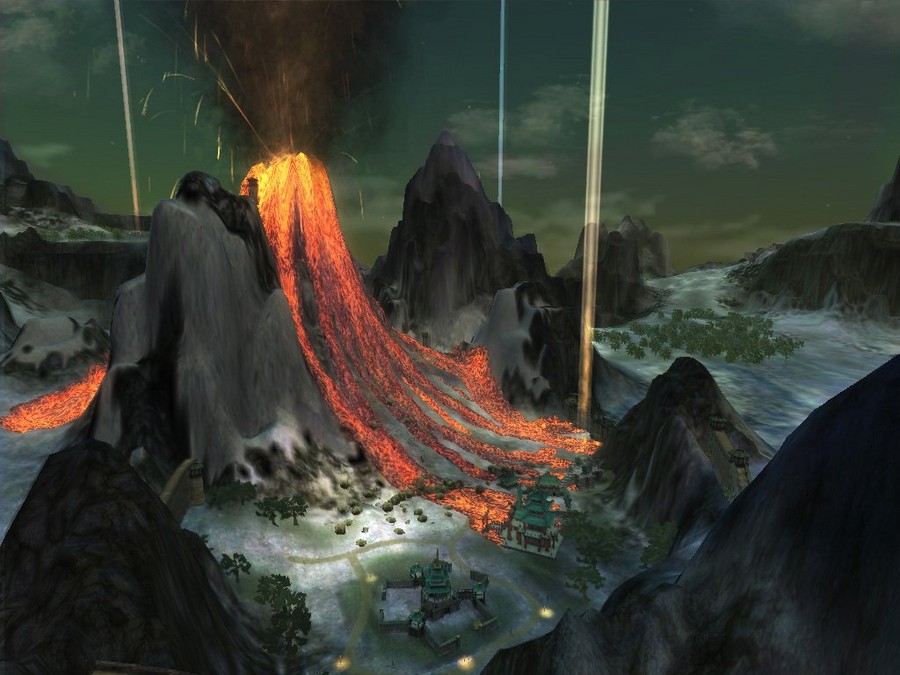
Besides graveyards and better lodging, you can purchase some impressively godly things. Miracles allow you (or your Creature) to cast spells of healing, destruction, or plenty as you see fit. Epic Miracles can also be purchased, each with a dramatic effect on the environment. In a single deific moment you can raise a volcano beneath your enemies, shake their cities to rubble with earthquakes, or convert their people with the power of a Siren. These elements are beautiful looking icing on the cake, and are moments that can remind you of the level of power you're capable of wielding.
Above and beyond the gameplay, Black and White 2 is a stunning game with a unique soundscape. The production values of the Lionhead game are top notch, with an incredible amount of detail in every moment. While the hype for this game didn't include being able to zoom in to observe a worm in an apple, the freedom the game gives you to zoom in and out makes for some breathtaking views. Pulling back to observe the entire island you're currently on is as easy as pushing in to monitor a single citizen. The audio environment is just as lush, with warcries from clashing armies and crashing underbrush from deforestation adding highlights to gameplay elements. The musical cues are few and far between, but just like the original game are beautifully orchestrated.
Despite some gameplay frustrations, Black and White 2 is a solid experience. The design has stepped back from the free-form environment of the original, and I think the decisions made to allow for greater awareness and control were wise ones. While I wish it were possible to play as a 'good' god without going stark raving mad, in exploring the various moral decisions it seemed as though the mixed tactic of improving your city while raising armies was the most enjoyable way to go. If you enjoyed the first Black and White title you're definitely going to want to come back to the series, as the freedom and morality play aspects of the game have been woven successfully throughout the sequel. If, on the other hand, you didn't like the original you still may want to give this title a shot. The more approachable interface elements have removed much of the ambiguity of the first title. Black and White 2 is a game first and foremost, and nothing like a toy.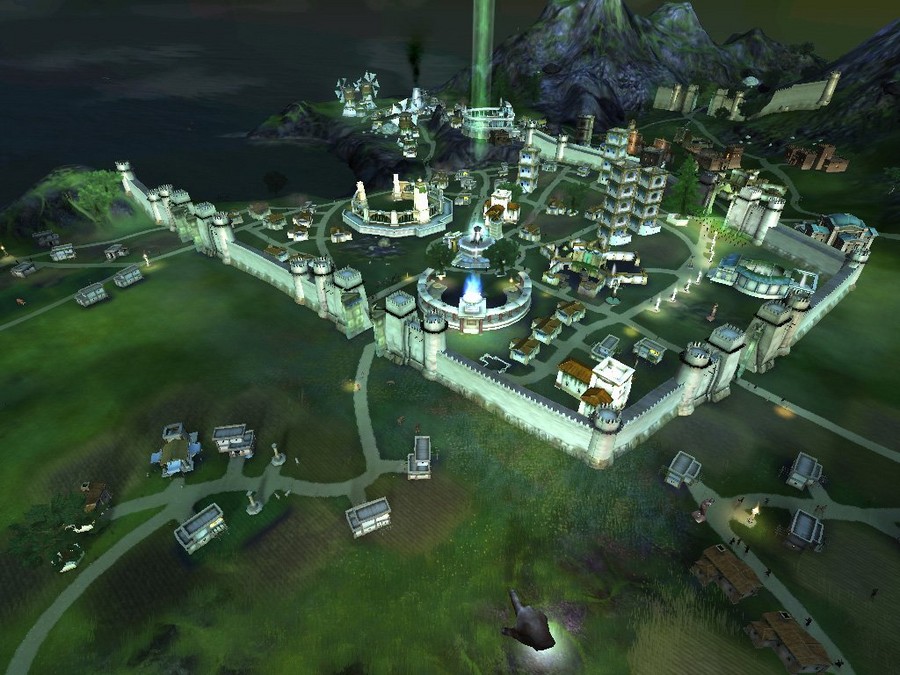
0 of 165 comments (clear)
No comments match the current filter.