 Slashdot Mirror
How Computers Transformed Baby Boomers
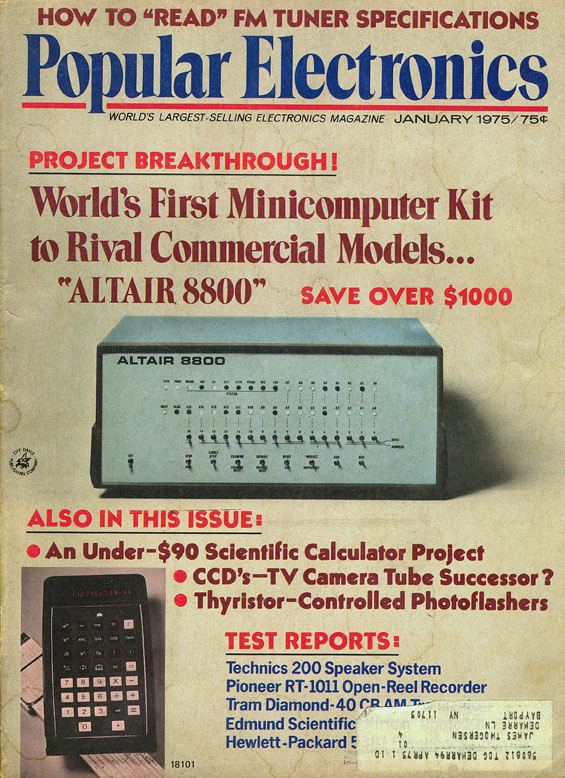
theodp writes "Newsweek's Steven Levy takes a look at how the baby boomer generation formed our tech landscape. Many of the realities boomers grew up with are today's metaphors, including cut-and-paste, the origin of which the 56-year-old Levy had to explain to 20-something Google employees. Levy cites two texts as crucial in pushing the boomers' vision toward power-to-the-people computing — Ted Nelson's Computer Lib/Dream Machines, which inspired Mitch Kapor, and the January 1975 Popular Electronics, which got Bill Gates jazzed. You kids might want to check out Dad's bookshelf — used copies of Computer Lib are going for $130-$225 at Amazon."
...and it works spectacularly well.
The modern version works like this: you need a photocopier, your source material, a pair of scissors, and a stick of solid glue. Photocopy all your source materials. Cut them up. Stick them onto a blank piece of paper in the order you want. Photocopy. All the seams miraculously vanish, and you end up with an extremely professional-looking end result.
It's a great deal easier than scanning and using a DTP package, it's faster, and it can also produce better results depending on your photocopier and scanner. I wouldn't use it for anything that needed to be stored for long periods of time --- your template is fragile and will fall apart if stored --- but for quickly putting together posters, exam questions (I inherited the technique from my father, who was a teacher), simple fliers, news clipping collections etc, it's first rate.
Don't get glue on the photocopier plate. It'll never come off.
Oh, yes. Old-fashioned typewriters had cylinders to wrap paper around, and the typewriter users had to roll the paper around by hand.
There is a fine line between recklessness and courage... -- Paul McCartney
Just for the record, kids - you try pulling this shit and Dad will spank your arse, no matter whether you're bigger than him now or not.
..and I'll form the head!!
nitpick: NCSA HTTPd *wasn't* the first web server - it did appear very early on, but Tim Berners-Lee wrote the first web server at CERN (which is obvious, when you think about it..)
..and I'll form the head!!