 Slashdot Mirror
How Computers Transformed Baby Boomers
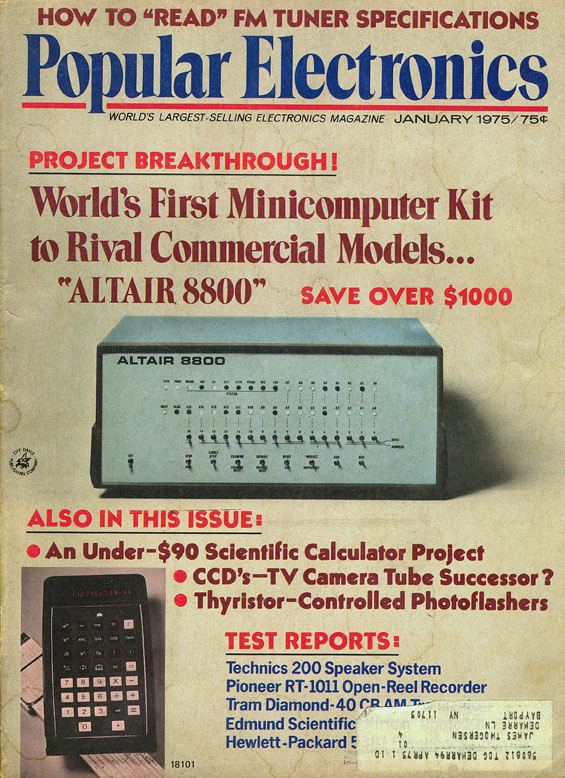
theodp writes "Newsweek's Steven Levy takes a look at how the baby boomer generation formed our tech landscape. Many of the realities boomers grew up with are today's metaphors, including cut-and-paste, the origin of which the 56-year-old Levy had to explain to 20-something Google employees. Levy cites two texts as crucial in pushing the boomers' vision toward power-to-the-people computing — Ted Nelson's Computer Lib/Dream Machines, which inspired Mitch Kapor, and the January 1975 Popular Electronics, which got Bill Gates jazzed. You kids might want to check out Dad's bookshelf — used copies of Computer Lib are going for $130-$225 at Amazon."
Railroads and electricity made much bigger changes in people's lives. Before railroads, most people spent their lives within 50 miles of their birthplace. Before electricity, it was, well, dark at night almost everywhere. Huge amounts of effort went into activities like basic cooking and cleaning clothes.
The changes between 1850 and 1900 were far, far greater than those between 1950 and 2000. In communications, in 1950 we had radio, television, teletype, and telephones. Even newspaper delivery via broadcast radio fax, although that never really caught on. Most important info was getting to its destination fast. Most of the communication things you can do today, you could do in 1950, but more expensively.
It has less to do with him being a nutcase and more to do with the stuff he was rambling on about
being well ahead of it's time. Heh... Some nutcase-you're using the same stuff he's talking about
in that flip-flop book to make the post calling him a nutball- it's just not the full monty as it
were. Hyper-G was closer, much closer, but they made a mistake in making the reference implementation
proprietary, whereas NCSA made the first HTTP server effectively open source and the child of that
implementation is the #1 web server right at the moment.
I am not merely a "consumer" or a "taxpayer". I am a Citizen of the State of Texas
Steven Levy deserves a lot of credit for his book Hackers, which was the first place to publicly discuss "the hacker ethic." He really "got" a lot of the things that journalists today still don't get. You can disagree with a lot of what he says, and his "ethic" list is a little goofy, but as a "third" generation hacker (someone who grew up hacking on an Apple ][e), I found his interpretation of what was going on in the golden age deeply insightful. IMO, "computer journalism" has never really produced someone like him again -- today it's all David Pogue type "gadget reviewers" who really don't get what was, and still is, revolutionary about computing and the people involved in it.
Protect your liberties. Donate to the ACLU
I feel it should be pointed out that there are Boomers and then there are Boomers. Many of the most influential Baby Boomers for personal computers were born more or less in the mid fifties. They were barely teenagers when Woodstock happened and they became eligible for the draft just around the time America left Vietnam. To call them Baby Boomers isn't exactly wrong, (some demographers call them Generation Jones, but it's all bullshit anyway) but to lump them in with those "damned self-important idealists" as some of the other posters are doing is unfair, since by the time these guys came of age, the idealism had already begun to go the other way.
"Never attribute to malice that which can be adequately explained by stupidity." -- Hanlon's Razor