 Slashdot Mirror
IBM Patents Checking a Box
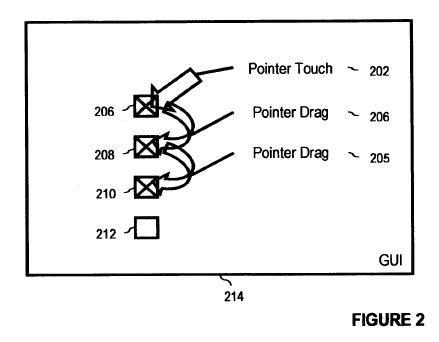
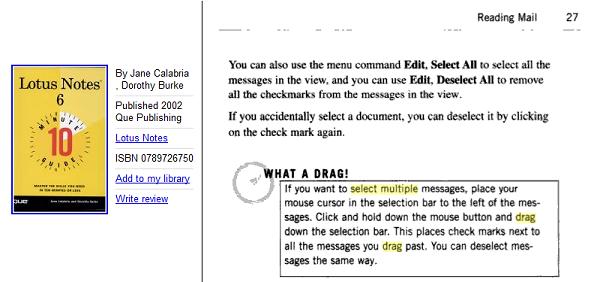
theodp writes "What do you call it when you drag a pointer over a checkbox to select or deselect it depending on its original state? Answer: US Patent 7,278,116. On Tuesday, the USPTO awarded IBM a patent for Mode Switching for Ad Hoc Checkbox Selection, aka Making an 'X'. Isn't this essentially the same concept as the older Lotus Notes selection model that IBM was recently asked to reintroduce?"
I am a patent attorney who tries to get his clients good, valid patents for any technology, including those that are implemented in software.
I really hate to see patents like this being granted, because they are so obviously stupid, and bring the whole system into disrepute.
If this were a granted European patent, it would have any number of oppositions filed against it. (An opposition is a cheap and effective challenges to a granted patent). IMO, no proper patent system should be without a workable system of opposition!
This is a horrible mess, and I wish that there were a way of extracting it from the US patent system in a way that will save IBM the ignominy of having such an obviously bad patent granted in its name.
A
That being said, let's see what IBM really patented. First, for the time being, discount everything before the "claims." Claims protect what the patentee considers his/her invention. There are 15 claims of the '116 patent ("We" usually refer to patents by their last three digits). Claims 1, 6, and 11 appear to be the independent claims. These are, arguably, the broadest claims in that the claimed subject matter is much broader than claims 2-5, 7-10, and 12-15.
Claim 1 recites:
A method for control of checkbox status, the method comprising:
Now, we come to the crux of the matter. What do these three limitations mean? Honestly, I have no idea. This is when we have to go back and read everything before the claims. Do these three limitations mean merely "checking a box"? Somehow, I don't think so. There seems to be a lot more going on here. For example, what does it mean to "detect[] a mode selection event"? That doesn't sound like merely "checking a box." That sounds like a bit more.
The other independent claims recite a similar limitations. For example, claim 6 recites "means for detecting a mode selection event." What does this mean? I don't know, I haven't read the rest of the patent's specification. Again, however, this seems to be a bit more than "checking a box." I live it up to another reader to figure out what this limitation means.
The lesson to take away here is that the patent stories on Slashdot are sensationalism at its finest. I read Slashdot, and often, I find the stories very interesting. However, the patent summaries are atrocious and are nothing short of informative, if not misleading.
If you think you have prior art that would invalidate this patent, then please, submit it. I invite you to read about the reexamination procedures at the USPTO. You can find them here.
The views expressed herein are in no way associated with any private entity or government organization
Photoshop does the same thing. Click the eye to toggle vis of a layer and you can drag to do more than one.
The M.Y.O.B Accounting software I use in my business has had this feature for years. When reconciling your checking account, for example, just click on a cleared check and drag across all the others in sequence that have also cleared, and they all get checked.
Nothing to see here, folks. Move along.