 Slashdot Mirror
Bezos Buries Patent Office in Paper
theodp writes "On June 2nd, almost two-and-half years after the USPTO initiated a reexamination of Amazon CEO Jeff Bezos' 1-Click Patent, Amazon dumped another load of documents on the USPTO Examiner assigned to the case, asking for consideration of the 185 or so listed references and 'favorable action.' Peter Calveley, the LOTR actor whose do-it-yourself legal effort prompted the reexam, notes that he was cc'ed on 20 kg of documents that Amazon sent earlier to the USPTO as it tried to stave off last October's nonfinal rejection of all but 5 of Amazon's 26 1-Click patent claims. So much for Bezos' 2000 pledge of 'less work for the overworked Patent and Trademark Office.'"
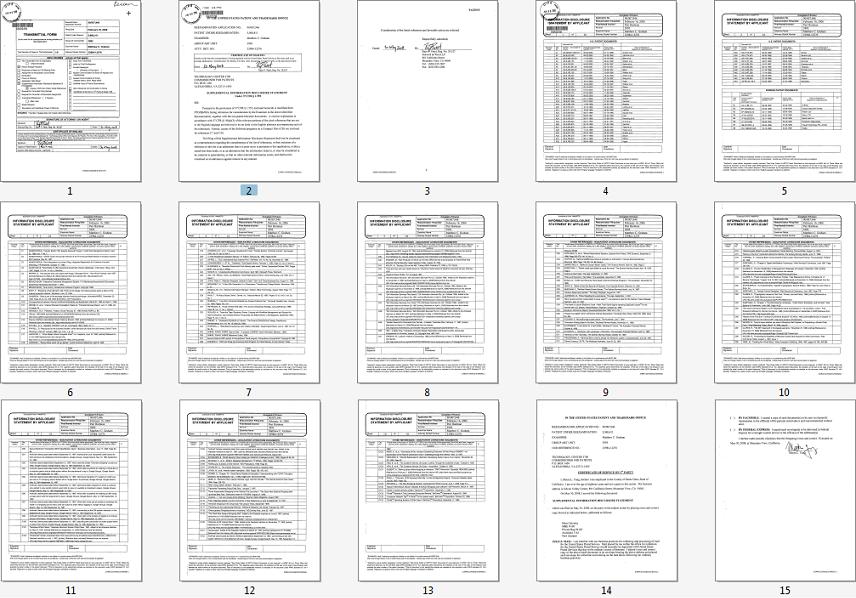
Amazon, and all other patent applicants, tend to submit large volumes of information for consideration by examiners. Both federal law and patent office rules (37 CFR 1.56) require applicants to submit information that is "material" to patentability -- which federal courts have construed to mean anything that remote relates to the invention.
So, if you forget to submit a single page of information (out of 10 million) that has some marginal relation to your invention (in this case, probably a printout of every existing ecommerce site), your patent could be held unenforceable due to "inequitable conduct."
Whoops.
(See post topic)
Unfortunately,your interpretation is uninformed. The technical definition of "cumulative" at the PTO is very narrow. The MPEP states that two documents may discuss the identical subject matter and still not be cumulative because the material is presented differently. It further states that references will *rarely* be cumulative.
The idea is to encourage impulse buys. Once you're an Aamazon customer, they want you to come back often to check out their offerings, and when something catches your eye they want to minimize the barrier between them and your money. The idea is to make buying *stuff* as addictive, as, say, buying songs off iTunes (which is *also* a 1-click service).