 Slashdot Mirror
NASA Turns 50
phobos13013 writes "Fifty years ago yesterday, in 1958, President Eisenhower signed the United States Public Law 85-568, National Aeronautics and Space Act to create NASA. In the fifty years since its creation, NASA has made manned missions landing on the Moon, put a space station in orbit, launched numerous unmanned missions to the Moon, Mars, the solar system, and beyond, as well as launching reusable manned spacecraft in orbit. Some of the failures included the loss of two manned spacecraft and their crews as well as the loss of the Apollo 1 crew during a training mission. Although the future of the organization is in question, Americans, and the world, are looking forward to another fifty years of progress including a return trip to the Moon and an eventual manned mission to Mars."
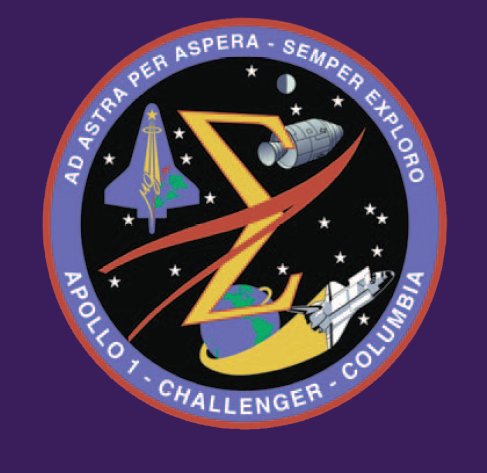
Not to mention the inherently unsafe strap-on design.
And their notoriously unreliable vibrators.
I just read Slashdot for the articles.
I am not convinced that the ultimate end of all NASA's work (investment?) has got to be a commercial sector development. Most of space is pretty hostile - too cold, too empty, too expensive, too far go go back if something goes wrong. There are spin-offs but they are pretty tiny when compared to the actual cost. Perhaps what NASA does is worth doing, just because it is fun, and makes us feel good about ourselves?
We have already had the obligatory rants on how (a) the money could be better spent on the starving or (b) how much smaller the NASA budget is than the military. Perhaps we could equate what NASA does to entertainment. I believe the costs of the Apollo program were the equivalent to a cinema ticket for every US adult and child per year. Or, the other way around, when the film "2010" was produced, people considered shooting the spacewalk sequences in space itself: it was more expensive, but not by a silly ratio.
The Apollo program has been likened to a modern building of the pyramids. This is probably a fair analogy: Egypt had a seasonal surplus of labor. The costs did not seem to have harmed them at the time. The Easter Islanders, on the other hand, destroyed their economy and ruined their island putting up those stupid heads. The Great Wall of China was a huge investment, but provided no real protection.
I don't think we can come up with a conventional financial justification for going into space. There is no need for a 'space race' any longer: we don't need to develop heavy missile weapons, and who gets there first is not an issue. Space will be there, much the same in ten years or a hundred. If we are going to do something in space, then let it be purely for the fun of finding out. Budget the thing at about a cinema ticket per adult per year.
Bread and circuses. That's what the people want.