 Slashdot Mirror
Review: Dragon Age: Origins
- Title: Dragon Age: Origins
- Developer: BioWare
- Publisher: Electronic Arts
- System: Windows (Also: PlayStation 3, Xbox 360)
- Reviewer: Soulskill
- Score: 8/10
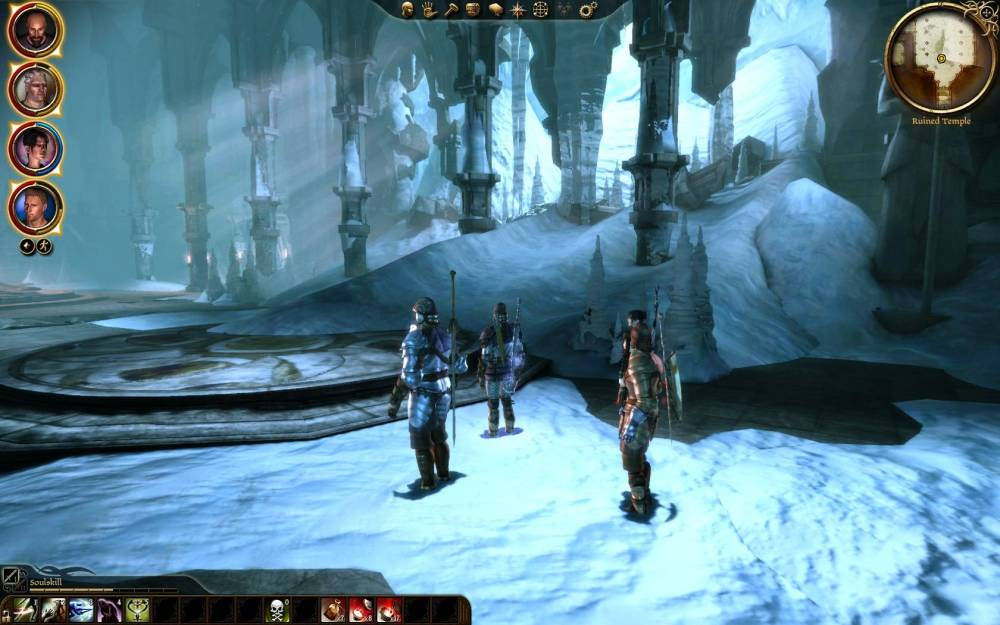
Character creation starts you off with a few simple choices that have far-reaching effects. There are three races (Human, Dwarf, Elf), and three classes (Warrior, Mage, Rogue), and they are much as you'd expect if you've ever played a fantasy RPG before. Depending on what you pick, one or two of the 'Origins' stories becomes available. These are short scenarios which detail the introduction of your character to the main plot line. For example, Human Rogues get their beginning as part of a noble house. Dwarf Warriors can choose either the dwarf noble or dwarf commoner starting areas, and both Elven and Human mages share a starter-story due to their class. (The only race restriction is that Dwarves can't be Mages.) These decisions affect how NPCs interact with your character throughout the game.
While only having three classes may seem limiting, your characters will have a high degree of customization as you start leveling up. You have talent trees (well, not so much 'trees' as 'lines') and each level gives you a talent point to spend. The talent lines are divided up into major fighting categories. The categories for Warriors are Dual Weapon, Archery, Weapon and Shield, and Two-Handed. Within each of these categories are sets of activated and passive abilities that grow progressively more powerful as you spend more talent points in that line.
The result of this is that you can easily have multiple Warriors in a group, each performing a different role and having different gameplay. One can swing a massive axe and lay waste to whatever he touches, and another can grab a shield and take on the tank role, utilizing a host of defensive talents. Mages get a similar selection of roles, and are able to play as elemental sorcerers, healers/buffers, or dabblers in the dark arts. On top of all this, each class has a set of four Specializations, which confer certain bonuses and unlock another set of abilities. Rogues can choose to become bards, which grants them songs to buff their party and mesmerize their enemies; they can also choose Assassin, making them better at finding weak spots, or Ranger, which lets them summon forest creatures to their aid. You get to pick a specialization at levels 7 and again at 14, but perhaps the most interesting part is how you acquire them. Some you can purchase, some are trained by various NPCs or party members, and others are unlocked by quests.
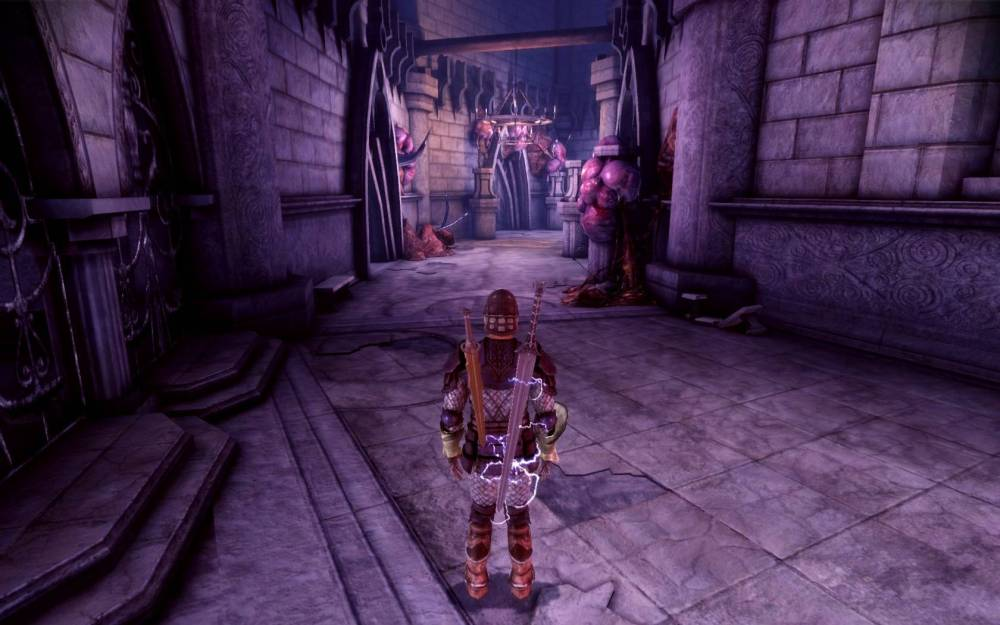
The stat system will be instantly familiar to anyone with experience in the genre; strength makes you hit harder, constitution makes you tougher, etc. It's quite simple, and the tooltips explain everything you need to know. Every level gives you three stat points to spend as you will. Various items and talents will have a stat requirement to use or acquire, but it's a fairly smooth progression. You won't typically have to wait very long to use that shiny new sword you picked up. There's no single, monolithic alignment system, but your actions will have an effect on how NPCs treat you. Perhaps more importantly, your actions will have an effect on how your group members feel about you. Each of them has an Approval Rating, which is a measure of how much they like you. Extreme ratings can unlock side plots — friendship and romance for high ratings, mutiny and abandonment for low ratings — and they can have an effect on the characters' stats.
The Approval system is a fun way to learn about each of your companions. There's a surprising amount of story to be told for each of them. Surprising, at least, until you realize how much story there is in the rest of the game. I was impressed by how often I had a meaningful choice in how the plot unfolded. That is, when the dialogue allowed for different options, they didn't feel like window dressing. (e.g. Do you want to kill him? Yes/No Yes. Are you sure? No/I Guess Not Damnit.) I just picked whichever option I felt like picking, and the plot still worked.

The story succeeds, by and large, for two reasons: the writing and the voice acting. BioWare made a lot of noise about getting some big names for Dragon Age: Origins (and they did; Kate Mulgrew, Claudia Black, Tim Curry, Steve Valentine, and Tim Russ, to name a few), but that isn't a guarantee of good voice work. Virtually all of the NPC dialogue in this game is spoken (you can skip through it if you care to; I rarely felt the need to), even when you're asking them about mundane things, so poor voice acting would be hard to tolerate after a while. But this cast turned in a performance that (sadly) I don't tend to expect from video games. What helped a lot in this regard is that the characters are very well written — which is to say they actually seem fleshed-out and believable, with a personality that's consistent from one scene to the next. The details of how the characters react to events and interact with each other are spot on. Your companions will occasionally trade jokes or insults at random times throughout the game, whether you're in the middle of dialogue or just wandering through a city.
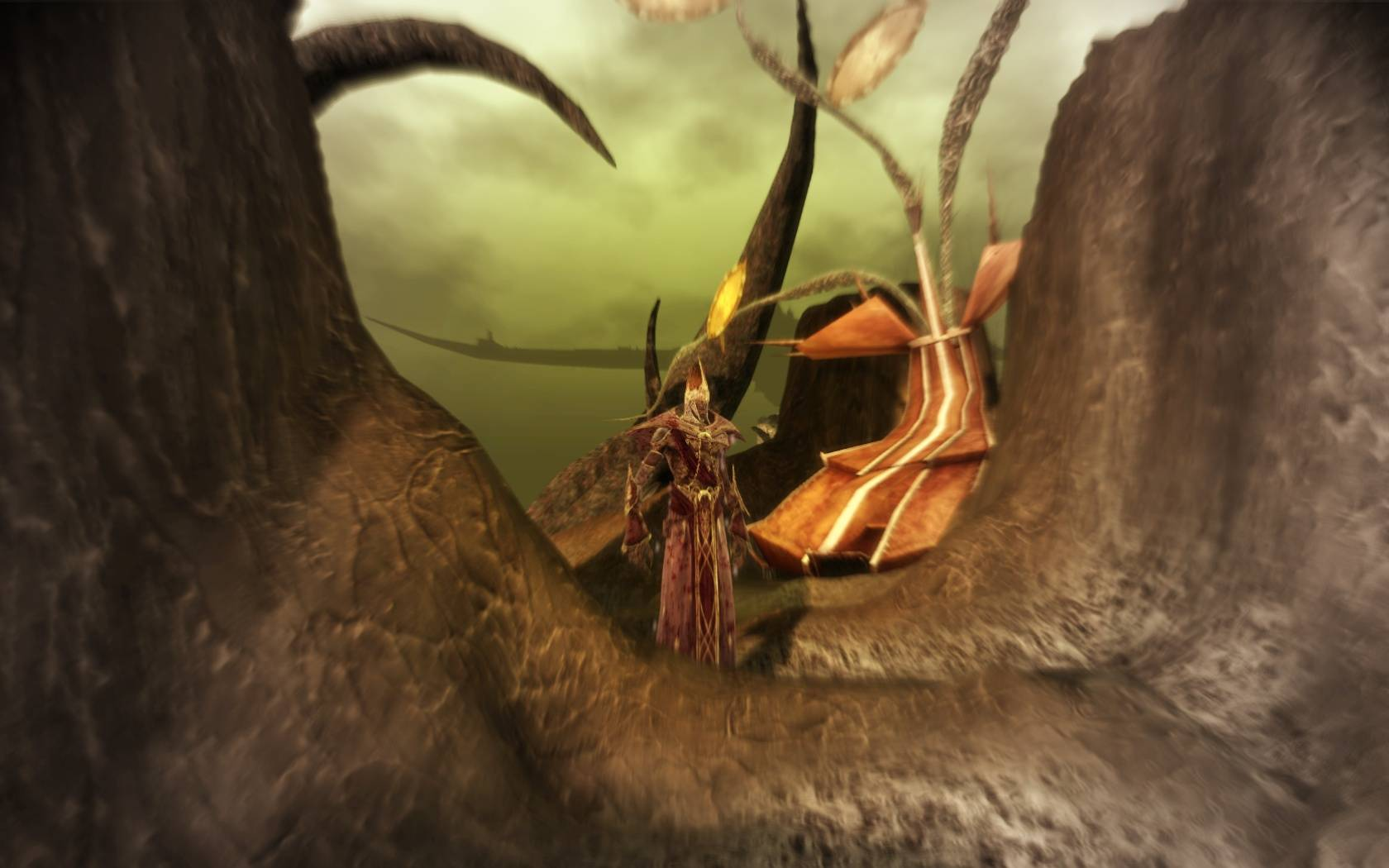
Now, don't get me wrong; the plot itself is interesting too, but it's hard to tread new ground here (Doom threatens the world; a hero arises; things go wrong that the hero must put right), and the writers don't really worry about doing so. They're just trying to tell a cool story. Without spoiling too much, the Mage Tower story in the main plot is particularly fun. The writers leave you a trail of breadcrumbs to figure out what happened, dump you into fantasy land for a few puzzles and a different way of fighting, then top it off with an epic battle, all while maintaining an atmosphere of hopelessness and dread. What's more, all the different portions of the main plot are completely distinct, each with its own moral dilemmas, level layout, look, and back-story.
In addition to countless hours of dialogue, one big way BioWare goes about establishing their game world is through books, scrolls, and notes scattered around the areas you visit. When you click on them, they'll put a page or so of text in your Codex explaining who's who and what's what, so you're not inundated with a flood of made-up, fantasy-world names at any one time. The Codex entries are relevant to whatever task you're currently doing, and vary in form from dictionary-style explanation to diary entries to poems.

So, how about the gameplay? Many RPGs have met their downfall on the weakness of their combat mechanics, or have succeeded in spite of it. (I'll name no names, but one such rhymes with Moblivion.) Like several other BioWare games, you can pause the action and queue up an ability that will fire off when you un-pause. You can also take control of any other party member(s) whenever you please. Group size tops out at four, which allows a fair amount of micromanagement without becoming tedious. For general commands like attacking or movement, you can control multiple party members at once. There's not a lot of movement during combat. Rogues have bit of an incentive to move behind their targets, and mages will occasionally have cause to kite a monster, but most of the running you do will be to get your melee in range to hit something. My only major gripe is that melee classes tend to run out of stamina quickly, so for long battles they spend a lot of time auto-attacking.
Even with just that, it would be a solid combat system, but there are three other major features which allow you customize your level of engagement. First, there are four difficulty settings. Easy will let you basically just point-and-click to win. Normal will require some planning and pausing, and some potion use on the tougher fights. Hard makes you do a lot more micromanagement, use consumables often, and watch out for friendly fire. Nightmare is for people who should probably be medicated. Second, you can set generalized behaviors for each of your party members; this will make them run to seek a fight, run away, ignore it altogether, or a few other options.
Third is your Tactics page. This lets you set up responses to a large variety of actions or game states. For example, you can set a Mage to cast a heal when somebody drops below 50% health. Or, you could have your warrior tank run over to attack whatever monster is beating on your rogue. There are hundreds of trigger conditions neatly laid out in a set of drop-down menus. You can set some some fairly complex behavior if you'd like to, or just automate the basic tasks. When you put this whole system together, you end up being able to tailor the fighting to your personal preference for involvement. You can micromanage as much or as little as you want.
The UI is very streamlined and responsive. The camera is over-the-shoulder, and if you zoom out far enough it pulls back to an almost top-down, "tactical" view. (The console versions are restricted to over-the-shoulder.) For using your abilities, you have a boilerplate action bar, and your group portraits are off to the left for monitoring health and mana. If I were nitpicking, I'd say the health and mana bars should be somewhat thicker; they're a bit small to take in the whole group at a glance. Click-able bars pop up on the bottom of your screen whenever you get quest or codex updates (and a few other things), which makes it very easy to keep track of what's going on with the plot. You can hold down a button to highlight everything on screen that you can interact with (chests, NPCs, monsters, loot-able corpses, quest items, doors), so finding what you're looking for is dead easy.
That streamlining carries over into the gameplay as well. Any of your party members who fall in battle come back to life if the remaining characters win the fight. It's silly from a realism perspective, but at the same time it saves me from spending 30 seconds casting Resurrection every other battle or keeping 500 Phoenix Downs in my bags. (Though, oddly, characters come back to life with injuries — minor stat debuffs — that require an item or a visit to base camp to heal.) Itemization is perhaps a victim of this streamlining. As I leveled up, I naturally picked up better gear, but it never felt like the items made a significant difference. On the other hand, stat gains from leveling were constant, and new talents provided obvious improvements. Quests are sometimes quite simplistic because of the interface as well, but those quests mainly exist to serve the narrative. I expected this to bother me, but it didn't; I just wanted to see where the story was going.
Dragon Age: Origins has a ton of (quality) playtime in it; even more when you consider replayability. I'm sure I could go through the entire game again and have a largely different experience, both in story and in combat. (I tend to stick with a group configuration I like, so one of my potential companions has been sitting on the sidelines the whole time, and I slightly killed another one. Not to mention different talent choices and specializations.) BioWare didn't blaze a new trail within the genre, but they succeeded in their effort to create a game that presents a new, fun take on the familiar with elegance and polish. (And Claudia Black.)
I was a huge fan of the Baldur's Gate (got both PC and Mac versions of all of them) series so I'll be getting this. It also helps to know that there's no DRM other than the disk check. So Bioware have come to their senses after the excursion into the DRM land with Mass Effect (that was using the dreaded SecurROM).
And I haven't had much luck trying to get it to run on Wine. 1.1.31 from wine1.2 package on Kubuntu 9.10, hangs at the end of installation when it tried to install Nvidia PhysX. I'm using an ATI 4770 with FGLRX drivers, running the game gives me garbage on the screen.
Had to boot back into my WinXP partition that I haven't touch since April.
Looking at appdb, it seems not many people have much luck either, but some have managed to get it to run. Wonder what I'm doing wrong.
The game is solidly single player, for the folks who like single player RPGs.
I really don't get the need for people to have coop/multiplayer in EVERY GAME they come across.
First of all, let me just say that I'm loving this game so far (about 10 hours in). This game has all of the rich storytelling and character development that Bioware are famous for, with an updated graphics and combat system that really works well and is extremely polished.
With that out of the way, let me just say one thing: EA, keep your fucking money grubbing hands off of Bioware! You can see their "mark" on this game in the DLC.
In your party camp, there is a quest-giver that actually tries to sell you DLC! I started chatting him up, since he has a quest ! above his head. He starts talking about how Duncan of the Grey Wardens owes his family a debt, and would you be so kind as to assist him. I get 3 minutes through the conversation about how his family needs help, and just when I'm about to agree to help him, it gives me a menu option that says something like "Help him - Purchase Downloadable Content."
Let that sink in for just a minute... there is an NPC quest giver that tries to sell you content that is available on the day of release! This makes me think even more that EA intentionally stripped content out of the game to try to nickel and dime you. Tycho and Gabe talk about this and have a hilarious comic strip at Penny Arcade.
I'm still enjoying every minute of the game, but it kills the immersion when I have a quest giver try to hawk DRM laden "premium content". What makes it even worse, in order to get a storage chest, you have to purchase this content. No thanks, I'm not going to buy it. You already got my money, and that's all you're going to get.
"When the president does it, that means it's not illegal." - Richard M. Nixon
I'm all for being a social animal, but every now and then I like to retreat to my own private world and enjoy a game crafted around the single player experience.
It is very much a complete game. I hate DLC as much as anyone else, but it's not like they hacked pieces out of the original game and offered them up for sale. The DLC is extra, totally unnecessary, and IMHO not that impressive. I'd try not to confuse hating DLC and hating the original product, if you do that you risk missing out on enjoyment you could otherwise appreciate. ;)
Way to be a sellout Slashdot.
For shame.
I can only think of three Soulskill reviews that I know of to rate this review against others. To be fair, he gave Lord of the Rings: Conquest a bit of a bad review. Whereas Halo Wars and Resident Evil 5 were for the most part positive. Give him time to post some more reviews before you accuse the over doting as a Slashvertisement. Scores of 5, 7, 7 and 8 are pretty fair if you imagine they're trying to cherry pick to begin with (who wants to play Madden 20XX? over and over?).
... granted Zonk wasn't that great at hitting all the major games. I guess the most difficult thing is just the amount of free time a fellow has. While Slashdot seems to promote user based book reviews, it never seems as though users are promoted to review games. I guess I would have liked to see a review of Braid and I have just finished up everything in Eufloria.
My biggest complaint is not the Slashvertisement but actually the lack of reviews. Is this the fourth review since Soulskill took over from Zonk? I was hoping for more frequency
Hell, if any Slashdot admins are reading this, are non-editor game reviews accepted ever?
My work here is dung.
I bought it pre order, the game has already had it's first Patch for the PC and it's still buggy. All that but the game itself is awesome, completely awesome. Now the DLC - Downloadable Content stuff is not making me happy. I've bought it all but apparently it's not actually mine if my internet connection goes down. WTF? That's not acceptable, I bought it, give it to me, don't make me a prisoner of my internet connection. That particular aspect of the game is a true 'bend over and prepare for your surprise' moment. I don't know why they felt it necessary to do this either. I'm reading also that you need your 360 connected to the internet to be able to play the downloadable content and not just to download it. Another slap in the face of the fans. So I'm torn, love the game, hate the crap surrounding it.
Enjoy your Karma, after all you earned it. Feel your Karma Joe, feel it burn.
Why didn't they just call the classes Plate, Cloth, and Leather?
from what I heard, they actually offer the DLC content as a quest in game that you'll get a "you must buy this to do it" type thing.
that's about as hard a sell short of in game/loading screen advertising that you can get.
According to the reviews and talk online, the PC version is the superior version by a significant margin. Some of the advantages of the PC version are better graphics (obviously), a better UI, and the ability to put the camera into isometric view similar to the old infinity engine games (i.e. Baldur's Gate et. al.). For control, on PC you have a standard spell bar and can click the ground to move, but on console you have a radial menu for your skills and have to move using standard 3rd person controls. This means that in combat, on the PC, you can queue up all parties members exactly where you want them to go without controlling them manually. But the biggest advantage to the PC version, in my opinion, is the toolset that Bioware just released to create user campaigns that you can download for free. They talked about porting some of the best ones to PS3, but on PC you will have access to everything.
Well - if you haven't played Mass Effect - you don't understand how BioWare tailors their Single Player Experience.
And if you have played Mass Effect - and you didn't like it, you are the first person I've encountered who didn't enjoy it.
The thing with these SP RPG's that Bioware makes is that they are more or less trying to put you inside of an interactive movie, almost moreso than they are trying to make a game. Don't get me wrong, they have always been solid in their gameplay elements, but whenever anyone talks about Mass Effect, and now Dragon Age, the things they generally tend to mention are its incredible story and how well they get immersed in the game, usually through dialogue.
The Trend that Bioware and myself are noticing is that when you make something Multiplayer - Pretty much the whole story element gets shot out the window. Its no longer about you being a hero to save the princess, its more about you and your friends having a fun social experience trying to kill the biggest badest thing you guys can find. Which is fine for some games, like World of Warcraft. But How many MMO RPG players read the quest text? How many players on Halo 3 consider themselves the heroic Masterchief when every other player in the game is just as equal?
As for Co-op, there are always limitations to Co-op, and in my opinion they always detract so heavily from the game that I wouldn't even Bother. Fable 2 is an excellent example of how Co op ruins the experience. You can have 2 people in the same world, for sure, but they can't venture further than 20 feet from each other, and whoever is in the lead ends up running into an invisible wall and can't move forward. Meanwhile slowmo over in the back can't get around this fence because his buddy is so far ahead it restricts his lateral movement. And even if they managed to sort out those sort of issues, it still always feels like 1 person is the Hero and everyone else is just side kicks.
The only games which seem to properly implement Co-op are First Person shooters, like Left 4 Dead, or ODST, where everyone is essentially Equal and MUST work together. Mass Effect (and probably Dragon Age) While approaching the FPS kind of gameplay, are still more Roleplaying games then they are shooters. You got levels, stats, and gear. Once you take those out, your gameplay is fleshed down a point and shoot. Which not everyone wants. There are plenty of Fantasy co op games out there, where you can get with your party of 5 and do an instance, get your gold and get your gear. Bioware wants to tell a story. And they do a hell of a job doing it.
Multiplayer makes sense for some things but for some things less so.
Multiplayer RPGs in the fashion that Bioware makes their RPGs would be sufficently different from current multiplayer models that it would require alot of thought and effort to make even a cursory system.
At the worse, you'd just be playing seperate characters in a party, one where the entire story is geared towards the idea where your main character is "The One". That isn't plot details concering the most recent game, that's just what BioWare games are about, single character going through the universe righting or doing wrongs along the way to defeat the big bad guy after having a couple of 'bonding moments' with their sidekicks. So who gets to be "The One" and who is the sidekick. And when your teammate starts the romance sideplot with you, are you going to feel uncomfortable about the sex scene?
Or perhaps that isn't the worse, how about two competeing parties. "I'm sorry, you would have been able to save our village from the bandits, if your friend hadn't rolled through town last week and killed all the NPC's himself! Hope you didn't need that XP for leveling!" "Yeah, all the cool NPC's have joined your rival's party. Here are the NPC's no one ever plays with if they can help it.."
Really, a multiplayer version of a Bioware game would need a completely different story structure (not to mention tech) than the one they use. Sometimes just because you can bolt a jet engine to a car, doesn't mean it's a good idea to do so.
Bioware has done it again... and that as I will try to make clear is not entirely a compliment.
Dragon Age is the fantasy RPG from Bioware that is NOT D&D. As you may know, Baldur Gate and Neverwinter Nights were both based in this universe. And to be honest, after having the same exact skillset for over a decade, it was time for something new. Anyway, Bioware no longer got the license so they set out to create a bright new world with dragons and dungeons and elves and dwarves and magic...
So what is new in this brave new world? No magic arrow and colored spray. Everything else is the same. Oh okay, not exactly the same, stats are simpler but if you played Baldur's Gate, you will have a strong sensation of Deja Vu. But then you should be used to it, because you had the same sensation in Neverwinter Nights.
So it is more of what we come to expect, is this bad?
Yes.
Why? It is NOT because we got dwarfs and elves and such. Their are enough subtle changes to make it interesting while at the same time giving us that warm feeling of a familiar place.
The problem is that the game STILL plays the same. You will STILL need a rogue who is useless in combat because they need to be specced to the max to detect the traps that are only in a few dungeons but then are so numerous you can't move an inch. You STILL get locked wooden chests that this time you can't even bash, even with a golem around. You STILL only get 1 ingredient from said locked chest that is 1/5 of a potion. You STILL get said chests in the end game where you are fighting for your life and stop the entire war to pick a chest that then has a shield that never was of any use during the entire game.
Some, like me, might have hoped Bioware had gotten past this, that the endless looting of chests all over the place every 2 meters, the idiotic loot drops etc had just been part of D&D. But that is not true. No dungeon master would do that. Loot goes at the end of the game, the dragon horde. Not every 30 seconds.
Will I like the game
Yes: if you want Baldur's Gate 3.
No: if you are sick to death of the same game OVER and OVER.
A brief walktrhough
You choose a race, a class and a origin. This bit is actually very well done, you can really see the different stories blend in with the main storyline and they are interesting enough. It is once you get on the main story that you get another MAJOR and disappointing Deja Vu moment. Bla bla bla, world in danger from an enemy, unite the races, all three races want you to do something for them, gain a force, give them better equipment, assault the enemy in a final battle. Been there, DONE that. It was TWICE in Neverwinter Nights.
Is it REALLY that hard to come with a new story type? Apparently it is for Bioware.
Remember please Bioware, people play your games multiple times, so we have united armies and equipped them dozens of times before. COME UP WITH SOMETHING NEW PLEASE! And no, collecting 3 items to create a weapon is NOT NEW.
But how is the combat
Messy and idiotic.
One of the most braindead decisions by Bioware is to limit you to four, to make story dependant on who you pick (only people in your part comment and get affected by choices) and to LIMIT their AI settings based on skill points you NEED for other things.
So unless you cheat, you are either going to have to do without skills like herb and tracking or do without a full list of ai options.
The idea is that you can create a very simple "if this, then do that" list for your party members. It works, it takes some thinking but it really does work. Provided you pick your own because the ones Bioware has cooked up suck donkey balls. Oh, and you got to cheat.
Let me explain:
The ideal foursome in DAO would be a tank who can gain agro, a DPS who shoots the crap out of enemies, a disabler who disables stuff you ain't ready to deal with and a healer.
The only decent tank is Shale, a golem
MMO Quests are like orgasms:
You may solo them, I prefer them in a group.
This is kind of true, but it's not as dire as you make it seem. The DLC is just side quests; they contribute to the story but they're in no way essential to the game's plot.
You access the DLC through in-game NPCs, like you say; that's how they tie the side-quests into the main story. If you don't have the DLC, there's a "(Purchase this DLC) Let me think about that..." dialog option that opens the EA store in-game. If you don't want to shell out for the DLC, you don't have to do the side quests.
That said, the base game is massive. My cousin and I both bought it and hacked away at it without sleep over the weekend. The game claims were 8% and 10% done, after two days and who knows how many hours. So, it doesn't look like they butchered the core game to sell DLC!
DATABASE WOW WOW
Why is this modded insightful??
Because it is.
It doesn't need to be in every game (any more than the game NEEDS to exist in the first place)
Correct.
but there's no reason to NOT build in the option for people who want it.
It could turn a $50 40 hour game into a $50, 100 hour game.
True, but there is an audience for games that are designed to be single-player, and not multi-player.
They could offer it and you could ignore it.
Typically, no. The impact on gameplay and UI are deep and, I suspect, intractable.
Then people who *have* friends could play this game together.
Cheap and inaccurate shot. I play highly cooperative games ranging from multi-player to MMOs and I still appreciate a good single-player only game.
I agree with everything you say here, and would like to add that the finely tuned play balance of human vs. campaign is often compromised by the human vs. human balance.
In the case of dragon age, tactics slots make it even worse than in most such games, because part of the game's balance and an entire skill line is dedicated to the fact that you control the AI of your companions, and you get more detailed control the more you invest in that line.
There are *very* few games that don't make design tradeoffs on the decision to be single-player or multi-player or both (and what sorts of multi-player to support).
For reference, let me start by giving my opinion of some previous BioWare titles.
In my opinion, Baldur's Gate is the best RPG series ever made. I also enjoyed Neverwinter Nights, but I was a bit disappointed that the tilesets and UI made the game feel stale. I enjoyed the LAN play ability of BG, and I thought NWN online was a bit of a failure.
I was also really blown away by Mass Effect, I loved the dialoge interface that allowed me to easily choose options that corresponded to my emotional response without needing to read in my head the exact words that my character would be saying. The dialogues were so well recorded that they seemed more engaging than Star Wars episodes 1-3. Truly this is one of the first games where I actually enjoyed sparking new dialogues.
Now onto my review of Dragon Age Origins. The game feels like NWN with improved graphics mixed with Mass Effect style scripted dialogues. Unfortunately the dialogues do not work so well in Dragon Age and quickly become monotonous, because none of the character responses are pre-recorded (making them sound oddly one-sided), and also because you need to read through the full sentence as opposed to the easy to use dialogue interface of Mass Effect. This was a step backwards towards Baldur's Gate style dialogue. Despite BG being my favorite RPG, I can admit to sometimes getting impatient with the dialogues. Also, there is a bit too much dialogue in this game and not enough fighting.
I was excited that they strayed from traditional D&D rules with Dragon Age because I thought it would be fun to learn new spells. An example of where that worked very well was Guild Wars. Unfortunately, the skill trees remind me more of Hellgate London...although a little better than that.
First, they are highly unbalanced. There are WAY too many "sustained" abilities because you can only active one at a time and yet they occupy nearly 1/3 of all skills. This is a waste because any build is simply going to pick 1 that remains active 99% of the time.
Second, the skills themselves are highly unbalanced...some of them are awesome, and some of them totally suck. There's no way to tell which ones are good because the skill descriptions don't give any stats or equations, so the only way to figure it out is by trial and error. Trial and error works fine in an action RPG like Diablo, but it's not fun to re-do the same story lines over and over just to try out a different spell build, especially when there's no easy way to go out and level without having to go through the story.
The skills for the Warrior are even more unbalanced. The skill categories are broken into sections like "dual wielding," "sword and shield" and "two handed." Obviously a fighter is going to specialize in only 1 area, which makes 1/3 of all skills useless. Then because 1/3 of those are all sustained, this makes only 1 + 1/9N of all N skills actually by any one build. A further 1/3 of those are passive, leaving only a petty few active combat skills to choose from, and 90% of those are so useless that when I level up, I can't think of a single skill to put a point into that would have any practical value...so sometimes I don't even bother to use the skill points anymore. Also, the skills all have level requirements for the Fighter, whereas the Mage skills (spells) have no level requirements. That's not really fair!
There are more class/party unabalances. First, it seems like 2/3 of all chests in the game are locked, but for the entire first act you can't open these locked chests unless you are a Rogue. It's really annoying to torture the other 2 more popular classes (Fighter and Mage) by not being able to open any chests, and not providing any party members that are Rogues that could join the party except for short durations of time.
this brings me to my next complaint: The chests never contain anything useful. After a while, you will discover that pretty much the only loot you ever find is useless crafting materials and potions. I'v
and elfage and dwarfage... and hackage and pillage and luggage...
but is there winnage?
You are not a brain: http://books.google.com/books?id=2oV61CeDx-YC
Uh... I don't know what to tell you except that you're completely wrong.
The patch is out right here: http://social.bioware.com/game_patches.php
Also, you don't have to be online to play the base game. However, if you have any DLC, you must be connected to the internet and logged into your BioWare account through Dragon Age to access it -- and if your saved games have any of that content in them, that means you can't load those saved games unless you're connected to the internet.
Karma: Terrifying (mostly affected by atrocities you've committed)