 Slashdot Mirror
Introducing L2Ork, World's First Linux Laptop Orchestra
Agram writes "Take a netbook, Wiimotes, Nunchuks, and hemispherical speakers (which were once IKEA salad bowls), toss it up with some Ubuntu goodness and what you get is Virginia Tech's L2Ork, the world's first Linux-based laptop orchestra. With its affordable design and support from the Linux community, L2Ork hopes to bring laptop orchestras to K-12 education and beyond. So, regardless whether you wish to hear how L2Ork might sound or to learn how to build your own Linux-based *Ork infrastructure, perhaps this is a good opportunity to reopen the age-old debate: is Linux finally ready for some serious audio work?"
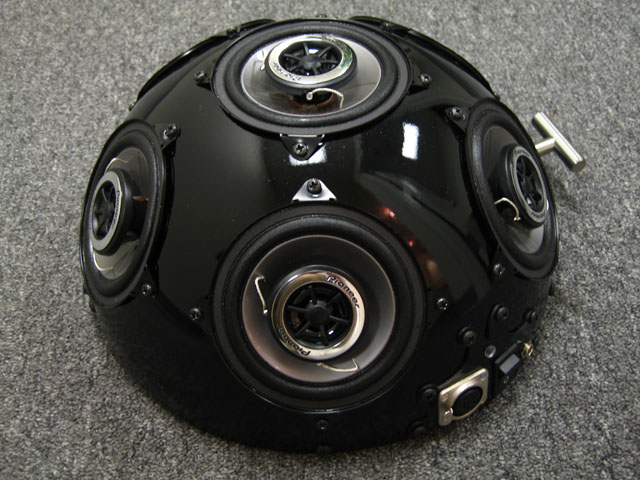
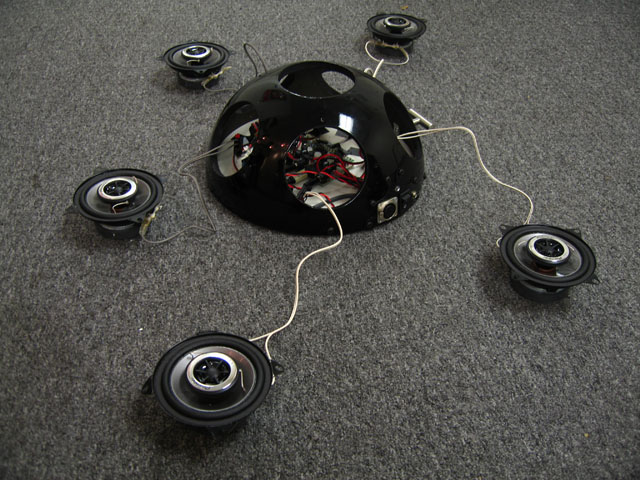
Unfortunately companies that make good DACs, like MOTU, don't provide Linux drivers. It's no good to try and work on a Linux box if you're limited to the built in stereo 1/8" soundcard.
So while it can work for small hemi-speakers, trying to drive a full surround setup is near impossible without good proper DACs.
I still can't figure out exactly what this does. I've even looked up SLOrk and PLOrk, and I don't have any idea what they do, either. Is it a sort of MIDI-esque endeavour? Some kind of networking for digital instruments? Something entirely different?
Screw the rules, I have green hair!
doing audio work I got unstuck immediately. Really bad delays on my midi keyboard. I googled and was told I needed a low latency kernel or something. This was of course wrong. Linux needs a low latency kernel so that it can be taken seriously out of the box. Why would you want, by default, a high latency kernel? Also, I needed to stick together several apps, to turn midi input into something I could hear. I don't understand why. Why can't there be an app which takes midi input and plays sounds (from a sound font file, wav file, etc) when it gets them?
It's an interesting idea and may have beneficial applications for entertainment, music therapy or childhood education, but I don't see much potential for any real [read artistic] musical applications. Excepting, possibly, interactive performance art or something.
The richness of a real symphony orchestra's sound is tied to the complexity and expertise of about a hundred different musicians at levels of superb mastery working together as individuals to recreate and interpret a composer's vision. I don't see how it would be possible to do anything different from the already tired new-agey synthesizer muzak with a tool like this. Of course I feel similarly about replacing the big band with an electric guitar.
While I'm not into Laptop Orchestra's, I do use Ubuntu Studio now for MOST of my audio processing.
Only 4 years ago, I couldn't make it work. I use a Presonus Firepod to record my band, and also have some other gadgets. The only thing I am really missing is something like Gearbox for my Line 6 PodXT, there just isn't a substitute yet for Linux. No worries though, I pretty much have my board setup the way I want, so rarely even use Gearbox anymore.
Anyway, back to my point. I now use Linux as my DAW, as a sequencer, and increasing for my general computing needs. I love Jackd with Ardour and Patchage. It's gotten to the point where it's not just a suitable replacement for Cubase or Pro-Tools, but is my preferred setup. Now that my ATI drivers are finally working properly with the RT kernel in Ubuntu 9.10, I am finding the cube desktop actually useful instead of just eye candy. I can have my mixers, editors, patchage, etc. on separate workspaces and get to them easily.
Just a month ago, I had a friend of mine come over to check out my setup. He is a drummer that also wanted to start home recordings. He bought a ART Tubefire 8, and was very disappointed with the crippled Cubase LE that came with the hardware. After seeing my setup, he went out, bought a $300 computer and a firewire card and asked me to get him setup. Knowing nothing about Linux, or Ubuntu, etc, he is now using the setup to great success.. If there was ever a killer app for Linux, this is it, at least for music professionals and hobbyists.
The major drawback is hardware support still has a ways to go. But, right now there is the ability to get high end music recording equipment working very well right out of the box. I am a very satisfied "customer". And to think, 4 years ago I never thought it would get there.