 Slashdot Mirror
Subverting Fingerprinting
squizzar writes in with news of a 27 year old Chinese woman who was discovered to have had her fingerprints surgically swapped between hands in order to fool Japanese immigration. "It is Japan's first case of alleged biometric fraud, but police believe the practice may be widespread. ... The apparent ability of illegal migration networks to break through hi-tech controls suggests that other countries who fingerprint visitors could be equally vulnerable — not least the United States, according to BBC Asia analyst Andre Vornic." Time for some biometric escalation. Could iris scans be subverted as easily?
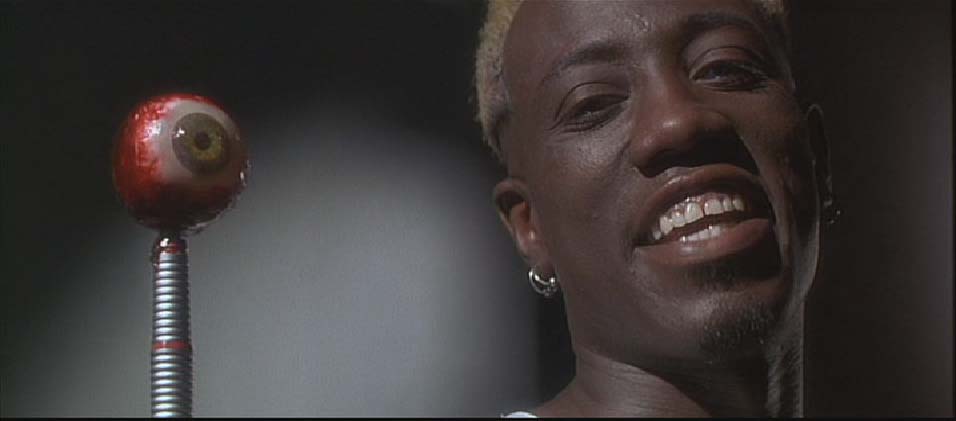
Can't blame her for wanting to live in Japan.
This is only a security threat if someone removes my finger and graft's it to someone else's hand so they can get my data. So my data is only as secure as the skin on my finger. I'm so scared. The likelihood of someone stealing my finger to get data is really high. Worse, they'll steal my eyeball to fake an iris scan. Maybe soon they'll just steal my brain and remove the passwords I have memorized. I'm sure in all those scenarios what I'll be thinking is "OMG, My Data!"
Japanese newspapers said police had noticed that Ms Lin's fingers had unnatural scars when she was arrested last month for allegedly faking a marriage to a Japanese man.
Seems like until they can get rid of the circular scars around their fingertips, they aren't going to fool anyone. From now on, when officials notice circular scars or other shaped scars around fingertips, they will probably have the person undergo further testing.
As far as iris switching...I don't think so. I have a feeling that the permanent blindness that likely follows(though I am not an ophthalmologist, so I can't be sure as to what is possible) will override any benefits that come from the short term gains of biometrics trickery.
I don't like Linux. This doesn't make me a troll.
The only real identity that is immune from subversion is consistent, community agreement.
What I mean by this is that every piece of data measured can be faked, copied, or altered in the database against which the measurement is checked. DNA can be planted, id cards will be sold on black markets and faked, biometrics can be later changed or forged. The measured data in the database against which identity is checked can be altered - *all* the technology-based methods for ID have vectors of attack.
What cannot be faked is what ones peers and friends agree upon regarding who an individual really is, and that the human in wuestion really is the person they agree it is. If all the friends and neighbors agree you really are Bob, then you're Bob regardless of what you do, or what data is stored in electronic systems. This is an unwieldy (nearly impossible) metric for access to a bar, authentication for into services, permission to drive, or asserting your ID at the bank to get your money. However, at its heart, community consistency could be the unalterable root from which all the other identification methods would rely upon. Basically one can create all kinds of electronic, physical, and technology based systems that will need to get reset when they are faked or forged or incorrect. To rely on other electronic systems for that reset is flawed and misses the essential nature of how people understand and use interpersonal identity.
The tech for swapping fingerprints apparently exists.
The tech for swapping fingerprint cards has existed even longer. Sometimes it's the people taking the prints that swap them for you.
Oh, say does that Star-Spangled Banner entwine / The myrtle of Venus with Bacchus's vine?
"The Myth of Fingerprints" - Paul Simon, right? As far as I understand it they only use a few "distinguishing features" anyway - and they allow for damage to those (like a cut). However, the point is that it's hard to predict what will "fool the scanner" and what won't. If you don't know which "distinguishing features" it's looking for what do you change? Even harder is to get the scanner to give a false hit on someone else's finger print data (so you can pretend to be them).
As evidence at a crime scene I think finger prints are far more suspect than they might at first appear.
How is that going to help you when they refuse to let you in at the border check?
How about a public (anonymised) repository of fingerprints. The idea is this: I can't change my prints, nor can I get back control once the government has taken them. But I could publish them to the world. That makes the print very easy for anyone else to fake. In other words, plausible deniability.
Why stop there.. Post DNA to the web too ;)
To my mind the who idea of biometrics as an absolute to your identity is bogus. It is nuts to think that just because DNA is 'unique' you it makes it exclusive enough to be a guarantee of who you are. Given time and technology and the descendants of the current DNA cloning technology they use to solve crimes being smaller, cheaper and portable how long will it be before DNA is realised to be THE most unreliable source of exclusivity there is as EVERYONE leaves traces of their DNA everywhere they ever go.
Think of it this way. My brother who works in a top research Lab had the experience of the associated bank to the lab talk about putting in a biometric cash machine. This lab specialises in biomedicine and so it was rather a shock to the bank in question when they had hundred of very qualified scientists signing a petition against the idea. Why you make ask? Simple, they know the limits of biometric data and are ahead of the loop when it comes to it's usefulness. In a traditional set up if you lose your credit/debit card what happens? You contact the bank, they cancel the card, they give you a new one, End of story. If your biometric data gets compromised what do you do then?
Sometimes it is better if people thought about the long term instead of the quick fix, but the truth of the matter is all this climate of fear , suspicion, and draconian security is all fueled by the industries that profit from them. Is this any surprise to people? It is the same with spam email and viruses. These are very simple problems to circumvent but there is a MASSIVE industry making sure no one ever does.
Call me a cynic but that's the way I see it.
'snuff said.
Rooster - A friend. "Anyone's friend in particular or just generally well disposed to people?"