 Slashdot Mirror
After Online Defamation Suit, Dismissal of Malicious Prosecution Claim Upheld
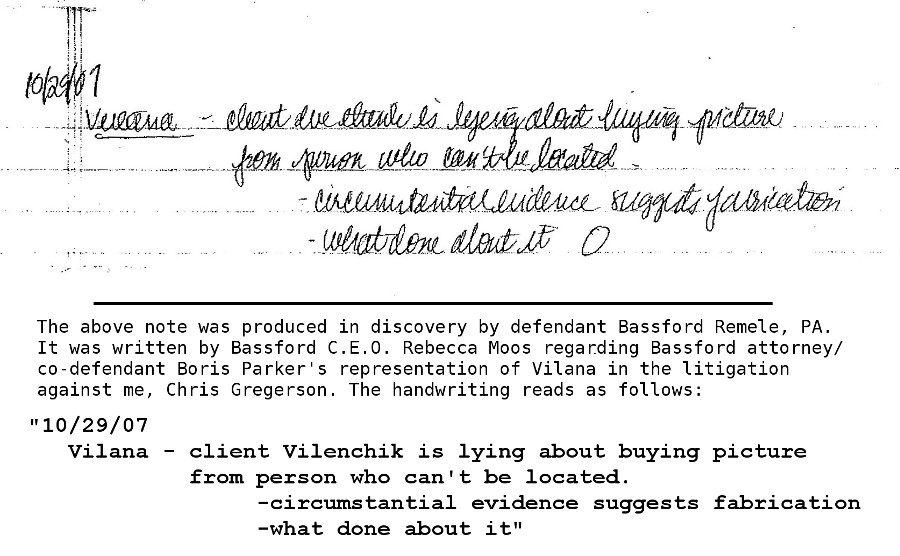
Christoph writes "I'm the Slashdot user who was sued for defamation (and six other claims) by a corporation over negative statements on my website. I prevailed (pro-se) in 2008. The court found the other side forged evidence and lied. In 2009, I sued the other party's lawyers for malicious prosecution/abuse of process (the corporation itself is dissolved/broke). One defendant had stated in writing their client was lying, but the trial court dismissed my claim for lack of evidence. I appealed, and this Tuesday the Minnesota Court of Appeals upheld the dismissal, completely ignoring the defendant's written admission (and other evidence). They further found it was not an abuse of process to sue to 'stop the publication of negative information and opinion.'"
Plain and simple.
We make fun of China and other places, but it seems that our judiciary is now pretty much bought in many places.
Check out this article on how many businesses see corruption as a barrier to entry to markets.
Make sure everyone's vote counts: Verified Voting
Smart move to proceed pro se. I just finished a few years in the feds, paid my attorneys middle six figures total, and they did nothing. Only when I started writing my own civil motions on collateral attack (specifically 28 USC 2255 ) did I get any traction at all. If I had to do it all over, I'd proceed pro se.
Little tidbit: you are indeed entitled to counsel if you are arrested, while you are in criminal proceedings. But if you lose an appeal, and have to proceed with collateral attack, that is civil and you are NOT entitled to counsel. Many people sit in prison because they have only civil remedies left.
"The pie shall be cut in half and each man shall receive.....death. I'll eat the pie."
This is not accurate at all. Appellate courts often review findings of fact, although they are reluctant to disturb factual findings, especially findings by a jury. To reflect this, there are different standards of review for matters of law and matters of fact. The usual standard for review of factual findings in Minnesota is the "clearly erroneous" standard. "Findings of fact shall not be set aside unless clearly erroneous, and due regard shall be given to the opportunity of the trial court to judge the credibility of the witnesses." Minn. R. Civ. P. 52.01. But make no mistake: appellate courts can and do review evidence.
This kind of fundamental error, which was made by the poster and the 3 people who modded up the post, is why representing yourself is such a bad idea.
"In the end, lawyers are held responsible for their--and even their clients'--actions all the time. We get fined, suspended, disbarred, held liable, and otherwise disciplined on a regular basis. Does it happen often enough? Sometimes I doubt that."
For criminal prosecutors, as I understand it, not remotely often enough. Need some more of that:
"Significantly, of the 4,741 public disciplinary actions reported in the California State Bar Journal from January 1997 to September 2009, only ten involved prosecutors, and only six of these were for conduct in the handling of a criminal case. That means that the State Bar publicly disciplined only one percent of the prosecutors in the 600 cases in which the courts found prosecutorial misconduct and NCIP researchers identified the prosecutor."
http://thecrimereport.org/2010/10/04/justice-on-trial/
We know where leadership by an anti-intellectual "strongman" who scapegoats minorities and likes boisterous rallies goes
Huh? He got screwed by a criminal corporation and a gang of corrupt attorneys. He's "entitled" to some redress for what they put him through. Do you have a problem with that?
He didn't get screwed - the summary is (unsurprisingly, given that it was written by one of the parties) biased.
There were three actions. The first was for copyright infringement, which he won and received $19,462 in damages, being $4,462 of actual damages and $15,000 of statutory damages. In response to this the other party countersued over comments made on his website and lost.
This story relates to an attempted claim for malicious prosecution and abuse of process against the other party's attorneys. The judge effectively found that an attorney is entitled to rely on the sworn testimony of his client even if the other party says that testimony is untrue - and how could it possibly be otherwise without rendering litigation impossible? The poster has on his website a document he alleges to show that the attorneys knew their client was lying, but as far as I can tell it is not referenced in any of the cases - I don't know whether it was actually admitted as evidence. The appeal judge refers to the claim as being essentially that because in the end the claims were found not to be credible the prosecution must have been malicious - this is clearly something of a leap. Finally, the poster claims unfairness because he was denied his day in court by this summary judgement. But given that the judgement was given based on there being no chance of success it is difficult to see what the day in court could achieve other than inconveniencing his opponent - and allowing a claim for abuse of process in order only to harass the other party would be a ridiculous irony.
If the claim of malicious prosecution was ambitious the appeal seems to have been consigned to failure from the beginning. The appeal judge notes that the appeal contained no disputes of law or of fact, so it is hard to see how he expected the decision to be reversed.