 Slashdot Mirror
Feds Attempt To Censor Parts of a New Book About the Hydrogen Bomb
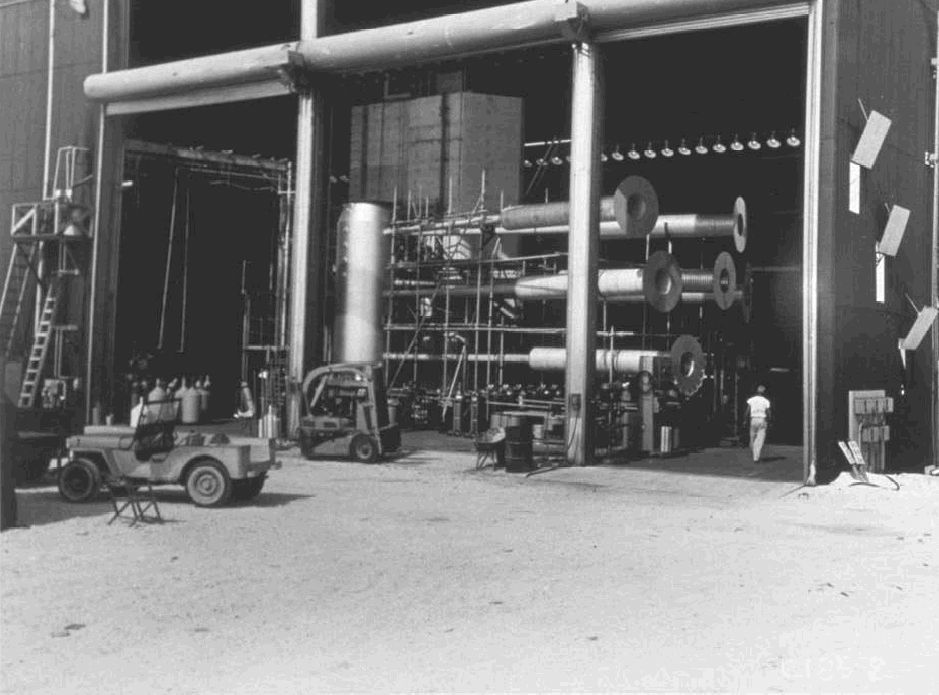
HughPickens.com writes: The atom bomb — leveler of Hiroshima and instant killer of some 80,000 people — is just a pale cousin compared to the hydrogen bomb, which easily packs the punch of a thousand Hiroshimas. That is why Washington has for decades done everything in its power to keep the details of its design out of the public domain. Now William J. Broad reports in the NY Times that Kenneth W. Ford has defied a federal order to cut material from his new book that the government says teems with thermonuclear secrets. Ford says he included the disputed material because it had already been disclosed elsewhere and helped him paint a fuller picture of an important chapter of American history. But after he volunteered the manuscript for a security review, federal officials told him to remove about 10 percent of the text, or roughly 5,000 words. "They wanted to eviscerate the book," says Ford. "My first thought was, 'This is so ridiculous I won't even respond.'" For instance, the federal agency wanted him to strike a reference to the size of the first hydrogen test device — its base was seven feet wide and 20 feet high. Dr. Ford responded that public photographs of the device, with men, jeeps and a forklift nearby, gave a scale of comparison that clearly revealed its overall dimensions.
Though difficult to make, hydrogen bombs are attractive to nations and militaries because their fuel is relatively cheap. Inside a thick metal casing, the weapon relies on a small atom bomb that works like a match to ignite the hydrogen fuel. Today, Britain, China, France, Russia and the United States are the only declared members of the thermonuclear club, each possessing hundreds or thousands of hydrogen bombs. Military experts suspect that Israel has dozens of hydrogen bombs. India, Pakistan and North Korea are seen as interested in acquiring the potent weapon. The big secret the book discusses is thermal equilibrium, the discovery that the temperature of the hydrogen fuel and the radiation could match each other during the explosion (PDF). World Scientific, a publisher in Singapore, recently made Dr. Ford's book public in electronic form, with print versions to follow. Ford remains convinced the book "contains nothing whatsoever whose dissemination could, by any stretch of the imagination, damage the United States or help a country that is trying to build a hydrogen bomb." "Were I to follow all — or even most — of your suggestions," says Ford, "it would destroy the book."
Though difficult to make, hydrogen bombs are attractive to nations and militaries because their fuel is relatively cheap. Inside a thick metal casing, the weapon relies on a small atom bomb that works like a match to ignite the hydrogen fuel. Today, Britain, China, France, Russia and the United States are the only declared members of the thermonuclear club, each possessing hundreds or thousands of hydrogen bombs. Military experts suspect that Israel has dozens of hydrogen bombs. India, Pakistan and North Korea are seen as interested in acquiring the potent weapon. The big secret the book discusses is thermal equilibrium, the discovery that the temperature of the hydrogen fuel and the radiation could match each other during the explosion (PDF). World Scientific, a publisher in Singapore, recently made Dr. Ford's book public in electronic form, with print versions to follow. Ford remains convinced the book "contains nothing whatsoever whose dissemination could, by any stretch of the imagination, damage the United States or help a country that is trying to build a hydrogen bomb." "Were I to follow all — or even most — of your suggestions," says Ford, "it would destroy the book."
The U.S. Supreme Court disagrees with you. The author would have to be inciting imminent lawless action. Reporting on the history of the hydrogen bomb is neither inciting nor likely to produce imminent 'safety' effects.
Brief overview of this: http://www.universitypressclub.com/archive/2013/02/the-a-bomb-kid-and-hows-your-senior-thesis-going/
General Relativity: Space-time tells matter where to go; Matter tells space-time what shape to be.
I know how suspension bridges work. I probably could build a small one, but any lengthy span would be well beyond me.
I know how internal combustion engines work. It would take a year of training on the tools before I'd be able to make one that even sorta worked, and then it would be at 1900s-level functionality.
I know how nuclear weapons work. Several types, in fact. But I cannot make them.
1) I could build a gun-type weapon, given the material (200lbs of 90% pure U-235, a 76mm artillery barrel, and some regular explosives), but I could not create the equipment to refine uranium.
2) I could probably build a reactor to generate plutonium, with massive effort and a significant risk of poisoning myself, but I could not build a working implosion bomb with it. It would take a year's training in explosives just to be able to build an existing design, and those designs are tightly secured.
3) With the materials, I might be able to upgrade an unboosted fission weapon into a boosted one. Maybe.
4) A fusion weapon is completely beyond me. You could stick me in Lawrence Livermore with all the parts in front of me, and without some Ikea-like instructions you aren't going to get anything.
We are protected from homemade gun-type weapons by the scarcity of uranium and the immense difficulty in refining it. Remember, this is something that was beyond the capabilities of most nations a scant 70 years ago. A dedicated nation-state or perhaps certain multinational corporations could pull it off, but not without detection.
We are protected against homemade implosion-type weapons by the complex engineering necessary, the esoteric nature of the specific engineering knowledge needed (nuclear physics and shaped explosives are not a common dual-major), and by the absolute need for testing before use. The former prevents fringe groups from succeeding; the latter prevents the non-suicidal from trying.
We are not protected by lack of general knowledge on nukes, because no such lack of knowledge exists. I learned half of this stuff from school textbooks, and the other half from Wikipedia. Anyone driven to find more can easily do so.
US doctrine has never been "no first use," unlike that of some other countries (USSR during the Cold War, China). Heck, we haven't even promised not to use them against nonnuclear states, attempting to retain their use as an option in the event of CBW attacks.
Make cheese not war 8:)
Note that the atomic bombs saved the lives of millions of Japanese by removing six cities from the "bomb these places into the stone age list". Apparently, the people making the bomb wanted to get a good idea of the effects without having to take into account the effects of prior bombings. This included Hiroshima and Nagasaki, which were spared the years of bombings (and their attendant casualties) that other cities had to endure.
Note further that the death tolls of Hiroshima and Nagasaki combined were lower than that of the firebombing of Tokyo.
Note, finally, that when generals talk about saving lives, they're generally (if you'll excuse the pun) talking about the lives of their men, not their enemy's men. Saving the lives of the enemy is someone else's job....
Addendum: just curious - where in Japan would you be finding "plenty of uninhabited or low population areas"?
"I do not agree with what you say, but I will defend to the death your right to say it"