 Slashdot Mirror
Wi-Fi Hotspot Blocking Persists Despite FCC Crackdown (networkworld.com)
An anonymous reader writes: An examination of consumer complaints to the FCC over the past year and a half shows that the practice of Wi-Fi hotspot device blocking continues even though the agency has slapped organizations such as Marriott and Hilton more than $2 million in total for doing this. Venues argue they need to block hotspots for security reasons, but the FCC and consumers say the organizations are doing this to force people to pay for pricey Internet access.
"Consumers who purchase cellular data plans should be able to use them without fear that their personal Internet connection will be blocked by their hotel or conference center," FCC Enforcement Bureau chief Travis LeBlanc said in a statement. "It is unacceptable for any hotel to intentionally disable personal hotspots while also charging consumers and small businesses high fees to use the hotel's own Wi-Fi network. This practice puts consumers in the untenable position of either paying twice for the same service or forgoing Internet access altogether." Consumers have filed many complaints about Wi-Fi hotspot blocking to the FCC.
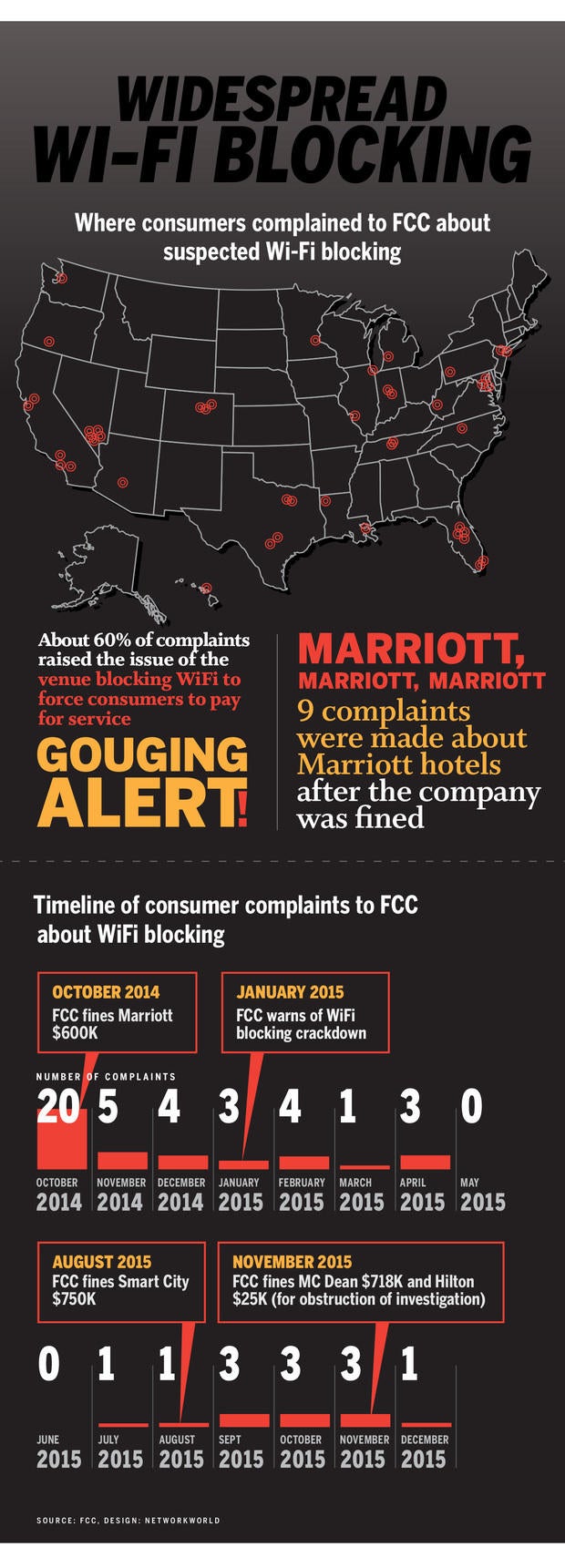
"Consumers who purchase cellular data plans should be able to use them without fear that their personal Internet connection will be blocked by their hotel or conference center," FCC Enforcement Bureau chief Travis LeBlanc said in a statement. "It is unacceptable for any hotel to intentionally disable personal hotspots while also charging consumers and small businesses high fees to use the hotel's own Wi-Fi network. This practice puts consumers in the untenable position of either paying twice for the same service or forgoing Internet access altogether." Consumers have filed many complaints about Wi-Fi hotspot blocking to the FCC.
In recent years, I have rarely stayed at a first class hotel that did not have free guest w-fi. People expect it and will bail for the local coffee shop if it's not free in the hotel.
My guess is a lot of the offenders are in tourist traps where everything costs a lot.
If you want news from today, you have to come back tomorrow.
But wi-fi "blocking" gets a free pass? Have the FCC throw the book at them.
Venues argue they need to block hotspots for security reasons
Due to security reasons we are preventing people from running their own closed network between their devices and their telecom companies and instead forcing them all into our own network joined up with hundreds of other strangers ....