Slashdot Mirror
Domain: 2ce.com
Stories and comments across the archive that link to 2ce.com.
Comments · 14
-
Not a 3d desktop, but...
CubicEye is a 3d web browser. It lets you drill through every link from any given page in a tunnel-like structure.
-
Only 2D?
Two-dimensions are all well and good, but, c'mon, this is the 21st century. If I can't have my "Minority Report"-style glove-and-goggle mix, at least I can browse in 3D! This actually came out a couple of years ago. Fun to play around with.
-
Other 3D file system visualizers
Here are some other 3D file system visualizers:
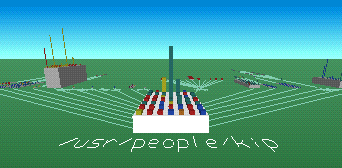
- FSV is modelled after FSN, but runs on Linux. FSV lays out files and directories in 3D, geometrically representing the file system hierarchy to allow visual overview and analysis.
[Screenshot] | [Download] (Linux)
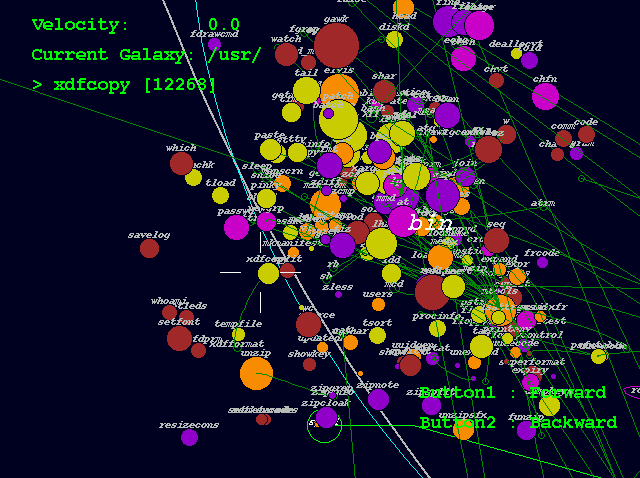
- Xcruiser lets you fly through a filesystem in 3D as if it were interplanetary space. Directories are represented as galaxies, files are represented as planets (whose mass is determined by the file size), and symbolic links are represented as wormholes.
[Screenshot] | [Download] (Linux)
- TDFSB is a 3D filesystem browser for Linux. Take a walk through your filesystem!
[Screenshot] | [Download] (Linux)
- 3Dtop is an extension for Windows that represents desktop icons in 3D, letting you to fly around your desktop. You can create coloured spotlights, background and floor textures, "paintings" (bitmaps), clocks, and "flags" that represent shortcuts.
[Screenshot] | [Download] (Windows)
- ROOMS turns a Windows desktop into a 3D world. You can see the world either through a first person perspective or with a map view, and you can populate the world with sounds, animated images, and 3D icons.
[Screenshot] | [Download] (Windows)
- CubicEye organizes windows into a navigable cube. Cubes can be arranged by thematic or functional subject matter, and can be explored either individually or collectively as part of a more comprehensive structure of multiple cubes representing various areas of interest.
[Screenshot] | [Download] (Windows) -
Other 3D file system visualizers
Here are some other 3D file system visualizers:
- FSV is modelled after FSN, but runs on Linux. FSV lays out files and directories in 3D, geometrically representing the file system hierarchy to allow visual overview and analysis.
[Screenshot] | [Download] (Linux)
- Xcruiser lets you fly through a filesystem in 3D as if it were interplanetary space. Directories are represented as galaxies, files are represented as planets (whose mass is determined by the file size), and symbolic links are represented as wormholes.
[Screenshot] | [Download] (Linux)
- TDFSB is a 3D filesystem browser for Linux. Take a walk through your filesystem!
[Screenshot] | [Download] (Linux)
- 3Dtop is an extension for Windows that represents desktop icons in 3D, letting you to fly around your desktop. You can create coloured spotlights, background and floor textures, "paintings" (bitmaps), clocks, and "flags" that represent shortcuts.
[Screenshot] | [Download] (Windows)
- ROOMS turns a Windows desktop into a 3D world. You can see the world either through a first person perspective or with a map view, and you can populate the world with sounds, animated images, and 3D icons.
[Screenshot] | [Download] (Windows)
- CubicEye organizes windows into a navigable cube. Cubes can be arranged by thematic or functional subject matter, and can be explored either individually or collectively as part of a more comprehensive structure of multiple cubes representing various areas of interest.
[Screenshot] | [Download] (Windows) -
Other 3D file system visualizers
Here are some other 3D file system visualizers:
- FSV is modelled after FSN, but runs on Linux. FSV lays out files and directories in 3D, geometrically representing the file system hierarchy to allow visual overview and analysis.
[Screenshot] | [Download] (Linux)
- Xcruiser lets you fly through a filesystem in 3D as if it were interplanetary space. Directories are represented as galaxies, files are represented as planets (whose mass is determined by the file size), and symbolic links are represented as wormholes.
[Screenshot] | [Download] (Linux)
- TDFSB is a 3D filesystem browser for Linux. Take a walk through your filesystem!
[Screenshot] | [Download] (Linux)
- 3Dtop is an extension for Windows that represents desktop icons in 3D, letting you to fly around your desktop. You can create coloured spotlights, background and floor textures, "paintings" (bitmaps), clocks, and "flags" that represent shortcuts.
[Screenshot] | [Download] (Windows)
- ROOMS turns a Windows desktop into a 3D world. You can see the world either through a first person perspective or with a map view, and you can populate the world with sounds, animated images, and 3D icons.
[Screenshot] | [Download] (Windows)
- CubicEye organizes windows into a navigable cube. Cubes can be arranged by thematic or functional subject matter, and can be explored either individually or collectively as part of a more comprehensive structure of multiple cubes representing various areas of interest.
[Screenshot] | [Download] (Windows) -
3d
CubicEye dogg.
-
Re:Another Linux 3D file manager
My site has been collecting 3D UIs for some time.
Here are links to some of the 3DUIs that are available today:
- FSN (pronounced "fusion") produces a cyberspace rendering of a file system. This was the original 3D file system navigator shown in Jurassic Park ("Hey, this is UNIX. I know this!").
[Screenshot] | [Download] (IRIX)
- FSV is modelled after FSN, but runs on Linux. FSV lays out files and directories in 3D, geometrically representing the file system hierarchy to allow visual overview and analysis.
[Screenshot] | [Download] (Linux)
- Xcruise lets you fly through a filesystem in 3D as if it were interplanetary space. Directories are represented as galaxies, files are represented as planets (whose mass is determined by the file size), and symbolic links are represented as wormholes.
[Screenshot] | [Download] (Linux)
- TDFSB is a 3D filesystem browser for Linux. Take a walk through your filesystem!
[Screenshot] | [Download] (Linux)
- Visual File System is a 3D file system visualizer for Windows. The tool scans a drive selected by the user, and then models the contents of the drive in 3D, based on the directories that are selected in a tree browser on the side of the display.
[Screenshot] | [Download] (Windows)
- 3Dtop is an extension for Windows that represents desktop icons in 3D, letting you to fly around your desktop. You can create coloured spotlights, background and floor textures, "paintings" (bitmaps), clocks, and "flags" that represent shortcuts.
[Screenshot] | [Download] (Windows)
- ROOMS turns a Windows desktop into a 3D world. You can see the world either through a first person perspective or with a map view, and you can populate the world with sounds, animated images, and 3D icons.
[Screenshot] | [Download] (Windows)
- CubicEye organizes windows into a navigable cube. Cubes can be arranged by thematic or functional subject matter, and can be explored either individually or collectively as part of a more comprehensive structure of multiple cubes representing various areas of interest.
[Screenshot] | [Download] (Windows)
- Vizible WorldViewer distributes windows across the exterior and interior surfaces of spheres, providing the means to visualize and navigate large numbers of web pages and data sources simultaneously.
[ -
Re:Another Linux 3D file manager
My site has been collecting 3D UIs for some time.
Here are links to some of the 3DUIs that are available today:
- FSN (pronounced "fusion") produces a cyberspace rendering of a file system. This was the original 3D file system navigator shown in Jurassic Park ("Hey, this is UNIX. I know this!").
[Screenshot] | [Download] (IRIX)
- FSV is modelled after FSN, but runs on Linux. FSV lays out files and directories in 3D, geometrically representing the file system hierarchy to allow visual overview and analysis.
[Screenshot] | [Download] (Linux)
- Xcruise lets you fly through a filesystem in 3D as if it were interplanetary space. Directories are represented as galaxies, files are represented as planets (whose mass is determined by the file size), and symbolic links are represented as wormholes.
[Screenshot] | [Download] (Linux)
- TDFSB is a 3D filesystem browser for Linux. Take a walk through your filesystem!
[Screenshot] | [Download] (Linux)
- Visual File System is a 3D file system visualizer for Windows. The tool scans a drive selected by the user, and then models the contents of the drive in 3D, based on the directories that are selected in a tree browser on the side of the display.
[Screenshot] | [Download] (Windows)
- 3Dtop is an extension for Windows that represents desktop icons in 3D, letting you to fly around your desktop. You can create coloured spotlights, background and floor textures, "paintings" (bitmaps), clocks, and "flags" that represent shortcuts.
[Screenshot] | [Download] (Windows)
- ROOMS turns a Windows desktop into a 3D world. You can see the world either through a first person perspective or with a map view, and you can populate the world with sounds, animated images, and 3D icons.
[Screenshot] | [Download] (Windows)
- CubicEye organizes windows into a navigable cube. Cubes can be arranged by thematic or functional subject matter, and can be explored either individually or collectively as part of a more comprehensive structure of multiple cubes representing various areas of interest.
[Screenshot] | [Download] (Windows)
- Vizible WorldViewer distributes windows across the exterior and interior surfaces of spheres, providing the means to visualize and navigate large numbers of web pages and data sources simultaneously.
[ -
Re:Another Linux 3D file manager
My site has been collecting 3D UIs for some time.
Here are links to some of the 3DUIs that are available today:
- FSN (pronounced "fusion") produces a cyberspace rendering of a file system. This was the original 3D file system navigator shown in Jurassic Park ("Hey, this is UNIX. I know this!").
[Screenshot] | [Download] (IRIX)
- FSV is modelled after FSN, but runs on Linux. FSV lays out files and directories in 3D, geometrically representing the file system hierarchy to allow visual overview and analysis.
[Screenshot] | [Download] (Linux)
- Xcruise lets you fly through a filesystem in 3D as if it were interplanetary space. Directories are represented as galaxies, files are represented as planets (whose mass is determined by the file size), and symbolic links are represented as wormholes.
[Screenshot] | [Download] (Linux)
- TDFSB is a 3D filesystem browser for Linux. Take a walk through your filesystem!
[Screenshot] | [Download] (Linux)
- Visual File System is a 3D file system visualizer for Windows. The tool scans a drive selected by the user, and then models the contents of the drive in 3D, based on the directories that are selected in a tree browser on the side of the display.
[Screenshot] | [Download] (Windows)
- 3Dtop is an extension for Windows that represents desktop icons in 3D, letting you to fly around your desktop. You can create coloured spotlights, background and floor textures, "paintings" (bitmaps), clocks, and "flags" that represent shortcuts.
[Screenshot] | [Download] (Windows)
- ROOMS turns a Windows desktop into a 3D world. You can see the world either through a first person perspective or with a map view, and you can populate the world with sounds, animated images, and 3D icons.
[Screenshot] | [Download] (Windows)
- CubicEye organizes windows into a navigable cube. Cubes can be arranged by thematic or functional subject matter, and can be explored either individually or collectively as part of a more comprehensive structure of multiple cubes representing various areas of interest.
[Screenshot] | [Download] (Windows)
- Vizible WorldViewer distributes windows across the exterior and interior surfaces of spheres, providing the means to visualize and navigate large numbers of web pages and data sources simultaneously.
[ -
Dead Wrong
Mark Anderson (sp?) apparently slept through 2001, when CubicEye burst onto the scene. CubicEye is more innovative than the Internet itself.
-
2013 Browsers
I predict: Something like CubicEye!
-
Other 3D UIs: references and links.This is the kind of stuff that is regularly discussed on Nooface (a Slash site BTW).
Ripped straight off the side bar :
Will 3D user interfaces ever take off? With ever-growing 3D processing capabilities available on standard PC hardware, it seems only natural to pursue UI directions that take advantage of this awesome power. Moreover, the generation of users now emerging has had access to video games for as long as they could remember. As the line between video games and PCs becomes blurrier, the time may have come to think about how to apply 3D visualization techniques for more day-to-day computing tasks.
Here are links to some of the 3DUIs that are available today:
- FSN (pronounced "fusion") produces a cyberspace rendering of a file system. This was the original 3D file system navigator shown in Jurassic Park ("Hey, this is UNIX. I know this!").
[Screenshot] | [Download] (IRIX)
- FSV is modelled after FSN, but runs on Linux. FSV lays out files and directories in 3D, geometrically representing the file system hierarchy to allow visual overview and analysis.
[Screenshot] | [Download] (Linux)
- Xcruise lets you fly through a filesystem in 3D as if it were interplanetary space. Directories are represented as galaxies, files are represented as planets (whose mass is determined by the file size), and symbolic links are represented as wormholes.
[Screenshot] | [Download] (Linux)
- TDFSB is a 3D filesystem browser for Linux. Take a walk through your filesystem!
[Screenshot] | [Download] (Linux)
- Visual File System is a 3D file system visualizer for Windows. The tool scans a drive selected by the user, and then models the contents of the drive in 3D, based on the directories that are selected in a tree browser on the side of the display.
[Screenshot] | [Download] (Windows)
- 3Dtop is an extension for Windows that represents desktop icons in 3D, letting you to fly around your desktop. You can create coloured spotlights, background and floor textures, "paintings" (bitmaps), clocks, and "flags" that represent shortcuts.
[Screenshot] | [Download] (Windows)
- ROOMS turns a Windows desktop into a 3D world. You can see the world either through a first person perspective or with a map view, and you can populate the world with sounds, animated images, and 3D icons.
[Screenshot] | [Download] (Windows)
- CubicEye organizes windows into a navigable cube. Cubes can be arranged by thematic or functional subject matter, and can be explored either individually or collectively as part of a more comprehensive structure of multiple cubes representing various areas of interest.
[Screenshot] | [Download] (Windows)
- Vizible WorldViewer distributes windows across the exterior and interior surfaces of spheres, providing the means to visualize and navigate large numbers of web pages and data sources simultaneously.
[Screenshot] -
Other 3D UIs: references and links.This is the kind of stuff that is regularly discussed on Nooface (a Slash site BTW).
Ripped straight off the side bar :
Will 3D user interfaces ever take off? With ever-growing 3D processing capabilities available on standard PC hardware, it seems only natural to pursue UI directions that take advantage of this awesome power. Moreover, the generation of users now emerging has had access to video games for as long as they could remember. As the line between video games and PCs becomes blurrier, the time may have come to think about how to apply 3D visualization techniques for more day-to-day computing tasks.
Here are links to some of the 3DUIs that are available today:
- FSN (pronounced "fusion") produces a cyberspace rendering of a file system. This was the original 3D file system navigator shown in Jurassic Park ("Hey, this is UNIX. I know this!").
[Screenshot] | [Download] (IRIX)
- FSV is modelled after FSN, but runs on Linux. FSV lays out files and directories in 3D, geometrically representing the file system hierarchy to allow visual overview and analysis.
[Screenshot] | [Download] (Linux)
- Xcruise lets you fly through a filesystem in 3D as if it were interplanetary space. Directories are represented as galaxies, files are represented as planets (whose mass is determined by the file size), and symbolic links are represented as wormholes.
[Screenshot] | [Download] (Linux)
- TDFSB is a 3D filesystem browser for Linux. Take a walk through your filesystem!
[Screenshot] | [Download] (Linux)
- Visual File System is a 3D file system visualizer for Windows. The tool scans a drive selected by the user, and then models the contents of the drive in 3D, based on the directories that are selected in a tree browser on the side of the display.
[Screenshot] | [Download] (Windows)
- 3Dtop is an extension for Windows that represents desktop icons in 3D, letting you to fly around your desktop. You can create coloured spotlights, background and floor textures, "paintings" (bitmaps), clocks, and "flags" that represent shortcuts.
[Screenshot] | [Download] (Windows)
- ROOMS turns a Windows desktop into a 3D world. You can see the world either through a first person perspective or with a map view, and you can populate the world with sounds, animated images, and 3D icons.
[Screenshot] | [Download] (Windows)
- CubicEye organizes windows into a navigable cube. Cubes can be arranged by thematic or functional subject matter, and can be explored either individually or collectively as part of a more comprehensive structure of multiple cubes representing various areas of interest.
[Screenshot] | [Download] (Windows)
- Vizible WorldViewer distributes windows across the exterior and interior surfaces of spheres, providing the means to visualize and navigate large numbers of web pages and data sources simultaneously.
[Screenshot] -
Other 3D UIs: references and links.This is the kind of stuff that is regularly discussed on Nooface (a Slash site BTW).
Ripped straight off the side bar :
Will 3D user interfaces ever take off? With ever-growing 3D processing capabilities available on standard PC hardware, it seems only natural to pursue UI directions that take advantage of this awesome power. Moreover, the generation of users now emerging has had access to video games for as long as they could remember. As the line between video games and PCs becomes blurrier, the time may have come to think about how to apply 3D visualization techniques for more day-to-day computing tasks.
Here are links to some of the 3DUIs that are available today:
- FSN (pronounced "fusion") produces a cyberspace rendering of a file system. This was the original 3D file system navigator shown in Jurassic Park ("Hey, this is UNIX. I know this!").
[Screenshot] | [Download] (IRIX)
- FSV is modelled after FSN, but runs on Linux. FSV lays out files and directories in 3D, geometrically representing the file system hierarchy to allow visual overview and analysis.
[Screenshot] | [Download] (Linux)
- Xcruise lets you fly through a filesystem in 3D as if it were interplanetary space. Directories are represented as galaxies, files are represented as planets (whose mass is determined by the file size), and symbolic links are represented as wormholes.
[Screenshot] | [Download] (Linux)
- TDFSB is a 3D filesystem browser for Linux. Take a walk through your filesystem!
[Screenshot] | [Download] (Linux)
- Visual File System is a 3D file system visualizer for Windows. The tool scans a drive selected by the user, and then models the contents of the drive in 3D, based on the directories that are selected in a tree browser on the side of the display.
[Screenshot] | [Download] (Windows)
- 3Dtop is an extension for Windows that represents desktop icons in 3D, letting you to fly around your desktop. You can create coloured spotlights, background and floor textures, "paintings" (bitmaps), clocks, and "flags" that represent shortcuts.
[Screenshot] | [Download] (Windows)
- ROOMS turns a Windows desktop into a 3D world. You can see the world either through a first person perspective or with a map view, and you can populate the world with sounds, animated images, and 3D icons.
[Screenshot] | [Download] (Windows)
- CubicEye organizes windows into a navigable cube. Cubes can be arranged by thematic or functional subject matter, and can be explored either individually or collectively as part of a more comprehensive structure of multiple cubes representing various areas of interest.
[Screenshot] | [Download] (Windows)
- Vizible WorldViewer distributes windows across the exterior and interior surfaces of spheres, providing the means to visualize and navigate large numbers of web pages and data sources simultaneously.
[Screenshot]