Slashdot Mirror
Domain: adfa.edu.au
Stories and comments across the archive that link to adfa.edu.au.
Comments · 17
-
Levelling Students for the past 5 years
Since 2006 I've been teaching an undergrad general education (i.e., for non-scientists) course in Computer Science called Computer Games at UNSW@ADFA (University of New South Wales, at the Australian Defence Force Academy) that has used a levelling metaphor. Students start out as "Newbs" (Fail level) and level up through Knave (Pass Conceded), Squire (Pass), Courtier (Credit), Peer (Distinction) and L33t (High Distinction). A large pool of elective tasks are made available to the students. These fall into one of three categories - Delves, Quests, and Odysseys based on their difficulty and work involved. Students undertake whatever tasks they desire (within a few constraints) and will level-up on successful completion of a certain task mix. Each student has their own Wiki where they record their progress on tasks and where I and my markers provide feedback on their progress. Think of it like a Quest Log. Heck, there's even a series of weekly exercises which might be considered the "main storyline" of the course/game, and there's icons for each of the ranks and quests. The 2009 version of the course can be found at http://seit.unsw.adfa.edu.au/coursework/ZGEN2301/index.html, with task lists etc. Student Wiki pages are there also but password locked (plagiarism issues), otherwise you'd be able to seem the excellent work that (some of) the students have done.
-
Re:They also claim Windows supports Posix
Win32 is a subsystem on the same level as POSIX. The Windows Win32 subsystem does not support fork. The Windows POSIX subsystem does support fork, and always has.
And the Windows
Cygwin needed to reimplement fork for two reasons:
1. It ran on Windows 95-Me. Those do not use the Windows NT kernel and never have, so they have no POSIX subsystem. They're apparently cutting support for this in the next version, but it's too late to just not re-implement fork.
2. Cygwin sits on the Win32 subsystem to simplify interoperability with Win32 applications. A lot of the point of cygwin would be lost if it built on the POSIX subsystem.References:
[1] http://www.ee.adfa.edu.au/staff/hrp/webDesignHelp/cygwin-ug-net-nochunks.html
"...processes run under the standard Win32 subsystem..."
-
Other Physiological Data on 1PS Play
People interested in the analysis of the physiological response of players might find the 2006 paper from my lab interesting: http://seal.tst.adfa.edu.au/~vesl/publications/SimTecT06heartRate.pdf We looked at the heart-rate of 1PS players. In general we found that average heart-rate changed very little; though there were individual differences - with a couple of players showing a small drop in heart-rate, and only one showing a significant increase. This came as a bit of a surprise - particularly in light of other data we collected which showed that players were immersed/engaged.
-
How about Quickscript?
I would recommend looking at something called Quikscript. This is a very ingenious pure Postscript markup language. It is essentially a complex Postscript header that defines some useful tags, in a primitive HTML sort of way. And the beauty is that there is no executable. All you need is a text editor and your printer (or ghotscript) does all the heavy lifting.
-
Re:Check out the facts firstAs it happens, rural malapportionment and its effects on agricultural protectionism are a subject that I, as part of a farm-owning family in a basically non-subsidising country (Australia) know a little bit about. You do have a good point about the historical basis for this, but there are a bunch of reasons why it persists today and disproportionate political power is one of the most important.
Japan has an even worse rural malapportionment than the US; see this PDF file for an explanation. Basically, the LDP 's power base is Japanese farmers.
Europe is a different matter, but the power bases of various politicians are still an important factor in the failure to wind back agricultural subsidies. France is the agricultural powerhouse of the EU, and consequently gets a huge whack of subsidy cash. Guess what Jacques Chirac's job was before he was President? Minister for Agriculture, and the continuation of subsidies was his crowning achievement in that job. Until he goes, any chance of even tinkering reforms is pretty minimal.
What I don't understand is why the poor struggling family farmer down on his luck story keeps on getting swallowed by urban voters.
-
Get a Style Guide
The "How to write Unmaintainable Code" article on the web is an excellent resource for documentation - much as "Web Pages that Suck is an excellent guide for web designers.
Your organisation - even if it's just 1 man and a dog - should already have a style guide in place. Don't have one? Well then it's easy, there are plenty of good ones on the Net, for Java, C++,Lisp,MATLAB, Ada and many others.
A good list of C and C++ styleguides is here. Just pick one. The important thing is to make sure everyone uses the same one, exactly which one is more a religious issue than anything else. That's an over-simplification, some really are better than others, but at least all the ones on that list have been tried, tested and peer-reviewed.
As for my own opinions, a few issues
- Make variable names meaningful. If you do this, then most of your comments will be metadata, e.g why you did something, and who and when a change was made, rather than what is being done. If you're doing something tricky or unusual, then having a pseudocode preamble can be worthwhile.
- If you can, try to use a relatively high-level language like Ada rather than a low-level one like C. But this is almost never under your control. The Javadoc auto-documentation tool is one of the biggest plusses that Java has over other languages - so if programming in Java, Use It!!
-
Re:original Unix
The software at that link is System V Release 2, and as far as I know there is no way to get that legally for free. You can get current System V Release 4 for free (depending on how you plan to use it) from places like SCO and Sun.
SysVR2 is about 15 years too late to be "original Unix", though. You can get binary versions of much earlier systems -- Fifth, Sixth, and Seventh Edition research Unix -- free for personal use, with Supnik's simulator at DEC's ftp site.
If you want to get early Unix source, and some versions other than those above, you can get a suitable Unix source license for free from SCO.
For information on early Unix, you could start with The UNIX Heritage Society, or perhaps Dennis Ritchie's home page.
-
Time MachineAgent Sokolov also has another pet-project. In addition to Sokoloving numerous software projects, he's also built himself a Sokolovian Time Machine.
http://minnie.cs.adfa.edu.au/ Quasijarus/tmachine.html
Another project of Quasijarus and the demented mind of Agent Sokolov.
-
Time MachineAgent Sokolov also has another pet-project. In addition to Sokoloving numerous software projects, he's also built himself a Sokolovian Time Machine.
http://minnie.cs.adfa.edu.au/ Quasijarus/tmachine.html
Another project of Quasijarus and the demented mind of Agent Sokolov.
-
It may point at a problem, but not one at Cygnus..There's already been some interesting discussion of this on the GCC mailing list, and all the other lists Michael posted it to.
In general, I like to recommend that people do a little research before they take what Michael says too literally. Unfortunately, Google seems to have got bored with Michael's magnum opus (the page in which he describes his love for the GNU project is particularly fun), but it still lists many of the other mailing lists Michael has tortured over the years.
-
It may point at a problem, but not one at Cygnus..There's already been some interesting discussion of this on the GCC mailing list, and all the other lists Michael posted it to.
In general, I like to recommend that people do a little research before they take what Michael says too literally. Unfortunately, Google seems to have got bored with Michael's magnum opus (the page in which he describes his love for the GNU project is particularly fun), but it still lists many of the other mailing lists Michael has tortured over the years.
-
UNIX History Graphing Projectyou may also want to check out the UNIX History Graphing Project which uses Graphviz to create the graph from ascii data files. the advantage is, you can calculate the graph on your machine if you want and easely add data and thus contribute to the project.
here is the source for the first linux kernels:
linux0.1
Name: Linux 0.1
Date: 1991-09-17
Reference: http://www.memalpha.cx/Linux/Kernel/Master.html
Influenced by minix1.5.10
linux0.2
Name: Linux 0.3
Date: 1991-10-05
Reference: a printed calendar
Successor to linux0.1
greetings, eMBee.
-- -
Re:Even easier.
A friend mentioned Mpcut to me (haven't tried it yet myself): http://minnie.cs.adfa.edu.au/Mpcut/
-
SCO needs to Ante-up
Great, yet another distro that tosses out a barebones version so they can claim to be a Linux company, then sell the real thing with all their proprietary crap. How about a goodwill gesture, change the license to ancient versions of Unix to the GPL. Open up the ancient Unix Archive.
-
Re:While it is nice to see articles touting FreeBS
After a while they do become boring... but apparently they're needed to "sell the product" to the upper management. Whatever. I couldn't care less about things as "user base" and such. (My chosen BSD) works for me.
Now for some real news:
Did you know that you can now get access (source license) to different BSD-versions from 1BSD via 2.xBSD, 3BSD and upto 4.3BSD-Reno ?? Yes,siree!
A click through license available a here.. PUPS archives contain a lot of other material too...
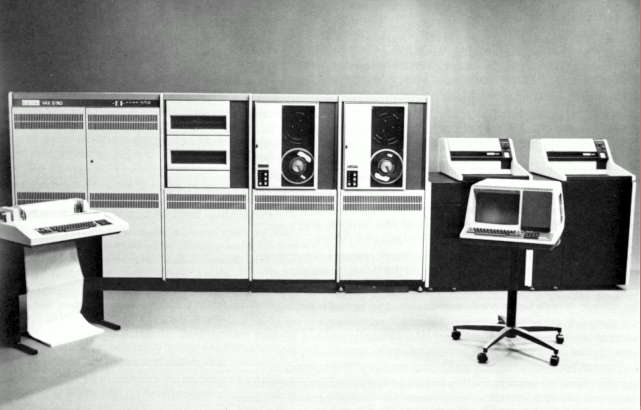
Now just dig out that VAX 11/780 from the closet and start hacking! -
Re:Some submissions
I missed an obvious significant document:
AT&T Unix Source Code and its license allowed schools and researchers to do significant computer research and experimentation. Old Unix and licenses are still available through The Unix Historical Society. -
A good resource...
Whatever this system is, it's not the first.
A good overview of extrasolar planets may
be found at http://www.ph.adfa.edu.au/e-mamajek/ex o.html.