Slashdot Mirror
Domain: askthepilot.com
Stories and comments across the archive that link to askthepilot.com.
Comments · 18
-
Re:Third pilot on JUMP SEAT, not flying.
No, the third pilot's disassociated viewpoint had nothing to do with it. He simply knew the plane's checklist. That's a bunch of standard procedures every pilot is supposed to know of what to do when they encounter a specific type of problem on that specific model plane. When you hear that a pilot has been trained on a certain plane model, that's what they're talking about - they're leaning all these checklists. If a pilot can't remember it exactly, the entire book of checklists is available aboard the plane for the pilots to reference in a Quick Reference Handbook. Any time the pilots face a situation aboard the plane which puzzles them and they don't recall the resolution from their training, they should reach for the QRH. One of them flys the plane, the other looks up the problem in the QRH.
The third pilot knew the checklist for the 737 Max. He instructed the other pilots to perform the manufacturer's specified procedure to resolve the problem, and it did resolve the problem. The pilots in the two planes which crashed apparently did not know the checklist, and did not reference the QRH. (Speculating here a bit since we don't know yet what happened - maybe they performed the proper reset procedure and the problem didn't go away.)
Contrary to the way most people here seem to be interpreting it, the third pilot's anecdote actually absolves Boeing and places blame for the crashes primarily upon the four pilots. This is looking like a pilot training problem. Boeing is still culpable for designing an automatic safety system which was prone to fail multiple times in just months of operation, and for making it so hard and non-obvious to override. But based on the third pilot's anecdote, primary culpability would be upon the pilots of the two other planes for not knowing the plane's checklists, and not bothering to crack open the QRH to double-check if they were addressing the problem properly.
Planes are incredibly complicated and it's unreasonable to expect a pilot to understand how all of its systems interact. The checklists in the QRH are made by the engineers who designed the plane. They do understand all of the plane's systems and how they interact. They come up with every possible problem they can think of which a pilot might encounter, and write checklists to resolve every possible cause they can think of for those problems. The checklist procedure for this problem fixed it in the third pilot's case. If the four pilots did not follow that procedure, then the crashes were their fault, not Boeing's. -
Re:Here's a thought:
The problem isn't with the major airlines, who generally treat their pilots fine, it is the commuter airlines. If you don't go the military route, you need to spend many years at a regional airline, where conditions historically have been much much worse than you describe. The conditions you describe are not available to novices - these are people with over a decade of piloting experience, and with expensive self-funded training. It is also the case that it is not the majors which are suffering from a pilot shortage - they can hire from the best of the current regional pilots, who will leap at the chance to fly for a major.
I am not a pilot, and the above paragraph describes USA conditions. I get my information from the 'Ask The Pilot' blog. The pilot in question addressed the pilot shortage in a post about a year ago. Here is an extract:
An aspiring aviator has to ask, is it worth sinking $100,000 or more into one’s primary training, plus the time it will take to build the necessary number of flight hours, plus the cost of a college education, only to spend years toiling at poverty-level wages, with at best a marginal shot at moving on to a major? For many the answer has been a resounding (and logical) no.
However, things are changing:
The regionals have finally started upping their salaries and improving benefits, in some cases substantially. The cost structures of these carriers, whose existence is primarily to allow the majors to outsource flying on the cheap, limits how much they can lavish on their employees, but frankly they have little choice. New hires at companies like Endeavor Air (a Delta affiliate) and PSA (American), for example, can now make first-year salaries in the $70,000-plus range. That’s three times what these pilots would have made in years past. Other companies are offering signing bonuses of several thousand dollars, and work rules too are getting better. Air Wisconsin, a United partner and one of the nation’s oldest regionals, says that pilots can now earn up to $57,000 in sign-on bonuses. It promises earnings of between $260,000 and $317,000, including salary and bonuses over the first three years of employment. Figures like that are unprecedented.
-
Re:Here's a thought:
The problem isn't with the major airlines, who generally treat their pilots fine, it is the commuter airlines. If you don't go the military route, you need to spend many years at a regional airline, where conditions historically have been much much worse than you describe. The conditions you describe are not available to novices - these are people with over a decade of piloting experience, and with expensive self-funded training. It is also the case that it is not the majors which are suffering from a pilot shortage - they can hire from the best of the current regional pilots, who will leap at the chance to fly for a major.
I am not a pilot, and the above paragraph describes USA conditions. I get my information from the 'Ask The Pilot' blog. The pilot in question addressed the pilot shortage in a post about a year ago. Here is an extract:
An aspiring aviator has to ask, is it worth sinking $100,000 or more into one’s primary training, plus the time it will take to build the necessary number of flight hours, plus the cost of a college education, only to spend years toiling at poverty-level wages, with at best a marginal shot at moving on to a major? For many the answer has been a resounding (and logical) no.
However, things are changing:
The regionals have finally started upping their salaries and improving benefits, in some cases substantially. The cost structures of these carriers, whose existence is primarily to allow the majors to outsource flying on the cheap, limits how much they can lavish on their employees, but frankly they have little choice. New hires at companies like Endeavor Air (a Delta affiliate) and PSA (American), for example, can now make first-year salaries in the $70,000-plus range. That’s three times what these pilots would have made in years past. Other companies are offering signing bonuses of several thousand dollars, and work rules too are getting better. Air Wisconsin, a United partner and one of the nation’s oldest regionals, says that pilots can now earn up to $57,000 in sign-on bonuses. It promises earnings of between $260,000 and $317,000, including salary and bonuses over the first three years of employment. Figures like that are unprecedented.
-
Ask the Pilot
I put in a request to Patrick Smith to write a blog entry on this. He hasn't commented on this that I have seen but anything you would want to know about it he will know.
-
Re:Missing a big point
http://www.askthepilot.com/que... "It amazes me how often this contention turns up—in magazines, on television, in the science section of the papers. Perhaps people are so gullible because they simply don’t know any better." Again whether you have met those people or not isn't the issue here. Maybe you just know smarter people. Or maybe you just never asked, I don't know. If there start being questions on the automobile driver's license test about how the autopilot in airplanes work, I will come around to your way of thinking. Until then, an aviation term shouldn't be used.
-
Humans are still the pilots
Um, modern plane auto pilots can, and regularly do, take-off and land without assistance.
Automated systems in modern jets very rarely land the plane and never do takeoffs. A modern jetliner flys itself about as much as a modern operating room operates by itself.
Today, pilots are mostly there for emergency backup.
Not true at all. Pilots fly the airplane - the automation facilitates the work of doing this but a cockpit is actually a very busy place for a pilot. While it's true that we have the technology to automate, in nearly all cases a human pilot is still the one in change of the plane.
-
I call BS
Quite obviously a PR/marketing stunt pandering to the obsessive fear of "germs", than any substantial improvement in the general quality of onboard health.
It's no secret that the air in most long haul flights is unhealthy, with cabin humidity under 10% most of which being other passengers' body fluids. If Boeing and the airline industry really cared about the well being of its passengers it would modify the ratio of fresh to recirculated air than make a big song about adding UV lamps in the toilets. -
Re:This problem needs a technical solution
> Agreed. On the other hand... what plane can't tolerate a drone strike?
Most of them. There are many good explanations of the problem, including http://www.askthepilot.com/the.... And a firefighting plane dumping foam is effectively "barnstorming" anyway, dumping the foam at the lowest possible altitude.. An impact on the cockpit is dangerously distracting, an impact in a rotor or jet engine could be catastrophic.
-
Re:deployed early?
...why? Insurance? In my city the entire subway system is automated, and the Space Shuttle could have flown entirely without pilots. But we must hero worship test pilots for some reason. I mean does a roller coaster have a pilot or just a minimum wage operator that presses buttons on the ground?
TL;DR- planes aren't subways
-
Re:Who would have thought
And let's just remember that planes don't actually fly themselves:
http://www.askthepilot.com/que...
-Chris
Your link is misleading. Autopilot can control aircraft at all times (climb, cruise , descent, approach, and landing phases) except during the taxi and landing phases.
Thus, with modern avionics, autopilot can control can be engaged immediately after takeoff (once flaps are off and gear is up) and kept on through landing.
A separate feature, called autothrottle, can be used to automatically control the plane's engines through the entire flight.
Of course, pilots are essential for programming these systems, monitoring them during flight, and stepping in during anomalous situations, but the planes really can fly themselves.
-
Re:Who would have thought
And let's just remember that planes don't actually fly themselves:
http://www.askthepilot.com/que...
-Chris
-
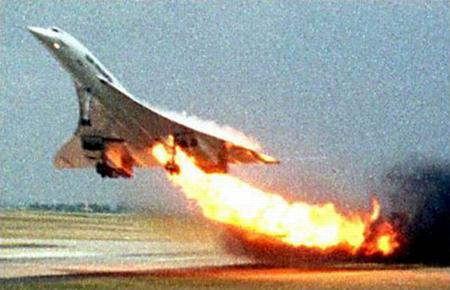
Have I seen this image before...
For some reason I got an uneasy feeling watching the image of SS2 running on its rubber rocket engine.
Now I know what it reminded me of. That image comes with an interesting back story, it seems the Concorde did not only go down in flames because of debris on the runway.
-
Have I seen this image before...
For some reason I got an uneasy feeling watching the image of SS2 running on its rubber rocket engine.
Now I know what it reminded me of. That image comes with an interesting back story, it seems the Concorde did not only go down in flames because of debris on the runway.
-
Re:My own personal hell.
That site is PR for airlines
It's absolutely not. If you read a few of Patrick's posts, it becomes very apparent very quickly that he says a lot of things the airlines don't want to hear. For example:
http://www.askthepilot.com/american-airlines-new-livery/
http://www.askthepilot.com/cheaper-and-safer/ -
Re:My own personal hell.
That site is PR for airlines
It's absolutely not. If you read a few of Patrick's posts, it becomes very apparent very quickly that he says a lot of things the airlines don't want to hear. For example:
http://www.askthepilot.com/american-airlines-new-livery/
http://www.askthepilot.com/cheaper-and-safer/ -
Re:My own personal hell.
where you get to breathe in the same recycled air for 9 hours
not really
http://www.askthepilot.com/questionanswers/cabin-air-quality/
just sayin
-
Put a lot of energy in a small place...
And you might end up with a little problem.
http://www.askthepilot.com/upsfire.html
Story that explains the picture:
http://www.salon.com/tech/col/smith/2006/09/22/ask thepilot202/print.html
Granted, Smith is a pilot, not an engineer, but he gives a somewhat good explanation of thermal runaway. -
Root Cause of the Problem
I am sure that this is great technology, but it will only encourage the airlines to continue to switch from large aircraft to so-called regional jets. Since the total number of people flying is either stable or increasing, the net result is that there are more smaller aircraft in the air today that ever before. That's what's causing the delays.
Salon recently published a good description of the problem, written by an airline pilot.