Slashdot Mirror
Domain: atlantic-cable.com
Stories and comments across the archive that link to atlantic-cable.com.
Comments · 8
-
Re:Wow
-
Re:Wow
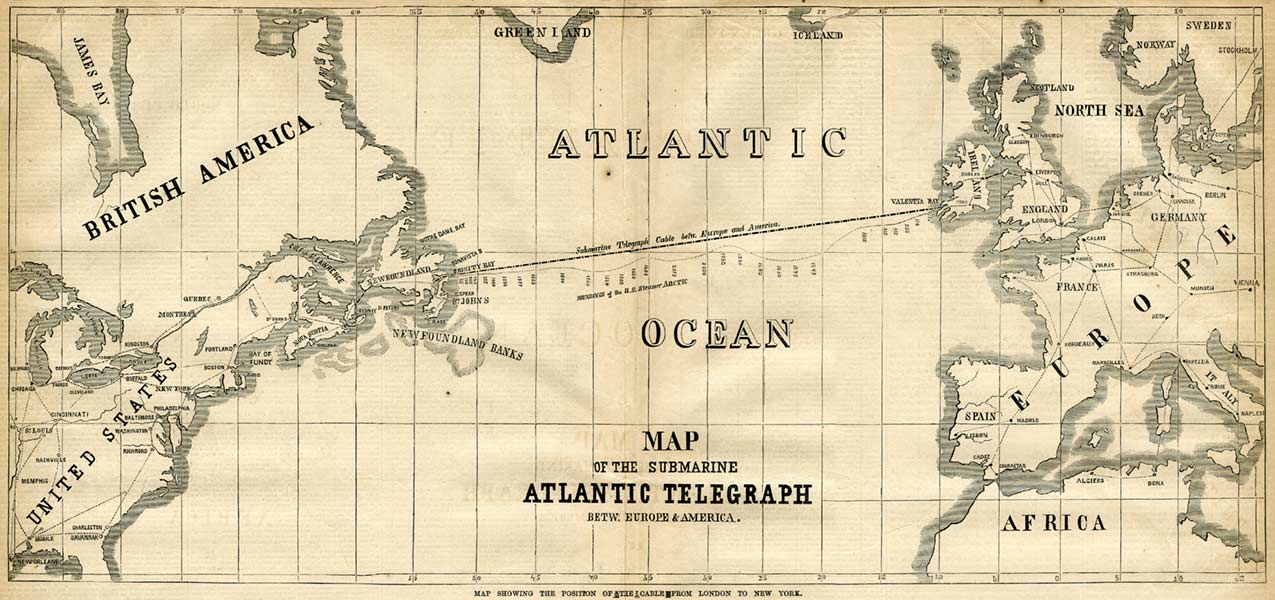
And check this one out, too. Ahh, the good old times we had in British America.
-
Re:Wow
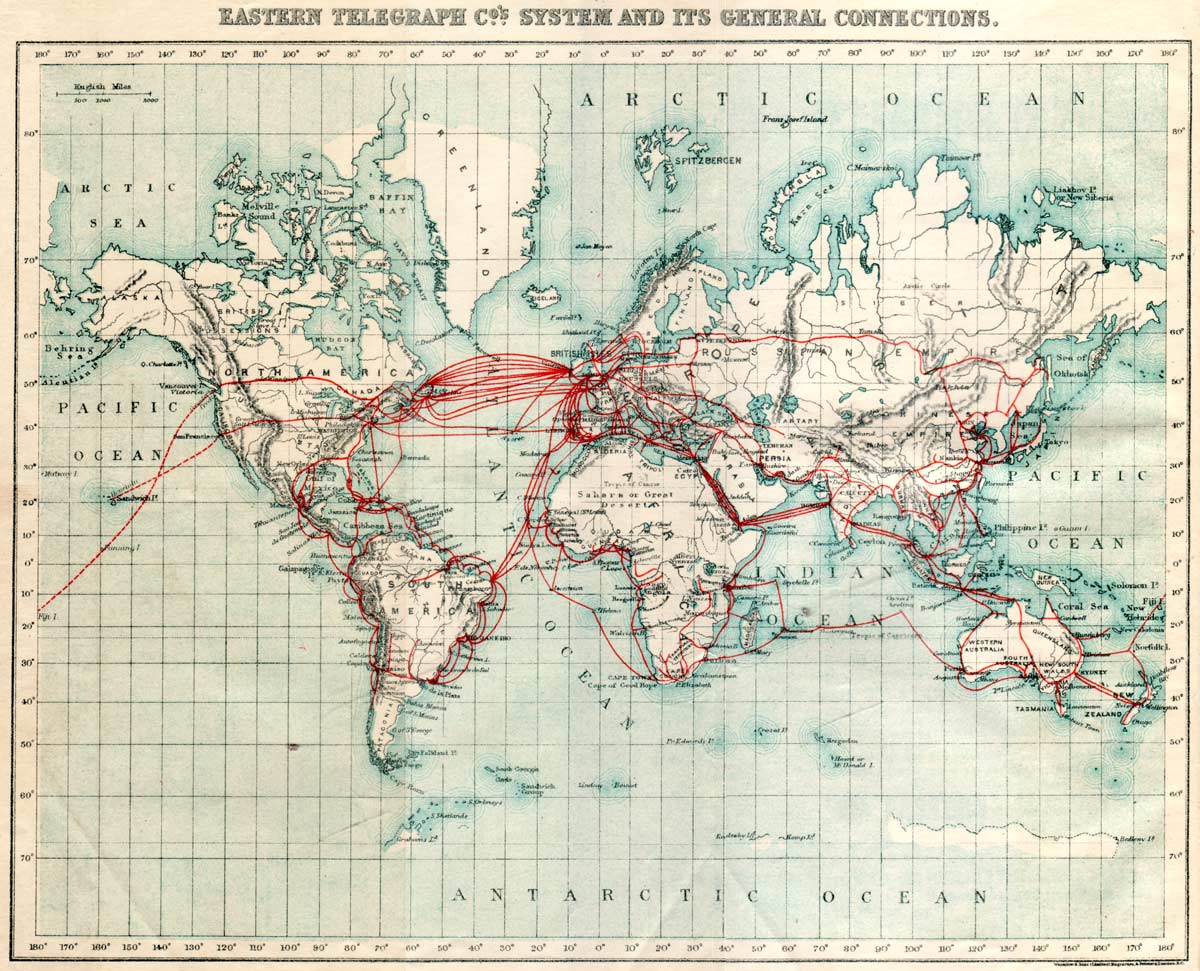
Think that is amazing, check out this map of undersea cables, from 1901!
-
Re:Oh, give me a break!
Since when does it take much sophistication to damage some cables?
You can find a map of approximate cable routes with google (one such example), and you can trash the cables with a decent sized ship dragging a sizable hunk of metal.
pretty much start in the northern mid-atlantic, and head due south dragging the anchor (or start in the south and go north. or both if you can get 2 ships) and it would seem to me you're practically guaranteed to screw up some of them. -
Re:Everything into NYC? [Geography & Routing]
Why do so many of those transatlantic cables seem to land in New York?
Two Reasons: Geography and Routing
1) Geography: First, the Guardian's map is a little oversimplified. Most of those cables come ashore in Eastern Long Island or along a relatively narrow stretch of New Jersey coastline, about 50 miles south of NYC proper. They're in those places because of submarine geography. The sea floor isn't flat- there are mountains and canyons, etc. Ever tried to run network cable through a crowded office? Pain in the neck, right? Now imagine doing it with six-foot long tweezers and a blindfold...for 3,000 miles. The cable-layers pick the flattest, least cluttered path they can. In the mid-1950s, we started to get good sonar maps of the North Atlantic sea floor. Laying undersea cable is *expensive*, and there was a big burst of it as those maps started to take the guesswork (and a lot of the risk) out of the equation. And once a company found a good route, they tended to keep using it.
Seafloor mapping:
http://oceanexplorer.noaa.gov/explorations/03fire/background/mapping/mapping.html
Timeline of transatlantic cables, 1951-2000:
http://www.atlantic-cable.com/Cables/CableTimeLine/index1951.htm
2) Routing. A *lot* of information passes through those cables. It's compressed (Hoffman encoding, anyone?), and at each end you have to decompress it and then route it back into the land line system. This is a big, complicated operation (Much more so in the '50s and '60s when so many of the US-Europe cables were laid), and it's cheaper to add capacity by laying more cables between existing terminals than to build new ones.
Overview of cable topography & operations for one big cable operator, Apollo Systems:
http://www.apollo-scs.com/networktopology/
Note that some companies (including Apollo) are starting to build new routes- the economics for doing that are getting better as cable gets cheaper and data traffic grows (shame on all the Americans downloading video files from peers in Sweden).
So yes, the undersea cable system *should* have much more redundancy, but it *won't* until somebody can make money building and selling that redundant capacity. And actually, these events will speed up that process; According to the Guardian, 50% of India's bandwidth is cut off. The people who own the pipes for the 50% that still works are having a *very* profitable week. -
Bad engineering
In the normal course of events, machines assist people not the other way 'round. One of the greater engineering fubars of all time was a ship called the Great Eastern. It had a steam powered windlass that required the assistance of seamen because the steam couldn't quite do the job. If the steam pooped out the result was mayhem. If the system was designed to be properly steam powered or properly human powered, fewer bones would have been broken.
I'm not sure what could go wrong with Amazon's plan but I'm sure that it will go wrong.
http://www.atlantic-cable.com/Cableships/GreatEast ern/ -
Nothing New Under the Sun
During the Spanish-American War (1898), the American Navy cut the oceanic telegraph cables that connected Cuba to the rest of the Spanish Empire. See Cable-Cutting At Cienfuegos. During the first and second world wars, underseas cables were high-priority targets and were often cut.
-
Cape Cod - French Cable Station MuseumAlong the lines of your Stephenson reference...
I visited the French Cable Station Museum in Orleans, Cape Cod. It was really very interesting. This is a small museum in the original building where the first French trans-Atlantic submarine communications cable (laid in 1869) connected to the U.S. They have all of the orginal equipment used to send and receive communications, including one of the earliest (I presume) A to D converters which read to and from paper tape.There weren't many visitors in the museum, and the elderly gentlemen who volunteered there were extremely friendly and more than willing to give an extensive tour of the place and all the equipment. I'd recommend it if you find yourself in that area. As they might say up there, "It's wicked pissah!"
A quick search did not reveal a website for the museum, but there is a bit about it here.