Slashdot Mirror
Domain: citylab.com
Stories and comments across the archive that link to citylab.com.
Comments · 75
-
Re:Kids
Except that cities have higher productivity than non-urban areas and it seems mostly proportional to size and density: http://www.citylab.com/work/20... . Not to mention that many of us enjoy the quality of life found in cities compared to suburban or rural areas - YMMV.
-
Re: Fools think this is horrible.
the poor tend to do more things that are stupid and land them in court in the first place.
Have you ever noticed how it's difficult to think about something when you're worried about something else?
The poor have more things to worry about than the rich, so asking them to make wise decisions when they don't know where their next meal is coming from is like that old saying, "the beatings will continue until morale improves!"
So rather than blaming them for making unwise decisions, it would be more helpful to lighten their cognitive burden in order to give them a better chance to make wise decisions.
-
Re:"asphalt cheaper/more effective than rails"
By benefiting (mostly) rich white people instead of (mostly) poor minorities, it helps rake in campaign contributions from the Right People
Your entire post was hilarious; but I especially loved this bit. You've obviously never ridden on an urban mass transit system of any kind.
Nice way to except a quotation from GP without context and earn yourself some karma.
But while GP's post was over-the-top, his general point that buses are more important to the urban poor and subways tend to be built without the poor in mind is largely accurate. If you don't believe me, you might start with some articles like this and this, or maybe this recent survey of public transport riders in NYC, which showed the median income was significantly lower for those who used the bus as well as the subway, and even lower for those who used the bus alone.
Basically, for most big cities in the U.S. it works like this:
- Rich people have their own drivers.
- Upper middle class people who live in the suburbs drive themselves. If they live in the city, they take taxis.
- Most middle class people who live in the city take the subway. If they live in the suburbs, they drive to a commuter rail and take that.
- Poor people can't afford cars. They can't live in the suburbs, and if they do, they usually can't afford to live in the ones with convenient commuter rail service. If they live in the city, they often can't afford to live in the more popular areas right next to subway lines. (Those that can often live in rent-control neighborhoods which prevent the convenient subway-adjacent areas from being overrun by young professionals with more money.) The poor disproportionately live in the areas of the city that aren't served by subways, so they end up taking buses (because they can't afford cars) or doing a hybrid commute by bus until they can get to a subway line.It's clear from this post and another reply that you don't understand the reality of where subway/rail lines get constructed. They are VERY expensive, and poor areas tend not to have the tax revenue to justify them. So, poor areas get the much cheaper buses.
You see a lot of poor people riding subways and light rail in the city for two reasons: (1) the subways run through the most popular business districts in major cities, so even if a poor person starts on a bus, they likely find a connection to a subway convenient to get to work, and (2) dense urban areas tend to have a lot of poor areas located between middle-class and richer areas. So when a subway/rail is built to connect the middle-class areas, it will likely end up running through poor areas anyway.
If you look at most major cities in the Northeast U.S. which have had subways for many years, you'll likely find plenty of examples of poor areas that have been promised a subway/rail line for decades. But they rarely get built. It's much easier and cheaper to extend a new commuter rail line to another suburb, and it's more lucrative to get middle-class riders who can pay premium fares. Expanding the inner-city subway system often requires expensive and complex digging through dense areas, and for what? To get the relatively low fares that the city mostly gets from poor people on buses or taking subway connections from buses anyway.
It's lovely that you see some minorities in your subway commute, but GP had a legitimate point about the expense of rail vs. buses and where the former gets prioritized. The poor generally end up taking the bus in most cities.
-
Re:Who cares
I know it's hard to see your viewpoint from the US (which I assume you're from), but many in Europe do indeed feel that we're being bombarded. Near where I live in the UK and even London, I feel like a stranger in my own country, where whites are nearly a minority. Multi-culturalism has failed, and bringing more immigrants in will not make things better.
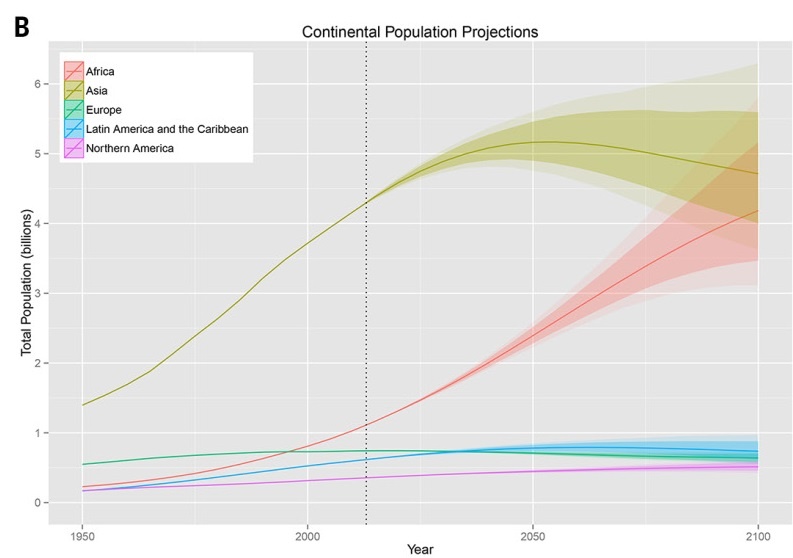
I'm scared that these quotas won't stop coming. Instead of the variety in the races, in the long run, we'll only have a single EU race, where the original cultures are lost and where there's no white skin, or black skin anymore (the latter is less likely as they're coming into the EU not vice versa). I also think that some cultures are less advanced than others and that the less advanced ones may dominate over time, and set us all back decades or even centuries. Africa's population is set to quadruple apparently (here's an article and the source), and that would be the final nail in the coffin if we were just as open then.
There is an alternative, and that is to let a billionaire look after them as he's promised to buy them an island and give them the essentials including education. He just needs the governments' permission. -
Re:Only children should fear the dark
If no lighting makes residents stay at home because they don't feel safe outside when they'd otherwise be out and about, that seems like a problem.
Their perception of danger is of no concern to me. I'm concerned with the actuality of danger. They are adults and not children who ought to be afraid of the dark. If they don't feel safe outside then I'd suggest they spend their money improving their policing or move some place where they feel safer. Again, if they are scared of nothing (and the data indicates that they are) and decide to stay home rather than face the night then I don't see an actual problem.
Where's the data that says they are afraid of nothing? If this study didn't account for how many people were outside without lights, then it doesn't show that.
Or maybe spend money and resources making residents feel safe and secure in their community?
Real security isn't going to come from a bunch of wasteful street lamps. At best it is security theater and it definitely is a huge waste of resources.
Security theater can be effective it it gets more people to be outside and using their streets, and it makes the streets more usable and neighborhoods more livable.
Results in the USA have been mixed, some times streetlights reduced crime, sometimes it had no effect.
http://www.citylab.com/housing...
But even if the streetlights don't actually reduce crime, they can still have a positive effect on the community:
The connection between light and crime may not be what most of us think it is, but the connection between light and our sense of safety is exactly what it's always been. Those Southampton researchers who measured crime rates in Wandsworth also found that the new lights "provide[d] reassurance to some people who were fearful in their use of public space," particularly women. Lighting increases a sense of community, and community pride. It brings us outdoors in our neighborhoods, helps us get to know each other. Fear keeps us out of the alley, and attraction to light and what it represents draws us to illuminated streets.
-
Re:Need more info
Public transpiration systems also reach their limit, and costs to expand them are ever rising. I've been on the trains in Paris and some are so overcrowded it is simply unsafe, a miserable experience that some people face every day. The system cannot handle more trains, and there is little room to add new tracks. At least with roads you can often widen them.
First off, Paris has done expansions of their train system. For instance, the Paris Métro Line 4. You will notice that Line 4 has gates at the tracks for safety under crowded conditions. Secondly, I have spent time in Paris, and I have friends who live in Paris. The system is quite good, actually. There are times when it is busy, but you can say the same for freeways. When subways get crowded, the ride time is pretty much the same. However when freeways get crowded, you can be commuting for 90 minutes on a route that normally takes 30 minutes. Also, you were likely referencing the subways in Paris; the rides are usually quite short on those lines However the commuter rail lines are usually far more comfortable. The cars often have two levels, and commuters usually get seats, except at the very worst times.
Finally there are the intangibles. There is good evidence that living in a city with good rail transportation, and using it, results in a better psychological state. I can anecdotally support that. I sometimes commute by subway; sometimes I have to stand, but often I get a seat. The ride is 15 minutes, which is faster than driving to my destination. There are no traffic jams, no accidents. The system just works. To me, there is something quite compelling about an efficient subway system.
-
Re:Pedestrian cycle!
Bring back the Barnes Dance!
-
Re:Glad they're trusting in the free market
And it worked fairly well for their railway system. It's not completely without flaws, or without regulations and subsidies, but private companies have demonstrated an ability to create both effective and profitable transportation systems which government run companies could never manage to do. Deregulation and privatization are not panaceas, but they can and do work well when done smartly. Japan seems to at least have a track record of success in this area.
-
Re:its all about the $$$
Its been proven time and time again that red light cameras do more harm than good.
If you do nothing but add red light cameras, the intersection tends to become safer.
But inevitably, the government agency which authorized the cameras suddenly realizes it's getting more revenue from traffic violations. And it starts shortening the duration of the yellow lights at the intersections to artificially increase the number of violations, and thus increase its revenue even more. This makes the intersection more dangerous, moreso than the cameras initially made them safer.
I've thought about these types of situations a bit. The best idea I could come up with is that fines for breaking the law should not go to the government. They should go into an escrow account held by the government, which gets equally redistributed to taxpayers when they get their tax refund (or converted to a tax credit if the person owes taxes). The idea behind these fines is that the offender needs to be penalized for the bad behavior. As the public was the party which was harmed by the behavior, and ostensibly the government is acting on behalf of the public, the fine goes to the government. But that leads to a conflict of interest on the part of the government in situations like this. So the best solution is to remove the conflict of interest - if the government makes no money from traffic violations, then its only motive for enacting traffic control is to improve traffic flow and safety. -
Re:its all about the $$$
Its been proven time and time again that red light cameras do more harm than good.
And the opposite has also been proven:
"Crash effects detected were consistent in direction with those found in many previous studies: decreased right-angle crashes and increased rear end ones."
(Right-angle crashes are much more dangerous to the occupants than rear end crashes, so exchanging the former for the latter results in a net improvement in safety.)
To further improve the safety of red-light cameras, consider that almost all rear-end collisions are caused by people tailgating. If each red-light camera were turned into a combination red-light and speed camera, people would slow down when approaching intersections, so someone slamming on their brakes at the last minute would be less likely to be hit from behind.
-
Re:jessh
At worst, people lose a day's worth of work, some businesses are affected.
The annual economic output of New York metro area alone (leaving Philadelphia aside for a minute) is about $1.4 trillion dollars — or about $4billion per day (weekdays such as today produce more than weekends). If even a mere 10% of that figure was lost today because of our rulers' failures, the cost is $400 million (for New York alone).
Possible severe damage to infrastructure
Little of such damage can be meaningfully prevented by shutting the infrastructure down. But even if it could be — and even the entire $60 million cost of the "Christmas Blizzard of 2010" could've been prevented by shutting the city down, it would've still been a pretty stupid thing to do — even if the storm actually lived up to the hype.
possible death toll
The "Christmas Blizzard of 2010" is imputed with 7 fatalities — or, in dollar terms, $63 million dollar, tops.
The best course of action by far is to shut the city down.
Hundreds vs. tens of millions of dollars lead to the exact opposite conclusion.
But there is more — individuals and businesses, made aware of the risks, can (and are supposed to!) make their own decisions. Governor declaring driving on a public road a crime is something else — they violate our freedom.
and who really expects a cabaret singer to have any knowledge of risk assessment
So, where do you sing?
-
Re:Extradition?
-
If only the cop had a camera in Ferguson...
Yes, if only the cop had a camera during the Michael Brown stop, then I suppose his killing would have looked more like this: https://www.youtube.com/watch?...
Don't forget, the cops in that case knew they were being filmed. Here's another case where cops disgracefully killed someone when they knew they were on film. He had a weapon, but was at such a distance that he posed no threat at all ( https://www.youtube.com/watch?... ) And another one: https://www.youtube.com/watch?...
Any time that cops are in a store, they know they're being filmed on security cameras. Here's another "heroic" action by the cops, committing what any sane human would consider to be murder while they know that they are being filmed: https://www.youtube.com/watch?...
And of course don't expect some of the footage not to go "missing" ( http://www.washingtonpost.com/... ), and don't expect the footage to even be released ( http://www.citylab.com/crime/2... ). And even if it goes to a grand jury, don't expect the District Attorney not to knowingly put a liar on the stand and throw the case: https://www.youtube.com/watch?...
Obviously this is all anecdotal and not "scientific" compared with the study in the summary, but it should be clear that this problem of police violence is not going to be completely solved until the cultures of "shoot first and ask questions later" and "protect each other" within law enforcement are changed.
-
Re: Predictions
Why someone marked this as "insightful" is beyond me- but I suppose they're afflicted by the same class of idiocy you seem to be.
Nationalized Power...
North Korea has thatThe truth of the matter is that it doesn't work. Can't work. Won't work. Therein lies the rub on all these Marxist delusions (which is WHAT you're talking to here). They all deny the reality of human nature from start to finish. I honestly and fervently wish the collective delusion of Nationalization, Collectivism, and the like would just simply friggin die off- because they AREN'T and CAN'T be workable in the context of Apex Predators built to run their prey unto drop-dead exhaustion. Humans aren't like Horses or Cattle, can't and won't be- and that's the ONLY way that these idiot notions will actually work.
-
Re:Ha
Nah You'll be fine.. At least in NYC you almost certainly won't be given a traffic ticket, let alone be charged with a crime.
http://gothamist.com/2012/02/15/heres_why_drivers_get_away_with_mur.php
http://www.citylab.com/commute/2012/04/invention-jaywalking/1837/
-
Re:Stupid, trucks cause the problem
foot and bicycle limit you to living within a few miles of where you work. that just isn't possible as rents in the cities are massively higher
That's why we need to abolish our outdated parking laws that artificially raise the cost of urban living. If you don't own a car, why should you have to pay for a parking space?
-
Re:But DC is different,no?
I believe that even though it passed in DC...that congress can put the kibosh on this pretty quick?
Yep, and it appears that Congress has a history of meddling with local politics in D.C.
Congress has the authority to do more than meddle:
To exercise exclusive legislation in all cases whatsoever, over such District (not exceeding ten miles square) as may, by cession of particular states, and the acceptance of Congress, become the seat of the government of the United States, and to exercise like authority over all places purchased by the consent of the legislature of the state in which the same shall be, for the erection of forts, magazines, arsenals, dockyards, and other needful buildings;
Don't like it? There's a process for changing it:
The Congress, whenever two thirds of both houses shall deem it necessary, shall propose amendments to this Constitution, or, on the application of the legislatures of two thirds of the several states, shall call a convention for proposing amendments, which, in either case, shall be valid to all intents and purposes, as part of this Constitution, when ratified by the legislatures of three fourths of the several states, or by conventions in three fourths thereof, as the one or the other mode of ratification may be proposed by the Congress; provided that no amendment which may be made prior to the year one thousand eight hundred and eight shall in any manner affect the first and fourth clauses in the ninth section of the first article; and that no state, without its consent, shall be deprived of its equal suffrage in the Senate.
-
Re:But DC is different,no?
I believe that even though it passed in DC...that congress can put the kibosh on this pretty quick?
Yep, and it appears that Congress has a history of meddling with local politics in D.C.
-
Maybe Elon should go to Venus instead.
-
Re:Not surprising
"continue legally mandating suburban development and banning urban development,"
Don't be daft.I don't think they're being daft, just informed. There really are laws preventing good urban development and encouraging suburban sprawl. Heck, AAA used to (and might still - I haven't checked up on it in a few years) lobby for suburban sprawl, and against urban planning, public transit, and other such measures. There's a lot of legislation around making it much harder to build up instead of out.
-
Re:A Century Ago
That's a nice story you have there. The reality is a little more complex than an attractive conspiracy theory. http://www.citylab.com/commute...
-
Re:Property Tax?
Maybe the poor could afford to cover their benefits if we didn't force them to live a middle-class lifestyle.
-
Alcohol-related "accident"?
alcohol-related events, like car accidents
That's self-contradictory. Here's a quote from the New York Police Department:
"There's no criminality," an NYPD spokesman told Metro. "That's why they call it an accident."
An alcohol-related car crash involves criminality and therefore cannot be an accident, logically speaking, if those who enforce the law are to be believed.
-
Re:Flawed?
-
Solution: Robotic Cops
The screenshot of what the Google car sees approaching a right turn (scroll almost halfway down the page) shows the car about to violate CVC 22100(a) and possibly also CVC 21717. So there are still some bugs to fix in Google's code.
Another company ought to build a robotic traffic enforcement cop as a way to check Google's work.