Slashdot Mirror
Domain: couchsurfing.org
Stories and comments across the archive that link to couchsurfing.org.
Stories · 11
-
Can Ello Legally Promise To Remain Ad-Free?
Bennett Haselton writes: Social networking company Ello has converted itself to a Public Benefit Corporation, bound by a charter saying that they will not now, nor in the future, make money by running advertisements or selling user data. Ello had followed these policies from the outset, but skeptics worried that venture capitalist investors might pressure Ello to change those policies, so this binding commitment was meant to assuage those fears. But is the commitment really legally binding and enforceable down the road? Read on for the rest.In a previous article about Ello, I wrote:
There is, in short, nothing to stop Ello from doing what Facebook does whenever they make a significant change to their Terms of Service: presenting users with a dialog box next time they sign in, saying, "These are the new rules, by checking this box, you are agreeing to abide by the new contract which you're not going to read."
After the story had been filed, I had a second thought and wrote to Ello's PR department, asking:
Why not just make an irrevocable commitment in the TOS, to remain privacy-friendly, or ad-free, or whatever else it is that Ello wants to promise users? Something like, "This is a binding, irrevocable commitment that cannot be modified in future updates to the TOS." That wouldn't make the venture capitalists happy, but it might address some of the concerns of the users.
Coincidentally, just as I was sending that email, Ello was issuing a press release announcing that they had re-chartered as a Public Benefit Corporation (PBC), bound by a charter which is intended, precisely, as an irrevocable commitment not to run ads or sell user data.
However, as user WWJohnBrowningDo pointed out in the previous story's comment threads, the Delaware law defining a "Public Benefit Corporation" states that the charter can be modified, or the PBC status nullified, or the company bought out by another entity not bound by the original charter, with the approval of a 2/3 supermajority of shareholders. (Go here and scroll down about halfway to the section beginning "Notwithstanding any other provisions of this chapter." It's also called out on the site about benefit corporations that is linked in Ello's press release.)
So, my non-lawyer face-value reading of the situation is: Previously, Ello could only change its policy and run ads with the approval of 51% of shareholders, and now 67% is required. That's an improvement but hardly an eternal guarantee. Either way, the majority could be achieved if enough of the original founders and shareholders give in to temptation, or if the exit-hungry venture capitalists get enough seats on the board to outvote them. (I ran this past a few Internet privacy lawyers to ask if there was any more nuance to it than this -- in particular, whether a company could make a "binding promise" in their PBC character, then toss it out with a 2/3 supermajority vote and get away with it. They said they had no idea.)
So, even if a PBC charter is not an irrevocable promise to remain ad-free, perhaps we can give them credit for trying to make such a promise, to the maximum extent legally possible. Or did they? This is just off the top of my head, but: What if they had said, "To each user signing up, we promise that if we ever start running ads or selling user-specific data or otherwise violating this charter, we will pay $1,000 to each affected user."
Now that's no longer merely a "charter" but is now an actual obligation to an outside party. And a contractual obligation to an outside party cannot be nullified by a 2/3 majority or even a 100% majority of shareholders. (Imagine: "All shareholders in favor of canceling our agreement to pay back the money we borrowed from FooBarBank, raise your hands.") On the other hand, this depends on whether a court would find the contract to be enforceable.
Regardless, even if Ello never voted to rescind their charter, another potential loophole is that the charter contains no formal definition of what constitutes "charging for advertising". Ello's stated business model is to offer optional special features that users can pay to use. But conceivably they could add paid features which essentially amount to the ability to advertise to other users, such as the ability to send mass messages to thousands of recipients. (I doubt Ello would do anything as crass as to let you spam thousands of random strangers. However, in most social networking sites such as Facebook, you cannot even mass-message thousands of people who are in your Facebook friends list. That's the kind of feature that some Facebook users, and some Ello users, would presumably be willing to pay for.) Or Ello could charge extra to have a special "badge" appear next to your name, or your company name, in search results. Or, like CouchSurfing.org, they could offer to "verify" your identity by charging $25 to a credit card in your name. And if the paid features really do remain Ello's sole source of revenue, then their developers may find themselves under subtle pressure to degrade the experience for regular non-paying users, while offering increasingly attractive perks to the paid ones.
Aral Balkan, one critic of Ello's venture-capital cash infusion, told me pointedly: "Their original statement smacked of misdirection. 'Look, we just got over $5M in additional venture capital but don't worry about that because...' I still don't trust them, sorry. They're closed source, centralized, (currently at least) free to use, and they've just taken an order of magnitude more VC after the influx of users they experienced. It sounds like typical Silicon Valley fare to me. If it looks like a duck and quacks like a duck..."
I don't think it's a matter of "trust" -- I have no reason to doubt that the founders behind Ello are good people -- but when you dangle millions of dollars in front of someone, they can find rationalizations and loopholes that are consistent with their vision of themselves as a good person. And of course since hosting the Ello platform will cost money, if they don't make enough of it back from selling paid features, they will eventually make the kind of passive-aggressive announcement that is issued routinely by formerly free or ad-free services: "Look, we either have to start raising money somehow, or the service has to be shut down completely." And then regardless of how most people respond, they can say after a few days, "We have received an outpouring of support from users who said they would be willing to view ads as long as it keeps the service alive" (without saying what percentage of all user responses expressed this sentiment). Then the ads go up (I'm calling it thirty-six months in advance: some pundits will grandiosely refer to this as "destroying Ello in order to save it"), and then we're back to Facebook all over again.
-
Couchsurfing Hacked, Sends Airbnb Prank Spam
Slashdot regular (and Couchsurfing.org volunteer) Bennett Haselton writes with a report that an anonymous prankster hacked the Couchsurfing.org website and sent spam to about 1 million members, snarkily advertising their commercial arch-rival Airbnb as "the new Couchsurfing." (Read on below for more on the breach.) As of now, the spam's been caught, but not the spammer.I've been a volunteer host on Couchsurfing.org for 16 months. Despite the ongoing controversies surrounding the site's changes in recent years, I've always found it to be a great way to meet travelers with fascinating stories and to make new friends, not to mention a way to force a deadline upon yourself to clean up your house before the next guest arrives.
On August 15, I received an email sent from "Couchsurfing <noreply@couchsurfing.org>" with the subject "Site Improvements", which read:
Hi!
We have some exciting news. Find out more about the new CouchSurfing here.
The CouchSurfing teambut the hyperlink on the word "here" did nothing when I clicked on it. So I looked at the HTML source code of the message and saw that the source code of the link was: We have some exciting news. Find out more about the new CouchSu= rfing <a href=3D=E2=80=9Chttps://www.airbnb.com/signup_login=E2=80=9D> her= e </a>.
So... the email from Couchsurfing was promoting a link to their commercial arch-rival, Airbnb.
At that point I assume the message was spam that had been sent from some third-party server and simply forged a return address from couchsurfing.org, but the message headers clearly showed that the message really had been sent from Couchsurfing: Received: from messaging3.couchsurfing.com (messaging3.couchsurfing.com. [54.236.187.135]) by mx.google.com with ESMTP id v7si15118226qay.99.2014.08.15.21.30.16 for <bennetthaselton@gmail.com>; The complete message headers and message source are here.
I sent a message to Couchsurfing tech support asking if they knew what had happened, and I started a thread on the Seattle Couchsurfing page, where several other users chimed in that they had received the same email. Couchsurfing support replied to me on August 18th:
Hello Bennett,
Thanks for your patience while we have been looking into this. As you saw yourself, some Couchsurfing members received an email in error on Friday night -- we apologize.
The part of Couchsurfing’s system that sends email to members was breached Friday night and an email was sent to approximately 1 million members. We take this very seriously, and we will continue to investigate and take all appropriate action until this situation is resolved.
There is no action you need to take to secure your account. Once we have further information, we will be sure to send out updates.
Warm Regards,Then on August 19th, I received an email from Couchsurfing (presumably along with all or most other Couchsurfing users) with the subject "Incorrect email -- our apologies":
Dear Bennett Haselton:
We're writing because you may have received an odd email from Couchsurfing in the last few days titled "Site Improvements."
We apologize for any confusion this may have caused -- it should not have been sent.
-- The Couchsurfing Team
Want more details? Find them herewhere the "here" link further explains: "The message was sent by an unauthorized user of our email system. No other systems were compromised, and we've addressed the circumstances that led to this unauthorized use."
So, kudos to Couchsurfing for at least alerting users that something had gone wrong. (Judging from the reactions in the thread that I started, most users who received the email simply deleted it without a second thought after seeing that the link didn't work, so Couchsurfing probably could have said nothing to their users at all, and gotten away with it. As of this writing, a Google News search for "couchsurfing hacked" turns up no other articles about the incident, so it's not as if there was a mob clamoring for answers that they had to respond to.)
On the other hand, I hope Couchsurfing is more forthcoming in the next few days about how much they know about what actually happened. When they say "We've addressed the circumstances that led to this unauthorized use," that probably means that they at least know whether the email was sent by (a) a disgruntled employee (or recently fired employee whose credentials still enabled them to access the server); or (b) someone who used an unpatched security hole to break in from the outside; or (c) something else. (I replied to the tech support ticket asking as much, but as of this writing I have not received a reply. I wasn't naive enough to think that they were probably going to tell me everything they knew, but it's one of those rituals that quasi-journalists engage in so that we can say "as of this writing I have not received a reply".)
Obviously I think it's unlikely that anyone at the real Airbnb would actually risk jail time by hacking Couchsurfing's servers to send out spam advertising the Airbnb website; it seems more like the actions of someone being snarky, possibly a former employee or an outsider with an axe to grind. Couchsurfing's apology email said "Once we have further information, we will be sure to send out updates." Hope so.
-
Couchsurfing Hacked, Sends Airbnb Prank Spam
Slashdot regular (and Couchsurfing.org volunteer) Bennett Haselton writes with a report that an anonymous prankster hacked the Couchsurfing.org website and sent spam to about 1 million members, snarkily advertising their commercial arch-rival Airbnb as "the new Couchsurfing." (Read on below for more on the breach.) As of now, the spam's been caught, but not the spammer.I've been a volunteer host on Couchsurfing.org for 16 months. Despite the ongoing controversies surrounding the site's changes in recent years, I've always found it to be a great way to meet travelers with fascinating stories and to make new friends, not to mention a way to force a deadline upon yourself to clean up your house before the next guest arrives.
On August 15, I received an email sent from "Couchsurfing <noreply@couchsurfing.org>" with the subject "Site Improvements", which read:
Hi!
We have some exciting news. Find out more about the new CouchSurfing here.
The CouchSurfing teambut the hyperlink on the word "here" did nothing when I clicked on it. So I looked at the HTML source code of the message and saw that the source code of the link was: We have some exciting news. Find out more about the new CouchSu= rfing <a href=3D=E2=80=9Chttps://www.airbnb.com/signup_login=E2=80=9D> her= e </a>.
So... the email from Couchsurfing was promoting a link to their commercial arch-rival, Airbnb.
At that point I assume the message was spam that had been sent from some third-party server and simply forged a return address from couchsurfing.org, but the message headers clearly showed that the message really had been sent from Couchsurfing: Received: from messaging3.couchsurfing.com (messaging3.couchsurfing.com. [54.236.187.135]) by mx.google.com with ESMTP id v7si15118226qay.99.2014.08.15.21.30.16 for <bennetthaselton@gmail.com>; The complete message headers and message source are here.
I sent a message to Couchsurfing tech support asking if they knew what had happened, and I started a thread on the Seattle Couchsurfing page, where several other users chimed in that they had received the same email. Couchsurfing support replied to me on August 18th:
Hello Bennett,
Thanks for your patience while we have been looking into this. As you saw yourself, some Couchsurfing members received an email in error on Friday night -- we apologize.
The part of Couchsurfing’s system that sends email to members was breached Friday night and an email was sent to approximately 1 million members. We take this very seriously, and we will continue to investigate and take all appropriate action until this situation is resolved.
There is no action you need to take to secure your account. Once we have further information, we will be sure to send out updates.
Warm Regards,Then on August 19th, I received an email from Couchsurfing (presumably along with all or most other Couchsurfing users) with the subject "Incorrect email -- our apologies":
Dear Bennett Haselton:
We're writing because you may have received an odd email from Couchsurfing in the last few days titled "Site Improvements."
We apologize for any confusion this may have caused -- it should not have been sent.
-- The Couchsurfing Team
Want more details? Find them herewhere the "here" link further explains: "The message was sent by an unauthorized user of our email system. No other systems were compromised, and we've addressed the circumstances that led to this unauthorized use."
So, kudos to Couchsurfing for at least alerting users that something had gone wrong. (Judging from the reactions in the thread that I started, most users who received the email simply deleted it without a second thought after seeing that the link didn't work, so Couchsurfing probably could have said nothing to their users at all, and gotten away with it. As of this writing, a Google News search for "couchsurfing hacked" turns up no other articles about the incident, so it's not as if there was a mob clamoring for answers that they had to respond to.)
On the other hand, I hope Couchsurfing is more forthcoming in the next few days about how much they know about what actually happened. When they say "We've addressed the circumstances that led to this unauthorized use," that probably means that they at least know whether the email was sent by (a) a disgruntled employee (or recently fired employee whose credentials still enabled them to access the server); or (b) someone who used an unpatched security hole to break in from the outside; or (c) something else. (I replied to the tech support ticket asking as much, but as of this writing I have not received a reply. I wasn't naive enough to think that they were probably going to tell me everything they knew, but it's one of those rituals that quasi-journalists engage in so that we can say "as of this writing I have not received a reply".)
Obviously I think it's unlikely that anyone at the real Airbnb would actually risk jail time by hacking Couchsurfing's servers to send out spam advertising the Airbnb website; it seems more like the actions of someone being snarky, possibly a former employee or an outsider with an axe to grind. Couchsurfing's apology email said "Once we have further information, we will be sure to send out updates." Hope so.
-
Couchsurfing Hacked, Sends Airbnb Prank Spam
Slashdot regular (and Couchsurfing.org volunteer) Bennett Haselton writes with a report that an anonymous prankster hacked the Couchsurfing.org website and sent spam to about 1 million members, snarkily advertising their commercial arch-rival Airbnb as "the new Couchsurfing." (Read on below for more on the breach.) As of now, the spam's been caught, but not the spammer.I've been a volunteer host on Couchsurfing.org for 16 months. Despite the ongoing controversies surrounding the site's changes in recent years, I've always found it to be a great way to meet travelers with fascinating stories and to make new friends, not to mention a way to force a deadline upon yourself to clean up your house before the next guest arrives.
On August 15, I received an email sent from "Couchsurfing <noreply@couchsurfing.org>" with the subject "Site Improvements", which read:
Hi!
We have some exciting news. Find out more about the new CouchSurfing here.
The CouchSurfing teambut the hyperlink on the word "here" did nothing when I clicked on it. So I looked at the HTML source code of the message and saw that the source code of the link was: We have some exciting news. Find out more about the new CouchSu= rfing <a href=3D=E2=80=9Chttps://www.airbnb.com/signup_login=E2=80=9D> her= e </a>.
So... the email from Couchsurfing was promoting a link to their commercial arch-rival, Airbnb.
At that point I assume the message was spam that had been sent from some third-party server and simply forged a return address from couchsurfing.org, but the message headers clearly showed that the message really had been sent from Couchsurfing: Received: from messaging3.couchsurfing.com (messaging3.couchsurfing.com. [54.236.187.135]) by mx.google.com with ESMTP id v7si15118226qay.99.2014.08.15.21.30.16 for <bennetthaselton@gmail.com>; The complete message headers and message source are here.
I sent a message to Couchsurfing tech support asking if they knew what had happened, and I started a thread on the Seattle Couchsurfing page, where several other users chimed in that they had received the same email. Couchsurfing support replied to me on August 18th:
Hello Bennett,
Thanks for your patience while we have been looking into this. As you saw yourself, some Couchsurfing members received an email in error on Friday night -- we apologize.
The part of Couchsurfing’s system that sends email to members was breached Friday night and an email was sent to approximately 1 million members. We take this very seriously, and we will continue to investigate and take all appropriate action until this situation is resolved.
There is no action you need to take to secure your account. Once we have further information, we will be sure to send out updates.
Warm Regards,Then on August 19th, I received an email from Couchsurfing (presumably along with all or most other Couchsurfing users) with the subject "Incorrect email -- our apologies":
Dear Bennett Haselton:
We're writing because you may have received an odd email from Couchsurfing in the last few days titled "Site Improvements."
We apologize for any confusion this may have caused -- it should not have been sent.
-- The Couchsurfing Team
Want more details? Find them herewhere the "here" link further explains: "The message was sent by an unauthorized user of our email system. No other systems were compromised, and we've addressed the circumstances that led to this unauthorized use."
So, kudos to Couchsurfing for at least alerting users that something had gone wrong. (Judging from the reactions in the thread that I started, most users who received the email simply deleted it without a second thought after seeing that the link didn't work, so Couchsurfing probably could have said nothing to their users at all, and gotten away with it. As of this writing, a Google News search for "couchsurfing hacked" turns up no other articles about the incident, so it's not as if there was a mob clamoring for answers that they had to respond to.)
On the other hand, I hope Couchsurfing is more forthcoming in the next few days about how much they know about what actually happened. When they say "We've addressed the circumstances that led to this unauthorized use," that probably means that they at least know whether the email was sent by (a) a disgruntled employee (or recently fired employee whose credentials still enabled them to access the server); or (b) someone who used an unpatched security hole to break in from the outside; or (c) something else. (I replied to the tech support ticket asking as much, but as of this writing I have not received a reply. I wasn't naive enough to think that they were probably going to tell me everything they knew, but it's one of those rituals that quasi-journalists engage in so that we can say "as of this writing I have not received a reply".)
Obviously I think it's unlikely that anyone at the real Airbnb would actually risk jail time by hacking Couchsurfing's servers to send out spam advertising the Airbnb website; it seems more like the actions of someone being snarky, possibly a former employee or an outsider with an axe to grind. Couchsurfing's apology email said "Once we have further information, we will be sure to send out updates." Hope so.
-
Couchsurfing Hacked, Sends Airbnb Prank Spam
Slashdot regular (and Couchsurfing.org volunteer) Bennett Haselton writes with a report that an anonymous prankster hacked the Couchsurfing.org website and sent spam to about 1 million members, snarkily advertising their commercial arch-rival Airbnb as "the new Couchsurfing." (Read on below for more on the breach.) As of now, the spam's been caught, but not the spammer.I've been a volunteer host on Couchsurfing.org for 16 months. Despite the ongoing controversies surrounding the site's changes in recent years, I've always found it to be a great way to meet travelers with fascinating stories and to make new friends, not to mention a way to force a deadline upon yourself to clean up your house before the next guest arrives.
On August 15, I received an email sent from "Couchsurfing <noreply@couchsurfing.org>" with the subject "Site Improvements", which read:
Hi!
We have some exciting news. Find out more about the new CouchSurfing here.
The CouchSurfing teambut the hyperlink on the word "here" did nothing when I clicked on it. So I looked at the HTML source code of the message and saw that the source code of the link was: We have some exciting news. Find out more about the new CouchSu= rfing <a href=3D=E2=80=9Chttps://www.airbnb.com/signup_login=E2=80=9D> her= e </a>.
So... the email from Couchsurfing was promoting a link to their commercial arch-rival, Airbnb.
At that point I assume the message was spam that had been sent from some third-party server and simply forged a return address from couchsurfing.org, but the message headers clearly showed that the message really had been sent from Couchsurfing: Received: from messaging3.couchsurfing.com (messaging3.couchsurfing.com. [54.236.187.135]) by mx.google.com with ESMTP id v7si15118226qay.99.2014.08.15.21.30.16 for <bennetthaselton@gmail.com>; The complete message headers and message source are here.
I sent a message to Couchsurfing tech support asking if they knew what had happened, and I started a thread on the Seattle Couchsurfing page, where several other users chimed in that they had received the same email. Couchsurfing support replied to me on August 18th:
Hello Bennett,
Thanks for your patience while we have been looking into this. As you saw yourself, some Couchsurfing members received an email in error on Friday night -- we apologize.
The part of Couchsurfing’s system that sends email to members was breached Friday night and an email was sent to approximately 1 million members. We take this very seriously, and we will continue to investigate and take all appropriate action until this situation is resolved.
There is no action you need to take to secure your account. Once we have further information, we will be sure to send out updates.
Warm Regards,Then on August 19th, I received an email from Couchsurfing (presumably along with all or most other Couchsurfing users) with the subject "Incorrect email -- our apologies":
Dear Bennett Haselton:
We're writing because you may have received an odd email from Couchsurfing in the last few days titled "Site Improvements."
We apologize for any confusion this may have caused -- it should not have been sent.
-- The Couchsurfing Team
Want more details? Find them herewhere the "here" link further explains: "The message was sent by an unauthorized user of our email system. No other systems were compromised, and we've addressed the circumstances that led to this unauthorized use."
So, kudos to Couchsurfing for at least alerting users that something had gone wrong. (Judging from the reactions in the thread that I started, most users who received the email simply deleted it without a second thought after seeing that the link didn't work, so Couchsurfing probably could have said nothing to their users at all, and gotten away with it. As of this writing, a Google News search for "couchsurfing hacked" turns up no other articles about the incident, so it's not as if there was a mob clamoring for answers that they had to respond to.)
On the other hand, I hope Couchsurfing is more forthcoming in the next few days about how much they know about what actually happened. When they say "We've addressed the circumstances that led to this unauthorized use," that probably means that they at least know whether the email was sent by (a) a disgruntled employee (or recently fired employee whose credentials still enabled them to access the server); or (b) someone who used an unpatched security hole to break in from the outside; or (c) something else. (I replied to the tech support ticket asking as much, but as of this writing I have not received a reply. I wasn't naive enough to think that they were probably going to tell me everything they knew, but it's one of those rituals that quasi-journalists engage in so that we can say "as of this writing I have not received a reply".)
Obviously I think it's unlikely that anyone at the real Airbnb would actually risk jail time by hacking Couchsurfing's servers to send out spam advertising the Airbnb website; it seems more like the actions of someone being snarky, possibly a former employee or an outsider with an axe to grind. Couchsurfing's apology email said "Once we have further information, we will be sure to send out updates." Hope so.
-
Couchsurfing Hacked, Sends Airbnb Prank Spam
Slashdot regular (and Couchsurfing.org volunteer) Bennett Haselton writes with a report that an anonymous prankster hacked the Couchsurfing.org website and sent spam to about 1 million members, snarkily advertising their commercial arch-rival Airbnb as "the new Couchsurfing." (Read on below for more on the breach.) As of now, the spam's been caught, but not the spammer.I've been a volunteer host on Couchsurfing.org for 16 months. Despite the ongoing controversies surrounding the site's changes in recent years, I've always found it to be a great way to meet travelers with fascinating stories and to make new friends, not to mention a way to force a deadline upon yourself to clean up your house before the next guest arrives.
On August 15, I received an email sent from "Couchsurfing <noreply@couchsurfing.org>" with the subject "Site Improvements", which read:
Hi!
We have some exciting news. Find out more about the new CouchSurfing here.
The CouchSurfing teambut the hyperlink on the word "here" did nothing when I clicked on it. So I looked at the HTML source code of the message and saw that the source code of the link was: We have some exciting news. Find out more about the new CouchSu= rfing <a href=3D=E2=80=9Chttps://www.airbnb.com/signup_login=E2=80=9D> her= e </a>.
So... the email from Couchsurfing was promoting a link to their commercial arch-rival, Airbnb.
At that point I assume the message was spam that had been sent from some third-party server and simply forged a return address from couchsurfing.org, but the message headers clearly showed that the message really had been sent from Couchsurfing: Received: from messaging3.couchsurfing.com (messaging3.couchsurfing.com. [54.236.187.135]) by mx.google.com with ESMTP id v7si15118226qay.99.2014.08.15.21.30.16 for <bennetthaselton@gmail.com>; The complete message headers and message source are here.
I sent a message to Couchsurfing tech support asking if they knew what had happened, and I started a thread on the Seattle Couchsurfing page, where several other users chimed in that they had received the same email. Couchsurfing support replied to me on August 18th:
Hello Bennett,
Thanks for your patience while we have been looking into this. As you saw yourself, some Couchsurfing members received an email in error on Friday night -- we apologize.
The part of Couchsurfing’s system that sends email to members was breached Friday night and an email was sent to approximately 1 million members. We take this very seriously, and we will continue to investigate and take all appropriate action until this situation is resolved.
There is no action you need to take to secure your account. Once we have further information, we will be sure to send out updates.
Warm Regards,Then on August 19th, I received an email from Couchsurfing (presumably along with all or most other Couchsurfing users) with the subject "Incorrect email -- our apologies":
Dear Bennett Haselton:
We're writing because you may have received an odd email from Couchsurfing in the last few days titled "Site Improvements."
We apologize for any confusion this may have caused -- it should not have been sent.
-- The Couchsurfing Team
Want more details? Find them herewhere the "here" link further explains: "The message was sent by an unauthorized user of our email system. No other systems were compromised, and we've addressed the circumstances that led to this unauthorized use."
So, kudos to Couchsurfing for at least alerting users that something had gone wrong. (Judging from the reactions in the thread that I started, most users who received the email simply deleted it without a second thought after seeing that the link didn't work, so Couchsurfing probably could have said nothing to their users at all, and gotten away with it. As of this writing, a Google News search for "couchsurfing hacked" turns up no other articles about the incident, so it's not as if there was a mob clamoring for answers that they had to respond to.)
On the other hand, I hope Couchsurfing is more forthcoming in the next few days about how much they know about what actually happened. When they say "We've addressed the circumstances that led to this unauthorized use," that probably means that they at least know whether the email was sent by (a) a disgruntled employee (or recently fired employee whose credentials still enabled them to access the server); or (b) someone who used an unpatched security hole to break in from the outside; or (c) something else. (I replied to the tech support ticket asking as much, but as of this writing I have not received a reply. I wasn't naive enough to think that they were probably going to tell me everything they knew, but it's one of those rituals that quasi-journalists engage in so that we can say "as of this writing I have not received a reply".)
Obviously I think it's unlikely that anyone at the real Airbnb would actually risk jail time by hacking Couchsurfing's servers to send out spam advertising the Airbnb website; it seems more like the actions of someone being snarky, possibly a former employee or an outsider with an axe to grind. Couchsurfing's apology email said "Once we have further information, we will be sure to send out updates." Hope so.
-
Why My LG Optimus Cellphone Is Worse Than It's Supposed To Be
Bennett Haselton writes My LG Optimus F3Q was the lowest-end phone in the T-Mobile store, but a cheap phone is supposed to suck in specific ways that make you want to upgrade to a better model. This one is plagued with software bugs that have nothing to do with the cheap hardware, and thus lower one's confidence in the whole product line. Similar to the suckiness of the Stratosphere and Stratosphere 2 that I was subjected to before this one, the phone's shortcomings actually raise more interesting questions — about why the free-market system rewards companies for pulling off miracles at the hardware level, but not for fixing software bugs that should be easy to catch. Read below to see what Bennett has to say.How long would it have taken you to find these bugs, as a beta tester?
-
The phone's auto-correct changes single-quotes to double-quotes in contractions -- for example, when you type you're, the phone auto-corrects it to you"re .
-
When you backspace over part of a word that you've typed and then type the rest of the word, auto-correct corrects based on the letters that you type after you've finished backspacing, rather than the letters in the entire word that you've just completed. For example, if you type couchsurfing and the phone auto-corrects it to concurring, then backspace over all of the letters except the initial co, and then type "uch" followed by a space to form the word "couch", the Optimus changes "uch" to "such" to form "cosuch", because it thinks it's auto-correcting just the "uch" fragment and doesn't see the entire word "couch".
-
Taking a screen capture still doesn't work, just like it didn't work on the Stratosphere 2. There are official directions on how to do it, but you can follow the steps and nothing happens.
-
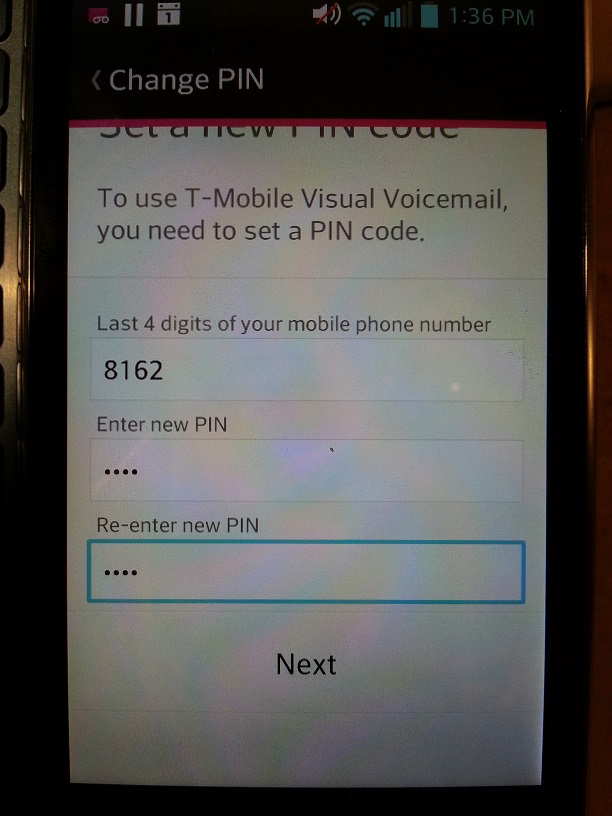
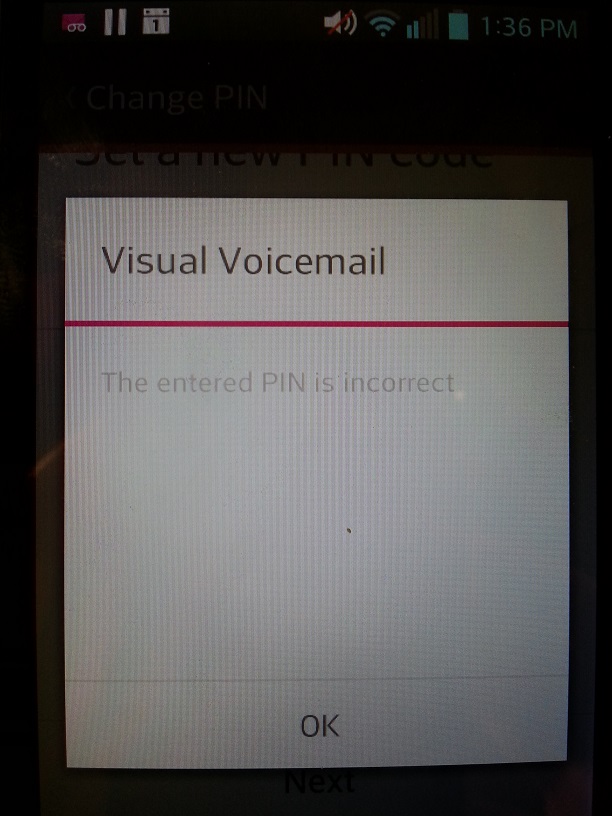
The first time I launched the voice mail application, the app prompted me to freely choose a new PIN code, and then sternly warned me, Mao-like, that my supposedly freely chosen PIN code was "incorrect". (I never got it working, and just called in to the voice mail number manually whenever I wanted to check my messages.)
-
When I bought a movie on Google Play and wanted to "pin" it to the phone -- i.e. download a static, non-streamed copy so that I could watch it offline, e.g. on a plane ride -- the phone didn't have enough internal storage left to save a copy of the movie (1.27 GB, most of it taken up in 1-2 MB increments by crapware already loaded on to the phone, so that only about 200 MB was left). So I tried saving the movie to a 32 GB SD card that I had plugged into the phone, but ran into the problem that Google Play wouldn't let me save the movie to the SD card, a problem described in Joe Levi's 2013 article "Why does Google hate your SD card?" and still not fixed almost a year later. (The comments posted on his article indicate that lots of people are pissed.)
Unlike the other bugs, this may be an example of stupidity not at the testing level but at the design specification level -- perhaps this was done in a misguided effort to prevent illegal copying. But, as Levi says of this theory, "If the DRM being used on Android is sufficient enough for content providers to accept it when media is saved internally, they should also accept it when media is saved to an SD card. Otherwise, the DRM isn't really that trustworthy, is it?" It's pointless from a copy-protection point of view, since anyone who wants to pirate a movie can just download it from various BitTorrent sites anyway; all this "feature" does is alienate people who are trying to pay for a movie legally.
-
In the Messaging (i.e. texting) app, you cannot search for messages by the name of the sender. Your conversations are listed in reverse chronological order by the date of the most recent message in each conversation, but to find a conversation with a particular person, you have to scroll down the entire list of conversations and keep your eyes peeled for the person's name.
- On certain mobile website forms (the Fandango site, for instance, and some others that I don't remember -- it's not clear why this happens on some website forms but not others), the phone won't let me type "special characters", the ones that appear in the upper-right corner of the keyboard keys (so that you can type the "@" symbol by first hitting the "Fn" key to access special characters, and then pressing the "2" key). This means that since I can't type the "@" symbol, I can't log in to any form that requires an email address as a username. (The workaround is to open the Gmail app, find an email address in an email message, copy the "@" symbol from the email address to the clipboard, and then paste it back in the browser form -- yes, I have to do every time I log in to a mobile site that has this problem.)
In my previous phone-suck article about the Samsung Stratosphere, I listed as many problems as I could think of at the time, and I completely forgot the fact that the phone recorded videos without any sound. (I know it wasn't a hardware problem with the microphone, since the phone app picked up my voice fine.) As part of my research into how to ruin Burning Man forever by telling "tourists" how to get there easily, I wanted to post a video of the quintessential Burning Man spectacle that makes all the dust and thirst and heat worthwhile -- and I had to post it with no sound recording, because Samsung's product testing is done by the same drunken bonobos that worked on the LG Optimus.
And both products raise the same question, not rhetorically, but seriously: How did this happen? More specifically, in a theoretical free market, any product improvement that costs only a small amount compared to the benefit it brings to consumers, should be implemented (and consumers will reward the company by paying additional dollars for the improvement, in proportion to the benefit it brings them). While it doesn't always work out that way in practice, it's hard to believe LG couldn't spring for a few English-language testers to point out that the phone shouldn't be correcting you're to you"re.
I think the answer in both cases is that the free market optimizes mainly for things that are easily quantifiable, like camera resolution and network speed, because those can be listed on the packaging and compared against other products. But the amount of stupid s*#t you run into while actually using the phone, is hard to define on an objective scale, so that's the first thing that companies will cut corners on, even if it's something that consumers would be willing to pay money for.
So my solution is still essentially the same as what I proposed after trashing the Stratosphere: Some Consumer-Reports-type outlet should rate phones on a Stupid S*#t Index (along with speed, reception, etc.), based on how much stupid s*#t they run into in a week of typical usage. Ideally the Stupid S*#t Index should be reduced to a number so that you can do a quick comparison between different models. If a cheap phone has a lot of stupid s*#t problems, but you don't mind because you want to save money, that's a valid choice, and if you want to pay more for a phone with less stupid s*#t, that's fine too. But people should know what they're buying.
More generally, I think people vastly overestimate the ability of the free market to meet consumer demand, in cases where the demand is for something that can't be easily quantified. I've spent a fair amount of time in "entrepreneurial" circles (while bouncing back and forth myself between entrepreneurship and regular jobs) and have heard the faithful reciting a lot of platitudes like "The market rewards the best product," or "Focus on building the best product you can make, and the customers will come." But most of them evidently didn't even believe it themselves -- they spent most of their efforts on search engine optimization, running content farms, networking with important business contacts, and other activities that didn't directly relate to the quality of their products. And who could blame them? Since their products weren't competing on qualities that were precisely quantifiable, there was no reason for any of them to try to create the "best" product, or even a particularly good one. And that strategy worked quite well for several of them.
On the other hand, when you're competing on a quantifiable metric like price, the best product or service can shoot straight to the top without wasting any time on zero-sum games like SEO or networking ass-kissery. If you're selling external hard drives on Amazon for $0.01, you'll make a lot of sales. You'll go broke, but in the meantime, the free market will connect you quite effectively with your customers.
So, make the mobile phone Stupid S*@t Index into something quantifiable, and maybe we'll have less stupid s#*t. One review body could publish the average rating from several different reviewers, or several different review bodies could publish their ratings and consumers could weight the averages themselves.
Not that it's a panacea -- I bought the LG Optimus not because it was the cheapest or because I didn't expect it to have bugs, but because it was the only offering with a slide-out keyboard, and I've become addicted to the precision of physical keys. (It is so much easier to let your fingertip feel its way to the right key first, and then actually press the key in a separate motion, rather than having to hope your fingertip lands on the right spot in the first place.) So I never returned the phone, they kept my money, and I suppose that makes me part of the problem.
-
-
The Best Parking Apps You've Never Heard Of and Why You Haven't
Bennett Haselton writes "If you read no further, use either the BestParking or ParkMe app to search all nearby parking garages for the cheapest spot, based on the time you're arriving and leaving. I'm interested in the question of why so few people know about these apps, how is it that they've been partially crowded out by other 'parking apps' that are much less useful, and why our marketplace for ideas and intellectual properly is still so inefficient." Read below to see what Bennett has to say.I casually asked a couple of my friends in Seattle -- where street parking is often unavailable, and parking garages vary widely in price -- if they'd ever heard of an app that would let them find the cheapest available parking garage, based on the time they wanted to enter and the time they planned on leaving. (Street parking is usually cheaper if you can find it, but the app would be useful for times that you can't find any.) Most of my friends said that they'd never heard of such an app, but they'd definitely use one if it existed. I also looked up parking apps on Google but the small subset that I randomly tried out, didn't do what I needed. So I thought about writing a "Somebody-with-more-time-than-me-should-go-and-do-this-thing" article, similar to the ride-swapping piece, when one of my friends casually mentioned the BestParking app.
Well, I tried it and it worked. (Lest I be accused of undue favoritism, ParkMe does the same thing just as well, although I didn't find it until later.) In both apps, you bring up a map centered on your current location, or scroll the map to where you plan on looking for parking later. You enter the time that you'll be entering and leaving, and the app shows a map with each parking garage represented by an icon showing the dollar amount that it will cost to park for that time. Without these apps, comparing rates is an annoyingly complex process to do by hand, in a crowded city like Seattle with many garages with different rates (and different times when their "evening rates" kick in -- usually 5 PM, but ranging from 4 to 7 PM), but the apps factor all of that in to give you the cheapest garage for the given time range. You can tap the individual garage icons for more information (if you plan on returning by 11 PM but you're not sure, you'd probably prefer a 24-hour garage instead of one that locks up at midnight). Also, if you're sitting at your computer and you already know the neighborhood where you'll be parking later, you can do the same search on each of their websites. (Although if you are on your phone, please don't do this from a moving car, duh. In Seattle there are plenty of 3-minute spots where you can pull over and do a search.)
So, I've been quite happy with both apps -- but I thought it was interesting that almost none of my friends had ever heard of them. I threw a quick survey up on Amazon's Mechanical Turk website, which I've used before for crowdsourced surveys and other experiments. I polled 50 people, offering them 25 cents apiece to answer these questions:
Would you use these apps? Section A: Parking garage app
Suppose a website and/or smartphone app existed where you could specify a neighborhood of a city, and enter a start and end time for when you wanted to park, and the app would automatically find the cheapest parking garage for that time range (assuming its too hard to find street parking).
1. Are you aware of any such apps/websites that already exist? If yes, whats the name of the app? (No need to do a web search -- only answer "Yes" if you already know of such an app or website.)
2. Would you use such an app/website if it existed? (Or, if youre aware of such an app that already exists, do you use it?)
Yes/No Section B: Spare room rental app
Suppose a website and/or smartphone app existed where you could list a room in your house as a temporary rental, and visitors to your city could rent it out for a single night, or more.
3. Are you aware of any such apps/websites that already exist? If yes, whats the name of the app? (No need to do a web search -- only answer "Yes" if you already know of such an app or website.)
4. Would you use such an app/website if it existed? (Or, if youre aware of such an app that already exists, do you use it?)
Yes/No
The second section, about a spare room rental app, was thrown in as a control in the experiment -- I knew the answer to that question (AirBnB), and I thought a large portion of the survey-takers would too, so I wanted to make sure they weren't just filling out the survey with blow-off answers to get the 25 cents as fast as possible.
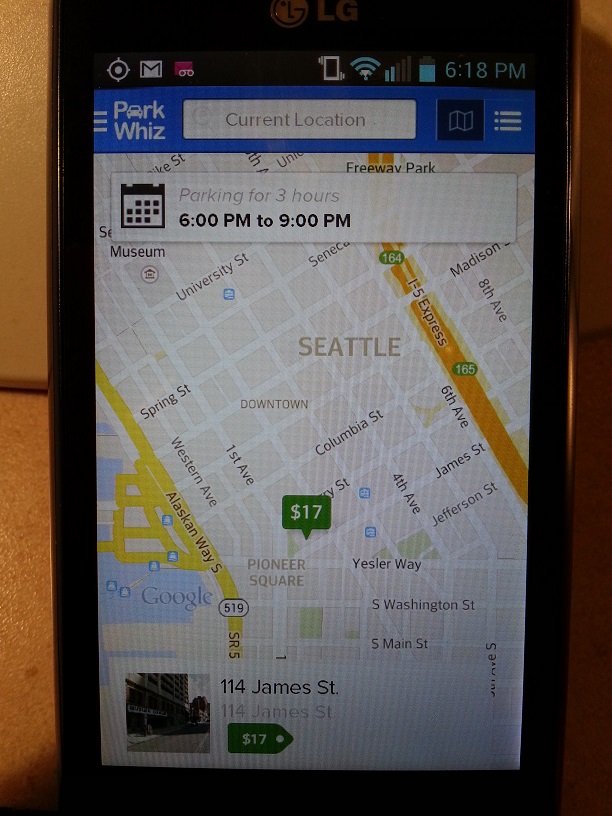
Of the 50 people who filled out the survey, 14 of them said they had heard of using AirBnB, Couchsurfing, or Craigslist for the purpose of renting out a room or finding one to rent (almost all of them mentioned AirBnB specifically). But of the same 50 respondents, only two of them mentioned any parking apps that they had heard of, and only one of them mentioned one of the two that I'd found which actually worked. (The other person mentioned an app called ParkWhiz, which, when I tested it out, only displayed one $17 parking garage in a neighborhood where I know of several $5 garages, which BestParking and ParkMe did list correctly.)
This seems to confirm the anecdotal evidence from my survey of my Seattle friends -- there is a great deficiency in awareness of these apps, relative to how useful people would find them if they knew about them.
So how is it that people are finding -- or not finding -- these apps? In a Google search for "parking app", the first result was an ad for ParkWhiz. BestParking and ParkMe did show up in the results, but so did another one called Parker, as well as a Mashable article by Kate Freeman listing "7 City Parking Apps to Save You Time, Money and Gas". Of the apps listed in the article, the only city-specific one that worked in Seattle (PrimoSpot) has been discontinued, and of the non-city-specific ones, only Parker is still around. (The article doesn't even mention BestParking or ParkMe, although I don't know if they existed when it was written.) Finally, a friend in my survey told me about an app called Parkopedia, which has over 100,000 downloads on Google Play (the same as BestParking, and more than ParkMe).
So even if it did occur to you to look for a parking-garage-finding app, the problem is that if you randomly picked one of the five most popular parking apps (BestParking, Parker, ParkMe, Parkopedia, and ParkWhiz), you might accidentally pick one of the three out of five that is a fail:
-
ParkWhiz, as noted above, only showed one $17 garage in a neighborhood full of other, cheaper garages.
-
Both ParkMe and Parkopedia display their results as a map with an icon marking each parking garage -- but with no price information. Simply having a map of parking garage locations isn't too useful, since you could get that by searching Google Maps for "parking" anyway. In both apps, you can click on parking garage icons to bring up a window showing their rates, but in Parker most of the listed garages just said "Contact facility for current rates". Parkopedia did usually display the rates for different garages -- but it's a pain to click on each of a dozen parking garage icons looking for the cheapest one. A typical area of downtown Seattle will have one garage where you can park for $5 for the evening, surrounded by garages where parking costs $10 or more, but Parkopedia doesn't make it easy to find it. And neither app lets you specify a start and end time for your parking so that you can find the cheapest garage for that time range.
So it seems odd that according to the Google Play store, Parkopedia has more downloads than ParkMe (100,000+ vs 50,000+), even though ParkMe seems a lot more useful. Meanwhile ParkWhiz, the one that found only one overpriced parking garage in a neighborhood full of cheaper ones, has fewer downloads but a slightly higher star rating in the app store than ParkMe. Of course in my parking-app survey of friends and Mechanical Turk users, the far-and-a-way winner was simply not knowing that any of these apps existed at all.
And here's why it matters to you even if you ride a granola-powered bike to work: I think this is a confirming instance of what I've been arguing for years, that the marketplace for ideas, inventions, and intellectual property is far less efficient than most people think it is. Every day a huge amount of human capital is squandered by people trying to jostle their competitors out of Google search results, or even just trying to raise the capital to advertise their products to people who would find them extremely useful, but will never find out about it if the venture capitalists don't come through with the money to advertise it. All of that is time and effort that could have instead gone towards making the products better.
I've suggested an algorithm based on "random-sample voting" as an antidote to some of these market inefficiencies, such as stopping people from buying votes on Digg, promoting the best ideas on Obama's "We The People" petition website, or even deciding whether J.K. Rowling is the world's greatest author or just lucky. Basically, in each scenario, the competing entities -- whether apps, or songs, or ideas for improving U.S. government policy -- would be rated by a sufficiently large random sample of qualified raters. ("Qualified raters" might mean economists in the case of the White House policy-petition website, or it might mean music consumers in the case of an algorithm to find the best new songs.) Each entity would receive an average rating from those raters, and then the entities with the highest average rating would be the ones promoted to the widest audience (at the top of Google search results, for example). It sounds deceptively simple, but it's far less amenable to "gaming the system", because you can't rope in your friends to vote for your app, or pay voters to rate you highly on Digg. The only way to win in this system is to make your song, idea, or app, the best that it can be -- which means your human capital is being channeled productively, instead of being wasted hiring an SEO company to try and knock your competition out of the top spot on Google.
If competition between parking apps worked this way, then all the current users of Parker, ParkWhiz and Parkopedia, would switch to BestParking and ParkMe, saving themselves a lot of hassle in the process, and those second-rate apps would have never even gotten on the ground unless they got their act together and implemented the same features. More broadly, if competition in the marketplace of ideas worked this way, then there wouldn't be so many users who really wish they could have an app like this, without realizing that the apps exist!
One striking thing about looking at a map of downtown parking garages, is how wildly the rates vary from each other, with $15 garages situated right next to the $5 ones. In theory, in a competitive marketplace, such rates should stabilize around a single price, for goods that are roughly comparable. But the $10 lots do still manage to get some customers who don't know any better, because it's just not practical to criss-cross a grid of several dozen city blocks looking for the cheapest garage. BestParking and ParkMe help people deal with this inefficient marketplace. So it's ironic that they're being held back by a marketplace for ideas that operates just as inefficiently in its own way.
-
-
If Ridesharing Is Banned, What About Ride-Trading?
Bennett Haselton writes "The city of Seattle just imposed new limits on commercial app-based ride-sharing companies like Uber and Lyft, effectively protecting taxi companies from low-cost competition in the form of smartphone apps. If other cities follow suit, could a company help ridesharers circumvent the restrictions by creating a ride-trading app, allowing drivers to earn 'miles' by driving passengers, and redeem those miles later to get rides for themselves?" Continue reading below to see what Bennett has to say.The cab companies got Seattle to crack down on ridesharing companies by arguing that by letting drivers charge money for rides, they were essentially operating illegal unlicensed taxi services. So it's not hard to imagine other cities taking similar action on the same ambiguous legal grounds, as Los Angeles did in sending cease-and-desist notices to Uber, Lyft and Sidecar, ordering them to stop operating entirely.
I tried some of these services and actually never saw what the big deal was. Much of the time, they were almost as expensive as taxis, much too pricey to use on a regular basis, and I would never use them unless my own poor planning left me somewhere without my own car and desperate somewhere faster than public transit could take me. Perhaps cab companies were afraid of where the services were eventually headed -- especially towards a model where drivers could set their own prices. As far as I know, currently all ridesharing services set a minimum price per mile and don't let drivers set their rate any lower. But many drivers would probably be willing to drive at a price lower than what the app allows, and a set-your-own-price model probably really would put the cab companies out of business.
Perhaps some cities will take a more benign view of ridesharing in the long run, but as long as money is changing hands, (1) the city will certainly view it as within their rights to regulate the ridesharing industry, and (2) taxi companies will be able to argue, not unreasonably, that the companies are effectively running unlicensed taxi services. Of course the real solution would be for cities to stop limiting the supply of taxi medallions and artificially enriching cab companies at everyone else's expense (if the city's concern is with rider "safety", they could increase the number of taxi medallions while still requiring all drivers to take safety training). But that doesn't seem likely to happen any time soon. So instead, what if a company created an app that attempted to circumvent the legal restrictions, by allowing users to trade rides -- not for cash, but for returning the favor?
Here's how it could work: When you sign up as a new user, you have a "miles" balance of zero. (The very first users of the system would have to start out with a nonzero balance, so that there are some units in the system to trade, but everyone who joins after that starts at zero.) You have to earn miles by giving someone else a ride before you can redeem your miles by getting a ride yourself. So you log in as a driver, and some other user "hails" you through their smartphone app, much as riders hail drivers through Uber or Lyft. You pick up a passenger and give them a ride to their destination, and at the end of the journey, they transfer a number of "miles" to you indicating how far you drove them. You now have a positive miles balance, and you can "spend" it by hailing a ride yourself later on. Drivers and riders could leave ratings for each other just as they do on Uber and Lyft. What Couchsurfing is to Airbnb, this service would be to Uber.
Since no money is changing hands, the arrangements would presumably not be covered by existing taxi statutes. You could even make an argument that a city couldn't pass a law regulating these ride-trades even if they wanted to, because as voluntary arrangements between consenting parties, they're protected under our First Amendment right of freedom of association! Of course, libertarians believe all commercial transactions between consenting parties ought to be exempt from regulation as well, but most state and local governments take a dim view of that premise. However, take money out of the equation, and you're on much stronger ground that your ride-trading arrangements aren't covered by existing laws.
(It is of course silly and inconsistent that the law often forbids selling something for money, but allows trading it for something of "value", or permits it if the nature of the trade is not made explicitly clear. If a girl sleeps with you and you occasionally "lend" her money, she's a high-maintenance girlfriend, but if she ever does you the courtesy of spelling out the arrangement explicitly, she's a prostitute and can go to jail. But as long as the government makes those silly and arbitrary distinctions, we might as well use them when they count in our favor.)
Would ride-trading with strangers be safe? Well, when a rider pages a driver, the system could tell the rider the license plate of the car associated with that driver's profile, so unless the driver was in a stolen car, the system would always have a record of the license plate (and, hence, the owner) of any car that picked up a passenger. More generally, if I were a user in a system like this and someone told me it sounded unsafe, I would just say the same thing I always say about Couchsurfing (where I've hosted over 50 people with no bad experiences). Namely: "Look, have you or any of your friends ever gone home with someone you met at a bar? And that's fine, I'm not judging you, I'm just saying that was a hell of a lot more risky than meeting up with someone in a system where you can read other people's references." Besides, in many cities there's already thriving subculture of slugging -- picking up total strangers so you can use the carpool lane and they get a free ride.
I feel like I would be happy to have this ride-trading service available if I ever wanted a quick ride across town and didn't have my car. The only "cost" to me would be the cost of giving someone an equal-length ride at some other point in time when I wasn't in a hurry. (Or even giving someone a lift to a place that I was already going.) It's an efficient transaction because it lets me spend miles when my time is valuable, and then rack up the miles later on when I have some time to kill that's not as valuable. You can realize even more efficiencies by letting people pay "premium rates" for periods when demand is high (Friday and Saturday nights) or supply is low (early mornings when people need rides to the airport), so that the balance of miles that you pay for a ride may be greater than the actual number of miles traveled.
On the other hand, there's an inefficiency in that the system cannot serve the needs of people who want a ride, but whose time is too valuable to spend it driving in order to "earn" the miles to redeem for the ride. This is a limitation in any system that bans money as a means of trade and only lets you trade a service for a repayment-in-kind of the same service.
To environmentalists who would object that this promotes greater car usage: First of all, it might result in more impromptu car pooling over routes that were being inadequately served by buses, in which case the passengers were going to have to take cars anyway, so they might as well be piled into fewer of them. But in any case, I would actually take the bus more if a service like this existed. I live in Bellevue, about a 20-minute bus ride outside of Seattle, and I'd gladly take the bus in to Seattle if I was going to a specific destination close to the bus line, and knew I was coming right back afterwards. The problem is that once I'm in Seattle, if I want to get to some other arbitrary destination in Seattle, taking public transit is slow and annoying (and, you may have heard, often involves some waiting around in the rain). I drive my car in to Seattle not because I want to drive to the city, but in order to have a car while I'm there. If I could summon a ride in under two minutes to take me anywhere else in the city (with the only price being to return the favor to someone else later), I wouldn't need my car and could take the bus downtown.
So, even assuming a service like this would be useful, why would a company create it? We know how Airbnb and Uber make money, by skimming a cut off of each transaction. But how would a company make money just by connecting riders and drivers for complimentary rides through a free app? Well, Couchsurfing connects users for free stays in each other's houses, and they got venture capitalists to invest $22 million. The thinking seems to be that if even a free a service has enough users, it must be worth something.
The major obstacle to deploying the system, is that the system would require a critical mass of users in any given city, before it could become effective. If there aren't enough drivers active in the city, then hailing a ride would take so long that after factoring in the delay, you might as well have taken the bus. You'd need enough drivers active to be reasonably sure that in any given neighborhood, you can catch a ride quickly -- and for the drivers have to be out in force, they have to know that there's a critical mass of riders who are ready to offer some miles in their balance for rides. Services that require a critical mass of users in order to be successful, are notoriously hard to get off the ground. If the project had the feeling of a social movement behind it -- in the spirit of resource sharing, as well as environmental friendliness insofar as people like me would be more likely to start using the bus -- perhaps the founders could sign up a base of users over time, prior to actually launching the service. And then once the number of enrolled users was large enough, could launch the live service with a critical mass of users already in place. (Of course, if they tried that out here, this being Seattle, most of those enrolled users who said they would show up, would probably flake out.)
-
If Ridesharing Is Banned, What About Ride-Trading?
Bennett Haselton writes "The city of Seattle just imposed new limits on commercial app-based ride-sharing companies like Uber and Lyft, effectively protecting taxi companies from low-cost competition in the form of smartphone apps. If other cities follow suit, could a company help ridesharers circumvent the restrictions by creating a ride-trading app, allowing drivers to earn 'miles' by driving passengers, and redeem those miles later to get rides for themselves?" Continue reading below to see what Bennett has to say.The cab companies got Seattle to crack down on ridesharing companies by arguing that by letting drivers charge money for rides, they were essentially operating illegal unlicensed taxi services. So it's not hard to imagine other cities taking similar action on the same ambiguous legal grounds, as Los Angeles did in sending cease-and-desist notices to Uber, Lyft and Sidecar, ordering them to stop operating entirely.
I tried some of these services and actually never saw what the big deal was. Much of the time, they were almost as expensive as taxis, much too pricey to use on a regular basis, and I would never use them unless my own poor planning left me somewhere without my own car and desperate somewhere faster than public transit could take me. Perhaps cab companies were afraid of where the services were eventually headed -- especially towards a model where drivers could set their own prices. As far as I know, currently all ridesharing services set a minimum price per mile and don't let drivers set their rate any lower. But many drivers would probably be willing to drive at a price lower than what the app allows, and a set-your-own-price model probably really would put the cab companies out of business.
Perhaps some cities will take a more benign view of ridesharing in the long run, but as long as money is changing hands, (1) the city will certainly view it as within their rights to regulate the ridesharing industry, and (2) taxi companies will be able to argue, not unreasonably, that the companies are effectively running unlicensed taxi services. Of course the real solution would be for cities to stop limiting the supply of taxi medallions and artificially enriching cab companies at everyone else's expense (if the city's concern is with rider "safety", they could increase the number of taxi medallions while still requiring all drivers to take safety training). But that doesn't seem likely to happen any time soon. So instead, what if a company created an app that attempted to circumvent the legal restrictions, by allowing users to trade rides -- not for cash, but for returning the favor?
Here's how it could work: When you sign up as a new user, you have a "miles" balance of zero. (The very first users of the system would have to start out with a nonzero balance, so that there are some units in the system to trade, but everyone who joins after that starts at zero.) You have to earn miles by giving someone else a ride before you can redeem your miles by getting a ride yourself. So you log in as a driver, and some other user "hails" you through their smartphone app, much as riders hail drivers through Uber or Lyft. You pick up a passenger and give them a ride to their destination, and at the end of the journey, they transfer a number of "miles" to you indicating how far you drove them. You now have a positive miles balance, and you can "spend" it by hailing a ride yourself later on. Drivers and riders could leave ratings for each other just as they do on Uber and Lyft. What Couchsurfing is to Airbnb, this service would be to Uber.
Since no money is changing hands, the arrangements would presumably not be covered by existing taxi statutes. You could even make an argument that a city couldn't pass a law regulating these ride-trades even if they wanted to, because as voluntary arrangements between consenting parties, they're protected under our First Amendment right of freedom of association! Of course, libertarians believe all commercial transactions between consenting parties ought to be exempt from regulation as well, but most state and local governments take a dim view of that premise. However, take money out of the equation, and you're on much stronger ground that your ride-trading arrangements aren't covered by existing laws.
(It is of course silly and inconsistent that the law often forbids selling something for money, but allows trading it for something of "value", or permits it if the nature of the trade is not made explicitly clear. If a girl sleeps with you and you occasionally "lend" her money, she's a high-maintenance girlfriend, but if she ever does you the courtesy of spelling out the arrangement explicitly, she's a prostitute and can go to jail. But as long as the government makes those silly and arbitrary distinctions, we might as well use them when they count in our favor.)
Would ride-trading with strangers be safe? Well, when a rider pages a driver, the system could tell the rider the license plate of the car associated with that driver's profile, so unless the driver was in a stolen car, the system would always have a record of the license plate (and, hence, the owner) of any car that picked up a passenger. More generally, if I were a user in a system like this and someone told me it sounded unsafe, I would just say the same thing I always say about Couchsurfing (where I've hosted over 50 people with no bad experiences). Namely: "Look, have you or any of your friends ever gone home with someone you met at a bar? And that's fine, I'm not judging you, I'm just saying that was a hell of a lot more risky than meeting up with someone in a system where you can read other people's references." Besides, in many cities there's already thriving subculture of slugging -- picking up total strangers so you can use the carpool lane and they get a free ride.
I feel like I would be happy to have this ride-trading service available if I ever wanted a quick ride across town and didn't have my car. The only "cost" to me would be the cost of giving someone an equal-length ride at some other point in time when I wasn't in a hurry. (Or even giving someone a lift to a place that I was already going.) It's an efficient transaction because it lets me spend miles when my time is valuable, and then rack up the miles later on when I have some time to kill that's not as valuable. You can realize even more efficiencies by letting people pay "premium rates" for periods when demand is high (Friday and Saturday nights) or supply is low (early mornings when people need rides to the airport), so that the balance of miles that you pay for a ride may be greater than the actual number of miles traveled.
On the other hand, there's an inefficiency in that the system cannot serve the needs of people who want a ride, but whose time is too valuable to spend it driving in order to "earn" the miles to redeem for the ride. This is a limitation in any system that bans money as a means of trade and only lets you trade a service for a repayment-in-kind of the same service.
To environmentalists who would object that this promotes greater car usage: First of all, it might result in more impromptu car pooling over routes that were being inadequately served by buses, in which case the passengers were going to have to take cars anyway, so they might as well be piled into fewer of them. But in any case, I would actually take the bus more if a service like this existed. I live in Bellevue, about a 20-minute bus ride outside of Seattle, and I'd gladly take the bus in to Seattle if I was going to a specific destination close to the bus line, and knew I was coming right back afterwards. The problem is that once I'm in Seattle, if I want to get to some other arbitrary destination in Seattle, taking public transit is slow and annoying (and, you may have heard, often involves some waiting around in the rain). I drive my car in to Seattle not because I want to drive to the city, but in order to have a car while I'm there. If I could summon a ride in under two minutes to take me anywhere else in the city (with the only price being to return the favor to someone else later), I wouldn't need my car and could take the bus downtown.
So, even assuming a service like this would be useful, why would a company create it? We know how Airbnb and Uber make money, by skimming a cut off of each transaction. But how would a company make money just by connecting riders and drivers for complimentary rides through a free app? Well, Couchsurfing connects users for free stays in each other's houses, and they got venture capitalists to invest $22 million. The thinking seems to be that if even a free a service has enough users, it must be worth something.
The major obstacle to deploying the system, is that the system would require a critical mass of users in any given city, before it could become effective. If there aren't enough drivers active in the city, then hailing a ride would take so long that after factoring in the delay, you might as well have taken the bus. You'd need enough drivers active to be reasonably sure that in any given neighborhood, you can catch a ride quickly -- and for the drivers have to be out in force, they have to know that there's a critical mass of riders who are ready to offer some miles in their balance for rides. Services that require a critical mass of users in order to be successful, are notoriously hard to get off the ground. If the project had the feeling of a social movement behind it -- in the spirit of resource sharing, as well as environmental friendliness insofar as people like me would be more likely to start using the bus -- perhaps the founders could sign up a base of users over time, prior to actually launching the service. And then once the number of enrolled users was large enough, could launch the live service with a critical mass of users already in place. (Of course, if they tried that out here, this being Seattle, most of those enrolled users who said they would show up, would probably flake out.)
-
If Ridesharing Is Banned, What About Ride-Trading?
Bennett Haselton writes "The city of Seattle just imposed new limits on commercial app-based ride-sharing companies like Uber and Lyft, effectively protecting taxi companies from low-cost competition in the form of smartphone apps. If other cities follow suit, could a company help ridesharers circumvent the restrictions by creating a ride-trading app, allowing drivers to earn 'miles' by driving passengers, and redeem those miles later to get rides for themselves?" Continue reading below to see what Bennett has to say.The cab companies got Seattle to crack down on ridesharing companies by arguing that by letting drivers charge money for rides, they were essentially operating illegal unlicensed taxi services. So it's not hard to imagine other cities taking similar action on the same ambiguous legal grounds, as Los Angeles did in sending cease-and-desist notices to Uber, Lyft and Sidecar, ordering them to stop operating entirely.
I tried some of these services and actually never saw what the big deal was. Much of the time, they were almost as expensive as taxis, much too pricey to use on a regular basis, and I would never use them unless my own poor planning left me somewhere without my own car and desperate somewhere faster than public transit could take me. Perhaps cab companies were afraid of where the services were eventually headed -- especially towards a model where drivers could set their own prices. As far as I know, currently all ridesharing services set a minimum price per mile and don't let drivers set their rate any lower. But many drivers would probably be willing to drive at a price lower than what the app allows, and a set-your-own-price model probably really would put the cab companies out of business.
Perhaps some cities will take a more benign view of ridesharing in the long run, but as long as money is changing hands, (1) the city will certainly view it as within their rights to regulate the ridesharing industry, and (2) taxi companies will be able to argue, not unreasonably, that the companies are effectively running unlicensed taxi services. Of course the real solution would be for cities to stop limiting the supply of taxi medallions and artificially enriching cab companies at everyone else's expense (if the city's concern is with rider "safety", they could increase the number of taxi medallions while still requiring all drivers to take safety training). But that doesn't seem likely to happen any time soon. So instead, what if a company created an app that attempted to circumvent the legal restrictions, by allowing users to trade rides -- not for cash, but for returning the favor?
Here's how it could work: When you sign up as a new user, you have a "miles" balance of zero. (The very first users of the system would have to start out with a nonzero balance, so that there are some units in the system to trade, but everyone who joins after that starts at zero.) You have to earn miles by giving someone else a ride before you can redeem your miles by getting a ride yourself. So you log in as a driver, and some other user "hails" you through their smartphone app, much as riders hail drivers through Uber or Lyft. You pick up a passenger and give them a ride to their destination, and at the end of the journey, they transfer a number of "miles" to you indicating how far you drove them. You now have a positive miles balance, and you can "spend" it by hailing a ride yourself later on. Drivers and riders could leave ratings for each other just as they do on Uber and Lyft. What Couchsurfing is to Airbnb, this service would be to Uber.
Since no money is changing hands, the arrangements would presumably not be covered by existing taxi statutes. You could even make an argument that a city couldn't pass a law regulating these ride-trades even if they wanted to, because as voluntary arrangements between consenting parties, they're protected under our First Amendment right of freedom of association! Of course, libertarians believe all commercial transactions between consenting parties ought to be exempt from regulation as well, but most state and local governments take a dim view of that premise. However, take money out of the equation, and you're on much stronger ground that your ride-trading arrangements aren't covered by existing laws.
(It is of course silly and inconsistent that the law often forbids selling something for money, but allows trading it for something of "value", or permits it if the nature of the trade is not made explicitly clear. If a girl sleeps with you and you occasionally "lend" her money, she's a high-maintenance girlfriend, but if she ever does you the courtesy of spelling out the arrangement explicitly, she's a prostitute and can go to jail. But as long as the government makes those silly and arbitrary distinctions, we might as well use them when they count in our favor.)
Would ride-trading with strangers be safe? Well, when a rider pages a driver, the system could tell the rider the license plate of the car associated with that driver's profile, so unless the driver was in a stolen car, the system would always have a record of the license plate (and, hence, the owner) of any car that picked up a passenger. More generally, if I were a user in a system like this and someone told me it sounded unsafe, I would just say the same thing I always say about Couchsurfing (where I've hosted over 50 people with no bad experiences). Namely: "Look, have you or any of your friends ever gone home with someone you met at a bar? And that's fine, I'm not judging you, I'm just saying that was a hell of a lot more risky than meeting up with someone in a system where you can read other people's references." Besides, in many cities there's already thriving subculture of slugging -- picking up total strangers so you can use the carpool lane and they get a free ride.
I feel like I would be happy to have this ride-trading service available if I ever wanted a quick ride across town and didn't have my car. The only "cost" to me would be the cost of giving someone an equal-length ride at some other point in time when I wasn't in a hurry. (Or even giving someone a lift to a place that I was already going.) It's an efficient transaction because it lets me spend miles when my time is valuable, and then rack up the miles later on when I have some time to kill that's not as valuable. You can realize even more efficiencies by letting people pay "premium rates" for periods when demand is high (Friday and Saturday nights) or supply is low (early mornings when people need rides to the airport), so that the balance of miles that you pay for a ride may be greater than the actual number of miles traveled.
On the other hand, there's an inefficiency in that the system cannot serve the needs of people who want a ride, but whose time is too valuable to spend it driving in order to "earn" the miles to redeem for the ride. This is a limitation in any system that bans money as a means of trade and only lets you trade a service for a repayment-in-kind of the same service.
To environmentalists who would object that this promotes greater car usage: First of all, it might result in more impromptu car pooling over routes that were being inadequately served by buses, in which case the passengers were going to have to take cars anyway, so they might as well be piled into fewer of them. But in any case, I would actually take the bus more if a service like this existed. I live in Bellevue, about a 20-minute bus ride outside of Seattle, and I'd gladly take the bus in to Seattle if I was going to a specific destination close to the bus line, and knew I was coming right back afterwards. The problem is that once I'm in Seattle, if I want to get to some other arbitrary destination in Seattle, taking public transit is slow and annoying (and, you may have heard, often involves some waiting around in the rain). I drive my car in to Seattle not because I want to drive to the city, but in order to have a car while I'm there. If I could summon a ride in under two minutes to take me anywhere else in the city (with the only price being to return the favor to someone else later), I wouldn't need my car and could take the bus downtown.
So, even assuming a service like this would be useful, why would a company create it? We know how Airbnb and Uber make money, by skimming a cut off of each transaction. But how would a company make money just by connecting riders and drivers for complimentary rides through a free app? Well, Couchsurfing connects users for free stays in each other's houses, and they got venture capitalists to invest $22 million. The thinking seems to be that if even a free a service has enough users, it must be worth something.
The major obstacle to deploying the system, is that the system would require a critical mass of users in any given city, before it could become effective. If there aren't enough drivers active in the city, then hailing a ride would take so long that after factoring in the delay, you might as well have taken the bus. You'd need enough drivers active to be reasonably sure that in any given neighborhood, you can catch a ride quickly -- and for the drivers have to be out in force, they have to know that there's a critical mass of riders who are ready to offer some miles in their balance for rides. Services that require a critical mass of users in order to be successful, are notoriously hard to get off the ground. If the project had the feeling of a social movement behind it -- in the spirit of resource sharing, as well as environmental friendliness insofar as people like me would be more likely to start using the bus -- perhaps the founders could sign up a base of users over time, prior to actually launching the service. And then once the number of enrolled users was large enough, could launch the live service with a critical mass of users already in place. (Of course, if they tried that out here, this being Seattle, most of those enrolled users who said they would show up, would probably flake out.)