Slashdot Mirror
Domain: earth911.com
Stories and comments across the archive that link to earth911.com.
Comments · 14
-
Re:Nicole Foss on renewables
Which is a non sequitur as in my straw man argument.
FTFY.
PV panels produce less than 80% of their original electrical output after 20-25 years but they still produce electricity. However, they are also made of highly recyclable materials, so it's really just re-manufacturing the panels when you are done with them.
So highly recyclable that the US still lack an infrastructure to recycle them. In the EU, PV panels are recycled because it is mandatory by law. In the US, an expert of solar energy technology at the Electric Power Research Institute said: "Either [PV recycling] becomes economical or it gets mandated. But I’ve heard that it will have to be mandated because it won’t ever be economical."
Sure, it's not done because it's economical and it's not economical because pollution isn't taxed and therefore costs less to just pollute and make new ones. Tax pollution and recycling suddenly becomes economical. Are you seeing a trend here? Pollution is the problem.
-
Re:Nicole Foss on renewables
It means that once it's manufactured, there is no part of it's operation that pollutes.
Which is a non sequitur as in the example of the plastic forks and steel forks. By the way, in the European Union plastic cutlery will be banned by 2021 (steel cutlery is still fine).
PV panels produce less than 80% of their original electrical output after 20-25 years but they still produce electricity. However, they are also made of highly recyclable materials, so it's really just re-manufacturing the panels when you are done with them.
So highly recyclable that the US still lack an infrastructure to recycle them. In the EU, PV panels are recycled because it is mandatory by law. In the US, an expert of solar energy technology at the Electric Power Research Institute said: "Either [PV recycling] becomes economical or it gets mandated. But I’ve heard that it will have to be mandated because it won’t ever be economical."
There is also a peer reviewed article[YanXu 2018] on the matter. It states: "At present, from the technical aspect, the research on solar panel recovery is facing many problems, and we need to further develop an economically feasible and non-toxic technology".it is all politics.
Only in the imaginary world where science doesn't matter and Earth gets warmer because it feels loved.
Yawn... politics.
-
Re:Excellent! But no nuclear?
So, you can't be bothered to find a citation so you shout the lie louder.
My citations:
http://www.greenmatch.co.uk/bl...Silicon powder is useful in cast iron foundries but it cannot be reused for the construction of new photovoltaic cells as it still contains a certain percentage of glass.
http://earth911.com/eco-tech/r...
Panels contain metals, such as lead, copper, gallium and cadmium; an aluminum frame
I'm pretty sure that lead and cadmium are heavy metal that people don't want in their drinking water.
These are recent articles so you can try to tell me someone figured it out since then but I won't believe you unless you give a citation.
how dumb do you think I am?
Do you really want an answer?
-
Re:Get Real
With lead acid, you recycle. Lead acid car batteries have ~98% recycle rate.
-
Re:Big Oil is Dancing
-
Re:Big Oil is Dancing
-
Re:It's the stigma
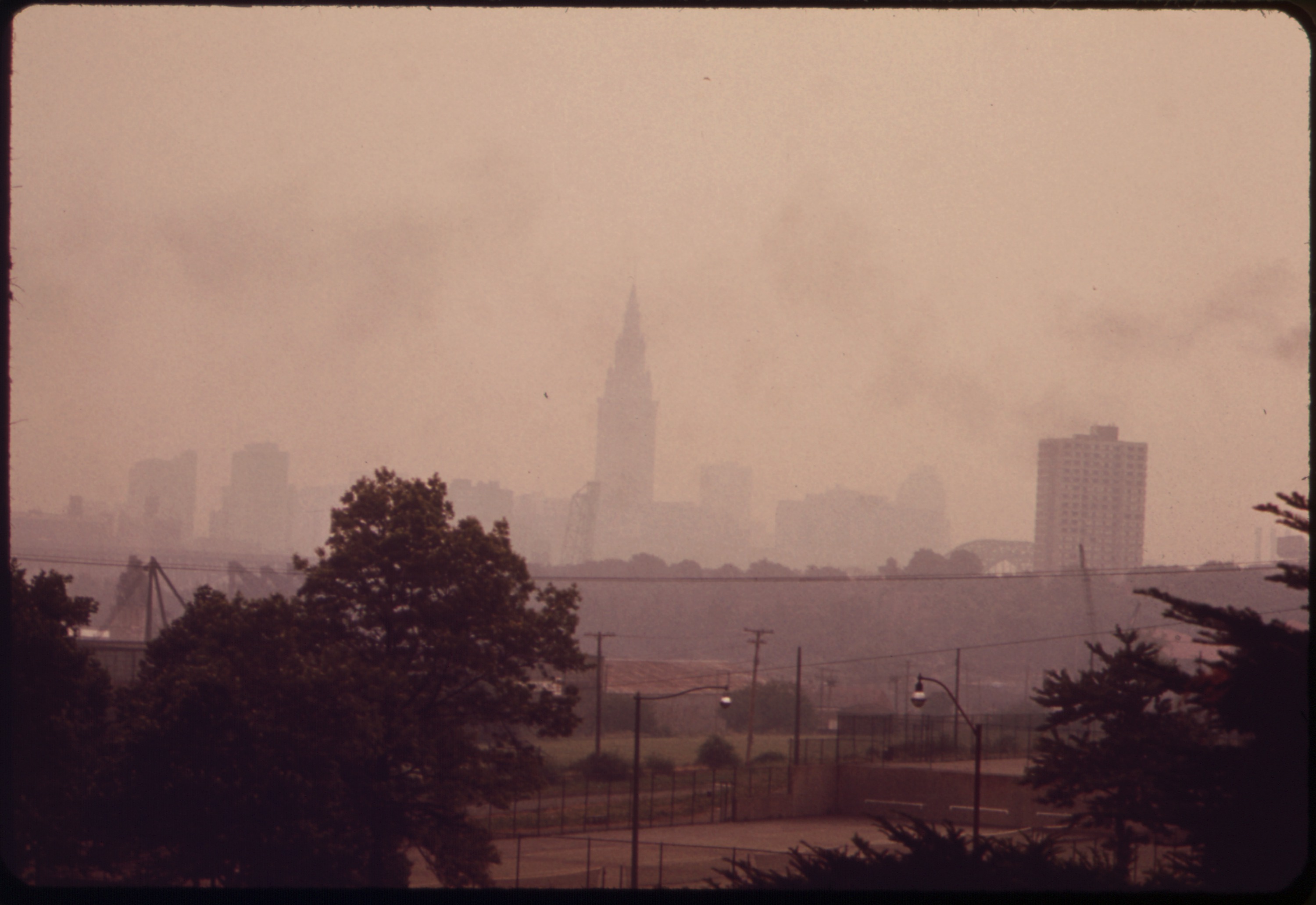
I don't know about 1990, but we definitely had some pretty nasty air pollution about 40-60 years ago. When I was < 10 and growing up in Ohio circa 1980, I remember that air pollution was pretty much everywhere, even in smaller cities, like the Warren-Youngstown-Sharon area roughly halfway between Cleveland and Pittsburgh. My first "omg" memory of Florida was looking up during recess one day about a month after we moved there, and freaking out because I could see the full moon in broad daylight. That was something you never, EVER saw in Ohio. Or at least something *I* had no memory of ever seeing.
Hell, I spent July 5, 1994 in New York, and remember BARELY being able to see the Twin Towers from Midtown. The whole city smelled like a burning log in a fireplace. Likewise, I spent a week in Los Angeles sometime in August 1996, and remember driving into L.A. on LaCienega drive... I made it over the mountain, and saw the famous vista with LA (well, OK, I guess it was actually Beverly Hills) spread out in front of me... except you couldn't actually see anything except faint rooftops a mile or two away, and a sea of opaque smog. In LA's defense, though, its smog didn't really have any particular odor. It was opaque to a degree I'd never seen in my life, but other than obscuring most of the views, it didn't really bother me.
Anyway, onto the pics:
Pittsburgh, 1948... during the DAY: http://bike-pgh.org/wp-content/uploads/2009/10/smog1.jpg
Cleveland, 1973: http://upload.wikimedia.org/wikipedia/commons/8/83/CLEVELAND_SKYLINE_IN_THE_SMOG_OF_JULY_20%2C_1973%2C_DAY_OF_POLLUTION_ALERT_-_NARA_-_550190.jpg
New York, 1972: http://earth911.com/wp-content/uploads/2012/04/Smog-1970s.jpg
Los Angeles, 1948: http://cdn.theatlantic.com/static/mt/assets/jamesfallows/los-angeles-smog_53499058.jpg
Manhattan, 1966: http://www.flickr.com/photos/wavz13/4083896787/
-
Re:Oh good grief.
Because when you divert 75% of compostables and recyclables out of the landfill, not only do you need 75% less landfills, but you can afford to build them better.
Oh, yeah...that sounds like something that will actually happen.
What? 75% diversion? San francisco is at 77%, Seattle hit 53% in 2010 with a goal of 60% in 2012. Single family homes were at a 70% diversion rates in Seattle in 2010.
-
Re:How much offset?
http://earth911.com/news/2009/07/01/sears-tower-retrofit-to-reduce-energy-use/
Says 80% reduction in energy use equal to 52 million kWh per year. So in other words 65 million kWh per year.
65 million kWh / 365 days
~= 178,000 kWh per day.
~= 7.4 megawatt average draw.That means the solar panels would contribute about 27% of the buildings pre-existing power requirements.
Additional energy efficiency efforts I guess will contribute the other 43%,
-
Re:Great
Only if the net output of the solar cells over their projected lifetime exceeds the energy costs to manufacture them and affix them to the side of the building.
Which, since they are conducting an extensive remodel of the building to improve energy efficiency including replacing the single-pane windows anyway, they most likely will, that makes it a good decision.
Just because something can be done doesn't mean it should be -- a good engineer looks for the most efficient means of accomplishing the objective.
Exactly, and that often means making use of multiple techniques in concert, including some smaller optimizations that nevertheless contribute to the overall objective, and ideally take advantage of changes you're already making. For example, you might see that one of the biggest improvements you can make to the building is to replace all the old poorly insulated windows with new efficient ones. And then you can look at whether or not in-window solar would be worth it in the context of having already decided to replace all the windows.
-
Re:Will it deliver?
They are http://earth911.com/news/2009/07/01/sears-tower-retrofit-to-reduce-energy-use/
The solar windows appear to be an afterthought, or more likely, they were replacing the windows anyway, and this just became possible.
-
Re:Exactly
Here you go, no Photoshop necessary.
-
Recycle.
I've been using cartridge stores like Cartridge World. Overall, the ink there is much cheaper. However, the best thing you can do is call up your local recycling center and see if they take e-waste. More so, a simple Google reveals that many manufacturers will take back their own product for recycling. Even if they're not listed, it wouldn't hurt to contact the manufacturer to see what programs they have in place.
-
Demand for dimmer switches
Honestly we NEED a led light bulb that will DIM acceptably for people.
OK, I'm down with this. A low energy consumption dimmable bulb would be a useful thing indeed.
...most people want to be able to use dimmers
"Most"? Really? I think your argument ran off the rails here. There is nothing preventing people from using dimmer switches now - they just can't use most CFLs in those sockets. I think "most" people don't really care and the evidence for that is that CFL bulbs, which generally aren't dimmable, are selling like hotcakes and increasing rapidly. Many houses might have some dimmers but usually not everywhere. That's not to say dimmable switches aren't a good idea but let's not overestimate the demand for them shall we?