Slashdot Mirror
Domain: faasafety.gov
Stories and comments across the archive that link to faasafety.gov.
Comments · 10
-
Re:SpaceX has other priorities right now
No NASA rating is needed for SpaceX to fly humans anywhere in any of their rockets, unless those humans include NASA astronauts. However, NASA may get snippy and not allow any of their launch facilities for a SpaceX 'experimental' rocket, depending on the details of their lease agreement. If SpaceX were to have their own private launch facilities, then they'd have no significant restrictions.
The short version is that SpaceX only needs to file a flight plan to 60,000 feet and man their rocket with an IFR rated 'pilot' and any other 'essential' crew. Above 60,000 feet is class 'E' airspace. The 'experimental rocket' pilot could simply cancel their IFR flight plan above 60,000 and continue 'flying'. The minor details would be transponder requirements and potentially RVSM certification, which is rather humorous.
References:
Instrument Flight Rules
US Airspace diagram -
Re:FAA has jurisdiction of all airspace in the US.
The FAA has jurisidction over military airspace. This includes military operating areas (MOAs), Restricted airspace, and any other Special Use Airspace (SUAs).
See: https://www.faasafety.gov/gsla...
Ehud
-
Re:FYROM
Airspace is completely different than towers. Most airspace is actually controlled remotely. The higher up the plane is the more likely the controlling "tower" will be further away. Most airspace is inverted cone shaped - The FAA has a whole page describing the various airspace classifications in the U.S. - and the procedure for hand-offs between various control authorities. Towers have to manage things like who gets the run way and who gets what taxiway - completely different. And generally requires visual verification of what plane is where (especially ground control)
-
Re:It's because YouTube has ads"What about all the skydivers who do the same thing? What about passengers on commercial flights? They don't have a license; the airline or pilot does."
In both cases, the activity is licensed. The pilot is responsible for the behavior of passengers (hence the laws against interfering with flight crews and their strict enforcement), as are drop pilots:14 CFR Part 105...Holds the pilot responsible for jumps that create a hazard to air traffic or persons, or property on the ground.
-FAA
-
Re:And that's half the story
The priorities of a pilot are Aviate, Navigate, Communicate
https://www.faasafety.gov/gsla...Aviate
It does seem that they kept the plane in the air, even climbing to a higher elevation for some time, pure speculation here, but they may have thought to use the high altitude to help extinguish the burning batteriesNavigate
There has been mention of them following waypoints to another airport, whether this navigation consisted of punching the numbers inot the autopilot or a pilot guiding the plane is unknownCommunicate
This did not happen, but there are plenty of things that could have occurred in the prior two steps; pilots incapacitated by smoke, pilots incapacitated by low oxygen, communications system affected by fire on board..., which would have prevented communicationAll of these things have been points of discussion for the past year, what was not included in the discussion until this month was the potential source for the sudden fire
-
Re:The EFF is nuts in this case
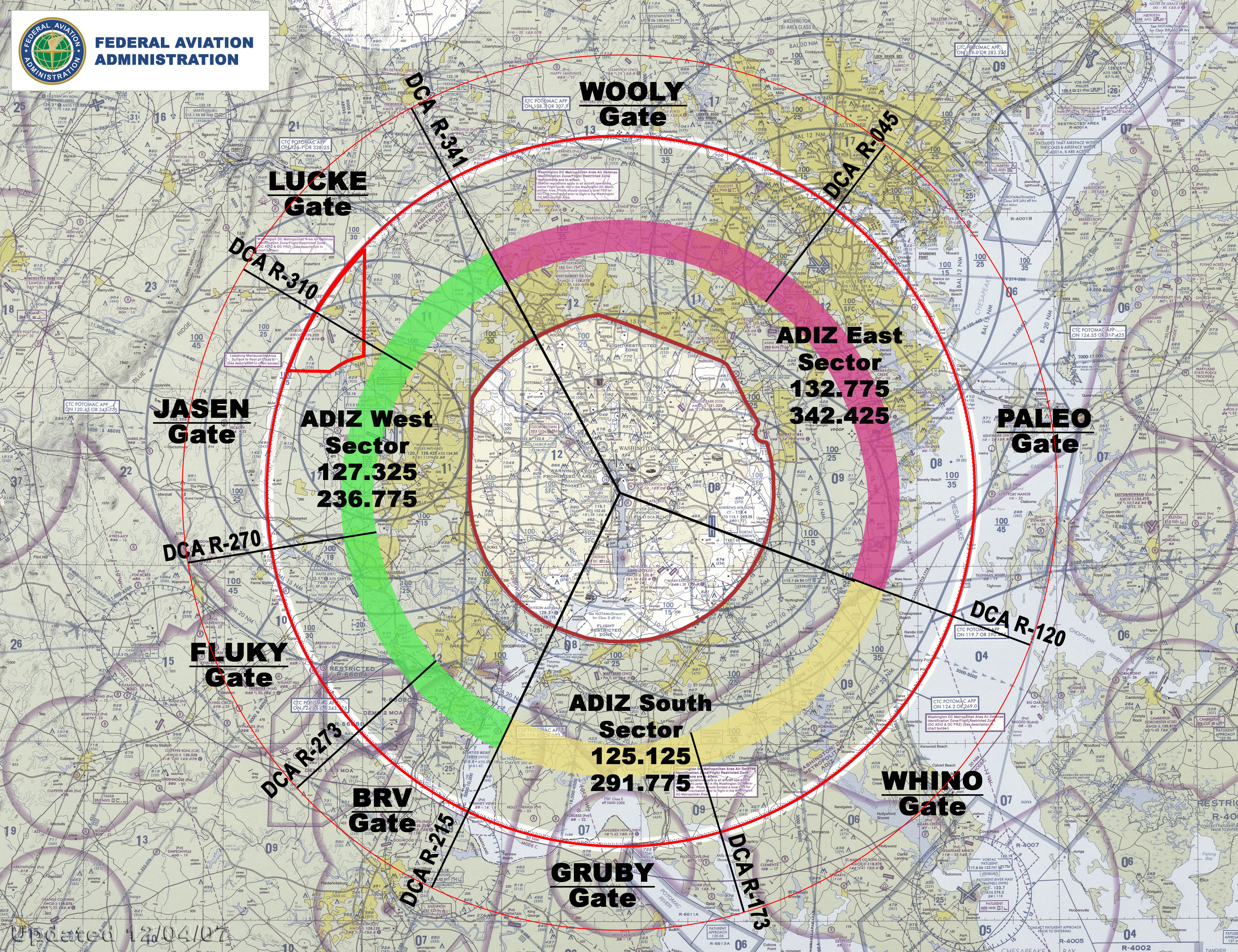
This is a pretty large no fly zone:
https://www.faasafety.gov/file...
That yellow in the upper right is labeled Baltimore, that is about 50-100 miles away, so i estimate the zone is around 20 miles radius. I believe the black lines are the approved flight paths for Reagan National Airport (which is bisected by the lines). There is good reason for the no fly zone, but it isn't around the white house so much as the whole of DC.
The manufacturer is preemptively forcing their drone to follow the law so that drones aren't further regulated (overregulated?) into having to all have these zones programmed in. Why it has other no fly zones, but was missing this one, I have no idea though, this zone is at least as old as 9/11, and may even predate that.
-
Re:These idiots are going to ruin it for everyone
No a quadrocopter and a bird will likely get downed by the propwash before it gets anywhere near a helicopter.
Why reply when you have clearly not comprehended the dudes post?
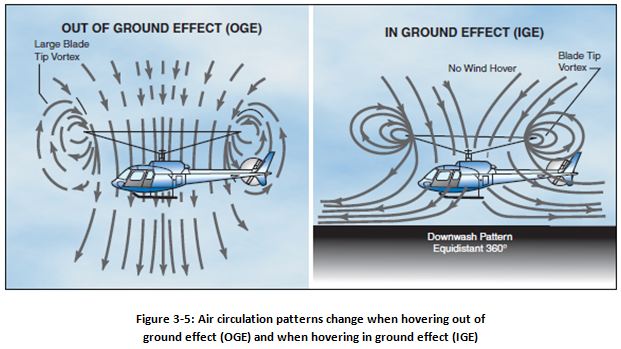
If a drone gets UNDER the rotor disk, sweet, it gets blown into oblivion. But thats only one of three possible scenarios.
If it gets ABOVE or LATERALLY CLOSE to the disk, it could either be sucked downwards into the rotor disk, or, as Splab correctly said, be pulled into the tip vortex ring, which would see the drone be lifted over and into the disk. See this diagram for a quick look at the aerodynamics at play. -
Re:White House
the US Government use UCAVs to keep the airspace around DC clear.
Actually, the current response to airspace incursions in the DC area is an F-16 and a Coast Guard helicopter. The F-16 is in case it turns out to be hostile, and the Coast Guard helicopter is for the usual case, which is a clueless VFR pilot who needs directions. This happens several times a week. The FAA now insists that all pilots operating within 60 miles of DC (actually 60NM of the DCA VOR) take this online course. Amazingly, there are still clueless pilots wandering into this airspace, although fewer than a few years ago.
-
Re: self-flying planes
Not according to the FAA (I hear that CASA in Australia is updating the reg's regarding "dark night flying", so things might be different outside the US).
There is no requirement for a visible horizon when flying VFR at night. Please reference VFR Weather Minimums. Flying anywhere near those minimums is crazy as far as I care, as it's really easy to progress into IFR conditions.
Regardless of whether it's legally VFR or not, I'd feel much more comfortable being IFR rated in those conditions. I'd want the option to call in for a pop-up IFR clearance if the weather deteriorated. The limits I place personally are much more stringent than the FAA reg's, seein' as I'm a low hour "strictly for the hobby and love of flying" pilot.
-
Re:It just don't make no sense
Relax, man. I didn't mean this to be a general and detailed analysis. I was pointing out that the reasoning for assuming 4 wheels are safer than 2 was flawed. I admit I oversimplified things and explained it further in that post. It depends on the circumstances. Clearly if you're going to be making an overseas trip, or going over mountains, a twin-engine is preferable, because being able to travel for a longer time in said emergency condition is important when there's no place to land. If you're not going to be doing that, you'd rather just minimize the chances of entering any emergency condition. I pointed this out the first time someone posted a response that questioned my statement.
A system with a RAID1 array is twice as likely to have a drive failure than a system with a single drive. But the system with a single drive is more likely to suffer data loss because when it has a drive failure, data loss is inevitable.
A twin engine plane running on a single engine is an emergency condition, it's not like running a RAID system in which everything keeps working just fine until you lose more drives. Especially if it happens at the most likely time, during takeoff, where you can lose 80 to 90 percent of climb performance. Which also means that, just like landing a plane in unpowered flight, you better get that landing right the first time, because you can't count on being able to go around.