Slashdot Mirror
Domain: fraunhofer.de
Stories and comments across the archive that link to fraunhofer.de.
Comments · 185
-
Re:Heh.
Why don't you just google for the numbers yourself?
E.g. you would find something like this: http://www.ise.fraunhofer.de/e... -
Re:Watch "how it's made" first
....Or maybe structural plastic manufacturing....
Structural plastic developer here, three years of professional experience in this area. The problem from a purely structural standpoint is that 3d printing cannot print fibre-reinforced plastics. There has been some preliminary work on this at the Frauenhofer Institut in Stuttgart, Germany. http://www.ipa.fraunhofer.de/ Their solution is running a nylon thread through the printer nozzle. For this, they have a spool of thread and a mechanism similar to a sewing machine on the printer head. This creates a part with a continuous thread that is oriented in the raster pattern traveled by the printer head. But the part does not have the characteristics of an injection-molded fibre-reinforced part, which would have many small fibers with many various orientations. I visited the site personally and saw their research first hand. They still have some technological problems to work out. For example, I don't think they understand shrinkage fully and would have a hard time complying with engineering tolerances. But for a quick prototype, more than adequate. Prototypes can be made to fit.
I won't go into material cost. Any industrial 3D printing outfit, that's halfway serious about what they do, would use raw granulate and not buy cartridges. But the main short coming of 3D printing as opposed to injection molding in a production environment is the cycle time. A complex part with tight tolerances (TG 3 after DIN 16742) of around 100-200 Gramms in an fibre-reinforced PA6 or PA12 can be injection molded in about two to three minutes, depending on injection temperature and cooling time in the mold, etc. The actual injection time is around one second for a reference. Otherwise material hardens during the injection process. The time required to print the same part would be many hours or even a day or more, depending on the printer used. I was at a 3D outfit and showed them a simple part of less than 10 Gramms. It would have taken in their estimation 30 minutes to print. Not good for mass production.
Where 3D printing is actually useful is generating rapid 3D prototypes or for doing custom parts in non-reinforced plastics. But custom parts, if they do wind up in the hands of a customer, aren't of good enough quality for my company to sell without hand-finishing to at least simulate the surface finish and texture of an injection-molded part. Acetone can be used here to make a smooth surface finish. Costs are high, but less than the cost of making a mold for a one-of-a-kind part. Alternatively custom parts can be made the old-fashioned way, that is by hand.
Usually the marketing people want the 3D parts more than the developers. Sometimes we use printed parts in development prototypes for parts where we haven't gotten around to making a prototype mold for. But these parts have limits, they usually cost a lot and if I need a high two digit or a three-digit-quantity, it's usually much cheaper to make a prototype mold. But sometimes it's difficult to convince management of that, which is probably a common problem. But after a couple of projects, the management's starting to come around to my point of view on this.
-
Re:Not simultaneously
I don't get your point. Brazil is one of the prime examples of countries that could rely completely on wind and solar (with a bit pumped storage ofc for load balancing) in a very short time frame.
At 7PM the german grid is still at high load, close to the peak actually.
This is an immage with typical load patterns in the winter for different days (Sunday/Saturday/Workday): http://commons.wikimedia.org/w...Unfortunately a bit inaccurate, the author made a few mistakes by layering "official" load curves on top of each other, hence a "base line" indicating the true "base laod" would be helpfull (and was on that wikipage a few years ago). In the time from roughly 0:00 to 6:00 we still deliever about 40% of the peak power into the grid, to refill pumped storages, hence the "base line" and hence the name "base load". The picture however is accurate regarding demand from "customers".
In other web sites I saw that base load is now considered more at 50% or even 55% level
Note: such load curves usualy picture 'demand' and not 'production', so you don't see the exported power on this particular graphic.
Here you have more infos, besides the missleading name all energy sources are covered and partly imports and exports: http://www.ise.fraunhofer.de/e...Right now we don't use solar much in the evening (or in the morning for that matter), most installations (that means a really huge percentage of the current installations) is facing more or less south. However new installations are meanwhile often turned to a different heading to have the biggest capturing at a different time of day (ofc they are tilted according to the average hight of the sun at that angle).
As germany is quite far in the north (relatively speaking) the shortest day in winter is only slightly more than 8 hours. So you can "optimize" for the most output of your personal plant at different times of the year and day times. Which obviously means if you want to sell peak energy in summer at 7PM you will sell nothing at all in winter at that time of the day
The question how fast the wind needs to be depends on the turbines, they are designed for specific wind speeds.
If you have your wind average at 30km/h, you use turbines suiting that average, then they will produce 100% (not 60%) of their rated power at that speed. (Offshore wind parks of the company http://enbw.com/ in the Baltic Sea e.g. produce roughly 4000h/y at 'rated' level and a bit more than 4000h/y 'above rated' level and about 300h/y they don't produce because of maintanance or to much or to less wind. So the mythical 'capacity' factor of those plants is above 100% Search on their web site, the pdfs covering this should be public available.)The lower the wind speed, the turbines accept, the more "time of the year" they produce power, but their peak production is less (IIRC).
BTW: it is easyer to use m/s instead of km/h because that is usually the unit for the nameplates and easier to google (especially if you want to buy a turbine or want to know the average wind speed at a certain place on the world).
This is a nice german/english publication, a bit to much markettroidish IMHO: http://www.dewi.de/dewi/filead...
But it gives a good overview about
-
Re:FTFY
The previous five years where perhaps one single month, or perhaps two where germany imported more power than it exported.
According to this document (page 37 Figure 13) there has been 12 months of net import between 2008 and 2011. Where are you getting your numbers from?
Germany has no 'short falls' as you claim it.
I will even use the current Fraunhoffer Report that you keep referring to. Take a look at pages 76 and 77. Notice that when wind energy production is low electricity imports rise.
-
Re:FTFY
Sorry, I don't know to which graph you are reffering.
Look at page 52 of this. It is the graph for import/export to France. Note how much more dark green (exports) there are than light green (imoprts) with respect to France. The result is net imports from France.
Germany has no 'short falls' as you claim it.
Take a look at page 75. Notice that most imports are just before dawn and just after dusk. This is when solar power is coming on and going off.
The net export might have shrunken to 7%, no idea, did not check lately Nevertheless roughly 20% of the generated power is exported.
That net export is a record for Germany for all of 2013. Show me some references that support your claim that "roughly 20% of the generated power is exported". I don't think it exists.
That germany is a net importer regardless from which source
I never said Germany was a net importer. What I said is that it imports a lot of power from France and much of that power is produced by nuclear generators. Like I said net trade is not the issue periodic import to cover shortfalls is. The point is that even though Germany is phasing out nuclear generation plants they will still rely on nuclear generation plants in France to keep their grid stable.
I also find it interesting that you don't link any of the reports you refer to. It looks to me like you are pulling numbers out of the air. Repeating the same number over and over without references does not make it true.
-
Re:FTFY
take a look at this document. Look at the first graph on page 52. All that dark green is electricity imported from France.
I did my research and have documents to back up what I say.
-
Re:No, because they are not compatible
tke a look at this document. It is real data from the German electricity system. Look at the weekly charts starting on page 101. The green band is the wind generated power. Notice some days there is a lot (jan 3) while other days there is almost none (jan 12). Wind power is not consistent
From that same report Germany had 32.5GW of installed wind power and produced a total of 47.2 TWh of electricity. If the turbines produced 100% capacity they could have produced 284.7 TWh but they only produced 11% of that. Why the difference in capacity and production? Probably lack of wind.
-
Re:Nuclear: only interim solution, permanent waste
First off all:
The nuclear plants are still running, only a few are offline.
Yes, we build new coal plants, they where in planning and under construction since 15 years. They are ment to replace older inefficient or dirty plants.Most links (I did not look at them) are simply "newspapers", they have no clue, sorry to say it so bluntly.
Here is a good link (missleading name) about german power production of this year:
http://www.ise.fraunhofer.de/de/downloads/pdf-files/aktuelles/stromproduktion-aus-solar-und-windenergie-2013.pdf (Someone else in this thread posted it allready)
I hope it is self explanaiting, so you don't need google translateAs you see: we export nearly every month roughly 30% of our production. Also you see we produce in the yearly average over 20% of our energy with solar / wind. With peaks over 40% (on special days like 1st or second January with exceptional perfect weather)
Ultimately, we would need to see the energy mix numbers from the German power companies/government to know for sure The PDF should contain some links to the sites where you can obtain such numbers, but the PDF actually has summarized them quite nicely imho.
-
Re:Nuclear: only interim solution, permanent waste
As you suggested I checked Google for facts and I was indeed wrong on some points, sorry. Germany gets most of its electricity from coal, not gas. And I thought the import/exports where on a daily basis instead of a yearly basis (I didn't write it though, so you probably implied it somehow).
However my point still stands : Germany export expensive fossil fuel power when demand is high and imports cheap nuclear power when demand is low.Here are the facts about Germany :
- Coal : 45%
- Renewables : 22%
- Nuclear : 16 %
- Gas : 11%
- Exports are higher during winter (high demand) and imports are higher during summer (low demand)
- Renewable electricity production is at the lowest in winter
- Coal electricity production is at the highest in winter
- Germany is a net exporter globally, France is also a net exporter globally. Germany is a net exporter for France.
Source : http://www.ise.fraunhofer.de/de/downloads/pdf-files/aktuelles/stromproduktion-aus-solar-und-windenergie-2013.pdf (+ others)Another thing : according to this http://epp.eurostat.ec.europa.eu/statistics_explained/images/7/75/Half-yearly_electricity_and_gas_prices.png household electricity for s1 2013 in Germany is 0.29€/kWh, that's more than 0.40$/kWh and among the most expensive in Europe. Are you taking everything into account when you are talking about 0.18€ (taxes, subscription...) ?
-
bad BIOS saga continues - 12/2013
Scientist-developed malware prototype covertly jumps air gaps using inaudible sound
---
Malware communicates at a distance of 65 feet using built-in mics and speakers.by Dan Goodin - Dec 2, 2013 7:29 pm UTC
http://arstechnica.com/author/dan-goodin
https://twitter.com/dangoodin001"Dan is the IT Security Editor at Ars Technica, which he joined in 2012 after working for The Register, the Associated Press, Bloomberg News, and other publications."
---
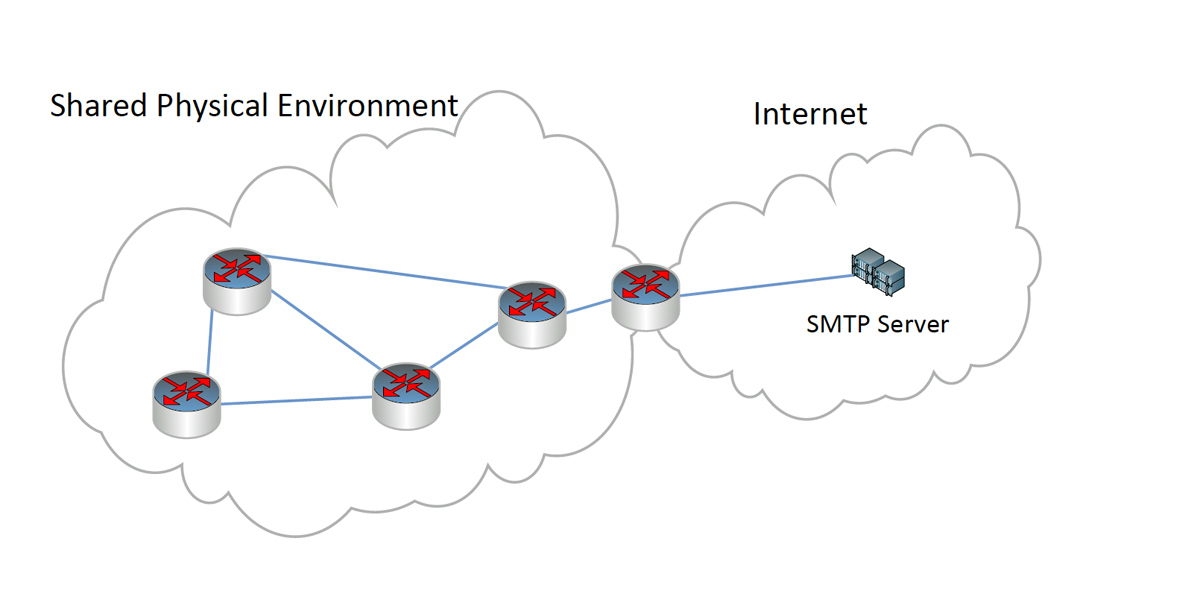
Topology of a covert mesh network that connects air-gapped computers to the Internet:http://cdn.arstechnica.net/wp-content/uploads/2013/12/acoustical-mesh-network.jpg
http://www.jocm.us/index.php?m=content&c=index&a=show&catid=124&id=600
----"Computer scientists have proposed a malware prototype that uses inaudible audio signals to communicate, a capability that allows the malware to covertly transmit keystrokes and other sensitive data even when infected machines have no network connection.
The proof-of-concept software-or malicious trojans that adopt the same high-frequency communication methods-could prove especially adept in penetrating highly sensitive environments that routinely place an "air gap" between computers and the outside world. Using nothing more than the built-in microphones and speakers of standard computers, the researchers were able to transmit passwords and other small amounts of data from distances of almost 65 feet. The software can transfer data at much greater distances by employing an acoustical mesh network made up of attacker-controlled devices that repeat the audio signals.
The researchers, from Germany's Fraunhofer Institute for Communication, Information Processing, and Ergonomics[1], recently disclosed their findings in a paper published in the Journal of Communications[2]. It came a few weeks after a security researcher said his computers were infected with a mysterious piece of malware that used high-frequency transmissions to jump air gaps[3]. The new research neither confirms nor disproves Dragos Ruiu's claims of the so-called badBIOS infections, but it does show that high-frequency networking is easily within the grasp of today's malware."
[1] http://www.fkie.fraunhofer.de/en.html
[2] http://www.jocm.us/index.php?m=content&c=index&a=show&catid=124&id=600
[3] http://arstechnica.com/security/2013/10/meet-badbios-the-mysterious-mac-and-pc-malware-that-jumps-airgaps/""In our article, we describe how the complete concept of air gaps can be considered obsolete as commonly available laptops can communicate over their internal speakers and microphones and even form a covert acoustical mesh network," one of the authors, Michael Hanspach, wrote in an e-mail. "Over this covert network, information can travel over multiple hops of infected nodes, connecting completely isolated computing systems and networks (e.g. the internet) to each other. We also propose some countermeasures against participation in a covert network."
The researchers developed several ways to use inaudible sounds to transmit data between two Lenovo T400 laptops using only their built-in microphones and speakers. The most effective technique relied
-
bad BIOS saga continues - 12/13
Scientist-developed malware prototype covertly jumps air gaps using inaudible sound
-
Malware communicates at a distance of 65 feet using built-in mics and speakers.by Dan Goodin - Dec 2, 2013 7:29 pm UTC
http://arstechnica.com/author/dan-goodin
https://twitter.com/dangoodin001"Dan is the IT Security Editor at Ars Technica, which he joined in 2012 after working for The Register, the Associated Press, Bloomberg News, and other publications."
-
Topology of a covert mesh network that connects air-gapped computers to the Internet:http://cdn.arstechnica.net/wp-content/uploads/2013/12/acoustical-mesh-network.jpg
http://www.jocm.us/index.php?m=content&c=index&a=show&catid=124&id=600
-"Computer scientists have proposed a malware prototype that uses inaudible audio signals to communicate, a capability that allows the malware to covertly transmit keystrokes and other sensitive data even when infected machines have no network connection.
The proof-of-concept software-or malicious trojans that adopt the same high-frequency communication methods-could prove especially adept in penetrating highly sensitive environments that routinely place an "air gap" between computers and the outside world. Using nothing more than the built-in microphones and speakers of standard computers, the researchers were able to transmit passwords and other small amounts of data from distances of almost 65 feet. The software can transfer data at much greater distances by employing an acoustical mesh network made up of attacker-controlled devices that repeat the audio signals.
The researchers, from Germany's Fraunhofer Institute for Communication, Information Processing, and Ergonomics[1], recently disclosed their findings in a paper published in the Journal of Communications[2]. It came a few weeks after a security researcher said his computers were infected with a mysterious piece of malware that used high-frequency transmissions to jump air gaps[3]. The new research neither confirms nor disproves Dragos Ruiu's claims of the so-called badBIOS infections, but it does show that high-frequency networking is easily within the grasp of today's malware."
[1] http://www.fkie.fraunhofer.de/en.html
[2] http://www.jocm.us/index.php?m=content&c=index&a=show&catid=124&id=600
[3] http://arstechnica.com/security/2013/10/meet-badbios-the-mysterious-mac-and-pc-malware-that-jumps-airgaps/""In our article, we describe how the complete concept of air gaps can be considered obsolete as commonly available laptops can communicate over their internal speakers and microphones and even form a covert acoustical mesh network," one of the authors, Michael Hanspach, wrote in an e-mail. "Over this covert network, information can travel over multiple hops of infected nodes, connecting completely isolated computing systems and networks (e.g. the internet) to each other. We also propose some countermeasures against participation in a covert network."
The researchers developed several ways to use inaudible sounds to transmit data between two Lenovo T400 laptops
-
bad BIOS saga continues - 12/13
Scientist-developed malware prototype covertly jumps air gaps using inaudible sound
-
Malware communicates at a distance of 65 feet using built-in mics and speakers.by Dan Goodin - Dec 2, 2013 7:29 pm UTC
http://arstechnica.com/author/dan-goodin
https://twitter.com/dangoodin001"Dan is the IT Security Editor at Ars Technica, which he joined in 2012 after working for The Register, the Associated Press, Bloomberg News, and other publications."
-
Topology of a covert mesh network that connects air-gapped computers to the Internet:http://cdn.arstechnica.net/wp-content/uploads/2013/12/acoustical-mesh-network.jpg
http://www.jocm.us/index.php?m=content&c=index&a=show&catid=124&id=600
-"Computer scientists have proposed a malware prototype that uses inaudible audio signals to communicate, a capability that allows the malware to covertly transmit keystrokes and other sensitive data even when infected machines have no network connection.
The proof-of-concept software-or malicious trojans that adopt the same high-frequency communication methods-could prove especially adept in penetrating highly sensitive environments that routinely place an "air gap" between computers and the outside world. Using nothing more than the built-in microphones and speakers of standard computers, the researchers were able to transmit passwords and other small amounts of data from distances of almost 65 feet. The software can transfer data at much greater distances by employing an acoustical mesh network made up of attacker-controlled devices that repeat the audio signals.
The researchers, from Germany's Fraunhofer Institute for Communication, Information Processing, and Ergonomics[1], recently disclosed their findings in a paper published in the Journal of Communications[2]. It came a few weeks after a security researcher said his computers were infected with a mysterious piece of malware that used high-frequency transmissions to jump air gaps[3]. The new research neither confirms nor disproves Dragos Ruiu's claims of the so-called badBIOS infections, but it does show that high-frequency networking is easily within the grasp of today's malware."
[1] http://www.fkie.fraunhofer.de/en.html
[2] http://www.jocm.us/index.php?m=content&c=index&a=show&catid=124&id=600
[3] http://arstechnica.com/security/2013/10/meet-badbios-the-mysterious-mac-and-pc-malware-that-jumps-airgaps/""In our article, we describe how the complete concept of air gaps can be considered obsolete as commonly available laptops can communicate over their internal speakers and microphones and even form a covert acoustical mesh network," one of the authors, Michael Hanspach, wrote in an e-mail. "Over this covert network, information can travel over multiple hops of infected nodes, connecting completely isolated computing systems and networks (e.g. the internet) to each other. We also propose some countermeasures against participation in a covert network."
The researchers developed several ways to use inaudible sounds to transmit data between two Lenovo T400 laptops using only their built-in microphones and speakers. The most effective technique
-
bad BIOS saga continues - 12/13
bad BIOS saga continues - 12/13
-
Scientist-developed malware prototype covertly jumps air gaps using inaudible sound
-
Malware communicates at a distance of 65 feet using built-in mics and speakers.by Dan Goodin - Dec 2, 2013 7:29 pm UTC
http://arstechnica.com/author/dan-goodin
https://twitter.com/dangoodin001"Dan is the IT Security Editor at Ars Technica, which he joined in 2012 after working for The Register, the Associated Press, Bloomberg News, and other publications."
-
Topology of a covert mesh network that connects air-gapped computers to the Internet:http://cdn.arstechnica.net/wp-content/uploads/2013/12/acoustical-mesh-network.jpg
http://www.jocm.us/index.php?m=content&c=index&a=show&catid=124&id=600
-"Computer scientists have proposed a malware prototype that uses inaudible audio signals to communicate, a capability that allows the malware to covertly transmit keystrokes and other sensitive data even when infected machines have no network connection.
The proof-of-concept software-or malicious trojans that adopt the same high-frequency communication methods-could prove especially adept in penetrating highly sensitive environments that routinely place an "air gap" between computers and the outside world. Using nothing more than the built-in microphones and speakers of standard computers, the researchers were able to transmit passwords and other small amounts of data from distances of almost 65 feet. The software can transfer data at much greater distances by employing an acoustical mesh network made up of attacker-controlled devices that repeat the audio signals.
The researchers, from Germany's Fraunhofer Institute for Communication, Information Processing, and Ergonomics[1], recently disclosed their findings in a paper published in the Journal of Communications[2]. It came a few weeks after a security researcher said his computers were infected with a mysterious piece of malware that used high-frequency transmissions to jump air gaps[3]. The new research neither confirms nor disproves Dragos Ruiu's claims of the so-called badBIOS infections, but it does show that high-frequency networking is easily within the grasp of today's malware."
[1] http://www.fkie.fraunhofer.de/en.html
[2] http://www.jocm.us/index.php?m=content&c=index&a=show&catid=124&id=600
[3] http://arstechnica.com/security/2013/10/meet-badbios-the-mysterious-mac-and-pc-malware-that-jumps-airgaps/""In our article, we describe how the complete concept of air gaps can be considered obsolete as commonly available laptops can communicate over their internal speakers and microphones and even form a covert acoustical mesh network," one of the authors, Michael Hanspach, wrote in an e-mail. "Over this covert network, information can travel over multiple hops of infected nodes, connecting completely isolated computing systems and networks (e.g. the internet) to each other. We also propose some countermeasures against participation in a covert network."
The researchers developed several ways to use inaudible sounds to transmit data between two Lenovo T400 laptops using only their built-in microphones and speakers. Th
-
bad BIOS saga continues - 12/13
Scientist-developed malware prototype covertly jumps air gaps using inaudible sound
-
Malware communicates at a distance of 65 feet using built-in mics and speakers.by Dan Goodin - Dec 2, 2013 7:29 pm UTC
http://arstechnica.com/author/dan-goodin
https://twitter.com/dangoodin001"Dan is the IT Security Editor at Ars Technica, which he joined in 2012 after working for The Register, the Associated Press, Bloomberg News, and other publications."
-
Topology of a covert mesh network that connects air-gapped computers to the Internet:http://cdn.arstechnica.net/wp-content/uploads/2013/12/acoustical-mesh-network.jpg
http://www.jocm.us/index.php?m=content&c=index&a=show&catid=124&id=600
-"Computer scientists have proposed a malware prototype that uses inaudible audio signals to communicate, a capability that allows the malware to covertly transmit keystrokes and other sensitive data even when infected machines have no network connection.
The proof-of-concept software-or malicious trojans that adopt the same high-frequency communication methods-could prove especially adept in penetrating highly sensitive environments that routinely place an "air gap" between computers and the outside world. Using nothing more than the built-in microphones and speakers of standard computers, the researchers were able to transmit passwords and other small amounts of data from distances of almost 65 feet. The software can transfer data at much greater distances by employing an acoustical mesh network made up of attacker-controlled devices that repeat the audio signals.
The researchers, from Germany's Fraunhofer Institute for Communication, Information Processing, and Ergonomics[1], recently disclosed their findings in a paper published in the Journal of Communications[2]. It came a few weeks after a security researcher said his computers were infected with a mysterious piece of malware that used high-frequency transmissions to jump air gaps[3]. The new research neither confirms nor disproves Dragos Ruiu's claims of the so-called badBIOS infections, but it does show that high-frequency networking is easily within the grasp of today's malware."
[1] http://www.fkie.fraunhofer.de/en.html
[2] http://www.jocm.us/index.php?m=content&c=index&a=show&catid=124&id=600
[3] http://arstechnica.com/security/2013/10/meet-badbios-the-mysterious-mac-and-pc-malware-that-jumps-airgaps/""In our article, we describe how the complete concept of air gaps can be considered obsolete as commonly available laptops can communicate over their internal speakers and microphones and even form a covert acoustical mesh network," one of the authors, Michael Hanspach, wrote in an e-mail. "Over this covert network, information can travel over multiple hops of infected nodes, connecting completely isolated computing systems and networks (e.g. the internet) to each other. We also propose some countermeasures against participation in a covert network."
The researchers developed several ways to use inaudible sounds to transmit data between two Lenovo T400 laptops using only their built-in microphones and speakers. The most effective technique relied
-
bad BIOS saga continues - 12/13
Scientist-developed malware prototype covertly jumps air gaps using inaudible sound
-
Malware communicates at a distance of 65 feet using built-in mics and speakers.by Dan Goodin - Dec 2, 2013 7:29 pm UTC
http://arstechnica.com/author/dan-goodin
https://twitter.com/dangoodin001"Dan is the IT Security Editor at Ars Technica, which he joined in 2012 after working for The Register, the Associated Press, Bloomberg News, and other publications."
-
Topology of a covert mesh network that connects air-gapped computers to the Internet:http://cdn.arstechnica.net/wp-content/uploads/2013/12/acoustical-mesh-network.jpg
http://www.jocm.us/index.php?m=content&c=index&a=show&catid=124&id=600
-"Computer scientists have proposed a malware prototype that uses inaudible audio signals to communicate, a capability that allows the malware to covertly transmit keystrokes and other sensitive data even when infected machines have no network connection.
The proof-of-concept software-or malicious trojans that adopt the same high-frequency communication methods-could prove especially adept in penetrating highly sensitive environments that routinely place an "air gap" between computers and the outside world. Using nothing more than the built-in microphones and speakers of standard computers, the researchers were able to transmit passwords and other small amounts of data from distances of almost 65 feet. The software can transfer data at much greater distances by employing an acoustical mesh network made up of attacker-controlled devices that repeat the audio signals.
The researchers, from Germany's Fraunhofer Institute for Communication, Information Processing, and Ergonomics[1], recently disclosed their findings in a paper published in the Journal of Communications[2]. It came a few weeks after a security researcher said his computers were infected with a mysterious piece of malware that used high-frequency transmissions to jump air gaps[3]. The new research neither confirms nor disproves Dragos Ruiu's claims of the so-called badBIOS infections, but it does show that high-frequency networking is easily within the grasp of today's malware."
[1] http://www.fkie.fraunhofer.de/en.html
[2] http://www.jocm.us/index.php?m=content&c=index&a=show&catid=124&id=600
[3] http://arstechnica.com/security/2013/10/meet-badbios-the-mysterious-mac-and-pc-malware-that-jumps-airgaps/""In our article, we describe how the complete concept of air gaps can be considered obsolete as commonly available laptops can communicate over their internal speakers and microphones and even form a covert acoustical mesh network," one of the authors, Michael Hanspach, wrote in an e-mail. "Over this covert network, information can travel over multiple hops of infected nodes, connecting completely isolated computing systems and networks (e.g. the internet) to each other. We also propose some countermeasures against participation in a covert network."
The researchers developed several ways to use inaudible sounds to transmit data between two Lenovo T400 laptops using only their built-in microphones and speakers. The most effective technique relied
-
bad BIOS saga continues - 12/13
Scientist-developed malware prototype covertly jumps air gaps using inaudible sound
-
Malware communicates at a distance of 65 feet using built-in mics and speakers.by Dan Goodin - Dec 2, 2013 7:29 pm UTC
http://arstechnica.com/author/dan-goodin
https://twitter.com/dangoodin001"Dan is the IT Security Editor at Ars Technica, which he joined in 2012 after working for The Register, the Associated Press, Bloomberg News, and other publications."
-
Topology of a covert mesh network that connects air-gapped computers to the Internet:http://cdn.arstechnica.net/wp-content/uploads/2013/12/acoustical-mesh-network.jpg
http://www.jocm.us/index.php?m=content&c=index&a=show&catid=124&id=600
-"Computer scientists have proposed a malware prototype that uses inaudible audio signals to communicate, a capability that allows the malware to covertly transmit keystrokes and other sensitive data even when infected machines have no network connection.
The proof-of-concept software-or malicious trojans that adopt the same high-frequency communication methods-could prove especially adept in penetrating highly sensitive environments that routinely place an "air gap" between computers and the outside world. Using nothing more than the built-in microphones and speakers of standard computers, the researchers were able to transmit passwords and other small amounts of data from distances of almost 65 feet. The software can transfer data at much greater distances by employing an acoustical mesh network made up of attacker-controlled devices that repeat the audio signals.
The researchers, from Germany's Fraunhofer Institute for Communication, Information Processing, and Ergonomics[1], recently disclosed their findings in a paper published in the Journal of Communications[2]. It came a few weeks after a security researcher said his computers were infected with a mysterious piece of malware that used high-frequency transmissions to jump air gaps[3]. The new research neither confirms nor disproves Dragos Ruiu's claims of the so-called badBIOS infections, but it does show that high-frequency networking is easily within the grasp of today's malware."
[1] http://www.fkie.fraunhofer.de/en.html
[2] http://www.jocm.us/index.php?m=content&c=index&a=show&catid=124&id=600
[3] http://arstechnica.com/security/2013/10/meet-badbios-the-mysterious-mac-and-pc-malware-that-jumps-airgaps/""In our article, we describe how the complete concept of air gaps can be considered obsolete as commonly available laptops can communicate over their internal speakers and microphones and even form a covert acoustical mesh network," one of the authors, Michael Hanspach, wrote in an e-mail. "Over this covert network, information can travel over multiple hops of infected nodes, connecting completely isolated computing systems and networks (e.g. the internet) to each other. We also propose some countermeasures against participation in a covert network."
The researchers developed several ways to use inaudible sounds to transmit data between two Lenovo T400 laptops using only their built-in microphones and speakers. The most effective technique relied on sof
-
tray problem?
I assume a cable hangs from the tray to the desktop? I suggest adding some climbing vines, with pots, so it looks natural. You can also add a few spider monkeys to go up and down the cables, and their poop will fertilize the vines after you scrape it off everything??
The basic problem with trays is the cable from tray to desk.
If you used a dropped ceiling (aka ceiling plates), you could have a high BW bidirectional infra-red network from overhead to desk. In fact, with a few bidirectional emitters you might cover the office very well with even less intrusion, http://www.fraunhofer.de/en/press/research-news/2012/october/wireless-data-at-top-speed.htmlWith IR reflectivity on all surfaces, coverage will come easy. The surface could look different at visible wavelengths for aesthetic reasons.
-
Re:This is disputed
According to this German energy report (page 9) the output of solar generated electricity ranges from 0.35 TWh in January to 5.1 TWh in July. So in the sunny summer months solar works great. In the stormy winter months not so much. Look at page 13. Notice that the conventional power production in January is at least as much as the total production in May through August. Even wind is not reliable. Look at page 45. The first and last week have lots of wind power produced; week 3 almost none.There still needs to be the conventional electricity sources available when solar and wind is not sufficient. There are too many reports of record breaking output and too few of the low outputs.
Also take a look at page 74. Notice as Solar becomes more prevalent so does the importation of electricity in the morning and evening. Overall the more solar produced the more electricity imported and less exported.
-
Re:HEVC/H.265 BSD-licensed reference implementatio
Somehow the link was removed: http://hevc.hhi.fraunhofer.de/
-
Re:It's a shame, but...
The US is a bad example, being the biggest polluter in the developed world and with a very badly messed up energy market.
Here's an interesting document about solar and wind in Germany: http://www.ise.fraunhofer.de/en/downloads-englisch/pdf-files-englisch/news/electricity-production-from-solar-and-wind-in-germany-in-2012.pdf
Take a look at page 16. You can see that combined production from renewables was actually very stable over the entire year. Sure, there are fluctuations with the day-night cycle and a little bit as wind varies over different parts of the country, but it turns out the combination of solar and wind is actually very good at providing base load. It's extremely reliable too, and less prone to large multi-gigawatt level failures like France has been experiencing.
You can also see how Germany is well on the way to replacing nuclear with renewables. Wind alone reached 50% of the nuclear capacity last year.
The US has a long list of excuses, but that's exactly what they are: excuses.
-
Re: All about the money
We abbolished nuclear plants last year (but they are STILL running). Building a coal plant takes 10 years of planning nad 5 years of construction.
Actually most of these coal projects were planned almost a decade ago after Germany decided for the first time to exit nuclear power in 2000 during the time of Gerhard Schroder.
Germany's coal-fired power plants contributed more than 50% to the nation's electricity demand in the first half of this year as output from natural gas-fired power plants and wind turbines dropped, according to the Fraunhofer Institute.
-
Re:"Renewables are doing so well, infact..."
Sure they might not make it with 20 plants but they could scale down to 2 plants
Look at the variability in day to day green power. Two plants won't be enough to make up for the times when green power is not available. You can not turn up the sun or the wind when needed. A prime example is on page 143. Notice that they used about 700Mw of conventional energy during the weekdays. Solar was almost non existent because it is winter and for some reason there wab not much wind power either. You need to size the base load plants to the maximum requirement; not the minimum.
Why should the Germans pay for overcapacity?
Exactly my point. Why pay for overcapacity on green energy that may or may not be available when needed so that base load plants can sit at warm up state to kick in when needed..
-
Re:Page 71
That's why the plans include wind, geothermal, hydro, biomass and concentrated solar.
Wind; Unreliable look at the charts in this document starting on page 53. Notice how muchce the sage green varies from day to day? Some days it is significant and some days it is nonexistent.
Geothermal; Very restricted areas of natural sources. Can cause earthquakes if injecting water. Uses a lot of water which is becoming scarce if doing injection.
Hydro; most viable sites are already in use.
biomass; very expensive power.
Concentrated solar; very expensive with heat storage.The point of that comment is in the fact that you CAN transport power all across the continent without much loss
Where are your loss figures? All I have seen is that it can be transported but not how much the loss is.
It is a project planned out to 2050 with SuperSmart Grid covering EU by 2030 and 50% of EU's own electricity production
It is a plan that has not been approved or funded yet. Plans are easy implementing them is much harder.
-
Re:Depends on the energy source duh!
In winter you likely don't import energy from german coal. Much more likely you import wind energy. Germany only produces roughly 30% of its energy with coal right now
Got an up to date source on that?
Best I can find is: http://www.ise.fraunhofer.de/en/news/news-2012/electricity-production-from-solar-and-wind-in-germany-in-2012
Which gives:
Net electricity production in 2012
Brown Coal 143TWh 30%
Hard Coal 106TWh 22%
Uranium 94TWh 19%
Gas 49TWh 10%
Wind 45.9TWh 10%
Solar 27.9TWh 6%
Run of River 17TWh 4%
Total 482.8TWh 100%So that's 52% coal, not 30% and wind is only 10%
Also, from page 50 Sweden exported more electricty to Germany than vice-versa.
-
Re:Pre-existing technology
Maybe because he's pushing several orders of magnitude more data through the system than your 20 khz headphones?
Size matters.
A-a-a-nd, that's what she said, thanks for that opening line
Okay, I read from the pdf page that it's expected to be available 3 years down the road, either in USB stick form or built-in smartphone sensors.
-
Re:sounds overly optimistic
So?
Where did you read they want to use the regular/primary room lights for this sort of communication?
It's in the story summary, and from the story's link to the Berlin Institute I found this...
{ Live-Demo: Optical Wireless High-Speed Data Communication
Optical wireless data communication uses standard LED lights for transmission of broadband data. This transmission technology can equally be used for HD video streaming and two-way communication. Offering data rates of up to 1.25 Gbit/s, it can easily deal even with broadband video files in HD quality. All it takes are just a few add-on parts to turn an off-the-shelf LED light into a powerful optical WLAN transmitter. Digital data is transmitted through a special modulator which switches the luminaries on and off at ultra high speed. At embedded world Fraunhofer HHI will be demonstrating two-way data transmission with through-put of up to 500 Mbit/s. }
http://www.hhi.fraunhofer.de/media/press/embedded-world-2013.html
-
Re:"Full HD" - right
It's actually a variant of H.264/MPEG-4 AVC, which is the codec on Blu-Ray audio. But not at a high bit rate, as on Blu-Ray discs. It's AAC/ELD v2, at 24Kb/s.
It's already in IOS Facetime, anyway.
This post doesn't make any sense.
- H.264 is a video codec, it has nothing to do with the audio on a bluray disc. Blu-ray discs use a wide variety of sound formats, from 24-bit PCM Mono, all the way to 7.1 Lossless codecs.
- You don't have to use H.264 to be "Full HD". "Full HD" is nothing more than a marketing term to start with, but it only refers to 1080p video. Early Blurays used MPEG2 for video codec and still did 1080p resolution.
- Facetime doesn't use AAC/ELD, but only AAC/LD, which doesn't go as low in frequency.
-
Re:WiFi AP MAC
There is some technology out there which does positioning based on Wifi. It's not open source, though, but I have seen it in action and it works pretty well: http://www.iis.fraunhofer.de/en/bf/ln/technologie/rssi/index.jsp
-
Where to buy??
I checked the Fraunhofer website but I don't see any links to vendors. I think this must still be in the research stage. Does anyone know of a similar product on the market? (Or how to build your own?)
-
Problem already solved
As far as I know, German Fraunhofer Institute has a solution for this kind of problem: http://www.ipk.fraunhofer.de/component/content/category/167-autsicherheitstechnikstasischnipsel (p.8ff, German language).
Looks like they have few problems assembling torn pages, and geometrically correct results for shredded paper (yet not necessarily correct content).
-
Re:And what happens if you get hit by a truck?
-
Re:Absorbs AND Releases?
Nothing new here.
Phase change applications were fairly commonly installed in houses back in the late 70s. Usually a liquid to gel phase change but some were liquid to solid.
The problem then as now, was finding something that changed at the desired temperature, because any time you have to concentrate the heat to reach the the temperature where phase change occurred you lost much if not all of advantage of using these materials. (You essentially ended up running a air-source heat pump to concentrate hot house air into the material).
Yeah, here's two more: http://www.gizmag.com/ravenskin-insulation-delays-heat-transfer/17056/ http://www.fraunhofer.de/en/research-topics/construction/microencapsulated.jsp
I think the second one looks cheap and interesting. They use a micro-encapsulated tailored wax which can be mixed into plaster wall boards, giving them the thermal capacity of a brick wall.
-
Re:Summary designed for idiots...
TFA is not to blame here. The official press release (German) is similar stupid.
-
Re:What could possibly go wrong?
I'm not sure if this is what you were referring to, but this is immediately what I thought of when I saw this article:
http://www.youtube.com/v/uVGiNAs-QbY
And the paper: http://www.sit.fraunhofer.de/en/Images/sc_iPhone%20Passwords_tcm502-80443.pdf
I got these from a friend a few days ago, and then was astounded to see this article on Slashdot. The method requires jailbreaking (a whole other problem), but uses built-in system functions to dump various keychain creds!
-
Re:Relies on Jailbreaking
Root access is there anything it can't do?
According to the actual paper
Secrets within other protection classes, such as passwords for websites, could not be revealed in our lost device scenario. In our proof of concept implementation, these secrets — marked "protected" in Table 1 — were available to the script only after entering the passcode to unlock the device, which by assumption should not be possible for an attacker.
-
it is using the latest/current device.
OR you could read the PDF which states CLEARLY:
"The results were taken from
a passcode protected and locked iPhone 4 with current firmware 4.2.1. "That is the latest iOS and the latest iPhone, mind you.
http://www.sit.fraunhofer.de/en/Images/sc_iPhone%20Passwords_tcm502-80443.pdf
-
Re:Context?
In addition to having physical access, The paper assumes that the phone has not received a wipe command, that the phone is not jailbroken and is running the latest firmware 4.2.1.
http://www.sit.fraunhofer.de/en/Images/sc_iPhone%20Passwords_tcm502-80443.pdf
6 min is well under the amount of time to:
- Realize you've misplaced your phone
- Do the pocket pat down
- Retrace your steps a little to confirm you've misplaced your phone
- Get someplace where you can send the wipe command. -
Re:Relies on Jailbreaking
But what the article didn't say was that the phone needed to be jailbroken by the original owner to start the process.
From the paper: http://www.sit.fraunhofer.de/en/Images/sc_iPhone%20Passwords_tcm502-80443.pdf [fraunhofer.de]
[...]
Also, it is assumed that the device has not been jailbroken and so all original iOS protection mechanisms are in place.
[...]One of these things is not like the other, one of these things just does not belong...
-
Re:Apple iOS File System Encryption
From the Paper: http://www.sit.fraunhofer.de/en/Images/sc_iPhone%20Passwords_tcm502-80443.pdf
In the described situation, device encryption commonly should provide protection against attacks from the outside. If the device is still turned on — e.g., not
run out of battery meanwhile —, we assume that no remote wipe6 command was received in the meantime (e.g, theft remained unnoticed, no network connection, etc.). In any case, the attacker turns off the device and removes the SIM card to prevent a further remote control. -
Re:Relies on Jailbreaking
But what the article didn't say was that the phone needed to be jailbroken by the original owner to start the process. Only that Jailbreaking is part of the process. Someone may infer that from your statement and that is not the case.
From the paper: http://www.sit.fraunhofer.de/en/Images/sc_iPhone%20Passwords_tcm502-80443.pdf
For evaluating the practical strength of iOS device encryption security, we assume an attacker with physical access to the device, e.g. accomplished by theft
or when finding a lost device. The assumed device is protected with a strong passcode, which is unknown to the attacker. The complexity of the passcode
does not play a role for this evaluation, but is assumed to prevent an attacker from gaining access by simply guessing. Also, it is assumed that the device has not been jailbroken and so all original iOS protection mechanisms are in place.When the device is found, it is assumed to be in the locked4 state with activated data protection5. An unlocked device would provide the possibilities for
user space exploits and could reveal more secrets. However, this leakage could not be accounted to the protection mechanism we wanted to evaluate.The attacker’s PC used to gain access to passwords has not been synchronized with the attacked device before. Therefore no secrets can be used by the attacker that are created between the owner’s PC and his device.
In the described situation, device encryption commonly should provide protection against attacks from the outside. If the device is still turned on — e.g., not
run out of battery meanwhile —, we assume that no remote wipe6 command was received in the meantime (e.g, theft remained unnoticed, no network connection, etc.). In any case, the attacker turns off the device and removes the SIM card to prevent a further remote control. In this described state, we have conducted our tests with iPhone 4 and iPad WiFi+ 3G hardware with the latest firmware 4.2.1. -
iPhone 4 & iOS 4.2.1
Oops, Should have not only read TFA but followed the links ! The paper from the Fraunhofer Institute linked in the article describes everything. (PDF 92 kB)
-
Re:Why really does Apple behave this way?
Apple owns Fraunhofer?
-
Accomodation and Vergence
I believe most 3D will "make your eyes hurt" for extended use until they solve vergence and accomodation issues. While there is some work (e.g., accommodation display at Fraunhofer and some work at HITlab) to resolve these, I'm afraid we might not see the results of these at Best Buy anytime soon.
Having demonstrated 3D technology to hundreds of adults and kids, my experience has been that kids below 12 _generally_ don't seem to "get" 3D. Perhaps it's their visual system, or perhaps it's because the inter-pupillary-distance (IPD) is wrong on most systems for how far apart their eyes are. I don't this they'll be missing out on too much if they skip out on the 3D games until their visual systems catch up with the tech.
All this aside, I'm personally thrilled that all this 3D technology is becoming mainstream, but I wouldn't (and wouldn't recommend for anyone to) use the 3D technology for more than a couple of hours a day at most. Still, the fear-mongering articles and the 3-D bashing that accompanies them (probably by people who can't see the 3D effect) kind of ticks me off..
-
Re:Oh, and ...
Members of the Fraunhofer Institute are regular contributors to the standard.
In that case, it's bound to be cool. And by cool, I mean patent encumbered.
BTW, {nitpick} it's not "the" Fraunhofer Institute, it's "Fraunhofer Society," within which are various institutes. Probably the most famous is on the internet is the Fraunhofer Institute for Integrated Circuits (Fraunhofer IIS) in Erlangen, whence came the mp3 standard. But the one responsible for Visible Light Communication is Fraunhofer HHI in Berlin. {/nitpick}
-
Re:Oh, and ...
Members of the Fraunhofer Institute are regular contributors to the standard.
In that case, it's bound to be cool. And by cool, I mean patent encumbered.
BTW, {nitpick} it's not "the" Fraunhofer Institute, it's "Fraunhofer Society," within which are various institutes. Probably the most famous is on the internet is the Fraunhofer Institute for Integrated Circuits (Fraunhofer IIS) in Erlangen, whence came the mp3 standard. But the one responsible for Visible Light Communication is Fraunhofer HHI in Berlin. {/nitpick}
-
Re:Oh, and ...
Members of the Fraunhofer Institute are regular contributors to the standard.
In that case, it's bound to be cool. And by cool, I mean patent encumbered.
BTW, {nitpick} it's not "the" Fraunhofer Institute, it's "Fraunhofer Society," within which are various institutes. Probably the most famous is on the internet is the Fraunhofer Institute for Integrated Circuits (Fraunhofer IIS) in Erlangen, whence came the mp3 standard. But the one responsible for Visible Light Communication is Fraunhofer HHI in Berlin. {/nitpick}
-
Re:Greater than any previous *single junction* dev
It's true. The Fraunhofer Institute itself has produced more efficient cells. And all use multiple junctions.
Examples:
Fraunhofer - triple junction
NREL - triple junction
University of Delaware - bream splittingAll claim to be the record because there is no standardized way to measure power efficiency. However, the concept of quantum wells used in solar cells is a new concept.
-
Re:First intelligent post.
Bah, this is nothing. Just wait until someone comes up with a way to turn facial characteristics into a string,
http://www.idmt.fraunhofer.de/eng/research_topics/photoid.htm
-
Similar ...
... though probably more down to earth.
Berlin Brain-Computer Interface
Quote: "For several years, research groups in Europe and the USA have been working on systems which allow for a direct dialog between man and machine. To this end, a "Brain Computer Interface" (BCI) has been developed. Cerebral electric activity is recorded via the electroencephalogram (EEG): electrodes, attached to the scalp, measure the electric signals of the brain. These signals are amplified and transmitted to the computer, which transforms them into device control commands. The crucial requirement for the successful functioning of the BCI is that the electric activity on the scalp surface already reflects motor intentions, i.e., the neural correlate of preparation for hand or foot movements. The BCI detects the motor-related EEG changes and uses this information, for example, to perform a choice between two alternatives: the detection of the preparation to move the left hand leads to the choice of the first, whereas the right hand intention would lead to the second alternative. By this means it is possible to operate devices which are connected to the computer; such a communication can even be realised via the internet."
CC. -
Re:Patents aren't bad...
They developed it in Germany, and patented it in the US. The US patents are where they get their money.
Wrong, they developed MP3 as part of an EU science program (Eureka) and were paid by that. That they still get money from the US patent is probably nice, but not the reason it was developed. So yes, they get money from the patent, but it wasn't the reason it was developed. An earlier attempt to patent a previous version of the audio codec was unsucessfull, so they couldn't be sure that they would be able to patent MP3 either. You can listen to the history of MP3 here
Completely wrong. The money that motivates them ALL comes from US software patents. If the US dissolved software patents, expect development of new (open) video and audio codecs to stop entirely.
Sorry, but my crystal ball is broken, so I won't make any predictions on the future and on "what if". But as the researchers were paid by a science program I doubt most of the people who helped to make it get any of the revenue from the patent.