Slashdot Mirror
Domain: genome.gov
Stories and comments across the archive that link to genome.gov.
Comments · 60
-
Re:error correction
crashfrog, you may have to correct me, but here's a start...
There's really almost no selection pressure against extra DNA sequences,
This refers to the process in evolution where an organism fails to reproduce due to having a disadvantage that the other critters in the species don't have. So if a pig that has useless DNA sequences tacked on in its genome has a statistically lower chance of having piglets, there's pressure against those useless DNA sequences.
crashfrog is saying that for a reason he explains (below) extra DNA isn't going to have any effect on the organism's chances of reproducing.
particularly ones with no associated promoter.
A promoter is a marker in the DNA strand. The protein "machine" (a transcription factor) that gets the "data" off the DNA and into the cell's outside chemistry has a "socket" that matches the "plug" formed by the specific pairs of the "promoter" marker. It's like the transcription factor searches for #!
One of the proofs of this is the fact that the human genome is comprised more of endogenous retroviruses than actual functional sequences.
I'm not sure if I can do this last sentence piece by piece, so here goes...
An endogeneous retrovirus is a kind of virus that infects DNA. So when the cell splits, the virus gets copied along with it. For instance, some scientists think Multiple Sclerosis is one of these retroviruses that has infected our DNA. So when we look at the entire human genome, all the pairs in the whole DNA sequence, and we look at where all the promoters are, it seems (according to current theory -- we may learn more about this!) at a first glance there are some pretty long stretches with no promoters. That is to say, they are either empty sectors on the disk, or some of them look like retrovirus DNA code.
How'd I do at explaining that? Like I said, crashfrog should probably amend my explanation... -
Re:Definition of discrimination?It's the Genetic Information Nondiscrimination Act of 2007: it passed the House 430-3; it has yet to be voted on by the Senate.
The act will protect individuals against discrimination based on their genetic information when it comes to health insurance and employment. These protections are intended to encourage Americans to take advantage of genetic testing as part of their medical care.
-
I don't think we're talking in good faith here.
Well, yes, I'm convinced by the gross structure of the diagram without knowing what the three levels of numbers written around the chromosome diagram mean. As I said, I don't understand the details of it, but the gross structure makes a blindingly good case for the origin of chromosome 2. I don't think I ever represented myself as knowing anything more than that. You're nitpicking, in that the object of your contention has little to nothing to do with the point you're debating. I'm not convinced by the little numbers, and never said I was; I'm convinced by the large, honkingly obvious black and white stripes. (These show up when you use Giemsa staining in the process of making a karyotype, which is a diagram of an organism's chromosomes. Photograph here.)
Also, you have a pretty odd atheist friend; I know a number of atheists, and they've invariably said the opposite of what yours did. Was there context to that? -
Re:Nature vs. Nurture
There is a high-throughput project to look at epigenetic markers in humans. Its called the ENCyclopedia Of DNA Elements (ENCODE) project (http://genome.gov/10005107) in which 10% of the human genome is being studied in extream detail for a variety characteristics including the best understood epigenetic marks (histone modification, DNA methylation etc).
-
Re:RNAi 101
Just to nitpick - it wasn't until 1944 that Oswald Theodore Avery, Colin MacLeod and Maclyn McCarty established that DNA was the "transforming principle". Read about it here: http://www.genome.gov/Pages/Education/Kit/main.cf
m ?pageid=28. -
48 hour aged beef? why bother with clones?I don't know how good this 48 hour thing would really be at making good tasting beef.
Sounds like determining the "best" will be a guess based on less than 48 hours of time, however, the best tasting beef is dry aged from 10-28 days (even the wet aged, vacuum packed, beef is aged for about 7 days). This means this will basically be done by visual inspection grading, not actually tasting anything...
Then you get make this clone of something that might taste good (at least has good fat marbling since that is what they grade on mostly) which you will need to have eat and exercise the exact same way to get the same beef grade. Sounds like the odds are perhaps better than playing dna roulette, but it still seems like a crap shoot to me.
Besides cows have already been genetically sequenced. You can already test them for the "marbling gene" and the "tenderness genes", which means you can sort embryo already. There's no need to clone to get this result. It really just sounds like they are doing this just because they can.
-
Re:junk's still a mystery
cool - where are you based? I am in Berkeley and am flying out to the ENCODE meeting next week...
-
On the use of the chicken genomeSeveral posters seem to assume that the main objective of having the chicken genome available is to make better and cheaper food products. There is of course some truth to that, but there are also other advantages.
Through domestication and long time (traditional) breeding, the farm chicken has become quite frail and there are several genetic dispositions for problematic conditions for chickens. Knowing its genome could help breeding (both traditional and more modern directed) generate a healthier bird. It is worth noting the man's best fried, the dog, also has these problems due to breeding.
The sequenced genome is actually from the wild Red Jungle fowl, and not the domestic chicken, so there will be plenty of "healthy genome" to learn from.
For scientists, finally having a bird genome is also great. It is further away from chimp, mouse, rat, dog, and other "close" genomes, while closer than, say, fly and nematode. It lands somewhere between us and fish, of which we today have something like three genomes (zebrafish, fugu, and tetraodon). A goal for choosing species to sequence today is having a good and even species sampling to make what is called comparative genomics better materials for comparisons. A nice resource for genomics of higher organisms is Ensembl, where you can get a glimpse of some of the more interesting animal genomes available.
-
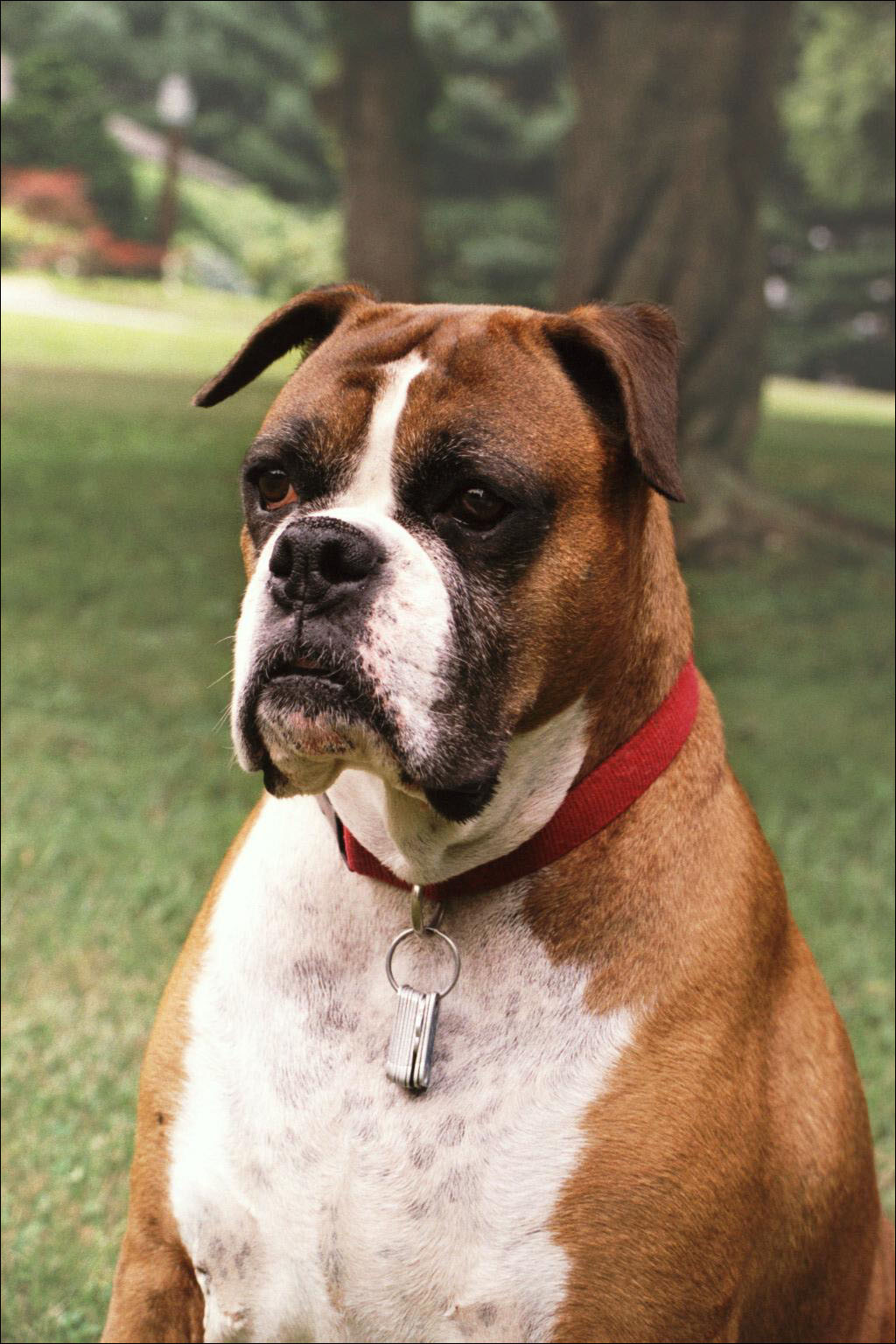
Even more disturbing...
is that the image for the poster child of the project was disproportionately scaled from 1024x1536 to 145x160.
Lets hope they didn't do the same with the dog genome. -
Re:Non-Linear Cause and Effect!
IAAB (I am a biologist) and while this is very interesting, it is more likely that the Nature site is down due to the fact that the mouse genome is published in the current issue and has been made available for free to researchers in the field.