Slashdot Mirror
Domain: joeydevilla.com
Stories and comments across the archive that link to joeydevilla.com.
Comments · 12
-
Re:I wondered what our future would be like
Wait! Stop! Don't!
It gets better in the future, you'll see!
-
Re:Wow. Glimpses of greatness...
...and the follow up
-
Re:Wow. Glimpses of greatness...
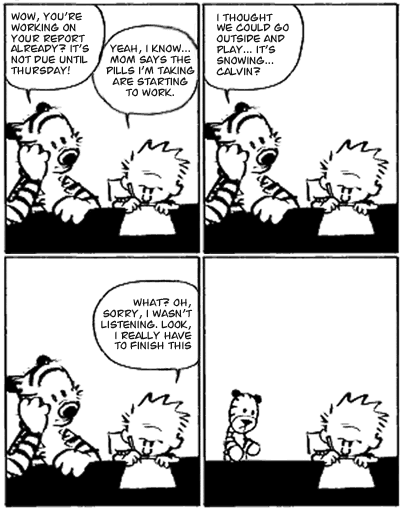
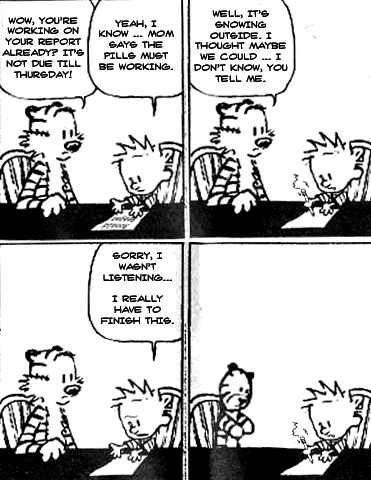
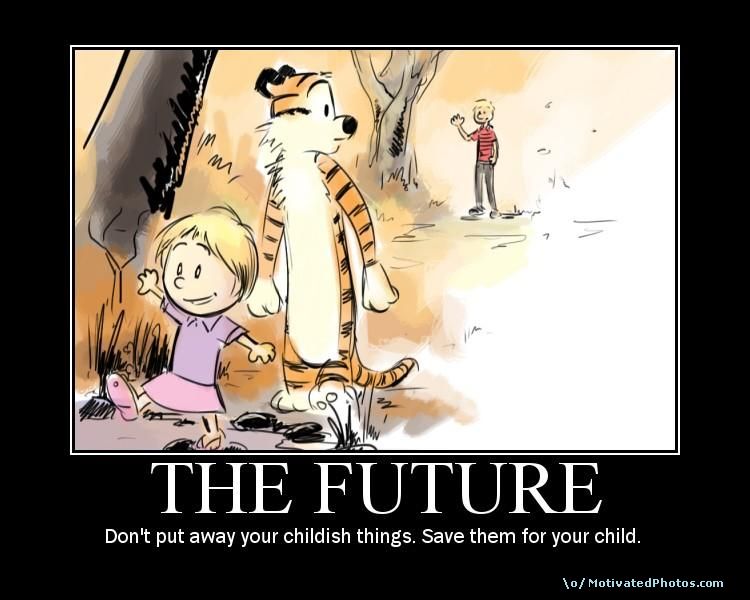
The saddest Calvin & Hobbes comic ever (a fake I know, but still clever).
-
Re:Misleading Summary; Less than exhaustive resear
Go ahead, smoke the dope! Just don't come crying to me when this happens!
-
Re:Well, that's where it was...
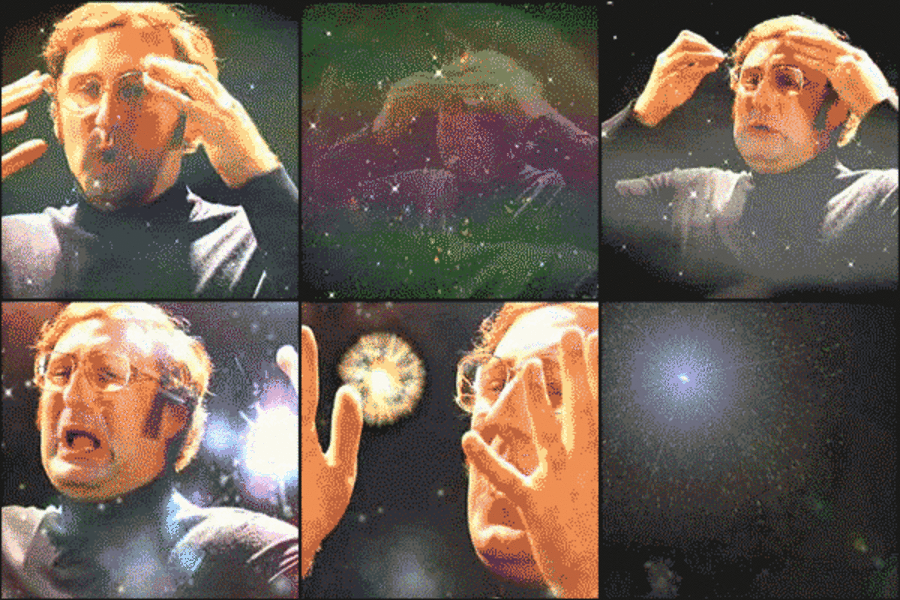
Mind = blown. Fun stuff, eh?
-
Re:Best comics
That is without a doubt the saddest C&H strip I've seen. Ever.
By $DEITY, don't take away a child's imagination!
-
Re:Best comics
It's very unusual for a first-grader to use words like "arboreal" and "ichthyoid". He played by his own rules, often living in his own head, and shunned the status quo. The strip showcases the importance of imagination contributing to intelligence and richness of experience. Calvin and Hobbes was the single largest influence of my childhood and I am happy that Watterson never whored out his work, unlike the guy who wrote the preface of the first C&H book.[scroll down for the strip] Most of the parodies of Calvin and Hobbes revolve around the fact that Calvin's rambunctiousness would be considered abnormal, today. Very sad.
Well now. The fact that I too admired Calvin's rambunctiousness does not in any way mean that his behavior was admirable in an objective sense. Fact is that Watterson himself wrote (in his Tenth Anniversary collection annotations) that he would hate to have a kid like Calvin and that he frequently disagreed with Calvin's POVs.
On the other hand, there are aspects of his personality that I absolutely adore. I hate organized events, just like Calvin. That just means that I have a hard time having a social life because I find most social events to be unimaginative, mundane and frightfully limited in scope. Ditto for sports. Calvin would grow up into the kind of person for whom boredom would be a fate worse than death (it's a blessing and a curse, for obvious reasons). In a strip where Calvin complains in his wonderfully frank way - "Why can't I just have fun on my own?", his dad retorts (in an unusual burst of man-to-man honesty), "When you grow up, it's not allowed". That pretty much says it all. I think it comes from needing greater variety in entertainment (which obviously includes education) options at a lower tree level of organization (i.e. "I'm bored with music, switch to reading", as opposed to "I'm bored with classical, switch to punk rock").
Also, you speak of shunning the status quo. I know what you're trying to say, but I think Watterson's genius lay in specifically NOT portraying Calvin as a rebel. Any rebellion was accidental, as it usually is in the case of very young children. Many of Calvin's exploits stemmed from taking an adult principle literally or following it to the logical conclusion - something that adults almost never do. In that sense, I get some of the same vicarious thrill from several C&H strips that I got from Atlas Shrugged -
Re:Best comics
This "The pills must be working" strip has got to be phony. First, in this example of it, the copyright date is 1986. Back then, ADD was on nobody's radar screen, and certainly not pills for it, and anybody hearing about a child being on pills for any mental disease would have been horrified, and had no idea what this strip was about. Putting children on speed for ADD was a meme that blew up in the 90s.
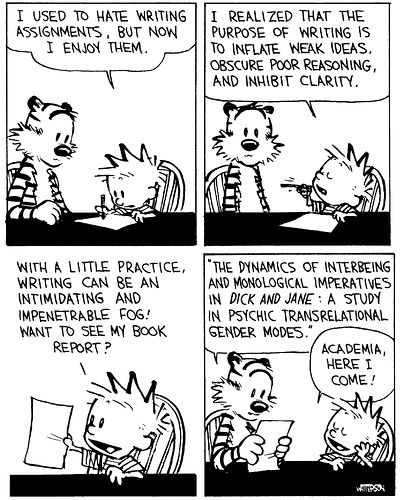
Secondly, there are a few clues that this isn't a real strip. First, the four-panel daily comics were never in color, even to this day. So the loss of color in the last panel that seems integral to this comic's story is a tip-off. Second, when Waterson doesn't put dialogue in bubbles, there is a single line emanating from the character speaking, like this. Notice also that Hobbes never moves in the purported authentic strip. That's a no-no among serious comics -- they always move things around from panel to panel, to keep visual attention. Notice how Hobbes moves in the second, real comic. First he looks at Calvin, then us, then the paper. Motion in each panel.
Also it seems to me that the lettering isn't as space-consuming as it is in authentic Waterson strips. Too much white space. I don't recall any white-space back-and-forth like in the first panel -- certainly not with that much white space. When two people are dialoguing in the same panel, he puts words in bubbles.
Notice too that there are *no* word bubbles in this cartoon. In the examples I just found in a google image search, bubbles were the norm. This strip is the opposite. Finally, I've read all the Calvin and Hobbes anthologies several times and don't recall this strip ever. This is the first I've seen of it
Oh, I was doing some more googling, and here's another obvious forgery. Notice how in this one also, Calvin and Hobbes never move in the strip. Of course, the fonts of the lettering give it away, but I think this one was intended to be an obvious phony. And here's another bad copy.
Don't get me wrong; I like the message of the strip! It's just not Waterson -
Best Calvin and Hobbes strips NOT by Watterson
Calvin on ritalin: http://www.joeydevilla.com/2008/01/08/calvin-and-hobbes-now-with-ritalin/
Calvin & Hobbes grown up: http://onceuponageek.com/images/calvin_hobbes_grown.jpg -
Re:Best comics
It's very unusual for a first-grader to use words like "arboreal" and "ichthyoid". He played by his own rules, often living in his own head, and shunned the status quo. The strip showcases the importance of imagination contributing to intelligence and richness of experience. Calvin and Hobbes was the single largest influence of my childhood and I am happy that Watterson never whored out his work, unlike the guy who wrote the preface of the first C&H book.[scroll down for the strip]
Most of the parodies of Calvin and Hobbes revolve around the fact that Calvin's rambunctiousness would be considered abnormal, today. Very sad. -
Not too uncommon for Asian math texts
-
Not too uncommon for Asian math texts