Slashdot Mirror
Domain: mortbay.com
Stories and comments across the archive that link to mortbay.com.
Comments · 15
-
Re:Well, it is named Greenland isn't it?
So Greenland used to be green. Then it froze. Now it's turning green again. It's almost like it's a natural cycle.
Greenland used to be covered in ice with a few small areas in fjords that were habitable. What evidence we have of the Norse settlements (and there is a reasonable amount) shows that they were a farily marginal colony. For instance their cows were the smallest known, due to such a short period when they could be outside in pasture. There is evidence that while kept inside barns in the winter they had to be forcefed kelp to help fatten them up/keep them alive. Doesn't sound like a lush paradise.
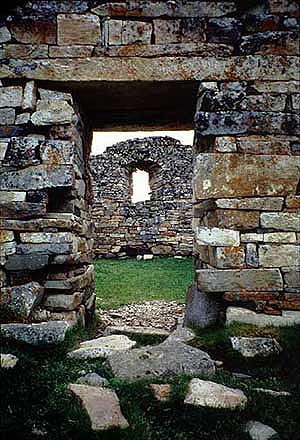
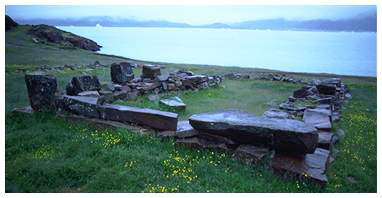
And on the other hand, its not as if today the Norse settlements are just starting to melt out from under the ice. The areas of Greenland that were settled by the Norse are and have been since they were rediscovered) quite green and habitable. Try looking at photos of the ruins: Hvalsey ruins, another shot of Hvalsey, ruins at Gardar, another shot of the Gardar ruins, ruins at Brattahlid, a general shot (I can't identify the location), and to round things out, a couple shots of modern day Greenland in summer. Things have looked that way for a while - the ice was always inland from these fjords. It didn't take anything special for the Norse to be able to settle there - just a little determination to survive the winters. -
Re:OpenGrok
while the above post was anonymous and probably not seen by many. it asked if there was a way to run this on a more local/lite deployment. i dont know myself, ive already got a tomcat box lying round for testing so it wasnt hard for me. But if you dont have a servlet container available. theres a few non tomcat options
http://servlets.com/engines/#embeddable has a list of quite a few. and from the list
http://jetty.mortbay.com/jetty/index.html seems to be the best candidate. (though it quotes no resource figures) -
It had been discussed
http://www.mortbay.com/MB/log/gregw/?permalink=Sc
a lingConnections.html
Basically, the server that is used to handle X number of customers making a request every 2-3 minutes, will get a multiple of that because the requests are coming in much more frequent.
You will need to tune the server for much higher throughput value (more listeners/threads/workers) to deal with AJAX. -
Re:Ok great
"In fact it incorporates a Servlet/Web/JSP container of its own, namely Jetty."
Just for clarification, Jetty was written by Greg Wilkins and is maintained by him and MortBay Consulting. It uses jasper as it's JSP engine, but is otherwise much faster than Tomcat. So to say Jetty is part of the Geronimo project is sort of misleading--as it is it's own entity. But that's the nice thing about good design--these things are modular. -
Other Servlet 2.4/JSP 2.0 Servers
This is good news. Tomcat is the reference Servlet implementation. So if it works on Tomcat it _should_ work on other servlet engines. So people that may have held off deploying or even developing Servlet 2.4/JSP 2.0 application may now start down that trail.
Also, let's not forget there are a couple of other great choices out there: Resin with Servlet 2.4 and JSP 2.0 and the alpha Jetty 5.0 the Servlet 2.4.
Linux VPS Based Java Hosting - Now with Tomcat 5 if you want it
-
Get the most out of that aging single server
-
Faster free-software servlet engine
Then use Jetty.
-
Re:Support?
Well, you should check this site for JBoss support.
Or this one if you want Jetty support.
The thing is, if your boss feels better having expensive support thay can have it, even as the same price of the commercial products. The win/win situation comes from the fact that expensive support is a may and not a must with free software. -
Lack of good benchmarks makes it tough to decide
The problem seems to be that it is extremely difficult to benchmark such servers. Greg Wilkins, one of the primary authors of Jetty, explains the issues fairly clearly in a response to the Jetty Benchmark thread on the jetty-discuss list.
In addition, experience shows that J2EE application optimization is not as straight forward as other Java applications, so it is easy to get radically different performance results from a servlet with only minor tweaks. There was a wonderful presenation at JavaOne 2002 San Francisco about servlet optimization (link for atendees only). Among other things, the author demonstrated. a simple 6 line "Hello World" servlet that is written in standard style, yet can be made to run 3x faster with only minor tweaks. He also shows that testing under load reveals that servlets can behave much differently under load and that the only way to really write fast and reliable servlets is to write them as you normally would and then test them mercilessly.
My conclusion is that you can't believe any of those published bechmarks, they're mostly biased marketting crap (everybody's benchmark seems to show their product is fastest). What you really need to do is load up multiple servers and configure them to do what you need them to do and test them under load to see how they perform in your environment. I know it's not what you want to hear, but since there are so many features that have varying performance, it's the only way to really find out.
-
Lack of good benchmarks makes it tough to decide
The problem seems to be that it is extremely difficult to benchmark such servers. Greg Wilkins, one of the primary authors of Jetty, explains the issues fairly clearly in a response to the Jetty Benchmark thread on the jetty-discuss list.
In addition, experience shows that J2EE application optimization is not as straight forward as other Java applications, so it is easy to get radically different performance results from a servlet with only minor tweaks. There was a wonderful presenation at JavaOne 2002 San Francisco about servlet optimization (link for atendees only). Among other things, the author demonstrated. a simple 6 line "Hello World" servlet that is written in standard style, yet can be made to run 3x faster with only minor tweaks. He also shows that testing under load reveals that servlets can behave much differently under load and that the only way to really write fast and reliable servlets is to write them as you normally would and then test them mercilessly.
My conclusion is that you can't believe any of those published bechmarks, they're mostly biased marketting crap (everybody's benchmark seems to show their product is fastest). What you really need to do is load up multiple servers and configure them to do what you need them to do and test them under load to see how they perform in your environment. I know it's not what you want to hear, but since there are so many features that have varying performance, it's the only way to really find out.
-
Re:Wasn't this expected ?
-
Re:Where are MS rivals on this?
I don't know about IBM but I doubt Sun feels fucked by the OSS community. There are several Open Source implementations of the J2EE platform or parts of it available and being developed. It's mostly that the Linux community is somewhat ignorant of them. Plus, of course they have more than 20 commercial companies developing implementations the J2EE platform, including IBM, which guarantees competition in the platform implementation and I doubt we will see in the same scale with the Microsoft platform.
For Open Source J2EE, check the following:
Jakarta
JBoss
Enhydra
Jetty
Resin
-
Not worth it... (at least not yet)
My personal opinions, of course..
But first of all, all this is doing is adding the hype behind the
Second, I think what is inevitable is that if there is ever even a threat of genuinely competitive Open Source implementation to Microsoft's own view of
Learn UDDI, ebXML, J2EE. There's no risk in providing Open Source alternatives on the first two. J2EE has still some licensing issues that requires extra work to get around for OS projects but it's quite feasible and have been done already. It's a proven and established platform. Basically SUN would love to see Open Source J2EE implementations fight the threat of
For those who are interested in working in the Windows realm, reverse engineering
jboss.org
Apache Jakarta
Enhydra
Jetty
-
Re:Why is it so complicated and slow (and unstableIf you only need servlets and Java Server Pages, I highly recommend Jetty from Mort Bay Consulting. It is Open Source/Free Software and is written entirely in Java. It is a Web server in its own right (that is, not an add-on to Apache), supporting HTTP 1.0 and 1.1 and SSL
It is small and very easy to install and configure. It can easily be embedded in a larger Java application, allowing a Web interface to be added "after the fact."
-
Wrong cool apps, for the wrong reasonsThere are tons of cool applications of Java, but you chose to show mostly the bad ones.
Standardized (albeit by Sun), extensible APIs, especially on the server end, and extensible products, is part of what makes Java thrive today. Transaction API, J2EE, JNDI, Java2D/imaging, Java3D, servlets, JDBC, CORBA. Plus a host of pre-packaged libraries for things like sockets and RMI. Products: object databases (Ozone, the Castor O/R mapping framework), transaction managers (Tyrex), web servers (Resin, Jetty, Orion, Enhydra), XML etc.
Above all, Java connect to anything, provides a lot of freebies (garbage collection, a simple object model), is high-level and easy to learn, and lets you be more productive right out of the box as opposed to languages such as C++. No wonder new stuff is sprouting up like mushrooms -- a phenomenon that I suppose Bjarne Stroustrup is mildly annoyed about and doesn't quite understand. Once you've written a C++ app, it's a dead end. It not reusable. Unless you wired it up with magical strings and CORBA and reinventing all sorts of technologies, it just sits there.
This is much the same reason Python is thriving, really. Unfortunately, Java currently does not have anything that comes close to Zope. Turbine and Cocoon sound like two different projects aimed at this area, but they're not even close.
Who cares about Amex or set-top boxes? Unless I can write TiVo-like apps on my desktop computer that controls the box in interesting and hitherto-unrealized ways, it's useless, just another closed implementation. And Amex, well, how do I connect to my card, then?
Now:
- Both Oracle 8i and IBM's DB2 use Java extensively both for their DB administration GUIs as well as for middleware code. If you didn't know, these are the number 1 and number 2 Enterprise database systems in the world
I wish you hadn't mentioned that. Oracle's bloated, clunky Java GUI stuff is their big black sheep. I wish they never screwed this part up -- Oracle's native NT tools used to be at least adequate. Compare Oracle's present, slow, unstable, overdesigned, Microsoft Bob-like Java GUIs with Microsoft SQL Server 7.0's flashy, fast, and hugely functional tools and you just want to crawl into your mama's arms and cry like a baby.
- Java servlets and JSP are used extensively on the web from sites like mail.com to Firstunion.com. Hundreds of sites use Java(TM) to deliver dynamic content these two are simply the most prominent that come to mind.
Servlets is hardly Java's finest moment, same goes for JSP. True, servlets replace CGI in a nice way, and anything is better than ASP and assorted horrors, but that's about it.
Servlets make up a very low-level layer, and servlets themselves are quite isolated entities, compared to the riches of Zope's DTML documents.
Please, developers, do yourselves a favour and read up on how to properly divide content, logic, and presentation. Hint: Putting Java inside HTML gives you no cigar. Look instead at things like Freemarker and Webmacro, or even that bastard son of template processing, XSLT. Even so, these are quite weak tools, and you need to buy a $35,000-per-CPU app server to get any sense of an integrated package.
End of rant.