Slashdot Mirror
Domain: paidcontent.co.uk
Stories and comments across the archive that link to paidcontent.co.uk.
Comments · 13
-
Been there, done that, got the legislation
Interestingly, this sort of thing was trialled in the UK by the BPI back in 2008 and it was abandoned quickly. It was completely ineffective, very expensive, and resulting in some bad press due to lots of false accusations. It did lead to some very profitable (at least in t A couple of years later they had it put into law, making it much easier and cheaper for them (ISPs didn't want to pay) but a couple of years on from that and implementing it is still some way away.
All this sort of scheme does is make money for lobbyists, monitoring companies and lawyers, at the expense of actual creators, ISPs and the general public.
-
Re:BBC, here is idea how to make money
Sell iPlayer subscriptions to non UK citizens, even for a higher price. Start with Apple universe if you don't trust to people having "more open" devices.
Good news : bbc plans subscription u.s. iplayer
-
Re:10,000 users a day...
That basically means the only viable solution left is no more digital music - live performances only.
Study finds pirates 10 times more likely to buy music
Another Study Finds Pirates Buy More MusicIf a majority of the population decided bank robbery was okay, does that mean we should re-evaluate if robbing banks is really a bad thing? Of course not!
Ultimately, yes. Either you convince them that they benefit more from not doing so, or you legalize it.
Ultimately, copying someone else's IP, to which you have no rights
Says who? You are you to say what person A should share with person B using their personal property?
, means someone didn't get paid.
Assuming they would get paid in the other case. Which not only isn't certain, in many cases is definitively not true. Especially when that "someone" has been dead for years.
And if you copied it, you have assigned some value to it.
Yes.
At best, it means you've inflicted direct financial harm by devaluing of the product in question. If you doubt me, I encourage you to verse yourself in the basics of economics.
So I have when I resell my stuff instead of destroying it.
No bones about it, if you pirate IP, you absolutely are harming the IP owners. Either that, or *everything* published on economics is wrong. The reasonable, safe bet, is the former rather than the later.
Again, the only harm is the same as when you resell something. Doesn't mean it should be illegal.
Time and time again the pirate position seems to be, I want it. You can't stop me. Its unlikely I'll be prosecuted. Therefore, I'm entitled to whatever I can take. If you try to stop me, you're a bad person.
The position I see is: I bought the CD, I should be allowed to do what I want with my property. Who are you to tell me what I should do with my CD?
When a massive number of people feel entitled to take what isn't theirs, what do you expect is going to happen. Draconian laws are the only likely result. And frankly, you can't really blame them.
iTunes dropped the DRM, sales are up. Clearly draconian measures work better.
If you worked and didn't get paid time and time again
MPAA revenue has been rising every year, so that's clearly not true for movies.
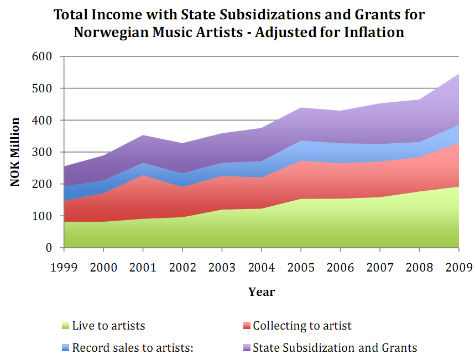
Music artists revenue is also rising.The only people losing revenue are the labels. Cry me a river over their outdated business model. We should now ban cars for the poor carriage drivers in the unemployment. Or ban cellphones because of the telegraph companies.
-
Re:What ?
-
Re:What ?
-
Re:Wonders will never cease!
Saying it's code implies that they're intending that it just be applied to small ISPs and support the bill really, but I think that's bollocks.
Whilst I agree that might be the net effect, that the bill will just end up getting applied to small ISPs, I do believe that they are interested in seeing it repealed or struck down simply because even as a large ISP this does add extra burden and costs on them, and does require them to be complicit in allowing court action to be threatened against many innocent customers of theirs.
TalkTalk has been campaigning against the DEA since before it was stated it would only apply to small ISPs so they at least certainly have shown all along they don't want this applied at all. BT's interest could certainly be more self serving, but I'm sure in general that they do honestly want to see this outright struck down, rather than applied equally across the board.
For what it's worth, BT did kick up a fuss before hand, not quite as publicly as TalkTalk, but they certainly did all the same, see this article for example:
http://paidcontent.co.uk/article/419-digital-economy-bill-the-half-billion-pound-price-tag/
-
Re:And nothing of value is lost
You will have paid for newspapers, like the financial times, that contain news worth paying a premium for, which they won't publish online.
There was an article 2 days ago about how FT "sees a five-year trajectory for having exited print in substantial part."
However, in another article yesterday another spokesperson say they have no plans to scale back printing and go all digital.
-
Re:People seem to be missing the LARGER issue.
"So rather than say "yay, Pink Floyd won!", we should be saying "what the fuck did EMI think they were doing?"."
This might have something to do with it?
http://paidcontent.co.uk/article/419-emi-crashes-1.75-billion-into-the-red/
-
Re:But it's not crazy
There have been some pretty serious allegations against the company made here in the last few days: http://paidcontent.co.uk/article/419-spinvox-paying-staff-in-stock-to-save-on-costs/
-
Re:Dual Standards
Also confusing to me is that I thought YouTube reached a deal with these guys back in 2007? Did that just fall apart?
The PRS wanted to increase the fees. From http://news.bbc.co.uk/1/hi/technology/7933565.stm back in March:
Mr Walker told BBC News the PRS was seeking a rise in fees "many, many factors" higher than the previous agreement.
I think they only realised they were shooting themselves in the foot after the trigger was already pulled.
-
Dual Standards
What I don't understand is that PRS asks for 3-5% of your Net Broadcasting Revenue yet if you're an online radio they ask for 6-8% of your total revenue. Why aren't these figures closer?
Also confusing to me is that I thought YouTube reached a deal with these guys back in 2007? Did that just fall apart? -
Re:The problem...
Whoever has the rights in your country won't let Hulu run the shows in it because it cuts into their advertising.
As Hulu says:
"Hulu is committed to making its content available worldwide. To do so, we must work through a number of legal and business issues, including obtaining international streaming rights. Know that we are working to make this happen and will continue to do so. Given the international background of the Hulu team, we have both a professional and personal interest in bringing Hulu to a global audience."
It should be kept in mind that all distribution deals between producers and distributors include regions, and sometimes exclusive distribution deals preclude streaming in a region at all. Hulu has to compete with all other distributors to obtain content rights from producers. There are also political issues (such as the troubles with the UK Competition Commission). The US is one of the few countries in the world that does not regulate content based on country of origin (we prefer "adult content" regulation evidently).
It was recently announced that Johannes Larcher will be Hulu's new SVP in charge of procuring international rights.
-
Re:Your tax money at work
Look at the percentages of young people who infringe copyright - almost half of the tracks in the study (of the 90% of the people who had mp3 players) were not legal. 95% of those in the study - literally, 95%, copied infringing music in some fashion (copying off friends' hard-drives etc)
Now, we can assume that many of them don't think about it any harder than 'ooh, free stuff', and also that many of them couldn't afford to buy any or at least most of what they copy. That attitude will likely change for some as they get older and they can afford to buy more instead of copyright infringing.
Even so - there is an entire generation that is now used to recorded music being effectively free. Just as radio and home taping was a way of life for my generation, sharing mp3s and ipods are now that for the current under 25s - and its a damn sight easier to get exactly what you want with near zero effort. Slashdot isn't representative of the general population, but then neither are elderly lawmakers.
Copyright is undergoing a fundamental change in terms of expectations of use. DRM and lawsuits will not change this, it's a spit in a tide of users. The copyright cartels need to understand that they have already lost - they need to change their approach and find ways of actually satisfying the wants of their customers, instead of destroying the lives of a tiny majority and hoping it scares everyone back to liking what they were told to like, and buying what they were told to buy.