Slashdot Mirror
Domain: ringdev.com
Stories and comments across the archive that link to ringdev.com.
Comments · 14
-
More prior art
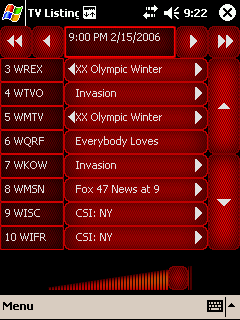
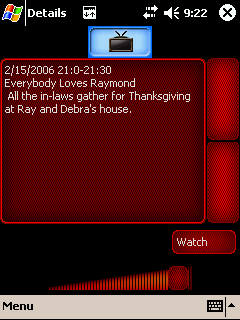
In 2004 my capstone project was a TV/DVR remote control software package that ran on a wireless PDA. It worked by sending SOAP requests to a web server that would execute command line instructions on a media service and return XML data based on the result and state of the device.
Their patent sounds like it is almost an exact duplication of my capstone.
I'm sure I have the source floating around somewhere, but I still have images from the app up on the web:
http://ringdev.com/images/BlueSkinListing.bmp
http://ringdev.com/images/RedLineSkinListing.bmp
http://ringdev.com/images/RedLineSkinDetail.bmp-Rick
-
More prior art
In 2004 my capstone project was a TV/DVR remote control software package that ran on a wireless PDA. It worked by sending SOAP requests to a web server that would execute command line instructions on a media service and return XML data based on the result and state of the device.
Their patent sounds like it is almost an exact duplication of my capstone.
I'm sure I have the source floating around somewhere, but I still have images from the app up on the web:
http://ringdev.com/images/BlueSkinListing.bmp
http://ringdev.com/images/RedLineSkinListing.bmp
http://ringdev.com/images/RedLineSkinDetail.bmp-Rick
-
More prior art
In 2004 my capstone project was a TV/DVR remote control software package that ran on a wireless PDA. It worked by sending SOAP requests to a web server that would execute command line instructions on a media service and return XML data based on the result and state of the device.
Their patent sounds like it is almost an exact duplication of my capstone.
I'm sure I have the source floating around somewhere, but I still have images from the app up on the web:
http://ringdev.com/images/BlueSkinListing.bmp
http://ringdev.com/images/RedLineSkinListing.bmp
http://ringdev.com/images/RedLineSkinDetail.bmp-Rick
-
Re:Interesting pictures, but...
Nope, just 1 for a power indicator. http://ringdev.com/images/NewPC3.JPG
-Rick -
Re:That's one doomed space marine
If you want to play Classic Doom in the glory of Doom 3 check out http://cdoom.d3files.com/ It is a Doom 3 total conversion to allow you to play all of episode 1 from the original Doom in the Doom 3 engine. Updated graphics, textures, models, music, everything.
[Bias note: I host the musician's web set at http://sonicclang.ringdev.com/ ]
-Rick -
Re:How about a free optimizing compiler
http://sonicclang.ringdev.com/Levels.php
quaters -> quarters -
Re:Slashdot is broken
Not exactly, but close.
Here is some out dated design docs
http://ringdev.com/code/GFCNamespace.gif
http://ringdev.com/code/GFCTeirDesign.gif
The ACD system for example talks to the ACD Database, the Employee Database, and the Admin Database. So it contains references to ACD.dll, Employee.dll, and General.dll (the admin database data objects are all contained in General.dll).
I can then write code like:
Dim objEmp as New GFC.Data.Employee.EmployeeDO
objEmp.FindByUserName("UserName")
Dim objACDEvents as New GFC.Data.ACD.EventsDO
objACDEvents.FindByExtension(objEmp.Extension)
for i as integer = 0 to objACDEvents.Count-1
objACDEvents.Load(i)
debug.writeling( objACDEvents.EventType & " " & objACDEvents.EventTime & " " & objACDEvents.Length)
next
It just took a minute or so to create code that will spit out all ACD events from a specific employee.
-Rick -
Re:Slashdot is broken
Not exactly, but close.
Here is some out dated design docs
http://ringdev.com/code/GFCNamespace.gif
http://ringdev.com/code/GFCTeirDesign.gif
The ACD system for example talks to the ACD Database, the Employee Database, and the Admin Database. So it contains references to ACD.dll, Employee.dll, and General.dll (the admin database data objects are all contained in General.dll).
I can then write code like:
Dim objEmp as New GFC.Data.Employee.EmployeeDO
objEmp.FindByUserName("UserName")
Dim objACDEvents as New GFC.Data.ACD.EventsDO
objACDEvents.FindByExtension(objEmp.Extension)
for i as integer = 0 to objACDEvents.Count-1
objACDEvents.Load(i)
debug.writeling( objACDEvents.EventType & " " & objACDEvents.EventTime & " " & objACDEvents.Length)
next
It just took a minute or so to create code that will spit out all ACD events from a specific employee.
-Rick -
Images, my bandwidth WILL DIE
not going to be able to host these for long, but since the site is slow as tar:
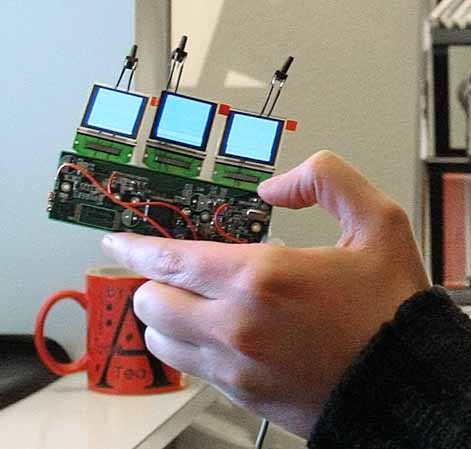
http://www.ringdev.com/images/3Button.jpg
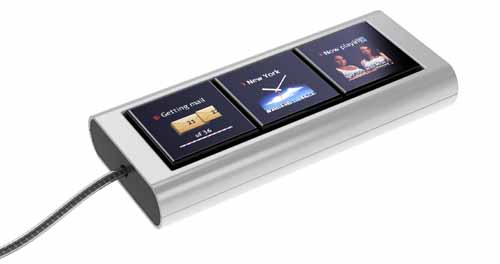
http://www.ringdev.com/images/optimus-mini-34.jpg
-Rick -
Images, my bandwidth WILL DIE
not going to be able to host these for long, but since the site is slow as tar:
http://www.ringdev.com/images/3Button.jpg
http://www.ringdev.com/images/optimus-mini-34.jpg
-Rick -
Re:Modding as the Game
"Now that more and more games are moddable, one has to wonder if modding has become the game."
I would say yes, and for some of us, it already has been. I started modding in Doom2 and Quake, making simple levels (nothing fancy). NFS2 would have died out much earlier then it did on my PC had it not been for the joy of custom car models. I got bit by the MMORPG bug a few years back, when the game got boring I pulled out 3ds-Max and got to the fun stuff (http://dmoc.ringdev.com./ I would have kept it up too but I wound up getting married and having a son (not necesarilly in that order) which pretty much put and end to my gaming and modding time.
-Rick -
No Classic Doom 3?!?!
http://cdoom.d3files.com/index.php?page=news
Episode 1 of the original Doom game in the Doom 3. Greatest mod ever.*
-Rick
*Note on bias, the music for CDoom was written by a friend of mine (http://sonicclang.ringdev.com/ -
Another blurb from another pro business app dev
Number one montra in business application development. "I'm doing this for the user"
Remember that. The user (customer/client/employee) defines the features they need. These features form the basics of the requirements document.
Your tech lead/analysist/coordinator is going to ask you for time estimates. Business sciences says the way to find this number is to find the Optimal time(a), the most likely time(b), and the worst case time(c) and apply the following formula:
Expected time = (a + 4b + c)/6
If I think I could get a roughed out edition together in 8 hours, I would use a=8, b=16, c=58 for an expected time of 22 hours. You to can sit through hours of business science and learn this too, or just use the old addage of "triple it!" and quote 24 hours
So, you kick that number back to the coordinator. The coordinator looks at other projects on your plate and priorities and sends a time estimate back to the manager.
That should take care of the deadlines and feature set. You have a rec document, and a schedule. Next up was code style. Most current business office application development is going to be in a RAD environment. VB and
Our apps now our no longer even apps. We run a portal like interface, and when we receive new user requests they get developed as modules that are simply plugged into the existing system. Here are some out dated, but still handy looks at the type of design we use.
http://ringdev.com/code/GFCTeirDesign.gif
http://ringdev.com/code/GFCNamespace.gif
Once you have a code base. Developing new apps is significantly easier, faster, and the code you produce is more stable. So your tech lead is right, code correctness is very important.
And finally, don't be afraid to say no. I have 3 tiers of projects. Immediate, Down the road, and Ignore. If my coordinater drops something on my desk with a very low priority and a very large work load, I usually tell him I'll take care of it right after I clean my desk. Which usually implies that anything on my desk gets round filed. It is your manager and coordinater's job to take care of scheduling. If they are putting to much on your plate, sit them down, prioritize, and give back.
-Rick -
Another blurb from another pro business app dev
Number one montra in business application development. "I'm doing this for the user"
Remember that. The user (customer/client/employee) defines the features they need. These features form the basics of the requirements document.
Your tech lead/analysist/coordinator is going to ask you for time estimates. Business sciences says the way to find this number is to find the Optimal time(a), the most likely time(b), and the worst case time(c) and apply the following formula:
Expected time = (a + 4b + c)/6
If I think I could get a roughed out edition together in 8 hours, I would use a=8, b=16, c=58 for an expected time of 22 hours. You to can sit through hours of business science and learn this too, or just use the old addage of "triple it!" and quote 24 hours
So, you kick that number back to the coordinator. The coordinator looks at other projects on your plate and priorities and sends a time estimate back to the manager.
That should take care of the deadlines and feature set. You have a rec document, and a schedule. Next up was code style. Most current business office application development is going to be in a RAD environment. VB and
Our apps now our no longer even apps. We run a portal like interface, and when we receive new user requests they get developed as modules that are simply plugged into the existing system. Here are some out dated, but still handy looks at the type of design we use.
http://ringdev.com/code/GFCTeirDesign.gif
http://ringdev.com/code/GFCNamespace.gif
Once you have a code base. Developing new apps is significantly easier, faster, and the code you produce is more stable. So your tech lead is right, code correctness is very important.
And finally, don't be afraid to say no. I have 3 tiers of projects. Immediate, Down the road, and Ignore. If my coordinater drops something on my desk with a very low priority and a very large work load, I usually tell him I'll take care of it right after I clean my desk. Which usually implies that anything on my desk gets round filed. It is your manager and coordinater's job to take care of scheduling. If they are putting to much on your plate, sit them down, prioritize, and give back.
-Rick