Slashdot Mirror
Domain: spacesafetymagazine.com
Stories and comments across the archive that link to spacesafetymagazine.com.
Comments · 7
-
UAE had presence in outer space for 30 years
Summary and TFA says "UAE has had a small "presence" in outer space for about 30 years". The source is a link to spacesafetymagazine.com, which tells about the UAE first satellite launched in 2009, which does not make 30 years.
Same article notes UAE space agency was created in the 1990s, hence we should probably read "UAE has been engaging space activities for 30 years".
-
Re:Currents
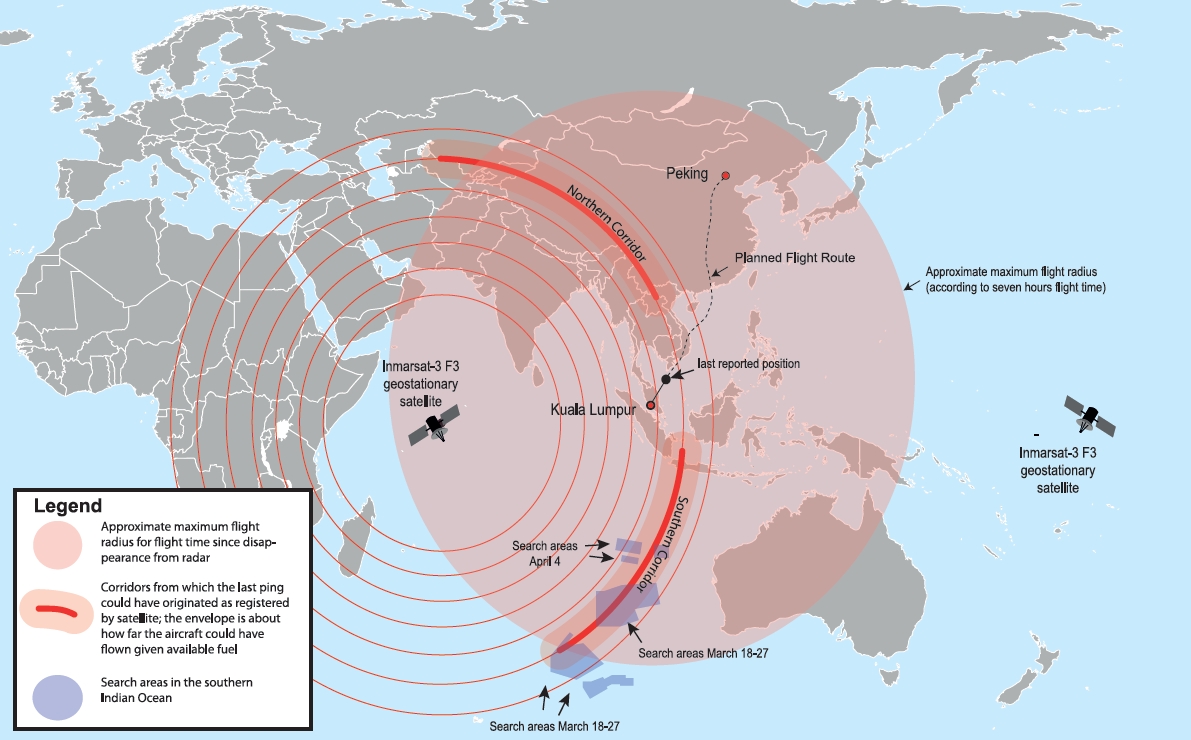
If you look at the currents in the Indian Ocean, and trace backwards from Reunion (it and Mauritius are the two dots east of Madagascar), you pass right through the area they've been searching off of Australia.
I'm afraid ocean currents are not as neat as that. They are pretty messy >> http://earth.nullschool.net/#current/ocean/surface/currents/orthographic=79.61,-7.51,591
-
Currents
If you look at the currents in the Indian Ocean, and trace backwards from Reunion (it and Mauritius are the two dots east of Madagascar), you pass right through the area they've been searching off of Australia.
-
Re:Am I reading this right
Not to mention that the one in Russia was on the high end of that range at 500 kilo tons.
As an amateur astronomer I've seen a couple dozen fireballs in my time, some ending pretty wildly. I'm wondering how many of those come in at the 1-10 kilo ton range. To be frank it almost sees like 1 kilo ton airbursts would be a joke at the height that most of these objects seem to go kablooie at. -
Re:fall to Earth
and http://www.spacesafetymagazine.com/2013/09/14/european-satellite-goce-uncontrolled-reentry/ his will be the first uncontrolled reentry of an ESA satellite since Isee-2, in 1987. Unfortunately, it will not be the last, considering that the bus-size Envisat’s altitude is gradually decaying in Low-Earth Orbit without control. According to ESA, up to 25% of GOCE’s mass will survive the extreme reentry conditions to fall to the ground. However, the risk for populated areas is very small since the majority of the Earth is covered by oceans. “The major part of what survives to the surface will be the core instrument,” says Dr. Floberghagen. “From the original mass which we have now in space, we have estimated that about 25%, about 250 kilos, will reach the surface, and these 250 kilos will be distributed over between 40 and 50 fragments.” The fragments that survive will hit the ground in a 900 km long footprint. The reentry will be a good test for debris monitoring systems and fragmentation models.
-
Re:Next year's news...Really? If you're going to make claims, you should substantiate them. A very brief amount of research (as simple as clicking on one of the links in the article) would show that there is a real concern, such as this statment:
good engineering projects for students, but of little use otherwise--and possible, in large numbers, an orbital debris nuisance.
or you might even find, with a simple Google search, that CubeSat collisions have already occurred.
Or, you can simply go on blindly putting your foot in your mouth, criticizing comments on subjects you know nothing about. -
Re:Small reusable manned craft
Yeah--it's basically a smaller shuttle designed to carry astronauts/pilots. From Wired:
"At a conference in California last week, Boeing program manager Art Grantz unveiled plans for an 'X-37C' that would be nearly twice as long as the current B-model, with a commensurate boost in payload. A pressurized cabin would have space for five seated astronauts plus one on a stretcher — presumably for medical evacuations from the International Space Station (ISS). The C-model space plane could be robotic like its predecessor, or piloted by one of the astronauts.
'Once qualified for human flight, these vehicles could transport a mix of astronauts and cargo to the ISS and offer a much gentler return to a runway landing for the space tourism industry,' Grantz said, positioning the X-37C as a potential rival to Space Ship Two and other near-orbital vehicles being developed by a host of ambitious start-ups."
Also more info at Space Safety Magazine.
The X-37C makes me want to shout something like "The space shuttle is dead! Long live the space shuttle!"
The "death of manned US space flight" is proving to be anything but--probably quite the opposite.